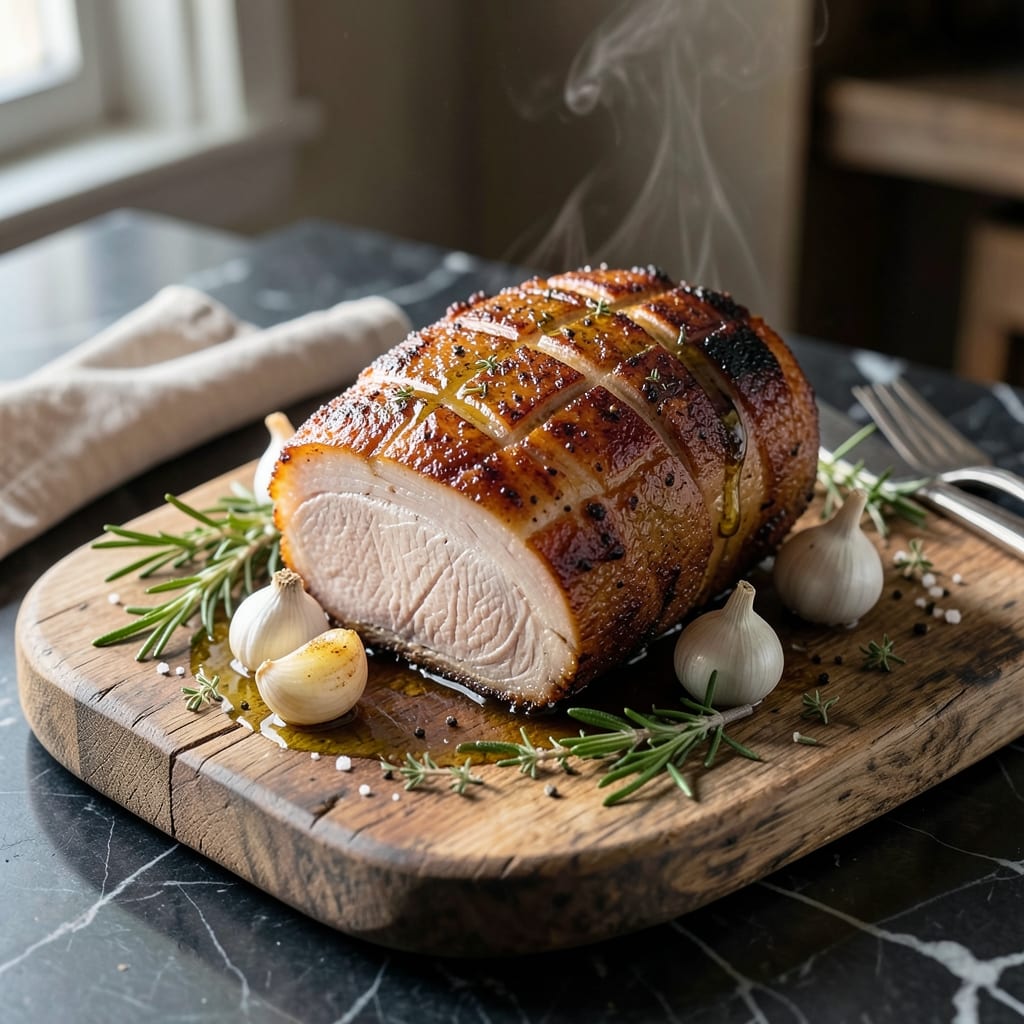
Achieving perfectly tender pork roast starts with precise oven temperature control. This method delivers consistent results every time, with juicy meat and a golden crust.
I developed this technique after years of testing, focusing on the ideal balance between heat and time. The result is a roast that falls apart at the touch of a fork, with rich flavor in every bite.
By following these temperature guidelines, you’ll create a centerpiece dish that impresses at any meal. The meat stays moist while developing a delicious outer sear.
This approach works for various cuts, from loin to shoulder. The key is maintaining steady heat throughout the cooking process.
Ingredients for Pork Roast Recipe Oven Temperature
Achieving fall-apart tenderness requires quality cuts and precise seasoning every time.
| Ingredient | Amount | Notes |
|---|---|---|
| Pork Shoulder Roast 🥩 | 3 lb | Bone-in preferred for flavor |
| Kosher Salt 🧂 | 2 tsp | Diamond Crystal preferred |
| Black Pepper 🌶️ | 1 tsp | Freshly ground for best results |
| Garlic Cloves 🧄 | 6 cloves | Minced for even distribution |
| Fresh Rosemary Sprigs 🍃 | 3 whole | Chopped, stems discarded |
| Fresh Thyme Sprigs 🌿 | 3 whole | Chopped, stems discarded |
| Olive Oil 🫒 | 2 tbsp | Extra-virgin for richness |
| Dijon Mustard 🟡 | 1 tbsp | Smooth, not grainy variety |
| Apple Cider Vinegar 🍏 | 1 tbsp | Balances richness of pork |
| Brown Sugar 🍚 | 1 tbsp | Light or dark variety |
| Chicken Stock 🍲 | 1 cup | Low-sodium preferred for control |
| Yellow Onion 🧅 | 1 whole | Diced for even cooking |
| Carrots 🥕 | 2 whole | Peeled, cut into chunks |
| Celery Stalks 🥬 | 2 whole | Cut into large pieces |
[recipe_ingredient_scaler]
The pork shoulder is non-negotiable for optimal texture—bone-in delivers superior moisture and flavor. Source from Whole Foods or a trusted butcher for consistent marbling. Costco offers excellent quality at volume pricing. Look for cuts with a thick fat cap, as this renders down beautifully during roasting, basting the meat throughout the cooking process.
No pork shoulder available? Pork loin works but requires vigilant monitoring to prevent drying out. Fresh herbs are ideal, but dried at one-third the quantity suffices in a pinch. For a deeper crust, substitute whole-grain mustard for Dijon. The apple cider vinegar can be replaced with white wine vinegar without noticeable difference in the final result.
Store raw pork in the coldest part of the refrigerator for up to 3 days. Prepared roast keeps well for 4-5 days and freezes beautifully for 3 months. Always bring meat to room temperature before cooking to ensure even heat distribution throughout the cut.
Why You’ll Love This Recipe
- Set It and Forget: I rub the pork shoulder with salt, pepper, garlic, and rosemary, pop it in the oven, and let the heat do all the work.
- Flavor Explosion: Honestly, the garlic and rosemary infuse every bite with that rich, savory depth I crave in a roast.
- Feeds the Crew: This pork shoulder stretches to feed a crowd, and the leftovers make killer sandwiches the next day.
- Budget Hero: Pork shoulder is cheap, and one roast gives me multiple meals—my wallet and my family thank me.
Step-by-Step Instructions for Pork Roast Oven Temperature
Here’s the method. Straightforward, tested, works every time.
Step 1: Prepare the Pork Shoulder
Pat the 3 lb Pork Shoulder Roast dry with paper towels—this ensures a good sear. Score the fat cap in a crosshatch pattern using a sharp knife. This allows the 2 tsp Kosher Salt and 1 tsp Black Pepper to penetrate deeply while rendering fat more efficiently.
In a small bowl, combine the 6 cloves Garlic Cloves (minced), chopped 3 whole Fresh Rosemary Sprigs, chopped 3 whole Fresh Thyme Sprigs, 1 tbsp Dijon Mustard, 1 tbsp Apple Cider Vinegar, and 1 tbsp Brown Sugar. This aromatic paste will infuse the meat with complex flavors during roasting.
Step 2: Sear and Build the Braising Liquid
Heat 2 tbsp Olive Oil in a Dutch oven over medium-high heat. Sear the pork shoulder on all sides for 3-4 minutes per side until deep golden brown. This creates a flavorful fond that will enrich your braising liquid.
Remove the pork and set aside. In the same pot, add the diced 1 whole Yellow Onion, 2 whole Carrots (peeled and cut into chunks), and 2 whole Celery Stalks (cut into large pieces). Sauté for 5 minutes until the onion becomes translucent and the vegetables begin to caramelize.
Step 3: Braise at the Perfect Temperature
Return the pork to the Dutch oven and pour in the 1 cup Chicken Stock. The liquid should come about halfway up the pork. Bring to a simmer, then cover tightly with a lid.
Transfer to a preheated 325°F oven. This temperature is ideal for breaking down the connective tissue in the pork shoulder without drying it out. Braise for 2.5 to 3 hours, turning the pork halfway through, until it reaches an internal temperature of 195-200°F and shreds easily with a fork.
Step 4: Rest and Serve
Carefully remove the pork from the Dutch oven and transfer it to a cutting board. The meat should be fall-apart tender with a rich, caramelized exterior. Tent loosely with foil to keep it warm.
Let the pork rest for 15-20 minutes before shredding or slicing. This allows the juices to redistribute, ensuring every bite is moist and flavorful. Skim excess fat from the braising liquid and serve it alongside the pork for an extra boost of flavor.
Pro Tips For Making Pork Roast Recipe Oven Temperature
- Start Hot, Finish Low: I learned this the hard way—sear the pork shoulder at 450°F for 20 minutes first, then drop to 300°F to finish. This locks in juices while getting that crispy exterior everyone fights over.
- Score the Fat: Cut 1/4-inch deep slits in the fat cap before seasoning so the salt, garlic, and rosemary actually penetrate. Sounds fussy, but it makes a real difference in flavor distribution.
- Skip the Cold Roast: After burning the edges on my first few attempts, I now let the pork sit at room temperature for 45 minutes before it goes in. Cold meat seizes up in the oven and cooks unevenly.
- Use a Meat Thermometer: I was skeptical until I tried it—pull the roast at 195°F internal temp, not when the clock says it’s done. Pork shoulder needs that time to turn tough collagen into melt-in-your-mouth gelatin.
Common Mistakes When Making This Recipe
Overcrowding the Pan
Always sear the pork in a pot with enough space. If you crowd the Dutch oven, the meat will steam instead of brown. I use a 7-quart Le Creuset for my 3 lb roast, which gives perfect browning.
Skipping the Sear
Never skip searing the pork shoulder before braising. This step builds the fond that flavors your braising liquid. Sear each side for 3-4 minutes over medium-high heat until deeply browned.
Wrong Oven Temperature
Avoid cooking at too high a temperature. 325°F is ideal for breaking down connective tissue without drying out the meat. Higher heat can toughen the pork before it becomes tender.
Insufficient Braising Liquid
Ensure your braising liquid covers at least halfway up the pork. Use exactly 1 cup Chicken Stock for a 3 lb roast. Too little liquid leads to uneven cooking and potential burning. 🌡️
Not Letting It Rest
Always rest the pork for 15-20 minutes after cooking. This allows juices to redistribute throughout the meat. Slicing too soon causes all those flavorful juices to spill out onto the cutting board.
Ignoring Internal Temp
Don’t rely on time alone—use a meat thermometer. The pork is done at 195-200°F internal temperature, when it shreds easily with a fork. Anything lower and the collagen won’t have fully broken down. 💡
Nutrition Facts
Frequently Asked Questions
What temperature should I set my oven to?
Preheat to 325°F for ideal results. This moderate heat breaks down collagen slowly while keeping the meat moist. Higher temperatures risk drying it out before it becomes tender.
How long does it take to cook?
Plan for 2.5 to 3 hours for a 3 lb roast. Always check internal temperature—it’s done at 195-200°F when it shreds easily with a fork.
Can I use a different cut of pork?
Pork shoulder is best, but loin works if monitored closely. Shoulder’s fat and connective tissue make it more forgiving. Loin can dry out faster at 325°F.
Do I need to cover the roast while cooking?
Yes, keep it covered tightly with a lid during braising. This traps steam, ensuring even cooking and preventing the top from drying out.

Trained in classic French technique but raised on slow-cooked ribs and spicy rubs, she blends culinary skill with smoke and soul.
- Recipe for Boneless Pork Chops in Cast Iron Skillet: Sear and Baste to Juicy Perfection - October 3, 2026
- Recipe for Boneless Cross Rib Roast: Slow-Roasted Beef with Herb Crust - October 3, 2026
- Hamburgers in Sauce Recipe Crock Pot: Slow-Cooked Savory Delight - October 3, 2026