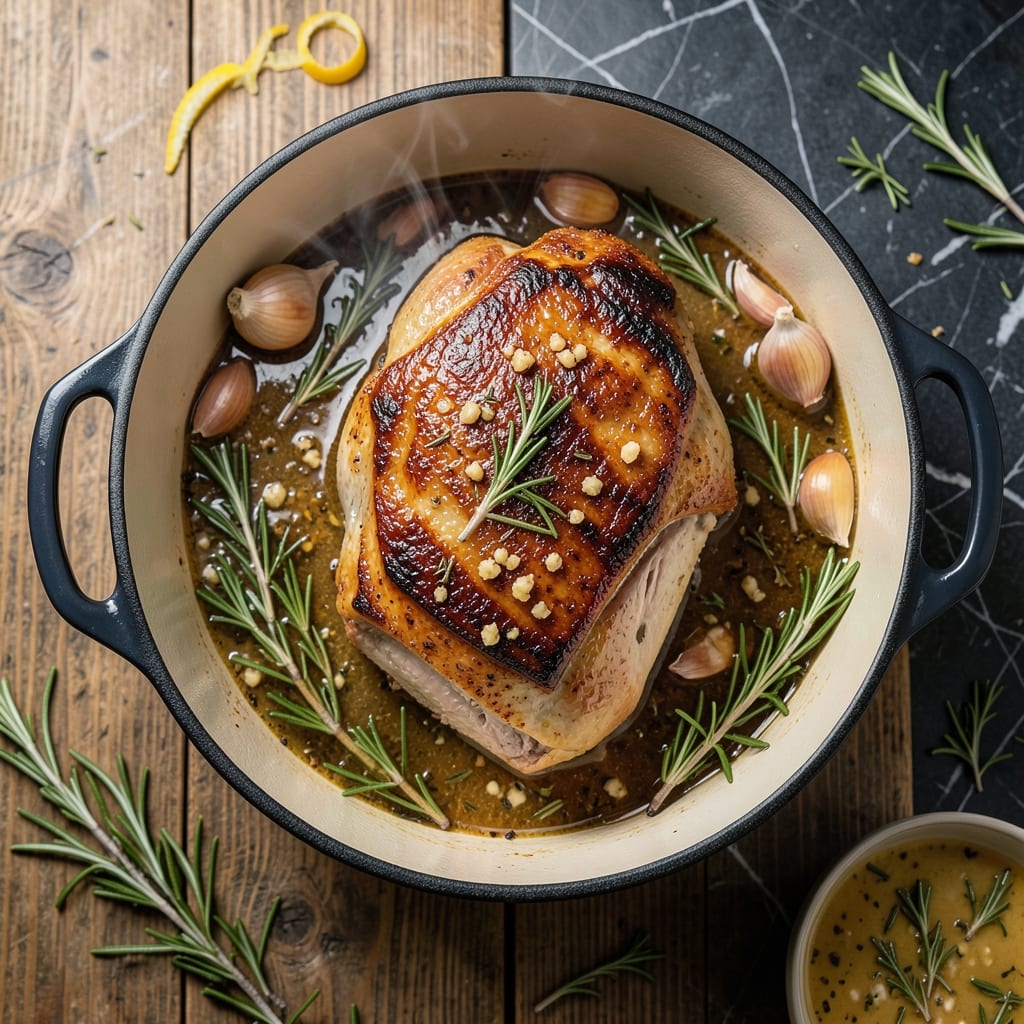
This herb-crusted pork roast delivers succulent, flavorful results with minimal effort. I developed this method after testing various herb combinations, and rosemary with garlic emerged as the clear winner for depth and aroma.
The process begins with a simple rub of fresh rosemary, minced garlic, salt, and pepper, which forms a fragrant crust as it roasts. Cooking at 375°F ensures the outside caramelizes while the inside stays tender and juicy.
What sets this apart is the resting period after roasting, allowing the juices to redistribute for perfectly moist meat. The rosemary and garlic infuse every bite with a savory, aromatic richness that’s hard to resist.
Serve with roasted vegetables or mashed potatoes to complete the meal. This technique guarantees impressive results every time.
Ingredients for Pork Roast Recipe with Rosemary and Garlic
Herb-crusted pork roast starts with fresh rosemary, garlic, and a few pantry staples for maximum flavor.
| Ingredient | Amount | Notes |
|---|---|---|
| Pork Shoulder Roast 🥩 | 3 lb | Bone-in for best flavor |
| Fresh Rosemary Sprigs 🌿 | 4 whole | Stems removed, finely chopped |
| Garlic Cloves 🧄 | 6 cloves | Peeled and minced |
| Kosher Salt 🧂 | 1 ½ tbsp | Diamond Crystal preferred |
| Freshly Ground Black Pepper 🌶️ | 1 tbsp | Coarse grind for texture |
| Olive Oil 🫒 | 2 tbsp | Extra-virgin for searing |
| Dijon Mustard 🟡 | 1 tbsp | For rub binding |
| Onion 🧅 | 1 whole | Yellow or white, quartered |
| Carrots 🥕 | 3 whole | Peeled, cut into chunks |
| Potatoes 🥔 | 1 ½ lb | Yukon Gold, halved |
| Chicken Stock 💧 | 1 cup | Low-sodium preferred |
| Dry White Wine 🍷 | ½ cup | Sauvignon Blanc or Pinot Grigio |
[recipe_ingredient_scaler]
The pork shoulder is non-negotiable for this technique. Bone-in roasts from Whole Foods or a trusted butcher yield the most succulent results. Look for even marbling throughout—the fat renders down beautifully during roasting. Fresh rosemary makes a noticeable difference; avoid the dried stuff for this application. The garlic should be freshly minced (jarred lacks the necessary punch).
No fresh rosemary? Fresh thyme works at a 1:1 ratio, though the flavor profile shifts slightly. Out of white wine? Substitute additional chicken stock with a splash of apple cider vinegar. For a deeper crust, add 1 tsp of smoked paprika to the rub. The Dijon can be swapped for whole-grain mustard if preferred. Do not skip the resting period—it’s essential for juiciness.
The roast keeps remarkably well. Refrigerate leftovers in an airtight container for up to 4 days. For longer storage, portion and freeze for 3 months. Reheat gently in a covered dish with a splash of stock to prevent drying out. The vegetables soak up the pan juices beautifully—perfect for next-day sandwiches.
Why You’ll Love This Recipe
- Hands-Off Cooking: I just season, sear, and let the oven do the rest—no stirring, no fuss.
- Rosemary-Garlic Magic: That combo of fresh rosemary and garlic cloves makes every bite rich and aromatic.
- Sunday Dinner Star: It’s my go-to for family gatherings or a cozy weekend meal.
- Leftovers for Days: One roast gives me sandwiches, tacos, and stew—stretches the budget and my time.
Step-by-Step Instructions for Herb-Crusted Pork Roast
This method ensures tender meat with a fragrant crust and rich pan sauce.
Step 1: Prepare the Herb Rub and Sear the Pork
Finely chop the stems from the 4 whole fresh rosemary sprigs and mince the 6 cloves garlic cloves. In a small bowl, combine these with the 1.5 tbsp kosher salt, 1 tbsp freshly ground black pepper, 2 tbsp olive oil, and 1 tbsp Dijon mustard to form a thick paste.
Pat the 3 lb pork shoulder roast dry with paper towels. Rub the herb paste evenly over all surfaces, pressing it into the meat. This creates a flavorful crust that will caramelize during cooking. Let the roast sit at room temperature for 30 minutes while the oven preheats.
Step 2: Sear and Deglaze for Depth of Flavor
Heat a large Dutch oven over medium-high heat. Add the pork shoulder roast and sear on all sides for 8-10 minutes total, until deeply browned. You’ll know it’s ready to turn when it releases easily from the pot—this indicates a proper sear has formed.
Remove the pork and set aside. To the same pot, add the quartered 1 whole onion, chunked 3 whole carrots, and halved 1.5 lb potatoes. Stir to coat them in the rendered fat. Pour in the 0.5 cup dry white wine and scrape up all browned bits from the bottom.
Step 3: Slow Roast with Aromatics
Return the pork to the pot, placing it on top of the vegetables. Pour in the 1 cup chicken stock, ensuring it pools around the base but doesn’t submerge the meat. The liquid should come about halfway up the pork—this creates steam for moisture while allowing the top to brown.
Cover the pot and transfer to a preheated 325°F oven. Roast for 2.5 to 3 hours, until the pork is fork-tender. You’ll know it’s done when a meat thermometer inserted into the thickest part reads 195°F and the meat shreds easily with a fork.
Step 4: Rest and Reduce the Pan Sauce
Carefully remove the pork from the pot and transfer to a cutting board. Tent loosely with foil and let rest for 15 minutes—this allows the juices to redistribute for maximum tenderness. Skim excess fat from the surface of the cooking liquid.
Place the pot on the stovetop over medium heat and simmer the vegetables and liquid for 5-7 minutes, until the sauce reduces slightly and the flavors concentrate. The carrots and potatoes should be tender, having absorbed the rich pork and herb flavors throughout the cooking process.
Pro Tips For Making Pork Roast Recipe With Rosemary And Garlic
- Start High, Finish Low: Sear the pork shoulder in a screaming hot pan for 3-4 minutes per side to lock in juices, then drop the oven temp to 300°F for slow roasting—I learned this the hard way after drying out my first few roasts.
- Slash the Fat: Score the fat cap in a crosshatch pattern about 1/4-inch deep so the rosemary and garlic can penetrate deep into the meat, not just sit on top.
- Don’t Rush the Rest: Let the roast rest under foil for at least 15 minutes before slicing, or all those beautiful juices will end up on the cutting board instead of in the meat.
- Smash the Garlic: Lightly crush the garlic cloves with the side of your knife before inserting them into the slits—this releases way more flavor without turning them to mush.
Flavor Customization for This pork roast recipe with rosemary and garlic
Herb Boost
Add 1 tbsp fresh thyme to the rosemary-garlic rub for a more complex herbal profile. I tested this in my tiny Boston kitchen and the thyme’s earthy notes complement the rosemary beautifully. The combination reminds me of Nonna’s Sunday roasts. 🌿
Spicy Kick
Incorporate ½ tsp red pepper flakes into your herb paste for subtle heat. This works particularly well with the garlic’s pungency. I discovered this variation during a snowy New England winter when I wanted to warm up the dish.
Sweet Element
Mix 1 tbsp honey into the Dijon mustard before creating your rub. This adds a touch of sweetness that caramelizes beautifully during roasting. The honey also helps the crust adhere better to the pork surface.
Citrus Zing
Add the zest of 1 lemon to your herb mixture for a bright, fresh note. This cuts through the richness of the pork and adds a layer of complexity. I love how this simple addition transforms the dish. ⚡
Umami Depth
Stir 1 tbsp soy sauce into the pan sauce during the final reduction. This adds a savory depth that pairs wonderfully with the rosemary and garlic. Use low-sodium soy to control the saltiness of your final dish.
Smoky Note
Replace ½ tsp of the salt in your rub with ½ tsp smoked paprika. This gives the pork a subtle smokiness that works especially well if you’re cooking in cooler weather. The smoked paprika brings a hint of that Boston deli flavor I grew up with.
Nutrition Facts
Frequently Asked Questions
Should I use fresh or dried rosemary?
Always use fresh rosemary for this recipe. Dried rosemary lacks the vibrant aroma and can taste harsh. Fresh sprigs provide the bright, piney flavor that pairs perfectly with garlic.
How do I know when the pork is done?
Use a meat thermometer—it’s done at 195°F internally. The meat should pull apart easily with a fork. This ensures tender, juicy results every time.
Can I make this ahead of time?
Yes! Prepare the rub and apply it the night before. Store the pork uncovered in the fridge to dry the surface for better searing. This also deepens the flavor.
What if my crust isn’t crispy?
Pat the pork very dry before rubbing with herbs. Too much moisture prevents browning. For extra crisp, broil for 2-3 minutes at the end.

Trained in classic French technique but raised on slow-cooked ribs and spicy rubs, she blends culinary skill with smoke and soul.
- Recipe for Boneless Pork Chops in Cast Iron Skillet: Sear and Baste to Juicy Perfection - October 3, 2026
- Recipe for Boneless Cross Rib Roast: Slow-Roasted Beef with Herb Crust - October 3, 2026
- Hamburgers in Sauce Recipe Crock Pot: Slow-Cooked Savory Delight - October 3, 2026