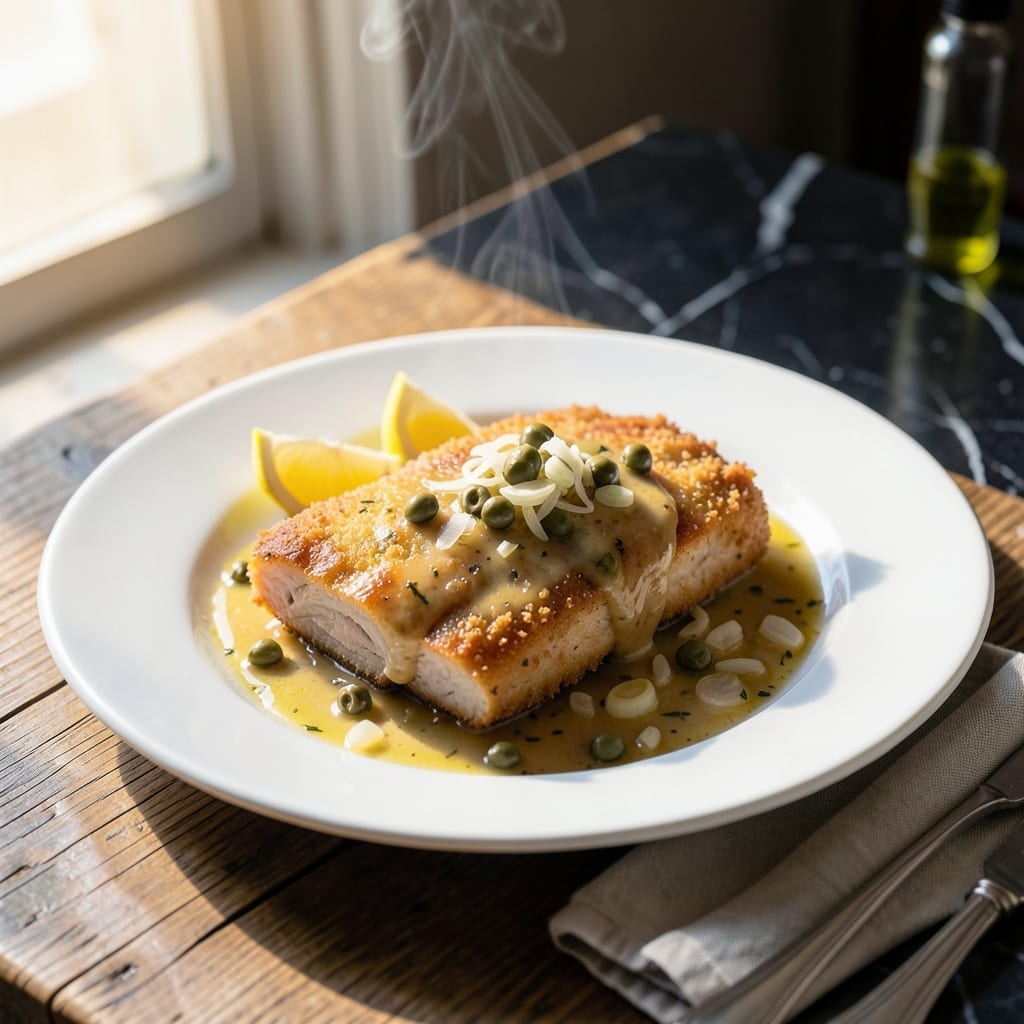
This tangy lemon-caper sauce transforms crispy pork schnitzel into a restaurant-quality dish. I developed it after realizing how a bright, acidic sauce cuts through rich fried foods perfectly.
The secret is using the pan drippings after cooking the schnitzel to build layers of flavor. 5 minutes of simmering melts the capers and lemon into a silky, balanced sauce that clings beautifully to each bite.
You’ll end up with a vibrant sauce that’s tangy, slightly briny, and just rich enough to complement without overwhelming. It turns simple schnitzel into a meal worth celebrating.
Store in an airtight container for 3 days or freeze for longer. Pair with roasted potatoes or a crisp green salad.
Ingredients for Pork Schnitzel Sauce
Nine ingredients build this vibrant, tangy sauce that elevates schnitzel to restaurant quality.
| Ingredient | Amount | Notes |
|---|---|---|
| Pan Drippings 🫒 | ¼ cup | From cooked pork schnitzel |
| Capers 🌿 | 2 tbsp | Drained, non-pasteurized preferred |
| Fresh Lemon Juice 🍋 | ¼ cup | About 2-3 lemons, freshly squeezed |
| Unsalted Butter 🧈 | 2 tbsp | Cold, cubed for emulsification |
| Shallot 🧅 | 1 whole | Finely minced for subtle flavor |
| White Wine 🍷 | ¼ cup | Dry variety like Sauvignon Blanc |
| Dijon Mustard 🟡 | 1 tsp | Smooth, no seeds |
| Chicken Stock 🥘 | ¼ cup | Low-sodium preferred |
| Fresh Parsley 🌿 | 2 tbsp | Chopped, for garnish |
| Kosher Salt 🧂 | ¼ tsp | Diamond Crystal preferred |
[recipe_ingredient_scaler]
The pan drippings are non-negotiable—they carry all that crispy, savory flavor from the schnitzel. Use a dry white wine like Sauvignon Blanc or Pinot Grigio; avoid anything oaky. For capers, non-pasteurized in brine (found at Whole Foods or specialty markets) have better texture than the vinegar-packed kind. The butter should be high-quality European-style for a richer finish—Plugrá or Kerrygold work beautifully.
No white wine? Substitute with extra chicken stock and a splash of white wine vinegar. Out of capers? Chopped green olives (pitted) add a similar briny punch at one-third the amount. Shallots can be swapped for red onion at half the quantity, but expect a slightly sharper bite. The Dijon mustard is key for depth—whole-grain mustard works too if that’s what’s in your fridge.
This sauce is best fresh but keeps in an airtight container for 3 days in the fridge. Freeze for up to 1 month in ice cube trays for easy portions. Reheat gently—don’t boil or the butter may separate. Always taste and adjust salt before serving.
Why You’ll Love This Recipe
- 5-Minute Magic: I just use the pan drippings from the schnitzel—no extra pots, no extra mess.
- Bright & Tangy: The capers and lemon juice cut through the richness so every bite feels fresh.
- Dinner to Lunch: Honestly, this sauce makes leftovers taste even better the next day on a sandwich.
- Pantry Friendly: Between us, I always have shallots and capers on hand, so it’s a last-minute lifesaver.
Step-by-Step Instructions for Tangy Lemon-Caper Pan Sauce
This sauce comes together in minutes using the flavors already in your pan.
Step 1: Sauté the Shallot in Pan Drippings
After removing your pork schnitzel from the pan, place it over medium heat. Add the finely minced shallot to the 0.25 cup pan drippings and cook for 2-3 minutes, stirring frequently, until the shallot softens and becomes translucent.
This base layer of flavor is crucial—don’t let the shallot brown or it will become bitter. The pan drippings from the schnitzel carry fond (those delicious browned bits) that will dissolve into the sauce as you cook. If your pan seems dry, reduce the heat slightly to prevent burning.
Step 2: Deglaze with White Wine
Pour in the 0.25 cup white wine and use a wooden spoon to scrape up all the browned bits from the bottom of the pan. This deglazing step is where the magic happens—those caramelized bits dissolve into the liquid, creating a rich, flavorful foundation.
Let the wine simmer for 2-3 minutes until it reduces by about half. You’ll notice the liquid becomes slightly syrupy and the alcohol smell dissipates. This concentration step ensures your final sauce has depth rather than a thin, watery consistency.
Step 3: Build the Sauce with Liquids and Aromatics
Add the 0.25 cup chicken stock, 0.25 cup fresh lemon juice, 2 tbsp capers, 1 tsp Dijon mustard, and 0.25 tsp kosher salt. Stir well to combine all the ingredients. The capers will plump slightly as they absorb the liquid.
Bring the mixture to a gentle simmer and let it cook for 3-4 minutes until the sauce reduces slightly and the flavors begin to meld. Taste at this point—you should detect a bright, tangy profile with salty pops from the capers.
Step 4: Finish with Butter for Richness
Reduce the heat to low and whisk in the 2 tbsp cold unsalted butter, one cube at a time. This emulsification step transforms the sauce from a thin liquid into a velvety, glossy finish that clings beautifully to the schnitzel.
The butter should melt completely and create a slightly thickened, silky texture. If the sauce seems too thick, add a splash of chicken stock to reach your desired consistency. Remove the pan from heat once the butter is fully incorporated.
Step 5: Garnish and Serve Immediately
Sprinkle in the 2 tbsp fresh parsley and stir to combine. The parsley adds a pop of color and a fresh, herbal note that balances the rich, tangy flavors of the sauce.
Pour the sauce over your pork schnitzel immediately while it’s still hot. This sauce doesn’t hold well, so serve it fresh for the best texture and flavor. Each bite should deliver a perfect harmony of bright lemon, briny capers, and rich pan drippings.
Pro Tips For Making Pork Schnitzel Sauce
- Use Hot Drippings: Pour the pan drippings into the sauce while they’re still sizzling hot—this helps the shallots soften quickly and builds deeper flavor. I learned this the hard way after making lukewarm, greasy sauce more than once.
- Fine Chop Shallots: Dice the shallot as finely as possible, almost to a paste, so it melts into the sauce rather than floating in chunky bits. Sounds tedious, but it actually changes the outcome.
- Skip the Salt: Hold off on salting until the end, since capers and pan drippings are already packed with salt. After burning a batch by over-seasoning, I now taste first and adjust.
- Swirl in Cold Butter: Take the pan off the heat and stir in cold, cubed butter at the end—it thickens the sauce and gives it a silky finish. My grandmother swore by this, and she was right.
Serving Suggestions for pork schnitzel sauce
Plating Presentation
Drizzle this vibrant sauce over your schnitzel in a zigzag pattern for visual appeal. I use the back of a spoon to create elegant swirls. The bright yellow sauce pops beautifully against the golden-brown crust of the pork. 💛
Side Dish Pairings
Serve with German potato salad or buttered egg noodles to soak up every last drop. In my Boston kitchen, I love pairing it with roasted fingerling potatoes—their crispy edges complement the schnitzel perfectly.
Vegetable Accompaniments
A simple cucumber-dill salad adds freshness that cuts through the richness. For a heartier option, try sautéed green beans with garlic—just 5 minutes in a hot pan brings out their natural sweetness.
Bread Options
Offer crusty bread or warm pumpernickel on the side for mopping up sauce. I often serve with dark rye from my neighborhood Italian deli—its earthy notes balance the bright lemon beautifully.
Garnish Ideas
Sprinkle with extra chopped parsley or lemon zest for color. A few capers scattered on top remind guests of the sauce’s briny depth. I always keep a small bowl of flaky sea salt nearby for those who want extra seasoning.
Serving Temperature
Serve the sauce immediately while hot—it thickens slightly as it cools. If it sits too long, gently rewarm over low heat while whisking to prevent butter separation. The flavors are most vibrant when fresh from the pan.
Nutrition Facts
Frequently Asked Questions
Can I make this sauce ahead of time?
Yes, but it’s best fresh. Store in an airtight container for 3 days in the fridge. Reheat gently over low heat while whisking to prevent separation.
What can I substitute for capers?
Use chopped green olives at one-third the amount for similar brininess. Pickles work in a pinch, but rinse them first to reduce acidity.
Why does the sauce separate when reheated?
This happens if heated too quickly. Always warm over low heat and whisk constantly. If it splits, add 1 tsp cold water and whisk vigorously.
Can I use this sauce with chicken?
It pairs beautifully with pan-seared chicken or turkey cutlets. The tangy lemon and capers complement poultry’s mild flavor.

Trained in classic French technique but raised on slow-cooked ribs and spicy rubs, she blends culinary skill with smoke and soul.
- Recipe for Boneless Pork Chops in Cast Iron Skillet: Sear and Baste to Juicy Perfection - October 3, 2026
- Recipe for Boneless Cross Rib Roast: Slow-Roasted Beef with Herb Crust - October 3, 2026
- Hamburgers in Sauce Recipe Crock Pot: Slow-Cooked Savory Delight - October 3, 2026