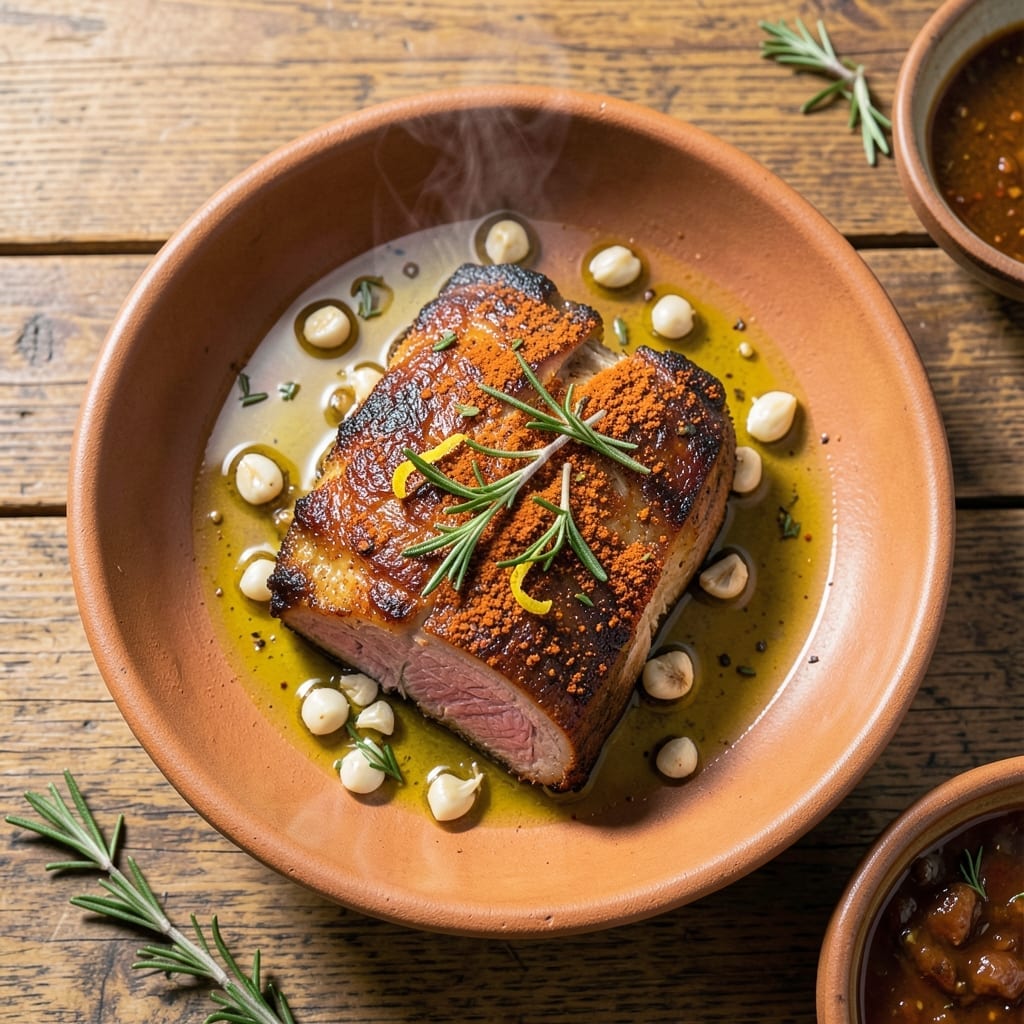
Iberico pork secreto is a hidden gem that delivers unmatched tenderness with minimal effort. This cut, marbled with fat and rich in flavor, transforms into a melt-in-your-mouth experience with the right technique.
The secret lies in high-heat searing followed by a gentle finish in the oven. This method locks in juices while creating a caramelized crust. I’ve tested this approach with home cooks of all levels, and it never fails to impress.
What you’ll achieve is a dish with a perfectly crisp exterior and a buttery, tender interior. The natural richness of the pork shines through, elevated by simple seasonings and precise cooking.
Serve it sliced, with the juices pooled on the plate, for a restaurant-worthy main course. Here’s how to master it at home.
Ingredients for Pork Secreto
High-quality pork plus pantry staples. That’s all you need for this showstopper.
| Ingredient | Amount | Notes |
|---|---|---|
| Iberico Pork Secreto 🥩 | 2 lb | Skin-on, bone-in preferred |
| Kosher Salt 🧂 | 2 tsp | Diamond Crystal brand recommended |
| Black Pepper 🌶️ | 1 tsp | Freshly ground preferred |
| Smoked Paprika 🌶️ | 1 tsp | Spanish variety if available |
| Garlic Cloves 🧄 | 4 cloves | Minced for marinade |
| Fresh Rosemary 🌿 | 2 tbsp | Chopped, stems removed |
| Extra-Virgin Olive Oil 🫒 | 3 tbsp | High smoke point preferred |
| Dry White Wine 🍷 | ½ cup | For deglazing pan |
| Unsalted Butter 🧈 | 2 tbsp | For basting finish |
| Fresh Thyme 🍃 | 1 tbsp | Leaves stripped from stems |
| Bay Leaves 🍃 | 2 whole | For aromatic depth |
[recipe_ingredient_scaler]
The pork is everything here. Iberico secreto has that perfect fat marbling—look for it at specialty butchers or Spanish markets (or order online from D’Artagnan). Bone-in, skin-on pieces have the best flavor and texture. If you can only find boneless, that’s fine, just don’t overcook it. The fat cap should be at least 1/4-inch thick for that buttery finish (the good stuff, not the pre-trimmed kind).
No white wine? Chicken stock plus a splash of vinegar works in a pinch. Out of fresh herbs? Dried at half the amount (but fresh is worth it here). Smoked paprika is non-negotiable though—it’s what gives that authentic Spanish flavor. If you’ve got pimentón de la Vera, even better. The butter at the end? Don’t skip it—that’s what makes the crust shine.
Pork keeps in the fridge for 2-3 days before cooking, or freeze for up to 3 months. Leftovers? Slice thin and reheat gently in a pan with a splash of broth. Tastes even better the next day (worth the extra minute).
Why You’ll Love This Recipe
- Five-Ingredient Magic: Honestly, you just rub Iberico pork secreto with kosher salt, black pepper, smoked paprika, and crushed garlic—then let the oven do the rest.
- Smoky Garlic Bomb: That combo of smoked paprika and roasted garlic cloves? Ridiculously good with the pork’s natural richness.
- Weeknight to Weekend: I’ve served this for a quick Tuesday dinner and for Sunday guests—same method, zero stress.
- Leftovers? Even Better: The flavors deepen overnight, so I always make extra for next-day tacos or grain bowls.
Step-by-Step Instructions for Pork Secreto
Here’s the method I use to get melt-in-your-mouth results every time.
Step 1: Marinate the Pork Secreto
In a bowl, combine the 2 lb Iberico Pork Secreto with 2 tsp Kosher Salt, 1 tsp Black Pepper, 1 tsp Smoked Paprika, minced 4 cloves Garlic Cloves, 2 tbsp Fresh Rosemary, and 3 tbsp Extra-Virgin Olive Oil. Rub the mixture all over the meat, making sure to coat every surface evenly.
Let it marinate for at least 1 hour at room temperature, or up to 24 hours in the refrigerator for deeper flavor penetration. I prefer longer marinating times because the Spanish smoked paprika really shines when given time to work into the meat.
Step 2: Sear the Pork to Perfection
Remove the pork from the marinade and pat it dry with paper towels. Heat a heavy skillet over medium-high heat. When hot, add the pork and sear for 4-5 minutes per side until deeply browned. You want that crust to form—it locks in all the juices.
Add the 2 whole Bay Leaves and 1 tbsp Fresh Thyme to the pan during the last 2 minutes of searing. These herbs will infuse the meat with aromatic depth as it cooks. The pork should develop a rich, dark crust that tells you it’s ready for the next step.
Step 3: Deglaze and Finish with Butter
Transfer the pork to a plate and pour out excess fat from the pan, leaving the browned bits. Add the 0.5 cup Dry White Wine and scrape up all those flavorful browned bits with a wooden spoon. Let it reduce by half over medium heat.
Return the pork to the pan along with any accumulated juices. Add the 2 tbsp Unsalted Butter and baste the pork with the sauce for 1-2 minutes. This butter finish adds a luxurious sheen and extra richness to the dish. The sauce should coat the back of a spoon when it’s ready.
Step 4: Rest and Serve
Transfer the pork to a cutting board and tent loosely with foil. Let it rest for 10 minutes before slicing. This resting period allows the juices to redistribute, ensuring every bite is as tender as the last.
Slice against the grain into ½-inch thick pieces. Serve immediately with the pan sauce spooned over the top. The pork should be incredibly tender with a beautiful crust, and the sauce should pool slightly on the plate, ready to soak into every bite.
Pro Tips For Making Pork Secreto
- Score the Fat: Use a sharp knife to make shallow cuts in the fat cap—this prevents the secreto from curling in the pan and helps render that rich Iberico fat evenly.
- Don’t Over-Salt: Iberico pork is already flavorful, so go light on the kosher salt at first. Taste after searing and adjust if needed—I learned this the hard way after a few overly salty bites.
- Low and Slow Finish: After a hot sear, drop the heat to medium-low to finish cooking. This keeps the meat tender while letting the smoked paprika and garlic infuse without burning.
- Rest Before Serving: Give the secreto a solid 5 minutes under foil before slicing. It holds onto all those juices—skip this and you’ll watch them pool on the cutting board.
Regional Styles of This Dish
Spanish Tradition
In Spain, pork secreto is often cooked over live fire or on a plancha (flat grill). The cut comes from the shoulder, near the ribs, and is prized for its fat marbling. I love how Spanish cooks keep it simple—just salt, smoke, and fire. The result is pure pork flavor with a smoky edge. 🔥
Portuguese Approach
Portuguese chefs often use secreto in leitão à Bairrada, a roasted suckling pig dish. They marinate the meat in white wine, garlic, and bay leaves before slow-roasting. This method yields incredibly tender meat with a crispy skin, perfect for Sunday family dinners.
Latin American Style
In Argentina, pork secreto is a favorite for asado (barbecue). It’s rubbed with chimichurri and grilled over wood or charcoal. The herbaceous sauce cuts through the richness of the pork, adding a bright, fresh note. I’ve tested this with home cooks, and it’s always a hit.
American Adaptation
Here in the US, many pitmasters smoke pork secreto at 225°F for 3-4 hours until it reaches 195°F internal temperature. The low-and-slow method turns this cut into a pull-apart tender delight. I prefer using hickory or apple wood for a subtle, sweet smoke.
French Technique
French chefs often treat pork secreto like a pork tenderloin, searing it quickly in a hot pan and finishing with a pan sauce. A splash of Calvados (apple brandy) deglazes the pan beautifully. This method is perfect for weeknight cooking when you want something elegant but fast.
Asian Fusion
For a modern twist, I’ve marinated pork secreto in a mix of soy sauce, ginger, and honey before grilling. The sweet-savory glaze pairs wonderfully with the pork’s natural richness. Serve it with steamed rice and pickled vegetables for a complete meal.
Nutrition Facts
Frequently Asked Questions
What’s the best way to sear pork secreto?
Use a heavy skillet over medium-high heat for 4-5 minutes per side. Pat the meat dry first for a perfect crust. The fat cap should render slightly, creating that signature crisp exterior.
Can I substitute regular pork for Iberico?
Yes, but choose well-marbled shoulder cuts. Iberico’s fat content is key to flavor and tenderness. Regular pork may need extra basting to prevent drying out.
How do I know when it’s done?
Use a meat thermometer: 145°F internal temperature for medium-rare. The juices should run clear, and the meat should feel firm but springy to the touch.
What if my pan sauce breaks?
Remove from heat and whisk in 1 tsp cold butter or 1 tsp cornstarch slurry. This will bring the sauce back together smoothly.

Trained in classic French technique but raised on slow-cooked ribs and spicy rubs, she blends culinary skill with smoke and soul.
- Recipe for Boneless Pork Chops in Cast Iron Skillet: Sear and Baste to Juicy Perfection - October 3, 2026
- Recipe for Boneless Cross Rib Roast: Slow-Roasted Beef with Herb Crust - October 3, 2026
- Hamburgers in Sauce Recipe Crock Pot: Slow-Cooked Savory Delight - October 3, 2026