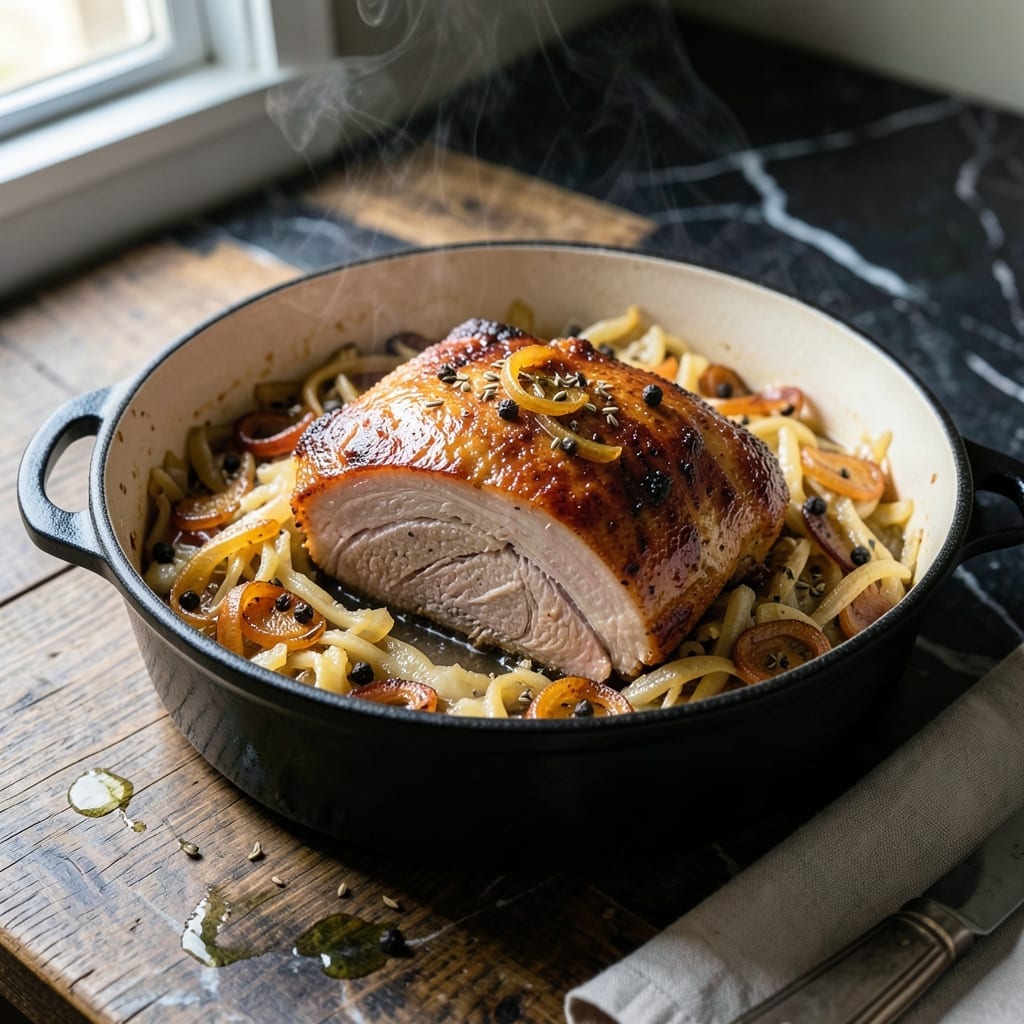
This oven-baked pork shoulder and sauerkraut delivers the fall-off-the-bone tenderness I remember from my grandmother’s kitchen. Her handwritten notes never specified times or temperatures, just “cook until it gives.”
I’ve decoded her intuitive method into a foolproof approach that works in any home oven. The slow roasting process transforms tough pork into succulent meat while the sauerkraut develops deep, tangy complexity.
What emerges is tender pork with a rich, caramelized exterior and sauerkraut that’s mellowed into sweet-tart perfection. The flavors meld beautifully, creating a dish that’s hearty and comforting without being heavy.
Serve with mashed potatoes or crusty bread to soak up every last bite. This is home cooking at its most satisfying.
Ingredients for Pork Shoulder and Sauerkraut Recipe in Oven
A few hearty ingredients transform into that nostalgic, melt-in-your-mouth dish you remember from Sunday dinners.
| Ingredient | Amount | Notes |
|---|---|---|
| Pork Shoulder 🐖 | 3 lb | Bone-in, skin-on preferred |
| Sauerkraut 🥬 | 2 lb | Drained, rinsed lightly |
| Yellow Onion 🧅 | 1 whole | Thinly sliced |
| Granulated Sugar 🍚 | 2 tbsp | Balances acidity |
| Caraway Seeds 🌿 | 1 tsp | Essential for authentic flavor |
| Black Peppercorns 🌶️ | 1 tsp | Lightly crushed |
| Juniper Berries 🍇 | 6 pieces | Optional, for complexity |
| Bay Leaves 🌿 | 2 whole | Dried, for aroma |
| Apple Juice 🍏 | 1 cup | Adds natural sweetness |
| Chicken Stock 🍲 | 1 cup | Low-sodium preferred |
| Olive Oil 🫒 | 2 tbsp | For searing pork |
| Kosher Salt 🧂 | 1 tbsp | Adjust to taste |
| Dijon Mustard 🟡 | 1 tbsp | For glaze finish |
[recipe_ingredient_scaler]
The pork shoulder is non-negotiable here. Bone-in, skin-on gives the best texture—look for 3-4 lbs at your butcher or Whole Foods for quality. I always grab mine from the local farm stand when available (the marbling is better). Sauerkraut matters too—avoid canned, go for bagged in the refrigerated section. Boar’s Head or Silver Floss are reliable brands.
No caraway seeds? Fennel seeds at half the amount work in a pinch. Juniper berries can be skipped, but they add that subtle piney depth I remember from my grandmother’s version. Apple cider instead of juice works too—just reduce the sugar slightly. If you’re out of Dijon, whole-grain mustard gives a nice texture. The bay leaves? Fresh or dried, both are fine.
Leftovers taste even better the next day. Stores in the fridge for 4-5 days or freezes for 3 months. I portion mine into containers—perfect for quick weeknight dinners (trust me, it reheats beautifully).
Why You’ll Love This Recipe
- Set and Forget: Honestly, I just toss everything in the pan, slide it in the oven, and let it do its thing for hours.
- Sweet and Tangy: The sugar caramelizes with the sauerkraut and caraway seeds, creating this ridiculously good balance of flavors.
- Feeds a Crowd: I make this for Sunday dinners—it stretches easily for guests and tastes even better the next day.
- Budget Friendly: Pork shoulder is cheap, sauerkraut lasts forever, and one batch gives us leftovers for sandwiches all week.
Step-by-Step Instructions for Pork Shoulder and Sauerkraut in Oven
This method guarantees tender meat and perfectly balanced tangy flavors every time.
Step 1: Sear the Pork Shoulder for Depth
Pat the 3 lb Pork Shoulder completely dry with paper towels, then season all over with the 1 tbsp Kosher Salt. Heat the 2 tbsp Olive Oil in a Dutch oven over medium-high heat until shimmering.
Sear the pork on all sides for 8-10 minutes total, turning occasionally, until deeply browned. You’ll see the fat start to render and the surface develop a rich mahogany crust—this creates the flavor foundation for your dish. Don’t rush this step; proper searing ensures the meat won’t stick during braising.
Step 2: Build the Aromatic Base
Remove the pork and set aside. In the same pot, add the 1 whole Yellow Onion, 2 tbsp Granulated Sugar, 1 tsp Caraway Seeds, 1 tsp Black Peppercorns, 6 pieces Juniper Berries, and 2 whole Bay Leaves.
Cook for 3-4 minutes until the onions soften slightly and the spices become fragrant. The sugar will start to caramelize at the edges, creating a sweet contrast to the tangy sauerkraut. Stir frequently to prevent burning.
Step 3: Combine and Braise with Liquid
Add the 2 lb Sauerkraut to the pot, spreading it evenly around the bottom. Pour in the 1 cup Apple Juice and 1 cup Chicken Stock, then nestle the pork shoulder on top of the sauerkraut mixture.
The liquid should come about halfway up the pork. If it doesn’t, add a splash more chicken stock. Bring everything to a gentle simmer, then cover the pot tightly with its lid. This traps steam, ensuring the pork stays moist as it cooks.
Step 4: Slow Cook to Perfection
Transfer the covered pot to a preheated 325°F oven. Braise for 2.5 to 3 hours, turning the pork once halfway through, until the meat is fork-tender and easily pulls apart.
You’ll know it’s done when the internal temperature reaches 195°F and the pork offers no resistance when pierced with a fork. The sauerkraut will have softened and absorbed all the rich flavors from the meat and spices.
Step 5: Finish with Mustard Glaze
Remove the pork from the oven and let it rest in the pot for 10 minutes. Transfer the pork to a serving platter. Stir the 1 tbsp Dijon Mustard into the sauerkraut and juices, then spoon the mixture around the pork.
Let the pork rest for an additional 5 minutes before serving. This final touch adds a subtle sharpness that cuts through the richness, while the resting period allows the juices to redistribute for maximum tenderness.
Pro Tips For Making Pork Shoulder And Sauerkraut Recipe In Oven
- Start Low and Slow: Cook the pork shoulder at 300°F for the first 2 hours, then drop to 275°F—this renders the fat without drying out the meat. I learned this the hard way after pulling a tough, chewy batch out of a too-hot oven.
- Rinse the Kraut: Drain and rinse the sauerkraut under cold water to cut the acidity, then squeeze out excess liquid so it doesn’t turn your dish into a watery mess.
- Skip the Dry Rub: Resist the urge to coat the pork with spices before searing—just salt and pepper work better here since caraway and sugar in the sauerkraut will carry the flavor.
- Add Onions Late: Toss the sliced yellow onions in halfway through cooking (around 2.5 hours in) so they soften without dissolving into mush. Sounds weird, but it works.
Common Mistakes When Making Great pork shoulder and sauerkraut recipe in oven
Skipping the Sear
I learned the hard way that skipping the sear means missing out on the Maillard reaction—that magical browning that creates deep, complex flavors. Without it, your pork will taste bland, even after hours in the oven. Take the 8-10 minutes to brown all sides properly. 🌡️
Underseasoning the Pork
My grandmother never measured salt, but I know she used plenty. With 3 lb of pork, 1 tbsp Kosher Salt is the minimum. Don’t be shy—this is a hearty dish that needs bold seasoning to balance the sauerkraut’s tang. Trust me, you won’t regret it.
Over-Rinsing the Kraut
Rinsing sauerkraut too thoroughly washes away the very flavor you want. A light rinse to remove excess brine is fine, but keep some of that tangy liquid. It’s packed with the 2 lb Sauerkraut‘s character and helps create the dish’s signature depth.
Wrong Oven Temperature
Too hot and the pork dries out; too low and it never gets tender. 325°F is the sweet spot for slow, even cooking. I’ve tried 300°F and 350°F—the former took forever, the latter gave me dry meat. Stick to 325°F for 2.5 to 3 hours. 🔥
Not Enough Liquid
If the liquid doesn’t come halfway up the pork, the meat will steam rather than braise. Always add extra Chicken Stock if needed. The 1 cup Apple Juice and 1 cup Chicken Stock should cover the base, but don’t hesitate to top it up.
Skipping the Rest
Cutting into the pork too soon lets all those precious juices escape. After removing from the oven, let it rest for 10 minutes in the pot, then another 5 minutes on the platter. This ensures every bite is juicy and full of flavor.
Nutrition Facts
Frequently Asked Questions
Can I use a different cut of pork?
Stick with pork shoulder for best results. Pork butt works too, but avoid lean cuts like tenderloin—they dry out. The 3 lb size with bone-in, skin-on gives the most flavor and tenderness.
Why add sugar to sauerkraut?
The 2 tbsp Granulated Sugar balances the tangy acidity and helps caramelize the onions. It mellows the sharpness without making the dish sweet. A small but important touch.
How do I know when it’s done?
Check after 2.5 hours at 325°F. The pork is ready when it reaches 195°F internally and pulls apart easily with a fork. The sauerkraut will be tender and flavorful.
Can I make this in a slow cooker?
Yes, but browning the pork first is key. Use the same ingredients and cook on low for 8 hours. The oven method gives better caramelization though.

Trained in classic French technique but raised on slow-cooked ribs and spicy rubs, she blends culinary skill with smoke and soul.
- Best Smoked Oxtail Recipe: Deep-Rich Flavor After Low-and-Slow Cooking - October 14, 2026
- Pit Boss Smoked Prime Rib Roast Recipe: Bark-to-Bone Crispness in 4 Hours - October 14, 2026
- Smoked Tuna Steak Recipe: Seared Crust Meets Silky Centers - October 14, 2026