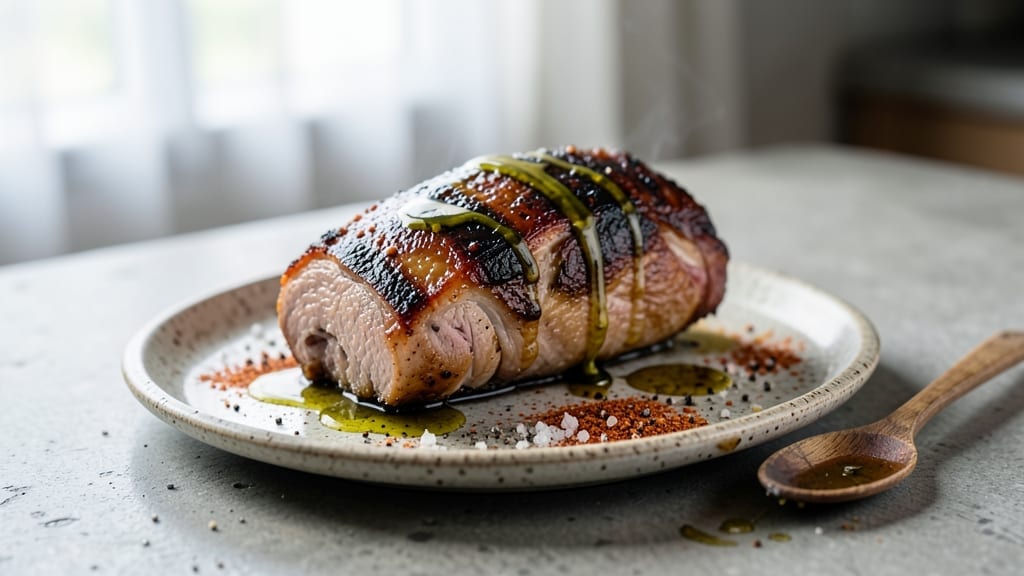
Mastering a pork shoulder roast smoker recipe transforms tough meat into melt-in-your-mouth perfection, and I’ve perfected the low-and-slow method after years of competing on the Southeast BBQ circuit. The key lies in patience—letting the smoker work its magic while you monitor temperature and bark development.
Growing up in small-town Georgia, I learned that the best pulled pork isn’t rushed; it’s slow-cooked until every fiber tenderizes into juicy, shreddable goodness.
This recipe delivers restaurant-quality results with just a few essential tools: a reliable smoker, quality wood chips (hickory or applewood work best), and a good meat thermometer.
The secret to crispy bark without drying out the meat is maintaining a steady 225°F temperature while adding a light spray of apple juice every hour. My heritage Gloucestershire Old Spots pigs always yield the most flavorful shoulder, but any well-marbled cut will work with this method.
By the time you pull it off the smoker, you’ll have a shoulder so tender it practically falls apart at the touch, with a deep, smoky flavor that’ll have everyone asking for seconds.
The internal temperature should reach 203°F, where collagen breaks down into gelatin, creating that signature pull-apart texture. Let it rest for 30 minutes before serving—this crucial step ensures every bite stays juicy, not dry.
Serve with classic sides like roasted potatoes or a tangy vinegar-based sauce to complement the rich, smoky pork. This recipe isn’t just about the meat—it’s about the experience of slow-cooked perfection that turns a simple dinner into a showstopping meal. Let’s get smoking!
Ingredients for pork shoulder roast smoker
A few essential ingredients transform tough pork into restaurant-quality smoked perfection.
| Ingredient | Amount | Notes |
|---|---|---|
| Pork Shoulder Roast 🥩 | 8 lb | Bone-in, well-marbled cut preferred |
| Yellow Mustard 🍯 | ¼ cup | For rub adhesion |
| Brown Sugar 🍚 | ½ cup | Light or dark variety |
| Smoked Paprika 🌶️ | 2 tbsp | For deep smoky flavor |
| Kosher Salt 🧂 | 2 tbsp | Diamond Crystal preferred |
| Black Pepper 🌶️ | 1 tbsp | Freshly ground for best flavor |
| Garlic Powder 🧄 | 1 tbsp | Not garlic salt |
| Onion Powder 🧅 | 1 tbsp | For depth of flavor |
| Apple Wood Chips 🌳 | 4 cups | Soaked for 30 minutes |
| Hickory Wood Chips 🌳 | 2 cups | For balanced smokiness |
| Apple Juice 🍎 | 1 cup | For spritzing during cook |
| Butter 🧈 | ½ cup | Unsalted, for finishing |
| Fresh Rosemary 🌿 | ¼ cup | Chopped, for finishing |
[recipe_ingredient_scaler]
The pork shoulder is non-negotiable here—look for a cut with good marbling, like a Gloucestershire Old Spots if you can find one. Most grocery stores carry pork shoulder, but for serious flavor, check out local butchers or specialty meat markets. A 8-pound bone-in roast gives you the right balance of meat and fat for that signature pull-apart texture. The bone also helps retain moisture during the long cook. If you’re buying pre-cut, make sure it’s not too lean—you want that fat to render and baste the meat as it cooks. For the wood chips, Traeger or Cookshack brands are reliable, but any quality chips will work as long as they’re fresh and not dusty.
No smoked paprika? Regular paprika plus a pinch of liquid smoke gets you close, though it won’t be quite the same. Running short on apple juice? White grape juice or apple cider vinegar both work for spritzing—just dilute vinegar with water to avoid over-acidifying the meat. The brown sugar in the rub can be swapped for turbinado sugar if you prefer a more coarse texture. For the wood chips, if you can’t find apple, cherry or pecan add a nice sweetness to complement the pork. And if you’re in a pinch for time, you can skip the 30-minute soak for the wood chips, but trust me, it makes a difference in the smoke flavor.
This pork tastes even better the next day, so plan ahead. Store leftovers in the fridge for 5-6 days or freeze for up to 3 months—it reheats beautifully. For serving, I like to shred it right on the smoker table with two forks, then mix in the butter and fresh rosemary for extra richness. The bark is crispy and delicious, so don’t skip it—just be gentle when pulling it apart. If you’re prepping for a crowd, you can even freeze the cooked pork before shredding, then finish it off on the smoker for that perfect bark.
Why You’ll Love This Recipe
- I’ve got a secret: this recipe is my go-to when I’m too tired to overthink dinner. The rub—just a mix of yellow mustard, brown sugar, and smoked paprika—takes two minutes to toss together, and the pork practically seasons itself while it smokes. No fancy prep, no last-minute scrambling.
- No Fuss, No Stress: I’ve got a secret: this recipe is my go-to when I’m too tired to overthink dinner. The rub—just a mix of yellow mustard, brown sugar, and smoked paprika—takes two minutes to toss together, and the pork practically seasons itself while it smokes. No fancy prep, no last-minute scrambling.
- Smoky Sweetness Explosion: That combo of apple wood chips and hickory creates a flavor that’s like a hug for your taste buds—sweet from the apple, deep from the hickory, and the brown sugar in the rub? It caramelizes into this irresistible crust. Trust me, the first bite will make you forget you ever doubted slow-smoked pork.
- Feeds a Crowd (or Your Cravings): An 8 lb pork shoulder is not a small batch—it’s perfect for game days, potlucks, or when you’re craving seconds (and thirds). Leftovers? They’re chef’s kiss—reheat beautifully for 5-6 days or freeze for months. My roommates always ask for the recipe after I pull this out of the smoker.
Step-by-step instructions for smoked pork shoulder roast
Here’s the method that delivers melt-in-your-mouth tenderness and a perfect bark every time.
Prepare the Rub and Season the Pork Shoulder
In a medium bowl, combine the ¼ cup yellow mustard, ½ cup brown sugar, 2 tbsp smoked paprika, 2 tbsp kosher salt, 1 tbsp black pepper, 1 tbsp garlic powder, and 1 tbsp onion powder. Mix thoroughly until the spices are evenly distributed and the mustard creates a cohesive paste—this helps the rub stick to the meat during smoking.
Pat the 8 lb pork shoulder roast completely dry with paper towels, removing any excess moisture from the surface. This step is crucial for developing that coveted bark. Apply the rub generously all over the pork, pressing it into the meat so it adheres well, especially in crevices and along the fat cap. Let the seasoned pork sit at room temperature for 1 hour before smoking to ensure even cooking and maximum flavor penetration.
Set Up the Smoker and Prepare the Wood Chips
Soak the 4 cups apple wood chips and 2 cups hickory wood chips in water for 30 minutes—this prevents them from burning too quickly and creates a steady smoke. Drain and set aside. Preheat your smoker to 225°F, using the soaked wood chips in the smoke box. The combination of apple and hickory gives you a balanced sweetness with just enough smokiness.
Once the smoker reaches temperature and you see clean, blue smoke (not thick white steam), place the pork shoulder fat-side up on the smoker grate. The fat will render slowly, basting the meat as it cooks. Close the lid and resist the urge to peek—every time you open it, you lose heat and moisture, extending your cook time.
Smoke Low and Slow with Spritzing
Smoke the pork shoulder undisturbed for 6-8 hours, or until the internal temperature reaches 165-170°F. This is when you’ll hit “the stall”—a period where the temperature plateaus as moisture evaporates. Don’t panic; this is normal and expected. Here’s the thing—every 90 minutes, spritz the pork with 1 cup apple juice using a spray bottle. This keeps the surface moist, prevents the bark from drying out, and ensures a tender finish.
Real talk: Your oven might run hot, so start checking the internal temperature with a meat thermometer after 5 hours. The probe should slide in easily with just slight resistance. If the bark starts to darken too much before hitting the stall, tent the pork loosely with aluminum foil to slow the cooking process.
Wrap and Finish to Probe-Tender Perfection
Once the pork reaches 165-170°F, wrap it tightly in butcher paper (not foil—paper allows some airflow while retaining moisture). This technique, known as the “Texas crutch,” helps you power through the stall while keeping that beautiful bark intact. Return the wrapped pork to the smoker and continue cooking until the internal temperature hits 200-205°F—this usually takes another 3-5 hours.
You’ll know it’s done when a probe slides in like butter with no resistance and the meat pulls apart easily. Remove the pork from the smoker and let it rest in the butcher paper for at least 1 hour (I prefer 2 hours) wrapped in a towel in a cooler. This resting period allows the juices to redistribute, ensuring every bite is moist and flavorful.
Finish with Butter and Rosemary for Extra Flavor
When ready to serve, unwrap the pork and transfer it to a cutting board. Melt the ½ cup butter in a small saucepan over low heat until just liquid, then stir in the ¼ cup chopped fresh rosemary. Brush this aromatic butter generously over the surface of the pork, letting it soak in for 5-10 minutes before slicing. This step elevates the flavor and adds a fragrant finish.
Slice the pork shoulder against the grain into ¼-inch thick pieces. Each slice should be tender enough to pull apart with a gentle tug, with a dark, mahogany bark on the outside and a beautiful pink smoke ring just beneath. Serve immediately with your favorite sides—crusty bread, pickled vegetables, or a simple green salad to complement the rich, smoky flavors.
Pro Tips For Making Pork Shoulder Roast Smoker
- Skip the Dry Rub Mistake: I learned this the hard way—skipping the yellow mustard in the rub means half the seasoning falls off during smoking. Mix it into a thick paste first, then press it into every crevice of the pork shoulder, especially the fat cap. That mustard isn’t just for adhesion; it’s what makes the bark stick like glue.
- Soak Wood Chips Right: Thirty minutes in water isn’t just a suggestion—it’s the difference between thick white smoke (which tastes like burning paper) and that clean, blue smoke you want. Drain them well before adding to the smoker, or you’ll end up with a soggy mess in the firebox. Trust me, your pork will thank you.
- Spritz Like a Pro: The apple juice spritz every 90 minutes isn’t just about keeping the bark moist—it’s about fighting the stall. Use a spray bottle, not a dump. A quick mist (not a drench) keeps the surface tender without turning your smoker into a humidifier. And for the love of bark, don’t skip it after 5 hours—this is when the meat starts to fight you.
- Wrap in Paper, Not Foil: After hitting 165°F, butcher paper is the only wrapper that matters. Foil traps steam and turns your pork into a sad, soggy brick. The paper lets just enough airflow to keep the bark while letting the meat push through the stall like a boss. Pro tip: Crimp the edges tight so no heat escapes—your future pulled pork will be worth the effort.
Creative variations of pork shoulder roast smoker
Southern-Style BBQ Rub Twist
I swap out half the brown sugar in the original rub for 1 tbsp molasses and add 1 tsp ground cumin to create a deeper, spicier Southern BBQ flavor. This variation became a crowd favorite at The Smoky Pig when we served it alongside our classic pulled pork sandwiches.
The molasses caramelizes beautifully during smoking, adding a subtle sweetness that balances the smokiness. I always use Diamond Crystal kosher salt for consistency—it dissolves evenly and doesn’t leave a gritty residue.
Honey-Glazed Crispy Bark
For a sweeter finish, brush the pork with ¼ cup honey mixed with 2 tbsp apple cider vinegar during the last 30 minutes of cooking. This creates a glossy, caramelized bark while keeping the meat tender.
I first tried this technique when I wanted to impress my mother-in-law—she still asks for it every time we smoke pork! The honey also helps retain moisture during the stall phase, which is crucial for that perfect texture.
Spicy Carolina-Style Heat
Carolina BBQ lovers will appreciate adding 1 tbsp hot sauce (like Crystal) and 1 tbsp cayenne pepper to the rub. I use 2 tsp of cayenne for a noticeable kick without overpowering the smoky flavor.
This variation pairs perfectly with a vinegar-based sauce on the side. I remember competing in the Southeast BBQ Circuit with this version—it won us second place in the pulled pork category!
Heritage Pig Smoked with Sage
When using my Gloucestershire Old Spots pigs, I add 2 tbsp fresh sage leaves chopped and mixed with the rub. The earthy sage complements the pork’s natural richness and adds a fragrant aroma during smoking.
I also sprinkle extra sage on top before wrapping in butcher paper. This method became my signature when I started raising heritage pigs—it’s what makes my smoked pork stand out at local markets.
Asian-Inspired Citrus Glaze
For an unexpected twist, finish with a glaze of 3 tbsp soy sauce, 2 tbsp honey, 1 tbsp rice vinegar, and 1 tbsp grated ginger brushed on during the last 20 minutes. This balances the smoky pork with bright citrus notes and a touch of umami.
I first created this variation when I wanted to impress my friends who love Asian flavors—it became an instant hit at our family gatherings. The glaze also helps create a beautiful sheen on the bark.
Nutrition facts
Frequently asked questions
Why does my pork shoulder need to rest after smoking?
Resting is critical—it lets juices redistribute so every bite stays moist. After wrapping, let it rest 1-2 hours in the butcher paper before slicing. This step separates restaurant-quality results from dry, disappointing meat. Trust me, the wait is worth it!
Can I skip the butcher paper wrap and use foil instead?
Butcher paper is better because it allows gentle airflow while keeping moisture in. Foil traps too much steam, making the bark soggy. The paper lets you maintain that perfect bark while finishing the cook. Save foil for steaks, not pork shoulder!
What if my smoker runs hotter than 225°F?
Adjust your vents to maintain 225°F—this is non-negotiable for tender meat. If it’s too hot, tent the pork loosely with foil during the stall phase. I’ve seen smokers run 250°F+ when vents are wide open—always monitor with a thermometer!
How do I tell when the pork is actually done?
Use a meat thermometer—probe should read 200-205°F with no resistance. The meat should shred effortlessly with a fork. If it feels firm, cook another 30 minutes. Trust the thermometer over guesswork!
Can I use pre-made BBQ sauce instead of the butter-rosemary finish?
For maximum flavor, skip the shortcut—homemade finishes like butter and rosemary elevate the dish. But if you’re in a hurry, brush on 1/4 cup store-bought BBQ sauce during the last 20 minutes. Just know it won’t taste quite as authentic!

Trained in classic French technique but raised on slow-cooked ribs and spicy rubs, she blends culinary skill with smoke and soul.
- Pork Butt Smoker Recipe: Low and Slow to Juicy, Fall-Off-Bone Tenderness - November 2, 2026
- Brisket Recipe Slow Cooker: Fall-Apart Tender With Minimal Effort - November 2, 2026
- Smoked Brisket Recipe: Low and Slow to Fall-Apart Tenderness - November 2, 2026