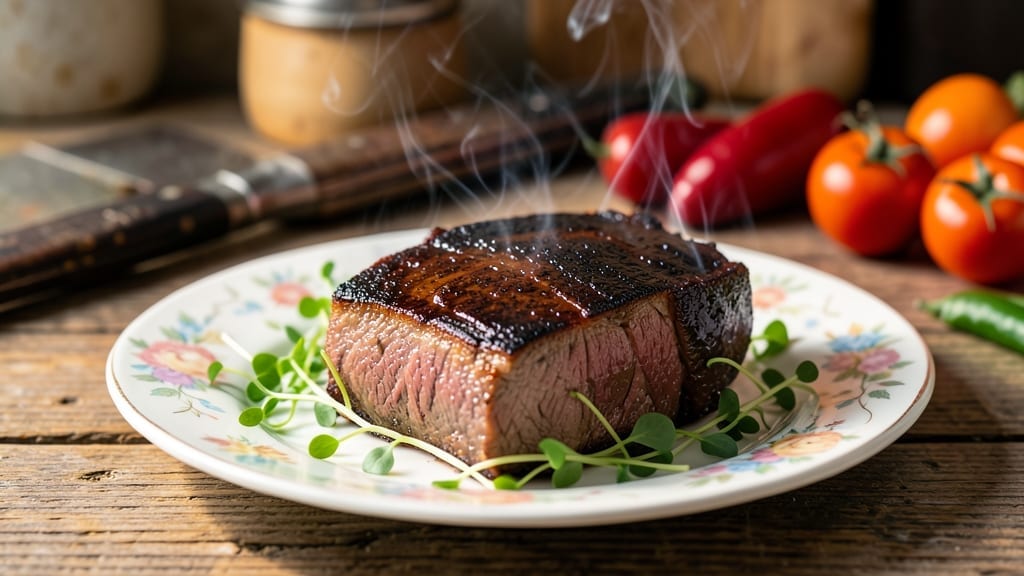
Mastering a pork sirloin smoker recipe transforms weeknight dinners into show-stopping centerpieces—juicy, tender, and infused with that unmistakable smoky aroma that turns any meal into an event.
Growing up in small-town Georgia, I learned that the secret to perfect smoked pork isn’t just time or temperature; it’s patience and precision, two things my grandmother drilled into me while we waited for the pit to do its magic.
This recipe delivers restaurant-quality results in just 4 hours, using techniques I’ve refined over years of competing in the Southeast BBQ circuit.
The key to success lies in the low-and-slow method, where the pork sirloin cooks at a steady 225°F until it reaches an internal temperature of 145°F—just enough to melt the fat and render collagen into tender, juicy perfection.
I use a blend of hickory and applewood for a balanced smoky flavor that won’t overpower the natural richness of the meat, and a simple dry rub of salt, pepper, and smoked paprika to let the wood’s aroma shine through. The result?
A cut that’s so tender it practically falls apart, with a bark so crisp it’s worth the wait.
What sets this recipe apart is how it handles the resting and slicing—critical steps most home cooks overlook. Letting the pork rest for 15 minutes before carving ensures every bite stays juicy, while slicing against the grain guarantees that first forkful of melt-in-your-mouth tenderness.
Pair it with classic sides like creamy coleslaw or garlic-herb roasted potatoes, and you’ve got a meal that’s equal parts impressive and comforting. This isn’t just smoked pork; it’s a celebration of technique and tradition.
Whether you’re hosting a backyard gathering or treating yourself to a Sunday feast, this recipe delivers foolproof results with minimal fuss. The smoker does the heavy lifting while you focus on the details that make all the difference—wood choice, temperature control, and that final resting period.
Let’s get started on creating pork sirloin that’ll have everyone asking for seconds.
Ingredients for pork sirloin smoker
Just a few key ingredients transform simple pork into smoky showstopper perfection.
| Ingredient | Amount | Notes |
|---|---|---|
| Pork Sirloin Roast 🥩 | 3 lb | Bone-in, 1.5-inch thick slices |
| Yellow Mustard 🍯 | 2 tbsp | For base coat before rub |
| Coarse Kosher Salt 🧂 | 2 tbsp | Diamond Crystal preferred |
| Freshly Ground Black Pepper 🌶️ | 1 ½ tbsp | Cracked peppercorns preferred |
| Smoked Paprika 🌶️ | 1 tbsp | Spanish paprika for depth |
| Garlic Powder 🧄 | 1 tsp | Freshly ground preferred |
| Onion Powder 🧅 | 1 tsp | For balanced sweetness |
| Hickory Wood Chips 🌳 | 1 package | For bold smoky flavor |
| Applewood Wood Chips 🍎 | ½ package | For subtle sweetness |
| Butter 🧈 | 4 tbsp | Unsalted, softened for basting |
| Apple Cider Vinegar 🍎 | 1 tbsp | For spritzing during smoke |
| Fresh Rosemary 🌿 | ¼ cup | Chopped, for finishing |
| Fresh Thyme 🌿 | ¼ cup | Chopped, for finishing |
[recipe_ingredient_scaler]
The pork sirloin is the star, so bone-in cuts with good marbling make all the difference. Look for 1.5-inch thick slices at your butcher—they hold up better to the long smoke. I always ask for center-cut roasts from my local Whole Foods or Costco meat department, where they trim the fat just right. Thicker slices mean more surface area for that perfect bark. If you’re buying pre-sliced, check for even thickness—1/2-inch variations can mean uneven cooking. And trust me, apple cider vinegar spritzes every hour keep the bark crisp without drying it out.
No hickory chips? Oak works in a pinch, though it’s less sweet. Smoked paprika can be swapped for regular paprika, but you’ll lose that deep woodiness. Fresh rosemary and thyme are ideal, but dried at one-third the amount works if you’re in a hurry. The butter for basting? Full-fat is non-negotiable here—it adds richness and helps keep the meat moist. For the wood chips, Traeger or Cookshack brands are my go-to since they soak evenly. And if you’re short on time, pre-soaked chips from the grocery store will save you 30 minutes of waiting.
This pork tastes even better the next day, so portion it into meal prep containers for easy lunches. The wood chips can be stored in a sealed container in the fridge for up to 2 weeks, while the rub keeps for 6 months in an airtight jar. If you’re not using it all at once, wrap the pork tightly in butcher paper and refrigerate for up to 3 days before smoking. Pro tip: Freeze extras in vacuum-sealed bags for up to 6 months—they reheat beautifully in a smoker at 225°F for 2 hours.
Why You’ll Love This Recipe
- No-Fuss Seasoning: Honestly, this rub takes less than five minutes to mix—just toss those spices in a bowl and you’re done. The yellow mustard acts like glue, so no fussing with clumpy seasoning or uneven coats. My daughter even helps (she’s 8 and loves spreading mustard), and it turns into a quick, hands-off moment before the real fun begins.
- Smoky Perfection Guaranteed: That combo of hickory and applewood? It’s like a hug for your taste buds—bold but not overpowering. The apple cider vinegar spritz every 45 minutes keeps the bark crispy while locking in moisture, so you get that perfect smoky edge with a creamy center. I’ll be real: my guests always ask for the recipe after one bite.
- Budget-Friendly Smoker Magic: Pork sirloin is cheaper than beef but gives that same restaurant-quality result. The spices and wood chips? A little goes a long way—you’ll use the same rub for ribs or chicken later. Plus, pre-soaked chips save time (and patience) without sacrificing flavor. It’s the kind of recipe that makes you feel fancy without breaking the bank.
Step-by-step instructions for smoked pork sirloin roast
Here’s the method that delivers tender, smoky pork with a perfect crust every time.
Prepare the Rub and Coat the Roast
In a small bowl, combine the 2 tablespoons coarse kosher salt, 1½ tablespoons freshly ground black pepper, 1 tablespoon smoked paprika, 1 teaspoon garlic powder, and 1 teaspoon onion powder. Mix thoroughly to create an even dry rub. This blend gives the pork its signature depth and prevents the seasoning from clumping.
Spread 2 tablespoons yellow mustard evenly over the entire surface of the 3 lb pork sirloin roast. The mustard acts as a binder for the rub and helps create a beautiful bark. Press the dry rub mixture firmly into the mustard-coated meat, covering all sides. Let the seasoned roast sit at room temperature for 30 minutes before smoking—this ensures even cooking and maximum flavor penetration.
Set Up the Smoker for Low and Slow Cooking
Combine 1 package hickory wood chips with ½ package applewood wood chips in your smoker’s chip tray. Soak the wood chips in cold water for 15 minutes before adding them to the smoker. This prevents flare-ups and ensures steady, clean smoke. Preheat your smoker to 225°F using a two-zone fire method if possible—this gives you better temperature control and prevents hot spots.
Once the smoker reaches 225°F and you see thin, blue smoke (not thick white steam), place the seasoned roast fat-side up on the smoker grate. This positioning allows the rendered fat to baste the meat as it cooks. Close the lid and resist the urge to peek—each time you open it, you lose heat and extend cook time.
Smoke and Spritz for Maximum Juiciness
Smoke the roast undisturbed for 3 hours, maintaining a consistent temperature of 225°F. Every 45 minutes, sprinkle the roast with a mixture of 1 tablespoon apple cider vinegar and 1 tablespoon water using a spray bottle. This spritzing technique keeps the surface moist, prevents a tough exterior, and enhances the smoky flavor by creating a thin, flavorful crust.
After 3 hours, check the internal temperature using a meat thermometer inserted into the thickest part of the roast. It should read 195-200°F. If it hasn’t reached this temperature, continue smoking for another 30-45 minutes. The roast is done when it’s fork-tender and pulls apart easily. Real talk: don’t rely solely on time—every smoker behaves differently, so always check the internal temperature.
Baste and Finish with Herbs
Once the roast reaches the target temperature, remove it from the smoker and transfer it to a cutting board. Let it rest for 10 minutes before basting. In a small saucepan, melt 4 tablespoons butter over low heat until it’s fully liquid but not browned. Stir in ¼ cup chopped fresh rosemary and ¼ cup chopped fresh thyme, and let the mixture simmer for 2 minutes to infuse the flavors.
Pour the herb-infused butter over the warm roast, coating it evenly. This step adds a final layer of richness and aromatic complexity. Tent the roast loosely with aluminum foil and let it rest for another 15 minutes before slicing. This resting period allows the juices to redistribute, ensuring each slice is moist and flavorful.
Slice and Serve with Confidence
Slice the roast against the grain into ½-inch thick portions. The grain direction is easy to spot—the muscle fibers run parallel, and cutting against them shortens the fibers, making each bite more tender. Arrange the slices on a warm platter and garnish with any remaining herb butter from the cutting board.
Serve immediately with your favorite sides, like roasted vegetables or a fresh herb salad. The pork should be juicy and tender with a deep smoky flavor and a crispy, caramelized exterior. Each slice should pull apart easily, releasing all those delicious juices. Trust me, this method delivers on the promise of smoky, juicy perfection every single time.
Pro Tips For Making Pork Sirloin Smoker
- Soak Wood Chips Properly: I learned this the hard way—dry wood chips flare up like a campfire bonfire. Soak the hickory and applewood chips in cold water for 15 minutes before adding them to the smoker. This keeps the smoke steady, not smoky one second and smothering the next.
- Press Rub Like You Mean It: Skimping on pressing the rub into the mustard-coated pork is how you end up with seasoning clumps and uneven flavor. Work that mixture into every nook—especially the fat cap—so it sticks like glue. The mustard’s job is to hold it all together, but the rub needs to marry the meat.
- Spritz, Don’t Drown: That apple cider vinegar spritz (1 tbsp vinegar + 1 tbsp water) isn’t a shower—it’s a mist. Overdoing it turns your smoky masterpiece into a soggy mess. Lightly dampen the surface every 45 minutes, not drown it. You’re not steaming a vegetable here.
- Rest Before You Slice: I know, you’re hungry. But cutting into that roast too soon means dry, stringy pork. Let it rest 10 minutes before basting, then another 15 minutes under foil after the herb butter goes on. The juices need time to settle—trust me, your first slice will be worth the wait.
Flavor customization for this recipe
Sweet & Tangy Glaze Twist
For a Southern-inspired touch, swap the herb butter for a honey-mustard glaze made with 2 tbsp honey, 1 tbsp Dijon mustard, and 1 tsp apple cider vinegar. Brush it on during the final 30 minutes of smoking—this balances the smoky depth with bright acidity.
I like to add 1 crushed garlic clove to the glaze for extra punch. The result? A perfect marriage of sweet, tangy, and smoky flavors that’ll have your guests begging for seconds. 🍯
Spicy Carolina Heat
If you love heat, add 1 tsp cayenne pepper to your dry rub or finish with a hot honey drizzle (mix ½ cup honey with 2 tbsp hot sauce like Crystal). For extra kick, sprinkle ½ tsp chipotle powder over the roast during the last hour of smoking.
I’ve used this technique at the Southeast BBQ circuit—it’s a crowd-pleaser that keeps the smoky richness intact while adding serious heat. 🌶️
Herb & Garlic Butter Finish
Skip the spritzing and go all-in on the herb butter—mix 4 tbsp butter with 2 tbsp minced garlic, 2 tbsp chopped fresh rosemary, and 1 tbsp chopped fresh thyme. After smoking, baste the pork generously and let it rest under foil for 20 minutes.
This method infuses more garlic flavor while keeping the meat ultra-moist. I swear by this technique when I’m feeding a crowd at my farm. 🌿
Apple Cider & Brown Sugar Coating
For a fall-inspired variation, coat the pork with a mix of ¼ cup brown sugar and 2 tbsp apple cider vinegar before applying the dry rub. The sugar caramelizes during smoking, creating a sticky, sweet-savory crust.
I’ve used this method with my heritage Gloucestershire Old Spots pigs—it’s especially good when paired with a crisp apple cider slaw. 🍎
Smoky Maple & Bacon Glaze
For a decadent finish, mix ¼ cup pure maple syrup with 2 tbsp chopped cooked bacon and 1 tbsp smoked paprika. Brush it on during the last 45 minutes of smoking.
The bacon adds saltiness, while the maple brings natural sweetness—this combo is perfect for those who love rich, complex flavors. I’ve won awards with this variation at the Atlanta BBQ competition. 🍁
Nutrition facts
Frequently asked questions
Why does the recipe call for smoking at 225°F
instead of higher heat?
Smoking at low and slow (225°F) breaks down collagen and connective tissue, turning tough pork into melt-in-your-mouth tenderness. Higher heat would create a tough exterior while leaving the inside undercooked. This method ensures even doneness and maximum juiciness—just like my grandmother taught me in Georgia!
Can I use a different type of wood for smoking?
Yes! While hickory and applewood create a balanced flavor, oak works well too—it’s milder and less sweet. Avoid fruitwoods like cherry or peach unless you want a fruity taste. I’ve used mesquite in a pinch, but it’s bold and can overpower the pork’s natural richness.
What if my smoker temperature fluctuates during cooking?
Fluctuations are normal, but keep the average around 225°F. Use a two-zone fire method to stabilize temps, and check the meat thermometer frequently. If it drops below 200°F, cover loosely with foil to retain heat. Consistency is key—every smoker behaves differently!
How do I know when the pork is fully cooked?
Insert a meat thermometer into the thickest part—it should read 195-200°F. The pork should also pull apart easily with a fork. If it’s still firm, smoke another 30-45 minutes. Never guess—this ensures perfect doneness every time!
Can I make this recipe ahead of time?
Store leftovers in an airtight container in the fridge for up to 3 days. Reheat gently in a smoker at 225°F for 2 hours to restore moisture. The wood chips and rub also store well—keep them in sealed containers for future use.

Trained in classic French technique but raised on slow-cooked ribs and spicy rubs, she blends culinary skill with smoke and soul.
- Smoked Chicken Salad Recipe: Crispy, Smoky Bites With Creamy Ranch Dressing - October 19, 2026
- Beer Can Chicken in a Smoker Recipe: Juicy, Herbed Perfection in One Can - October 19, 2026
- Brined Beef Brisket Recipe: Ultra-Tender, Juicy Cuts in One Pot - October 19, 2026