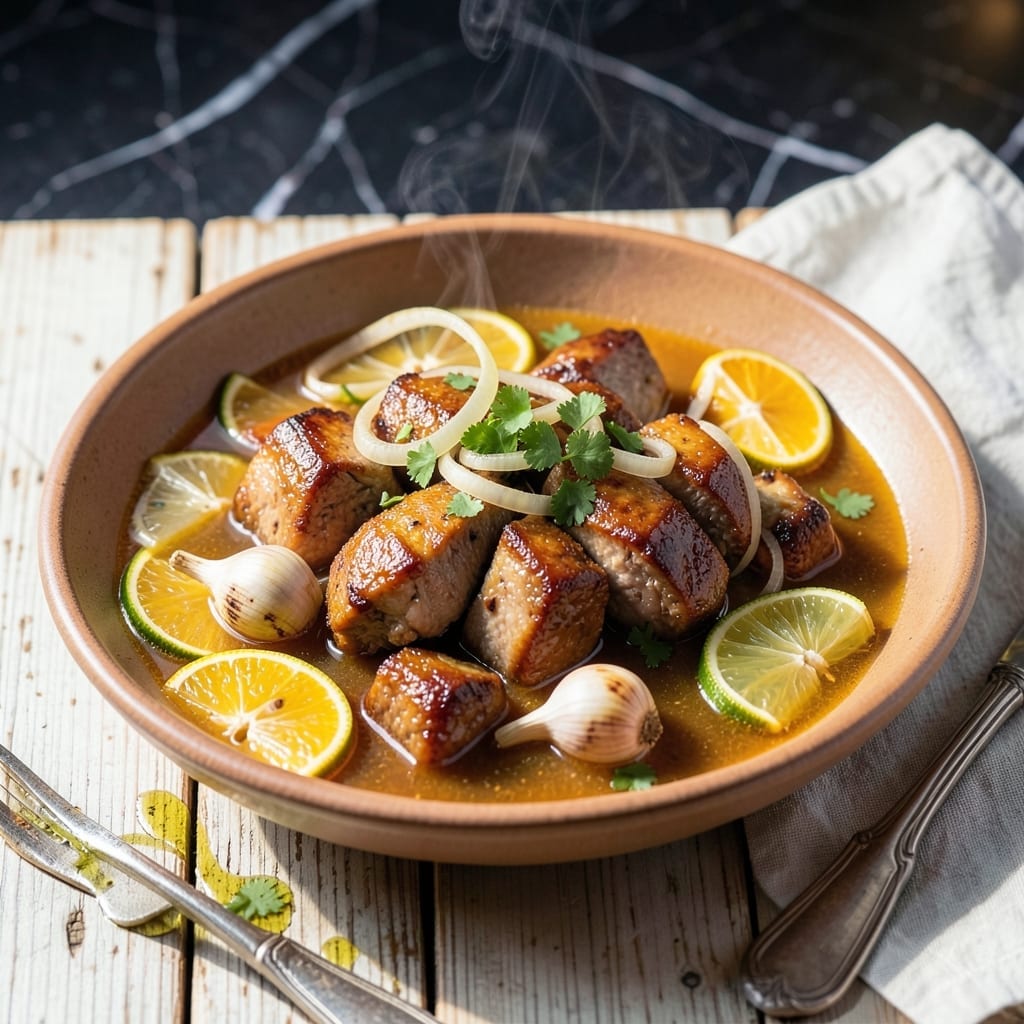
This Florida-style pork souse transforms tough cuts into tender, citrus-infused perfection through a slow braise. The method preserves my grandmother’s island traditions while adapting to local flavors.
Simple ingredients like pork shoulder, citrus, and spices create a dish that’s both hearty and bright. The vinegar brine ensures every bite carries that signature tang.
What emerges is fall-apart meat with a delicate balance of sweet and sour. The aroma alone will transport you to a Caribbean kitchen.
Serve it with rice or crusty bread to soak up every drop of the flavorful broth. The results are worth the wait.
Ingredients for Pork Souse Recipe Florida Style
Pork shoulder, citrus, and spices create this island-inspired braised dish with signature tang.
| Ingredient | Amount | Notes |
|---|---|---|
| Pork Shoulder 🥩 | 2 lb | Boneless, cut into 2-inch chunks |
| White Vinegar 💧 | 2 cups | Distilled or apple cider works |
| Fresh Lime Juice 🍈 | ½ cup | About 4-5 limes, freshly squeezed |
| Fresh Orange Juice 🍊 | ½ cup | About 2 large oranges, freshly squeezed |
| Yellow Onion 🧅 | 1 whole | Medium, thinly sliced |
| Garlic Cloves 🧄 | 6 cloves | Peeled, smashed |
| Scotch Bonnet Pepper 🌶️ | 1 whole | Seeded, minced (or habanero) |
| Fresh Thyme 🌿 | ¼ cup | Chopped, stems removed |
| Ground Allspice 🌿 | 1 tsp | Essential for authentic flavor |
| Bay Leaves 🍃 | 2 pieces | Dried or fresh |
| Brown Sugar 🧈 | 2 tbsp | Light or dark, for balance |
| Kosher Salt 🧂 | 1 ½ tsp | Diamond Crystal preferred |
| Black Peppercorns 🌶️ | 1 tsp | Whole, lightly crushed |
| Water 💧 | 2 cups | For braising liquid |
[recipe_ingredient_scaler]
The pork shoulder is non-negotiable for authentic texture—look for well-marbled, boneless cuts at your butcher or Costco for best results. The vinegar must be sharp and clear; Heinz distilled white vinegar is a reliable choice. Citrus should be fresh—bottled juice lacks the brightness needed to balance the brine. For the Scotch bonnet, habanero works in a pinch but adjust heat to taste.
No pork shoulder? Pork butt is an acceptable substitute with similar fat content. Out of Scotch bonnet? Jalapeño plus a pinch of cayenne approximates the flavor profile. Fresh herbs can be swapped for dried at one-third the amount. The allspice is key—if missing, a blend of cinnamon, nutmeg, and cloves (equal parts) mimics its warmth.
This souse improves overnight. Store in the fridge for up to 5 days or freeze for 3 months. Reheat gently to preserve the meat’s tenderness. The broth intensifies in flavor, so leftovers often taste even better.
Why You’ll Love This Recipe
- One Pot Wonder: I love how this comes together in a single pot—just pork shoulder, citrus, and vinegar doing all the work.
- Zesty Kick: The lime and orange juice give it that bright, tangy Florida punch I can’t get enough of.
- Feeds a Crowd: Honestly, it’s my go-to for parties—everyone loves the bold, vinegary bite.
- Budget Winner: Pork shoulder stretches far, and the ingredients are cheap. I’ll be real: it’s my wallet’s favorite dish.
Step-by-Step Instructions for Pork Souse Florida Style
This traditional method ensures tender meat with vibrant citrus notes every time.
Step 1: Prepare and Season the Pork
Begin by cutting the 2 lb pork shoulder into 2-inch chunks, trimming away any large fat deposits. I prefer boneless cuts for even cooking and easier serving. Pat the pieces dry with paper towels to ensure proper browning.
Season the pork evenly with the 1.5 tsp kosher salt, ensuring all surfaces are coated. This initial seasoning enhances flavor penetration during the braising process. Set the seasoned meat aside while you prepare the aromatic base.
Step 2: Build the Aromatic Foundation
In a large Dutch oven or heavy pot, combine the 1 whole yellow onion (thinly sliced), 6 cloves garlic cloves (smashed), and 1 whole Scotch Bonnet Pepper (minced). Add the 0.25 cup fresh thyme, 1 tsp ground allspice, and 2 pieces bay leaves to the pot.
Toast these aromatics over medium heat for 2-3 minutes until fragrant, stirring frequently to prevent burning. The onions should begin to soften slightly but not color. This step develops the complex base flavors characteristic of authentic souse.
Step 3: Add Liquids and Begin Braising
Pour in the 2 cups white vinegar, 0.5 cup fresh lime juice, 0.5 cup fresh orange juice, and 2 cups water. Add the 2 tbsp brown sugar and 1 tsp black peppercorns (lightly crushed) to the liquid mixture.
Bring the liquid to a gentle simmer over medium-high heat. The mixture should smell sharply acidic at first—the vinegar will mellow significantly as it cooks. Carefully add the seasoned pork chunks, ensuring they’re mostly submerged in the braising liquid.
Step 4: Simmer to Tender Perfection
Reduce heat to low, cover the pot, and let it simmer gently for 2 to 2.5 hours. You’ll know it’s ready when the pork shreds easily with a fork and the liquid has reduced by about one-third.
Stir occasionally during cooking, about every 30 minutes, to prevent sticking. The pork should absorb the citrus flavors while remaining moist. The final liquid should have a tangy, slightly sweet profile with the pork falling apart at the touch.
Remove the bay leaves before serving. The souse is traditionally served warm, with the tender pork chunks bathed in the flavorful braising liquid.
Pro Tips For Making Pork Souse Recipe Florida Style
- Parboil the Pork: Start by boiling the pork shoulder for 30-45 minutes to render fat and soften—this cuts down the simmering time later and removes impurities that could cloud your souse.
- Balance the Acids: Use a 2:1 ratio of white vinegar to fresh lime juice, then add orange juice to taste at the end. I learned this the hard way after my first batch tasted like a chemistry experiment.
- Slice Onions Thin: Shave the yellow onions paper-thin so they practically melt into the broth. Sounds fussy, but it makes the texture just right.
- Skim the Fat: After the initial boil, skim off the foam and fat that rise to the top—skip this and your souse will have a greasy finish, no matter how long you simmer it.
Serving Suggestions for pork souse recipe florida style
With Rice
Serve this dish over steamed white rice—I use jasmine or basmati for their delicate fragrance. The rice soaks up the tangy broth beautifully, creating a perfect balance of flavors in every bite. My grandmother always insisted on rice with her souse.
Crusty Bread
A slice of warm crusty bread from my local bakery is ideal for mopping up the vibrant braising liquid. I love using a baguette or ciabatta for this purpose. The bread’s crisp texture contrasts nicely with the tender pork.
Simple Salad
A light cucumber and tomato salad with a lime vinaigrette cuts through the richness. Toss 2 cups diced cucumbers with 1 cup cherry tomatoes and 1 tbsp lime juice. The freshness complements the hearty souse perfectly. 🥗
Pickled Vegetables
Add pickled red onions or quick-pickled carrots on the side for extra brightness and crunch. I make mine with rice vinegar and a touch of sugar. The acidity enhances the dish’s citrus notes.
Hot Sauce
Offer Caribbean-style hot sauce like Melinda’s or El Yucateco for those who want extra heat. Just a few drops can elevate the flavors. I always keep a bottle on hand for guests who enjoy spice.
Garnish Ideas
Finish with fresh cilantro or scallions for a pop of color and freshness. A sprinkle of toasted breadcrumbs adds texture. These simple garnishes make the dish look as good as it tastes. 💫
Nutrition Facts
Frequently Asked Questions
What cut of pork works best?
Pork shoulder is ideal for its marbling and tenderness after slow cooking. Pork butt can substitute in a pinch. Avoid lean cuts like tenderloin—they’ll dry out during the 2-2.5 hours of braising.
Can I make it less tangy?
Reduce the vinegar to 1.5 cups and add 1 extra tbsp of brown sugar. The citrus will still shine but with milder acidity. Balance is key in Florida-style souse.
How do I store leftovers?
Keep in an airtight container in the fridge for up to 5 days. The flavors deepen overnight, making leftovers even tastier. Freeze for up to 3 months if needed.
Can I skip the Scotch bonnet?
Yes, but it loses authentic heat. Substitute with 1 jalapeño plus a pinch of cayenne. For no heat at all, omit it entirely and add 1 tsp smoked paprika for depth.

Trained in classic French technique but raised on slow-cooked ribs and spicy rubs, she blends culinary skill with smoke and soul.
- Recipe for Boneless Pork Chops in Cast Iron Skillet: Sear and Baste to Juicy Perfection - October 3, 2026
- Recipe for Boneless Cross Rib Roast: Slow-Roasted Beef with Herb Crust - October 3, 2026
- Hamburgers in Sauce Recipe Crock Pot: Slow-Cooked Savory Delight - October 3, 2026