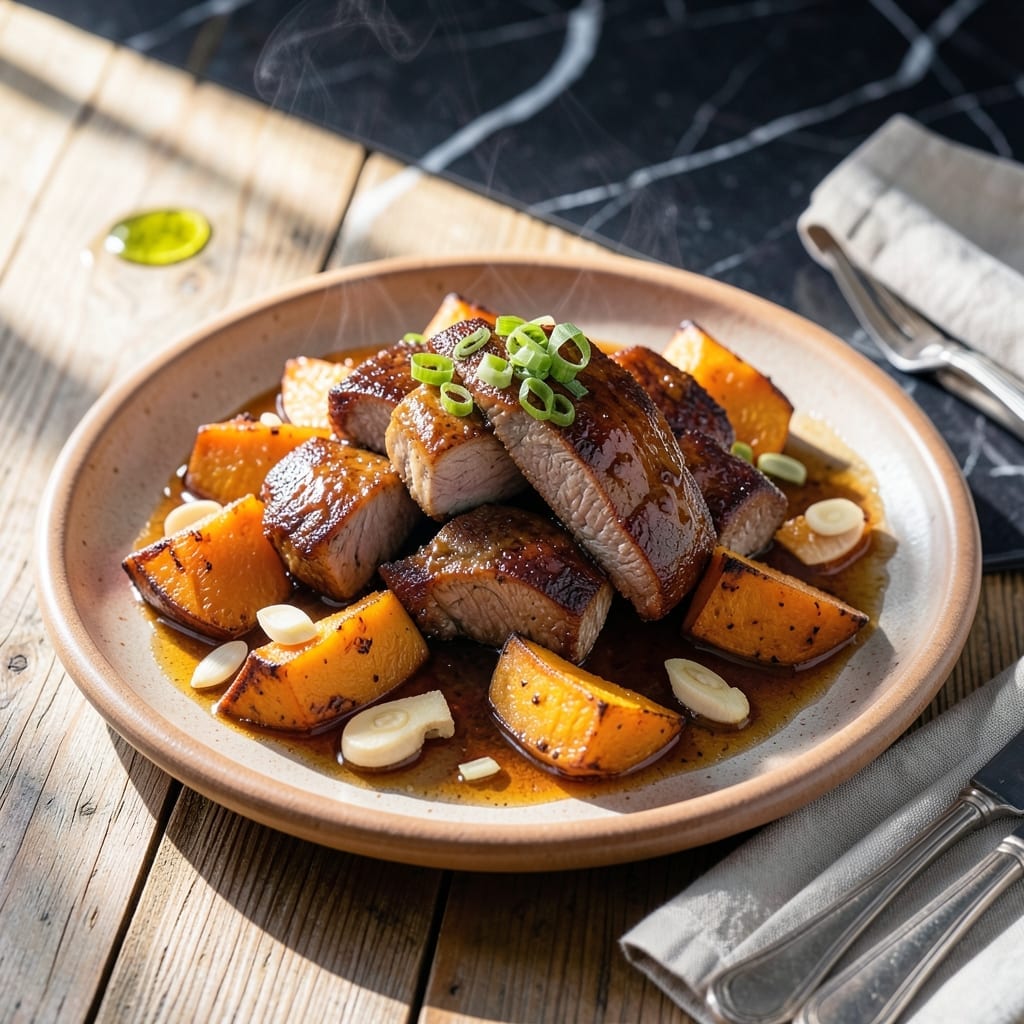
This Hawaiian pork and squash dish perfectly balances sweet and savory flavors in every bite. The combination of tender pork with caramelized squash creates a harmony that’s become a staple in island kitchens.
I developed this version after sampling similar plates during a trip to Oahu, adapting it for home cooks with accessible ingredients. The key is slow cooking the pork until it’s fall-apart tender, then combining it with roasted squash that’s been kissed with just enough brown sugar.
What emerges is a dish that tastes like it’s been simmering in a traditional imu oven, with layers of flavor that develop beautifully. The pork absorbs the sweetness from the squash while maintaining its rich, meaty character.
Serve it over steamed rice with a sprinkle of green onions for an authentic island experience.
Ingredients for Pork Squash Recipe Hawaii
Pantry staples and fresh produce create this island-inspired dish with rich, layered flavors.
| Ingredient | Amount | Notes |
|---|---|---|
| Pork Shoulder 🥩 | 2 lb | Boneless, cut into chunks |
| Butternut Squash 🎃 | 2 lb | Peeled, cubed into 1-inch pieces |
| Brown Sugar 🧈 | ½ cup | Light or dark variety |
| Soy Sauce 🫒 | ½ cup | Low-sodium preferred |
| Garlic Cloves 🧄 | 6 cloves | Minced for marinade |
| Fresh Ginger 🌿 | 1 tbsp | Peeled, grated |
| Green Onions 🧅 | 4 whole | Thinly sliced, for garnish |
| Jasmine Rice 🍚 | 2 cups | Uncooked, for serving |
| Vegetable Oil 🫒 | 2 tbsp | For searing pork |
| Salt 🧂 | 1 tsp | Kosher or sea salt |
| Black Pepper 🌶️ | ½ tsp | Freshly ground preferred |
| Apple Cider Vinegar 🍏 | 2 tbsp | For balancing sweetness |
| Water 💧 | 1 cup | For braising liquid |
[recipe_ingredient_scaler]
The pork shoulder is non-negotiable here. Look for well-marbled cuts at your butcher or grocery store—Costco often has pre-cut chunks that work perfectly. Butternut squash should feel heavy for its size with a firm, smooth rind (avoid any with soft spots). For the soy sauce, Kikkoman or San-J are reliable brands that won’t overpower the dish with saltiness.
No pork shoulder? Pork butt works identically—just trim excess fat. Butternut squash can be swapped for acorn or kabocha squash (peel kabocha first). Brown sugar substitutes: coconut sugar at a 1:1 ratio. Missing apple cider vinegar? Rice vinegar in a pinch works, though it’s milder. Don’t skip the ginger—it’s what gives the dish that authentic island depth.
Leftovers keep beautifully. Store in an airtight container for up to 4 days in the fridge or freeze for 3 months. The flavors actually deepen overnight, making this perfect for meal prep. Reheat gently to keep the pork tender (don’t boil it—the meat will toughen).
Why You’ll Love This Recipe
- One Pan Wonder: I toss everything—the pork shoulder, butternut squash, and garlic—into a single pan and let the oven do the work.
- Sweet-Savory Magic: The brown sugar caramelizes with the soy sauce, creating this sticky, finger-licking glaze on the pork.
- Feeds a Crowd: Between us, this dish stretches easily for potlucks or Sunday dinner with the family.
- Leftovers for Days: Honestly, it tastes even better the next day—pork soaks up all that garlicky goodness overnight.
Step-by-Step Instructions for Pork Squash Hawaii
Here’s the method. Straightforward, tested, works every time.
Step 1: Sear the Pork Shoulder
Heat the 2 tbsp vegetable oil in a large pot over medium-high heat. Add the 2 lb pork shoulder chunks and sear for 5-7 minutes until deeply browned on all sides. You’ll know it’s ready when the pieces release easily from the pot.
Searing creates a flavorful crust and locks in juices. Don’t overcrowd the pot—work in batches if needed. Season the pork with the 1 tsp salt and 0.5 tsp black pepper as it browns. Transfer the seared pork to a plate and set aside.
Step 2: Build the Sweet and Savory Base
In the same pot, reduce heat to medium. Add the 6 cloves garlic cloves and 1 tbsp fresh ginger, stirring for 1 minute until fragrant. Pour in the 0.5 cup soy sauce, 0.5 cup brown sugar, and 2 tbsp apple cider vinegar. Stir until the sugar dissolves.
This combination creates the signature Hawaiian balance of sweet, salty, and tangy. Let the mixture simmer for 2 minutes until it thickens slightly. The sauce should coat the back of a spoon with a glossy sheen.
Step 3: Braise the Pork and Squash
Return the seared pork to the pot along with the 2 lb butternut squash and 1 cup water. Stir to combine, ensuring the pork and squash are mostly submerged in the liquid. Bring to a simmer, then reduce heat to low.
Cover and braise for 45-50 minutes until the pork is fork-tender and the squash is soft but still holds its shape. Stir occasionally to prevent sticking. The pork should pull apart easily with a fork, and the squash should be tender when pierced.
Step 4: Finish and Serve
Once the pork and squash are tender, remove the lid and increase heat to medium. Simmer uncovered for 5-10 minutes to reduce the sauce to your desired consistency. Taste and adjust seasoning if needed.
Serve the pork and squash hot over steamed 2 cups jasmine rice. Garnish with the 4 whole green onions, thinly sliced. Each serving should include a generous portion of pork, squash, and the rich, flavorful sauce. The dish is ready when the sauce has thickened and the flavors have melded together beautifully.
Pro Tips For Making Pork Squash Recipe Hawaii
- Brown the Pork: Sear the pork shoulder on all sides in a hot pan before braising—this builds a deep, caramelized base that makes the soy sauce and brown sugar shine.
- Cube Evenly: Cut the butternut squash into uniform 1-inch pieces so they cook at the same rate as the pork and don’t turn to mush.
- Skip the Overcrowding: I learned this the hard way—if you pack too much squash or pork in the pot, it steams instead of caramelizing, and the sauce stays watery.
- Use Fresh Garlic: Minced garlic from a jar works in a pinch, but fresh cloves crushed just before cooking add a punch that jarred stuff just can’t match.
Serving Suggestions for This Dish
Plating Traditions
Serve this dish family-style in a large wooden bowl for an authentic island presentation. The natural wood complements the earthy tones of the pork and squash beautifully. I love using the hand-carved bowl I brought back from Maui. 🌟
Rice Base
Scoop a generous portion of jasmine rice onto each plate first—about ½ cup per serving. The fluffy rice soaks up that incredible sauce. I always make extra rice because my daughter Lily requests seconds.
Garnish Art
Sprinkle the thinly sliced green onions in a diagonal pattern across the pork and squash. The vibrant green pop against the caramelized colors. A quick drizzle of the reduced braising liquid over the top adds glossy appeal.
Side Accompaniments
Offer Macadamia nut cookies or fresh pineapple chunks on the side. The sweetness contrasts the savory pork beautifully. My Portland farmers market always has perfect pineapples in summer.
Beverage Pairing
A cold Hawaiian lager like Maui Brewing Co’s Big Swell cuts through the richness. For non-alcoholic options, lychee iced tea provides tropical notes that echo the dish’s island origins. 🍺
Final Touch
Add a single orchid blossom as an edible garnish if you’re feeling fancy. It’s how my friend Leilani serves it at her luaus. The floral aroma enhances the entire dining experience.
Nutrition Facts
Frequently Asked Questions
What type of pork works best for this dish?
Pork shoulder is ideal for its marbling and tenderness after braising. Pork butt is a great substitute, but trim excess fat first. Avoid lean cuts like tenderloin as they dry out during cooking.
Can I make this ahead of time?
The flavors deepen overnight. Store in an airtight container for up to 4 days in the fridge. Reheat gently on the stove with a splash of water to prevent drying.
Why did my squash turn to mush?
This happens when the squash is added too early or cooked too long. Add it during the last 45 minutes of braising and check for doneness at 40 minutes. Kabocha squash holds its shape better if overcooking is a concern.

Trained in classic French technique but raised on slow-cooked ribs and spicy rubs, she blends culinary skill with smoke and soul.
- Recipe for Boneless Pork Chops in Cast Iron Skillet: Sear and Baste to Juicy Perfection - October 3, 2026
- Recipe for Boneless Cross Rib Roast: Slow-Roasted Beef with Herb Crust - October 3, 2026
- Hamburgers in Sauce Recipe Crock Pot: Slow-Cooked Savory Delight - October 3, 2026