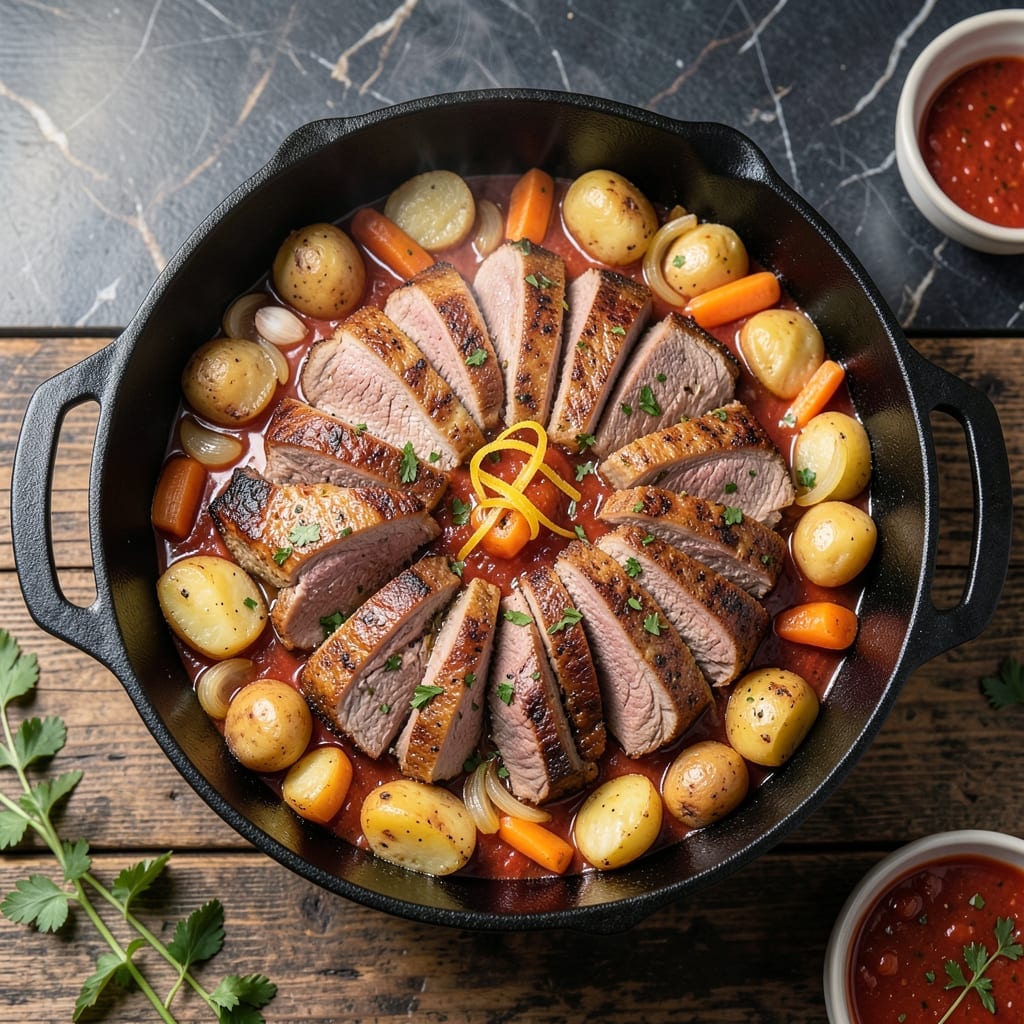
This pork shoulder steak casserole transforms tough cuts into tender, flavorful layers through slow cooking. The method builds depth with each component, ensuring every bite delivers rich, savory satisfaction.
I developed this approach after years of testing, focusing on a no-fuss technique that lets the oven do most of the work. The pork emerges fall-apart tender, while the vegetables soak up the meat’s juices.
The result is a complete meal in one dish—juicy pork, soft vegetables, and a sauce that ties everything together. It’s ideal for feeding a family or prepping meals ahead.
Serve straight from the baking dish for a hearty, comforting dinner that satisfies every time.
Ingredients for Pork Shoulder Steak Recipe Casserole
Slow-cooked pork shoulder steak with hearty vegetables and aromatic herbs creates this savory casserole.
| Ingredient | Amount | Notes |
|---|---|---|
| Pork Shoulder Steak 🥩 | 2 lb | Cut into 1-inch cubes, bone-in or boneless |
| Yellow Onions 🧅 | 2 whole | Medium, thinly sliced |
| Carrots 🥕 | 3 whole | Peeled and sliced into rounds |
| Russet Potatoes 🥔 | 2 whole | Peeled and cubed into 1-inch pieces |
| Garlic Cloves 🧄 | 6 cloves | Minced finely for even distribution |
| Tomato Paste 🍅 | 2 tbsp | For depth and umami richness |
| Beef Broth 💧 | 2 cups | Low-sodium preferred for control |
| Worcestershire Sauce 🫒 | 1 tbsp | Adds savory complexity to the sauce |
| Dried Thyme 🌿 | 1 tsp | Rubbed between fingers to release oils |
| Dried Rosemary 🍃 | 1 tsp | Crushed to enhance aroma |
| Bay Leaves 🌿 | 2 pieces | Whole, removed before serving |
| Olive Oil 🫒 | 2 tbsp | Divided for searing and finishing |
| All-Purpose Flour 🌾 | 2 tbsp | For thickening the sauce |
| Kosher Salt 🧂 | 1 ½ tsp | Divided for seasoning layers |
| Black Pepper 🌶️ | 1 tsp | Freshly ground for best flavor |
[recipe_ingredient_scaler]
The pork shoulder steak is non-negotiable here. Bone-in cuts offer more flavor, but boneless simplifies serving. Source from Costco or ButcherBox for consistent quality—look for good marbling, which guarantees tenderness after slow cooking. The beef broth should be low-sodium; Swanson or Kitchen Basics are reliable brands. Fresh garlic is essential, but pre-minced in jars works in a pinch (the flavor is milder).
No pork shoulder steak? Pork butt or Boston butt are identical cuts—just differently labeled. Vegetable swaps are flexible: sweet potatoes replace russets, parsnips work instead of carrots. For the sauce, soy sauce or coconut aminos can stand in for Worcestershire (note the saltier profile). Dried herbs must be freshly opened—old spices lose potency. If avoiding gluten, cornstarch or arrowroot replaces flour for thickening.
This casserole improves overnight. Store covered in the fridge for up to 4 days or freeze portions for 3 months. Reheat gently on the stovetop with a splash of broth to restore moisture. The sauce thickens further upon cooling—perfect for make-ahead meals.
Why You’ll Love This Recipe
- I’ll be real: this casserole stretches to feed six with zero extra effort.
- One Pan Wonder: I just toss the pork shoulder steak, onions, carrots, and potatoes in one dish and let the oven do the work.
- Garlic Deep Flavor: The pork soaks up the garlic and veggie juices, making every bite ridiculously good.
- Feeds a Crowd: I’ll be real: this casserole stretches to feed six with zero extra effort.
Step-by-Step Instructions for Pork Shoulder Steak Casserole
This method ensures tender pork and deeply flavored vegetables through careful layering and braising.
Step 1: Sear and Coat the Pork Shoulder Steak
Heat 1 tablespoon olive oil in a large Dutch oven over medium-high heat until shimmering. Pat the 2 lb Pork Shoulder Steak dry with paper towels, then season with ½ teaspoon Kosher Salt and ½ teaspoon Black Pepper.
Working in batches to avoid crowding, sear the cubed pork shoulder steak until deeply browned on all sides, about 5-6 minutes per batch. Transfer to a plate and sprinkle with the 2 tablespoons All-Purpose Flour, tossing to coat evenly. This creates a light crust that will thicken the braising liquid later.
Step 2: Build the Aromatic Base
In the same Dutch oven, add the remaining 1 tablespoon olive oil if needed. Add the 2 whole Yellow Onions and cook for 3-4 minutes until softened and just beginning to caramelize at the edges.
Stir in the 3 whole Carrots, 6 cloves Garlic Cloves, 2 tbsp Tomato Paste, 1 tsp Dried Thyme, and 1 tsp Dried Rosemary. Cook for 2 minutes, stirring constantly, until the tomato paste darkens slightly and the aroma becomes deeply fragrant. This step develops the foundation flavors for your casserole.
Step 3: Deglaze and Layer the Casserole
Pour in the 1 tbsp Worcestershire Sauce and 2 cups Beef Broth, scraping up any browned bits from the bottom of the pot with a wooden spoon. These fond bits contain concentrated flavor that will enrich your sauce.
Return the floured pork to the Dutch oven along with the 2 whole Russet Potatoes and 2 pieces Bay Leaves. Stir gently to combine, ensuring the potatoes are mostly submerged in the liquid. The liquid should just cover the ingredients—if it doesn’t, add a splash of water. Bring to a gentle simmer.
Step 4: Braise Until Fork-Tender
Cover the Dutch oven and transfer to a preheated 325°F oven. Braise for 2 to 2.5 hours, stirring once halfway through, until the pork shoulder steak is fall-apart tender and the potatoes are easily pierced with a fork.
Check the seasoning and adjust with the remaining 1 tsp Kosher Salt and ½ tsp Black Pepper as needed. The sauce should be rich and slightly thickened from the flour coating on the pork. Remove the bay leaves before serving.
Pro Tips For Making Pork Shoulder Steak Recipe Casserole
- Sear the Pork First: I learned this the hard way—browning the pork shoulder steak in a hot pan with a little oil for 3-4 minutes per side locks in juices and adds depth to the casserole. Skip this and the flavor will be flat.
- Cut Potatoes Evenly: Russet potatoes cook at different rates if they’re uneven, so slice them into 1-inch chunks. This guarantees they soften at the same time as the carrots and onions.
- Don’t Overcrowd the Pan: After burning three batches, I finally figured out that if you cram all the veggies and pork into the casserole dish, they’ll steam instead of roast. Use a big enough dish or cook in batches.
- Add Garlic Late: Sounds weird, but it works: toss the garlic cloves in during the last 30 minutes of cooking. This prevents them from turning bitter or burning while the pork and potatoes finish tenderizing.
Pro Cooking Tips for pork shoulder steak recipe casserole
Perfect Searing Technique
Pat the pork completely dry with paper towels before searing—this prevents steaming and ensures a deep brown crust. I use a Lodge cast iron Dutch oven for even heat distribution. Don’t crowd the pan; 5-6 minutes per batch gives each cube space to develop that perfect Maillard reaction. 🔥
Flour Coating Trick
After searing, toss the hot pork with 2 tablespoons flour while it rests on the plate. The residual heat helps the flour adhere, creating a thin coating that thickens the braising liquid beautifully. This step is my secret to a sauce that clings to every bite.
Layering for Flavor
When adding the pork back to the pot, nestle the pieces between the onions and carrots. This ensures the meat absorbs all those aromatic flavors during braising. I always add the potatoes last so they don’t turn mushy from overcooking.
Oven Temperature Control
Maintain a consistent 325°F in your oven. I check mine with an oven thermometer—many home ovens run hot or cold. The low-and-slow approach is what transforms tough pork shoulder into buttery-tender perfection over 2-2.5 hours. 🌡️
Sauce Consistency Check
If your sauce seems thin after braising, remove the lid and simmer on the stovetop for 5-10 minutes. The flour from the pork coating will do most of the work, but this extra step guarantees a rich, velvety texture.
Resting Before Serving
Let the casserole rest 15 minutes after removing from the oven. This allows the juices to redistribute throughout the meat. I learned this the hard way—cutting too soon sends all that delicious moisture straight to the cutting board.
Nutrition Facts
Frequently Asked Questions
Can I use a different cut of pork?
Yes, pork butt or Boston butt work perfectly as they’re the same cut. Just ensure good marbling for tenderness. Avoid lean cuts like tenderloin, as they dry out during long cooking.
Why is the sauce thin after cooking?
Uncover and simmer for 5-10 minutes on the stovetop to thicken. The flour coating on the pork should help, but this extra step guarantees a rich consistency.
Should I add the potatoes at the start?
Add them last to prevent mushiness. This ensures they cook just enough to soften without falling apart during the 2-2.5 hour braise.
Can I make this ahead?
The flavors deepen overnight. Store covered in the fridge for up to 4 days or freeze for 3 months. Reheat gently with a splash of broth.

Trained in classic French technique but raised on slow-cooked ribs and spicy rubs, she blends culinary skill with smoke and soul.
- Recipe for Boneless Pork Chops in Cast Iron Skillet: Sear and Baste to Juicy Perfection - October 3, 2026
- Recipe for Boneless Cross Rib Roast: Slow-Roasted Beef with Herb Crust - October 3, 2026
- Hamburgers in Sauce Recipe Crock Pot: Slow-Cooked Savory Delight - October 3, 2026