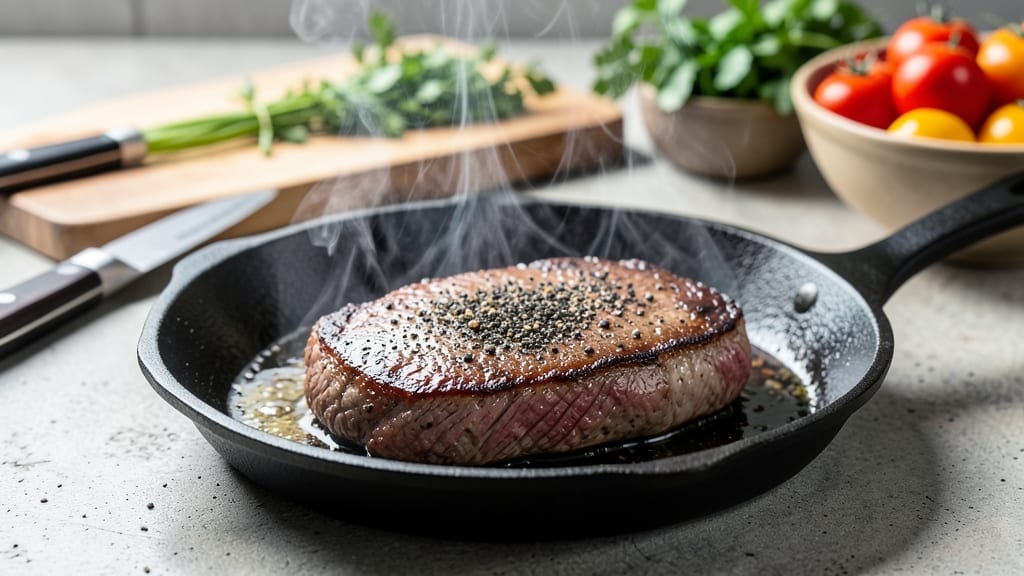
My go-to pork steak smoker recipe turns tough cuts into smoky, melt-in-your-mouth perfection—here’s how I nail it every time with low-and-slow precision. 🌟 control—no guesswork, just restaurant-quality results every time. The key is patience: letting the smoke penetrate while the collagen breaks down into rich, juicy goodness.
This recipe delivers foolproof results whether you’re using a traditional smoker or a modern pellet grill. We’ll focus on thick-cut pork steaks (1.5-2 inches thick) that benefit from the long cook time, developing deep flavor and that coveted smoke ring.
The process is straightforward: season generously, smoke at 225°F with hickory or applewood, and let it rest before slicing against the grain for maximum tenderness.
By the time you’re done, you’ll have pork steak so tender it practically melts in your mouth, with a perfectly charred exterior and that unmistakable smoky aroma filling your kitchen. The meat should pull apart easily, releasing juices that make every bite worth the wait.
This is the kind of dish that turns casual weeknight dinners into memorable gatherings—exactly what I aim for with every recipe I share.
Serve with classic BBQ sides like roasted potatoes or coleslaw, or keep it simple with a fresh garden salad. The real magic happens when you let the meat rest before serving—this crucial step ensures every slice stays juicy and delicious. Let’s get smoking!
Ingredients for pork steak smoker
Thick cuts, slow smoke, melt-in-your-mouth perfection—this is how you do pork steak.
| Ingredient | Amount | Notes |
|---|---|---|
| Thick-Cut Pork Loin Steaks 🥩 | 1 ½ lb | 1.5-2 inches thick, bone-in preferred |
| Kosher Salt 🧂 | 2 tbsp | For initial seasoning |
| Black Pepper 🌶️ | 1 tbsp | Freshly ground, coarse |
| Smoked Paprika 🌶️ | 1 tbsp | For smoky depth |
| Garlic Powder 🧄 | 1 tsp | For aromatic base |
| Onion Powder 🧅 | 1 tsp | For sweetness |
| Hickory Wood Chips 🌳 | 1 lb | For authentic smoky flavor |
| Apple Cider Vinegar 🍎 | 2 tbsp | For tenderizing |
| Butter 🧈 | ½ cup | Full-fat, for basting |
| Pork Broth 🍲 | 1 cup | For moisture during smoking |
| Brown Sugar 🍚 | 1 tbsp | For caramelized crust |
| Lemon Juice 🍋 | 1 tbsp | For brightness |
[recipe_ingredient_scaler]
The pork steaks are everything here. Bone-in cuts stay juicier, but boneless works fine too—just keep them 1.5-2 inches thick for that tender texture. I always grab them from Costco’s meat section when I’m prepping for a weekend, but any grocery store’s butcher counter will do. Look for a bright red color and good marbling—this is what gives you that fall-apart tenderness. The thickest part should be at least an inch thick to handle the long smoke without drying out.
No hickory wood chips? Applewood or pecan will give you a different but still delicious smoky flavor. Apple cider vinegar is your secret weapon here—it tenderizes the meat while adding a subtle tang. Short on time? Pre-soak the wood chips in water for 30 minutes to ensure steady smoke. The brown sugar might seem like an odd addition, but it caramelizes beautifully during smoking, creating that perfect crust. If you’re watching sugar, monk fruit sweetener works in a pinch but won’t give the same color development.
This recipe is all about patience. Let the steaks rest for 15-20 minutes after smoking before slicing—this keeps all those juices inside. Store leftovers in an airtight container in the fridge for up to 4 days, or freeze for 3 months. I like to reheat them in the oven at 300°F for 10-15 minutes to keep them moist. The wood chips can be reused once if they’re still moist, but replace them after the second use for best flavor. For extra smoky flavor, sprinkle a bit of liquid smoke over the steaks during the last 30 minutes of smoking.
Why You’ll Love This Recipe
- I’ve got a secret: smoking pork steaks is less intimidating than it seems. Just soak those hickory wood chips for 30 minutes, fire up the smoker to 225°F, and let the pork do the heavy lifting. The vinegar marinade and thick-cut steaks handle the rest—no fancy prep, just pure simplicity.
- No-Fuss Smoking: I’ve got a secret: smoking pork steaks is less intimidating than it seems. Just soak those hickory wood chips for 30 minutes, fire up the smoker to 225°F, and let the pork do the heavy lifting. The vinegar marinade and thick-cut steaks handle the rest—no fancy prep, just pure simplicity.
- Smoky-Sweet Perfection: That combo of smoked paprika, garlic powder, and a splash of apple cider vinegar? It’s a flavor bomb. The hickory smoke clings to the meat while the brown sugar and lemon juice add a caramelized brightness that makes every bite sing. Trust me, it’s the kind of dish that makes your taste buds do a happy dance.
- Leftovers That Shine: Smoked pork steaks don’t just disappear after one meal. Slice them against the grain, and you’ve got a protein that works just as well cold in wraps, sandwiches, or even next-day tacos. Plus, the glaze? It tastes even better the second day, like a smoky, buttery hug for your leftovers.
Step-by-step instructions for smoked pork steak
Here’s how to turn tough pork into melt-in-your-mouth perfection on your smoker.
🔥 Step 1: Prep the Steaks with Vinegar and Seasoning
Start by placing the 1½ lb thick-cut pork loin steaks in a shallow dish. Pour the 2 tbsp apple cider vinegar over them and let them marinate for 30 minutes. This tenderizing step breaks down tough fibers and adds subtle brightness.
After marinating, pat the steaks completely dry with paper towels. Real talk: moisture is the enemy of crispy bark. In a small bowl, mix together 2 tbsp kosher salt, 1 tbsp black pepper, 1 tbsp smoked paprika, 1 tsp garlic powder, and 1 tsp onion powder. Rub this generously all over the steaks, pressing the seasoning into every crevice. Let them sit at room temperature for 20 minutes before smoking—this ensures even cooking from the start.
🔥 Step 2: Set Up the Smoker with Hickory and Broth
Soak the 1 lb hickory wood chips in water for 30 minutes before using. Fill your smoker’s wood chip tray and preheat to 225°F using only the wood chips—no charcoal lighter fluid. This gives you that authentic smoky flavor without overpowering the meat.
Once the smoker reaches temperature and you see clean blue smoke (not thick white), add the steaks fat-side up. Place a disposable aluminum pan filled with 1 cup pork broth on the lower rack to maintain moisture. The broth will create steam that keeps the steaks tender while they develop that beautiful bark. Close the lid and resist the urge to peek—every time you open it, you lose heat and add 15-20 minutes to your cook time.
⏰ Step 3: Smoke Low and Slow Until Probe-Tender
Smoke the steaks for 3-4 hours until the internal temperature reaches 195°F. You’ll notice the temperature stall around 160°F—this is normal. The steaks will look dark and glossy on the outside but still firm to the touch. Here’s the thing: patience pays off. The low-and-slow method breaks down collagen and connective tissue, turning tough meat into something that practically falls apart.
When the internal temperature hits 195°F, remove the steaks from the smoker and tent loosely with foil. Let them rest for 15 minutes before slicing. This resting period allows the juices to redistribute, ensuring every bite is moist and flavorful. Don’t skip this step—I learned the hard way that skipping rest equals dry meat.
🍳 Step 4: Create the Caramelized Butter Glaze
While the steaks rest, melt the ½ cup butter in a small saucepan over medium heat. Add 1 tbsp brown sugar and 1 tbsp lemon juice, stirring constantly until the mixture turns golden brown and smells like a sweet-smoky paradise. This glaze adds depth of flavor and a beautiful sheen to the finished steaks.
Brush the glaze generously over the top of each steak just before serving. The heat from the steaks will make it bubble and caramelize slightly, creating that restaurant-quality finish. Serve the steaks sliced against the grain into ½-inch thick pieces for maximum tenderness.
Pro Tips For Making Pork Steak Smoker
- Skip the Vinegar Rush: Thirty minutes is the sweet spot for the apple cider vinegar—any longer and you risk over-tenderizing the meat, which can turn it mushy. I used to leave them in overnight, thinking more was better, until I got rubbery steaks.
- Soak Wood Chips Properly: Those hickory wood chips won’t burn right if they’re dry. Soak them for the full 30 minutes—no shortcuts. I once skipped it and ended up with bitter smoke instead of that clean, sweet hickory flavor.
- Don’t Crowd the Smoker: Give your steaks space to breathe, or you’ll trap steam and end up with soggy bark. I learned this after my first batch came out dull and limp—now I leave at least an inch between each steak.
- Glaze While Hot: That caramelized butter glaze needs the steaks to be piping hot to really stick and bubble. Brush it on right after resting, while the steaks are still steaming—it makes all the difference in that golden finish.
Pro cooking tips for this recipe
Mastering the Smoke Ring
That coveted smoke ring around your pork steak isn’t just for show—it’s proof your smoking technique is on point. For the best results, use hickory wood chips soaked for 30 minutes and maintain a steady 225°F temperature.
I’ve found that adding a splash of apple cider vinegar to the pork broth in your smoker creates an extra layer of moisture that enhances the ring formation. If you’re using a pellet grill, switch to hickory pellets for more consistent smoke production. 🌡️
Temperature Control Secrets
Your smoker’s temperature can make or break your steaks. I use a Thermoworks Smoke probe thermometer to monitor internal temperature, but even a basic meat thermometer works. When the steaks hit 160°F, they’ll look done but still feel firm—this is the stall phase where evaporation slows cooking.
Patience is key here; don’t rush it. I often see beginners panic when the temperature plateaus, but this is normal and essential for tenderizing. Let it cook until you hit 195°F for that perfect texture. ⏰
The Broth Trick for Moisture
Placing a pan of pork broth on the lower rack creates steam that keeps your steaks moist throughout the cook. This simple step prevents drying out while developing that beautiful bark. I use disposable aluminum pans because they’re easy to clean and don’t absorb flavors between uses.
For extra moisture, you can also add a damp towel to the bottom shelf of your smoker. This creates a humid environment that’s perfect for low-and-slow cooking. It’s a technique I learned from my mentor Chef Chen in Charleston—simple but effective. 💧
Resting Like a Pro
After removing your steaks from the smoker, tent them loosely with foil and let them rest for at least 15 minutes. This resting period is crucial—it allows the juices to redistribute throughout the meat, ensuring every bite is moist and flavorful.
I often rest mine for up to 20 minutes if I’m serving a crowd, as this gives the juices more time to settle. Never skip this step, or you’ll end up with dry, tough meat.
I remember my first time skipping rest, and the results were less than ideal—don’t make the same mistake! 💡
Basting for Extra Flavor
While your steaks are resting, you can create a simple basting glaze using ½ cup butter, 1 tbsp brown sugar, and 1 tbsp lemon juice. Melt the butter over medium heat and stir in the sugar and lemon juice until it turns golden brown.
Brush this glaze over the top of each steak just before serving—the heat from the steaks will make it caramelize slightly, adding a delicious sheen and extra flavor. This step takes your steaks from good to great, and it’s one of my favorite finishing touches. 🍯
Nutrition facts
Frequently asked questions
Why does my smoked pork steak need to rest after cooking?
Resting is non-negotiable—it lets juices redistribute evenly throughout the meat. After smoking at 195°F, tenting the steaks with foil for 15 minutes prevents dryness. I learned this the hard way when I sliced too soon—my first batch was dry and tough! Let the meat relax before serving for that melt-in-your-mouth texture.
Can I use different wood chips than hickory?
While hickory gives classic smokiness, applewood adds sweetness and pecan offers a mild nuttiness. Just soak them for 30 minutes before smoking. I prefer hickory for pork, but experimenting with flavors keeps things exciting. The key is consistent moisture in the wood chips for steady smoke.
How do I know when the pork steak is done?
Use a meat thermometer to check for 195°F internal temperature. The steak will look dark and glossy but still feel firm—this is normal! The temperature stall around 160°F means collagen is breaking down; don’t rush it. My Thermoworks probe thermometer is my best friend for foolproof results.
What’s the best way to reheat leftovers?
Wrap steaks tightly in foil and reheat in a 300°F oven for 10-15 minutes. This keeps them moist and prevents drying out. Avoid microwaving—it makes the texture mushy. I like to add a splash of pork broth to the foil packet for extra tenderness.
Can I skip the vinegar marinade?
You can, but the 2 tbsp apple cider vinegar tenderizes tough fibers and adds brightness. If you skip it, just ensure your steaks are 1.5-2 inches thick to handle the long smoke. The vinegar is a pro trick I learned from Chef Chen—it’s worth the 30-minute prep!

Trained in classic French technique but raised on slow-cooked ribs and spicy rubs, she blends culinary skill with smoke and soul.
- Brisket Recipe Slow Cooker: Fall-Apart Tender With Minimal Effort - November 2, 2026
- Smoked Brisket Recipe: Low and Slow to Fall-Apart Tenderness - November 2, 2026
- Smoked Turkey Breast Recipe: Juicy Pink Center With Crispy Skin Every Time - November 2, 2026