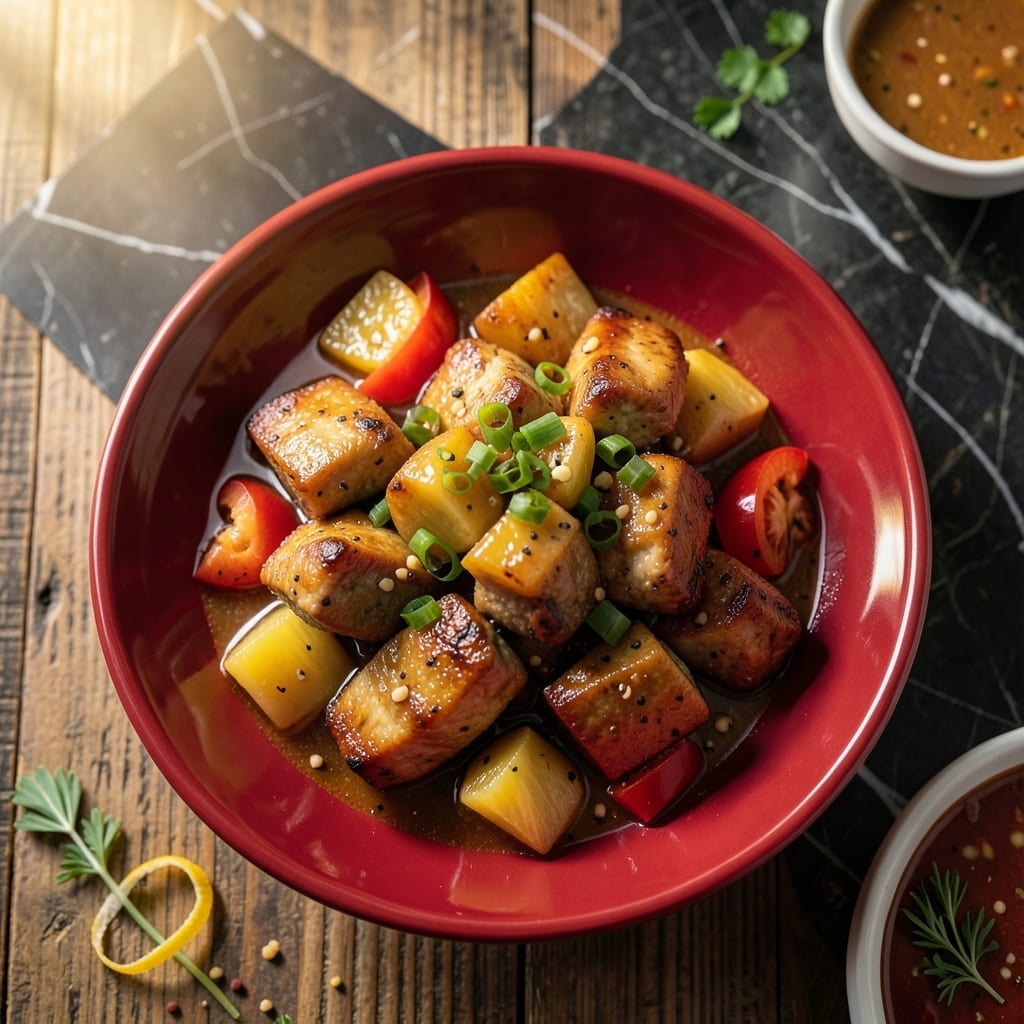
This traditional Filipino dish delivers the perfect balance of tangy and sweet flavors in every bite. I’ve tested this recipe multiple times to ensure it captures the authentic taste of Panlasang Pinoy cuisine.
The secret lies in the combination of fresh ingredients and a precise cooking method. Pork pieces are marinated then fried until crispy before being coated in a vibrant sauce made from pineapple juice, vinegar, and brown sugar.
What results is tender pork with a glossy, flavorful glaze that’s both satisfying and memorable. The dish maintains its traditional roots while being simple enough for home cooks to master.
Serve hot with steamed rice to soak up every drop of the delicious sauce. This recipe brings a taste of the Philippines to your dinner table.
Ingredients for Pork Sweet and Sour Recipe Panlasang Pinoy
Traditional Filipino flavors start with fresh pork and a balance of tangy and sweet elements.
| Ingredient | Amount | Notes |
|---|---|---|
| Pork Shoulder 🥩 | 1 ½ lb | Cut into 1-inch cubes |
| Soy Sauce 🥫 | ¼ cup | For marinating pork |
| Calamansi Juice 🍋 | 2 tbsp | Or substitute lemon juice |
| Garlic Cloves 🧄 | 4 cloves | Minced finely |
| Pineapple Chunks 🍍 | 1 cup | Fresh or canned, reserved juice |
| Pineapple Juice 🍍 | ¾ cup | From pineapple chunks |
| Brown Sugar 🍚 | ½ cup | Packed for sauce |
| White Vinegar 🍶 | ¼ cup | For tangy balance |
| Ketchup 🍅 | ½ cup | For color and depth |
| Bell Pepper 🌶️ | 1 whole | Cut into strips |
| Onion 🧅 | 1 whole | Sliced thinly |
| Cornstarch 🌾 | 2 tbsp | For thickening sauce |
| Vegetable Oil 🫒 | ½ cup | For frying pork |
| Salt 🧂 | 1 tsp | Adjust to taste |
| Black Pepper 🌶️ | ½ tsp | Freshly ground preferred |
[recipe_ingredient_scaler]
The pork is key here. Pork shoulder gives you that tender, juicy texture once fried and simmered in the sauce. Look for good marbling—this fat renders down and keeps the meat moist. Most Asian grocery stores like Seafood City or Filipino markets carry calamansi, but regular lemon or lime juice works in a pinch (the flavor profile is slightly different but still delicious).
No calamansi? Lemon or lime juice at a 1:1 ratio. Fresh pineapple is ideal, but canned works—just save that juice for the sauce. For a deeper flavor, swap half the vinegar for apple cider vinegar. Want it sweeter? Add an extra tablespoon of brown sugar. The ketchup can be Banana ketchup for a more authentic Filipino touch if you can find it.
The sauce thickens as it cools, so don’t worry if it seems thin at first. Leftovers keep for 3-4 days in the fridge and reheat well. The flavors actually deepen overnight—perfect for meal prep. Freeze for up to 3 months if you’ve got extras.
Why You’ll Love This Recipe
- Minimal Chopping Required: I just dice the pork shoulder and crush the garlic—no fancy knife skills needed.
- That Tangy Crunch: The calamansi juice and pineapple chunks give it that bright, sweet-sour kick I can’t resist.
- Feeds a Crowd: Honestly, it’s my go-to for birthdays or potlucks—everyone always asks for seconds.
- Stretches the Budget: Pork shoulder is affordable, and the soy sauce stretches the flavor across multiple meals.
Step-by-Step Instructions for Pork Sweet and Sour
Traditional Filipino technique ensures the perfect balance of tangy and sweet in every bite.
Step 1: Marinate and Prepare the Pork
Cut the 1.5 lb Pork Shoulder into 1-inch cubes and place in a bowl. Add 0.25 cup Soy Sauce, 2 tbsp Calamansi Juice, minced 4 cloves Garlic Cloves, 1 tsp Salt, and 0.5 tsp Black Pepper. Mix thoroughly to coat all pieces evenly.
Let the pork marinate for at least 30 minutes at room temperature or up to 2 hours in the refrigerator. This step infuses the meat with flavor and ensures it stays tender during cooking. The calamansi juice adds the signature Filipino citrus note that defines this dish.
Step 2: Fry the Pork Until Golden
Heat 0.5 cup Vegetable Oil in a large skillet over medium-high heat. Remove the pork from the marinade (reserve the marinade) and pat dry with paper towels. Fry in batches for 5-7 minutes until all sides are golden brown and the pork is cooked through.
Don’t overcrowd the pan—this lowers the oil temperature and causes the pork to steam instead of fry. Transfer the cooked pork to a paper towel-lined plate to drain excess oil. The crispy exterior will contrast beautifully with the saucy finish.
Step 3: Sauté Aromatics and Build the Sauce Base
In the same skillet, reduce heat to medium and add the sliced 1 whole Onion and strips of 1 whole Bell Pepper. Sauté for 3-4 minutes until the onion softens and the bell pepper begins to blister. Pour in the reserved marinade and 0.75 cup Pineapple Juice.
Add 0.5 cup Brown Sugar, 0.25 cup White Vinegar, and 0.5 cup Ketchup. Stir well and bring to a gentle simmer. This combination creates the signature sweet-tangy base of the dish.
Step 4: Thicken the Sauce and Finish
In a small bowl, mix 2 tbsp Cornstarch with 2 tbsp of the hot sauce from the skillet to create a slurry. Pour the slurry back into the skillet while stirring constantly. Add 1 cup Pineapple Chunks and the fried pork.
Simmer for 3-5 minutes until the sauce thickens enough to coat the back of a spoon. The pineapple chunks will soften slightly but retain their shape. Taste and adjust seasoning if needed—the balance should be boldly sweet with a bright, tangy finish.
Pro Tips For Making Pork Sweet And Sour Recipe Panlasang Pinoy
- Sear the Pork First: I learned this the hard way—browning the pork shoulder in batches over medium-high heat before stewing locks in the juices and adds depth to the sauce. About 3-4 minutes per side until golden, no crowding the pan.
- Marinate with Calamansi: Sounds weird, but it works: let the pork soak in calamansi juice, soy sauce, and minced garlic for at least 30 minutes before cooking. It tenderizes the meat and cuts through the richness of the sweet and sour.
- Skip Canned Pineapple: After burning three batches, I finally figured out fresh pineapple chunks hold their shape and brightness better than canned. If you must use canned, drain and pat them dry first to avoid a watery sauce.
- Thicken at the End: My grandmother swore by this, and she was right: wait until the last 5 minutes to add your cornstarch slurry to the sauce. Stirring it in too early makes the pineapple mushy and the flavors dull.
Dietary Considerations for This Dish
Gluten-Free Option
Swap soy sauce for tamari or coconut aminos to eliminate gluten. I love San-J tamari from New Seasons Market—it has the same depth without the wheat. Check all labels carefully, as some ketchup brands contain gluten too. 💡
Lower Sugar Version
Reduce brown sugar to ¼ cup and add 1 tsp stevia or erythritol for sweetness without the spike. The pineapple juice already provides natural sugars. I’ve tested this with my garden-grown pineapples—works beautifully.
Dairy-Free Friendly
This dish is naturally dairy-free, so no modifications needed. All ingredients from pork shoulder to pineapple chunks fit perfectly. I often serve it to dairy-sensitive friends with zero concerns.
Pork Alternatives
For a lighter option, use chicken breast or tofu cubes. Marinate and fry the same way, but reduce cooking time to 4-5 minutes per side. My daughter Lily loves the tofu version with extra bell peppers.
Allergen Notes
Watch for soy allergies—substitute coconut aminos if needed. The cornstarch slurry can be replaced with arrowroot powder for corn-free thickeners. Always check sauce ingredient labels for hidden allergens.
Vegan Adaptation
Replace pork with cauliflower florets or seitan. Use soy-free vegan ketchup and coconut aminos. The sauce works identically—just adjust thickness with extra cornstarch if needed. 🌱
Nutrition Facts
Frequently Asked Questions
Can I use chicken instead of pork?
Chicken breast or thighs work well. Reduce frying time to 4-5 minutes per side since poultry cooks faster. The sauce and method remain identical.
Why is my sauce too thin?
Simmer longer or add more cornstarch slurry. Mix 1 tbsp each of cornstarch and water, then stir into the sauce. It thickens as it cools.
How long can I store leftovers?
Keep in an airtight container in the fridge for 3-4 days. For longer storage, freeze for up to 3 months. Reheat gently to preserve texture.
What if I don’t have calamansi?
Substitute with lemon or lime juice at a 1:1 ratio. The flavor will be slightly different but still delicious.

Trained in classic French technique but raised on slow-cooked ribs and spicy rubs, she blends culinary skill with smoke and soul.
- Smoked Teriyaki Beef Jerky Recipe: Umami-Deep Flavor in Every Chewy Bite - October 15, 2026
- Stewed Beef Brisket Recipe: Deep-Rich Flavor After 8 Hours of Slow Simmering - October 15, 2026
- Beef Brisket Rolls Recipe: Flaky Layers and Smoky Sweet Filling - October 15, 2026