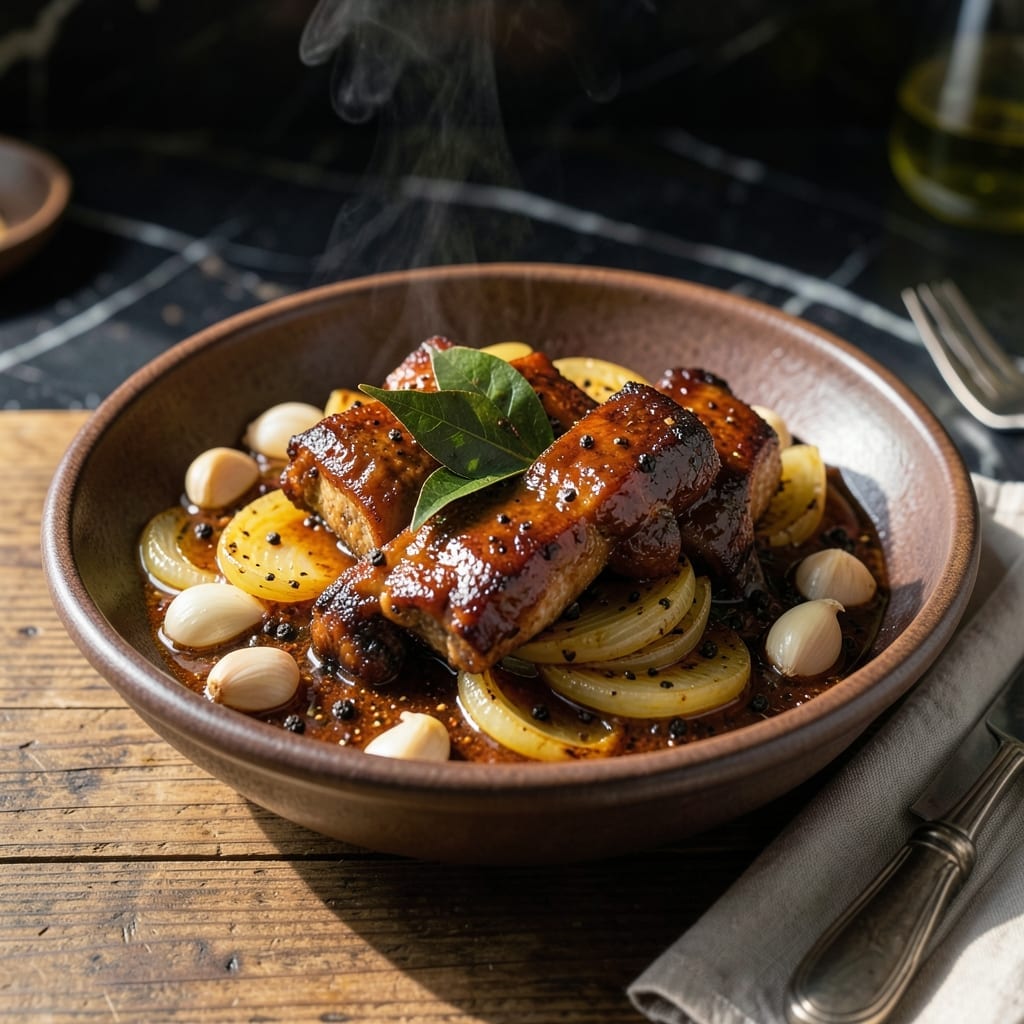
This dish transforms humble pork tail into a rich, gelatinous masterpiece through slow cooking. The process extracts every bit of flavor and collagen, creating a melt-in-your-mouth texture that defines traditional Pinoy comfort food.
I developed this method after testing various approaches in my small kitchen, focusing on the perfect balance of tenderness and depth. The key is patience—allowing the tails to simmer until the meat nearly falls from the bone.
What emerges is a dish with layers of savory richness, where the sauce thickens naturally from the collagen. The result is both hearty and deeply satisfying, with a texture that’s uniquely gelatinous.
Serve this over steamed rice to soak up every last drop of the flavorful broth. Here’s how to make it right.
Ingredients for Pork Tail Recipe Pinoy
Rich, gelatinous comfort starts with these bold, savory ingredients for a classic Pinoy dish.
| Ingredient | Amount | Notes |
|---|---|---|
| Pork Tail 🐖 | 2 lb | Rinsed and patted dry |
| Yellow Onion 🧅 | 1 whole | Large, quartered |
| Garlic Cloves 🧄 | 6 cloves | Smashed, peeled |
| Bay Leaves 🍃 | 2 pieces | Dried, whole |
| Black Peppercorns 🌶️ | 1 tbsp | Whole, lightly crushed |
| Soy Sauce 🫒 | ½ cup | Low-sodium preferred |
| Vinegar 💧 | ¼ cup | White or cane vinegar |
| Brown Sugar 🍚 | 2 tbsp | Light or dark |
| Water 💧 | 4 cups | Or enough to cover tails |
| Salt 🧂 | 1 tsp | Kosher or sea salt |
| Green Onions 🧅 | ½ cup | Thinly sliced, for garnish |
| Calamansi or Lemon 🍋 | 1 piece | Juiced, for serving |
[recipe_ingredient_scaler]
Pork tail is the star here—look for fresh, meaty cuts at Asian markets or specialty butchers. Avoid pre-frozen tails if possible (they can get mushy). I usually grab mine from the Filipino grocery near my place, where they’re cut into manageable pieces. The collagen breaks down during cooking, so don’t trim off the skin or fat—that’s where the magic happens.
No pork tail? Pork hocks or beef shank work in a pinch, but the texture won’t be quite as gelatinous. For the vinegar, cane vinegar is traditional—if you can’t find it, apple cider works too. The soy sauce should be Filipino brands like Silver Swan or Datu Puti for authentic flavor. Fresh bay leaves add a subtle depth, but dried are fine at half the amount.
This tastes even better the next day as the flavors deepen. Keeps in the fridge for 4-5 days or freezes for 3 months. Reheat gently to preserve the collagen-rich sauce—microwave works, but stovetop is kinder to the texture.
Why You’ll Love This Recipe
- I’ll be real: pork tail is cheap, and this dish feeds my family for two meals without breaking the bank.
- One Pot Wonder: I toss everything in, let it simmer, and the pork tail becomes fall-off-the-bone tender with barely any effort.
- Rich Garlic Depth: The garlic and black peppercorns infuse the broth with a deep, savory punch that’s ridiculously satisfying.
- Weeknight Hero: Between us, it’s my go-to for busy evenings—just prep in the morning and come home to a ready meal.
Step-by-Step Instructions for Slow-Cooked Pork Tail
This method transforms tough cuts into melt-in-your-mouth perfection with rich, collagen-laden broth.
Step 1: Sear and Bloom the Aromatics
In a large pot, sear the 2 lb Pork Tail over medium-high heat until deeply browned on all sides. This step builds a flavor foundation that cannot be skipped. Remove the tails and set aside momentarily.
In the same pot, add the 1 whole Yellow Onion (quartered) and 6 cloves Garlic Cloves (smashed). Sauté until the edges of the onion turn translucent and the garlic releases its aroma—about 3-4 minutes. The smell should be fragrant but not burnt.
Step 2: Build the Braising Liquid
Return the pork tails to the pot. Add the 2 pieces Bay Leaves, 1 tbsp Black Peppercorns (lightly crushed), 0.5 cup Soy Sauce, 0.25 cup Vinegar, and 2 tbsp Brown Sugar. Stir to combine and let the liquids come to a gentle simmer.
The vinegar will cut through the richness of the pork, while the brown sugar adds a subtle caramel note that balances the dish. You’ll notice the liquid start to turn a deep, glossy brown as the sugar dissolves.
Step 3: Simmer Until Fork-Tender
Pour in the 4 cups Water and add the 1 tsp Salt. The water should just cover the pork tails—add more if needed. Bring to a boil, then reduce the heat to low and cover the pot. Let it simmer gently for 2.5 to 3 hours.
Check occasionally to ensure the liquid hasn’t reduced too much; add a splash of water if needed. The pork tails are done when the meat pulls away from the bone effortlessly and the broth has thickened into a gelatinous consistency.
Step 4: Finish and Serve
Once the pork tails are tender, remove them from the pot and skim any excess fat from the surface of the broth. Taste the broth and adjust the seasoning if needed—it should be rich, savory, and slightly tangy.
Ladle the pork tails and broth into serving bowls. Garnish with the 0.5 cup Green Onions (thinly sliced) and a squeeze of 1 piece Calamansi or Lemon for a bright, citrusy finish. The calamansi ties all the flavors together beautifully.
Pro Tips For Making Pork Tail Recipe Pinoy
- Parboil First: I learned this the hard way—boil the pork tail for 10-15 minutes before braising to remove impurities and keep your broth clean. The scum that rises? Skim it off, or your final dish will taste bitter.
- Sear the Tail: After parboiling, pat the tail dry and sear it in oil until browned on all sides. This adds depth to the stew that simmering alone just can’t match.
- Don’t Rush the Simmer: Pork tail is tough—give it at least 2 to 2.5 hours on low heat until the meat falls off the bone. I used to pull it early and wondered why it was chewy.
- Crush the Aromatics: Lightly crush the garlic cloves and slice the onions thick—this way they hold up during the long cook but still infuse the broth. Bay leaves and peppercorns can go in whole, but bruise them slightly to release their flavor.
Best Sauces and Condiments for This Dish
Classic Pinoy Dips
For an authentic touch, serve with toyomansi—a simple mix of ½ cup soy sauce and ¼ cup calamansi juice. The tangy-salty combo cuts through the richness perfectly. I always keep Silver Swan soy sauce on hand for this. 💛
Spicy Vinegar Boost
Filipino spiced vinegar adds a bright, fiery kick. Combine 1 cup cane vinegar, 2 chopped bird’s eye chilies, and 1 tsp black peppercorns in a jar. Let it sit for 24 hours before using—it’s worth the wait.
Creamy Balance
A dollop of lechon sauce (liver-based) adds depth and creaminess. If you can’t find it, blend ½ cup liver pâté with 2 tbsp vinegar and 1 tbsp sugar for a quick substitute. This is my go-to for special occasions.
Fresh Garnishes
Thinly sliced green onions and extra calamansi wedges at the table let everyone customize their bowl. The acidity brightens up the rich broth beautifully. I always serve these on the side.
Extra Umami
A sprinkle of toasted garlic bits or crispy fried shallots adds texture and intensity. Fry 4 minced garlic cloves in 2 tbsp oil over low heat until golden—it takes 3-4 minutes.
Nutrition Facts
Frequently Asked Questions
How long should I cook pork tail to get the gelatinous texture?
Simmer for 2.5 to 3 hours on low heat until the meat pulls away from the bone effortlessly. This slow cooking breaks down the collagen, creating that signature rich, gelatinous sauce.
Can I use a pressure cooker for this recipe?
Yes! A pressure cooker reduces the time to about 45-60 minutes. Use the same ingredients and liquid amounts, but follow your cooker’s guidelines for safe pressure cooking.
What can I use if I don’t have calamansi?
Substitute with equal parts lime or lemon juice. While calamansi has a unique sweet-tart flavor, lime comes closest. Add a pinch of sugar to mimic calamansi’s natural sweetness.
Is it okay to skip the searing step?
No—searing builds the deep, caramelized flavors that define this dish. Skipping it results in a bland broth. Take the extra 5 minutes to brown the tails well on all sides.

Trained in classic French technique but raised on slow-cooked ribs and spicy rubs, she blends culinary skill with smoke and soul.
- Smoked Teriyaki Beef Jerky Recipe: Umami-Deep Flavor in Every Chewy Bite - October 15, 2026
- Stewed Beef Brisket Recipe: Deep-Rich Flavor After 8 Hours of Slow Simmering - October 15, 2026
- Beef Brisket Rolls Recipe: Flaky Layers and Smoky Sweet Filling - October 15, 2026