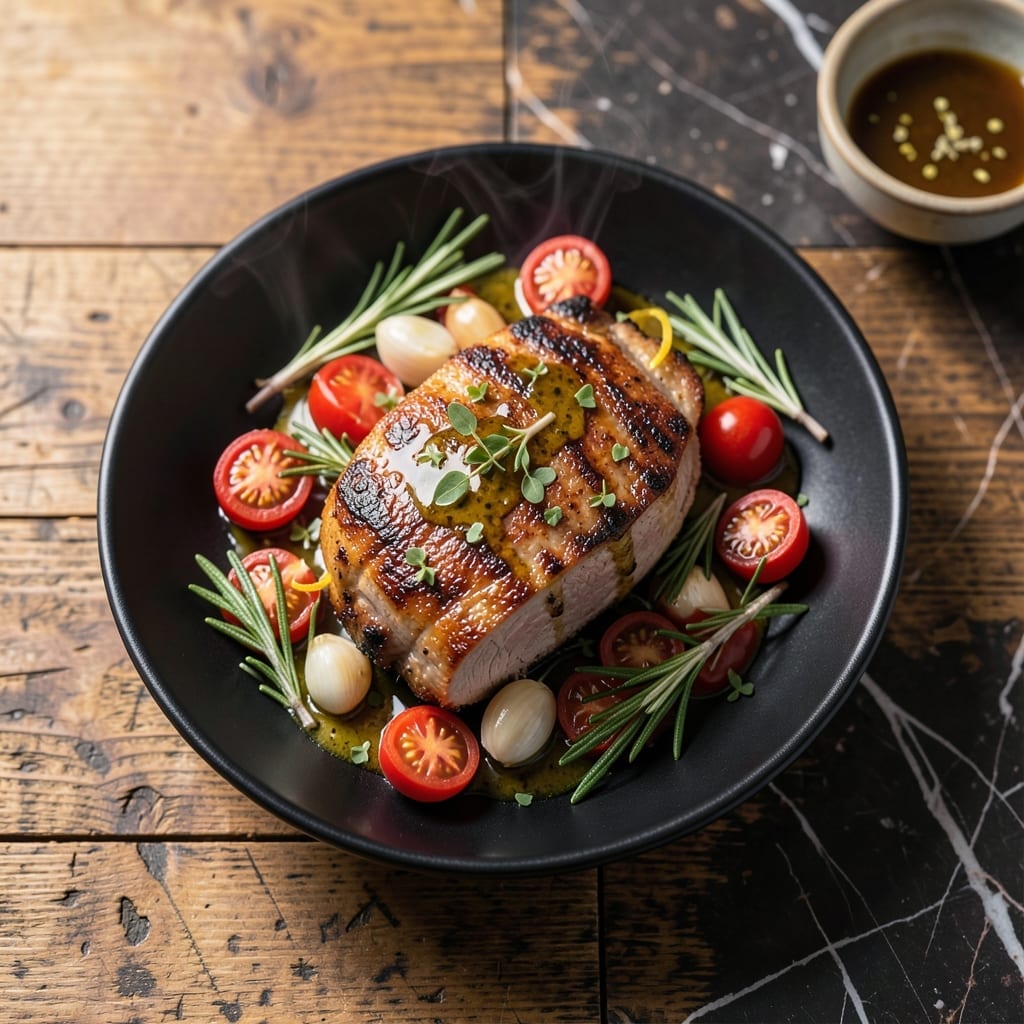
This herb-crusted pork tenderloin delivers tender, juicy results with a golden crust that cracks with every slice. I developed this method after years of testing to ensure perfect doneness without drying out the lean meat.
The secret lies in a simple herb rub and precise cooking temperature. A brief sear creates a flavorful crust, while finishing in the oven guarantees even cooking throughout. The result is restaurant-quality pork with minimal effort.
Each bite offers a balance of savory herbs and juicy pork, with a texture that’s both tender and satisfying. The technique works every time, whether for a weeknight dinner or special occasion.
Serve sliced and fanned for an elegant presentation that impresses without pretension. The method is straightforward, the results are consistent, and the flavor is undeniable.
Ingredients for Pork Tenderloin Recipe the Kitchen
Pantry herbs and a few fresh staples create this restaurant-quality centerpiece with ease.
| Ingredient | Amount | Notes |
|---|---|---|
| Pork Tenderloin 🥩 | 1 ½ lb | Trimmed of silver skin |
| Olive Oil 🫒 | 2 tbsp | Divided for searing and rub |
| Garlic Cloves 🧄 | 4 cloves | Minced finely for rub |
| Fresh Rosemary 🌿 | 2 tbsp | Finely chopped, stems discarded |
| Fresh Thyme Leaves 🍃 | 2 tbsp | Stems removed, finely chopped |
| Dijon Mustard 🟡 | 2 tbsp | Whole grain preferred for texture |
| Kosher Salt 🧂 | 1 ½ tsp | Diamond Crystal preferred for consistency |
| Black Pepper 🌶️ | 1 tsp | Freshly cracked for bold flavor |
| Paprika 🌶️ | 1 tsp | Sweet or smoked for depth |
| Dried Oregano 🍃 | 1 tsp | Mediterranean variety preferred |
| Butter 🧈 | 2 tbsp | Unsalted, for basting |
[recipe_ingredient_scaler]
The pork tenderloin itself is critical—opt for 1.5 lb trimmed pieces from a reputable butcher or Whole Foods for consistent thickness. Silver skin must be removed (your butcher will do this for free) as it prevents the rub from adhering properly. Fresh herbs from the produce section outperform dried every time, though dried work in a pinch at a reduced ratio.
No fresh rosemary or thyme? Dried herbs at one-third the quantity will suffice, though the flavor profile will be slightly muted. Dijon can be swapped for whole-grain mustard for added texture, or regular yellow in a bind. Paprika varieties (sweet, smoked, hot) each bring distinct notes—smoked paprika adds a subtle barbecue essence that pairs wonderfully with pork.
Store fresh herbs wrapped in damp paper towels for up to 5 days. The pork can be prepped and rubbed 12 hours ahead and refrigerated, which actually enhances flavor penetration. Always bring the meat to room temperature before cooking for even results.
Why You’ll Love This Recipe
- One Pan Wonder: I toss the tenderloin with olive oil, garlic, rosemary, and thyme, then roast—cleanup is just a quick wipe.
- Herb-Crusted Magic: That garlic-rosemary-thyme rub forms the most incredible crust, crisp outside, juicy inside.
- Weeknight Rescue: Honestly, it’s my 45-minute lifesaver when I need something impressive but unfussy.
- Budget-Friendly Feast: One affordable tenderloin serves four with leftovers that taste even better sliced thin for sandwiches.
Step-by-Step Instructions for Herb-Crusted Pork Tenderloin
This method ensures a perfectly seared crust with a tender, juicy interior every time.
Step 1: Prepare the Herb Rub
In a small bowl, combine the minced 4 cloves garlic cloves, 2 tbsp fresh rosemary, 2 tbsp fresh thyme leaves, 2 tbsp Dijon mustard, 1.5 tsp kosher salt, 1 tsp black pepper, 1 tsp paprika, and 1 tsp dried oregano. Stir until it forms a thick, fragrant paste.
Pat the 1.5 lb pork tenderloin completely dry with paper towels—this ensures the rub adheres properly and promotes even browning. Rub the herb mixture all over the surface of the pork, pressing firmly to create an even coating. Let it sit at room temperature for 15 minutes to allow the flavors to penetrate.
Step 2: Sear the Pork Tenderloin
Heat 1 tbsp olive oil in a large oven-safe skillet over medium-high heat until shimmering. Add the pork tenderloin and sear for 3-4 minutes per side, turning only once, until the crust is deep golden brown and crisp.
Resist the urge to move the pork around—this allows the herb crust to form properly. The pork should release easily from the pan when it’s ready to flip. If it sticks, let it cook for another 30 seconds before attempting to turn again.
Step 3: Baste with Butter and Finish in the Oven
Reduce the heat to medium and add the remaining 1 tbsp olive oil and 2 tbsp butter to the skillet. Tilt the pan slightly and use a spoon to baste the pork with the melted butter continuously for 1-2 minutes. This step adds richness and enhances the crust’s flavor.
Transfer the skillet to a preheated 400°F oven and roast for 12-15 minutes, or until the internal temperature reaches 145°F. The pork should feel slightly firm to the touch but still springy—this guarantees a juicy result.
Step 4: Rest and Serve
Remove the pork from the oven and transfer it to a cutting board. Tent loosely with foil and let it rest for 10 minutes—this allows the juices to redistribute throughout the meat. Skipping this step will result in dry, tough pork.
Slice the pork tenderloin into ½-inch thick medallions. The center should be just barely pink, and the herb crust should be deeply browned and aromatic. Serve immediately while warm, with any pan juices spooned over the top for added flavor.
Pro Tips For Making Pork Tenderloin Recipe The Kitchen
- Sear Hot and Fast: Crank your pan to medium-high before adding the pork—this gives a proper golden crust to lock in juices. I learned this the hard way after too many pale, soggy tenderloins.
- Pat It Dry: Blot the pork tenderloin with paper towels before seasoning; even a little moisture prevents a good sear. Sounds tedious, but it actually changes the outcome.
- Don’t Overcrowd the Pan: Give the pork space in the pan—crowding steams instead of sears. After burning three batches, I finally figured out it’s worth cooking in two shifts if needed.
- Rest Before Slicing: Let the pork rest for 5-10 minutes under foil after cooking; slicing too soon sends all the juices running onto the cutting board. My grandmother swore by this, and she was right.
Pro Cooking Tips for Great pork tenderloin recipe the kitchen
Perfect Searing Technique
Use a heavy-bottomed skillet like Lodge cast iron for even heat distribution. Heat 1 tbsp olive oil until it shimmers but doesn’t smoke—this happens at about 375°F. I learned the hard way that a too-hot pan burns herbs before they flavor the meat. 🔥
Temperature Control
Invest in an instant-read thermometer—I use ThermoWorks. Pull the pork at exactly 145°F internal temperature. The USDA confirms this is safe for pork, and the meat stays juicy. Remember, it continues cooking while resting.
Resting Is Crucial
Let the pork rest for 10 minutes under foil. This step changed my cooking forever after that pot pie disaster. The juices redistribute, preventing dryness when you slice. Skipping this ruins all your hard work.
Butter Basting Trick
Add 2 tbsp unsalted butter during the last minute of searing. Tilt the pan and spoon the melted butter over the pork continuously. This creates an extra-flavorful crust and adds richness to the lean meat.
Even Thickness Matters
Tuck the thin end of the tenderloin under itself and secure with kitchen twine before cooking. This ensures even cooking throughout. I picked this up from a butcher at my local Boston market. 💡
Herb Freshness Tip
Use fresh rosemary and thyme from the produce section. If substituting dried, reduce quantities by two-thirds. Fresh herbs release oils during cooking that dried simply can’t match.
Nutrition Facts
Frequently Asked Questions
How do I prevent the herb crust from burning?
Use medium-high heat for searing and watch closely. If the herbs start to darken too quickly, reduce the heat to medium. Basting with butter also helps protect the crust.
Why is resting the pork so important?
Resting for 10 minutes lets juices redistribute. Slicing too soon causes them to spill out, leaving the meat dry. It’s the secret to juicy, flavorful results every time.
Can I use a different pan if I don’t have cast iron?
Yes! A heavy stainless steel or oven-safe nonstick skillet works too. Just ensure it can handle 400°F in the oven. Avoid thin pans—they cause uneven cooking.
What if my tenderloin is thicker on one end?
Tuck the thin end under and secure it with kitchen twine. This ensures even thickness for consistent cooking. Remove the twine before slicing.

Trained in classic French technique but raised on slow-cooked ribs and spicy rubs, she blends culinary skill with smoke and soul.
- Recipe for Boneless Pork Chops in Cast Iron Skillet: Sear and Baste to Juicy Perfection - October 3, 2026
- Recipe for Boneless Cross Rib Roast: Slow-Roasted Beef with Herb Crust - October 3, 2026
- Hamburgers in Sauce Recipe Crock Pot: Slow-Cooked Savory Delight - October 3, 2026