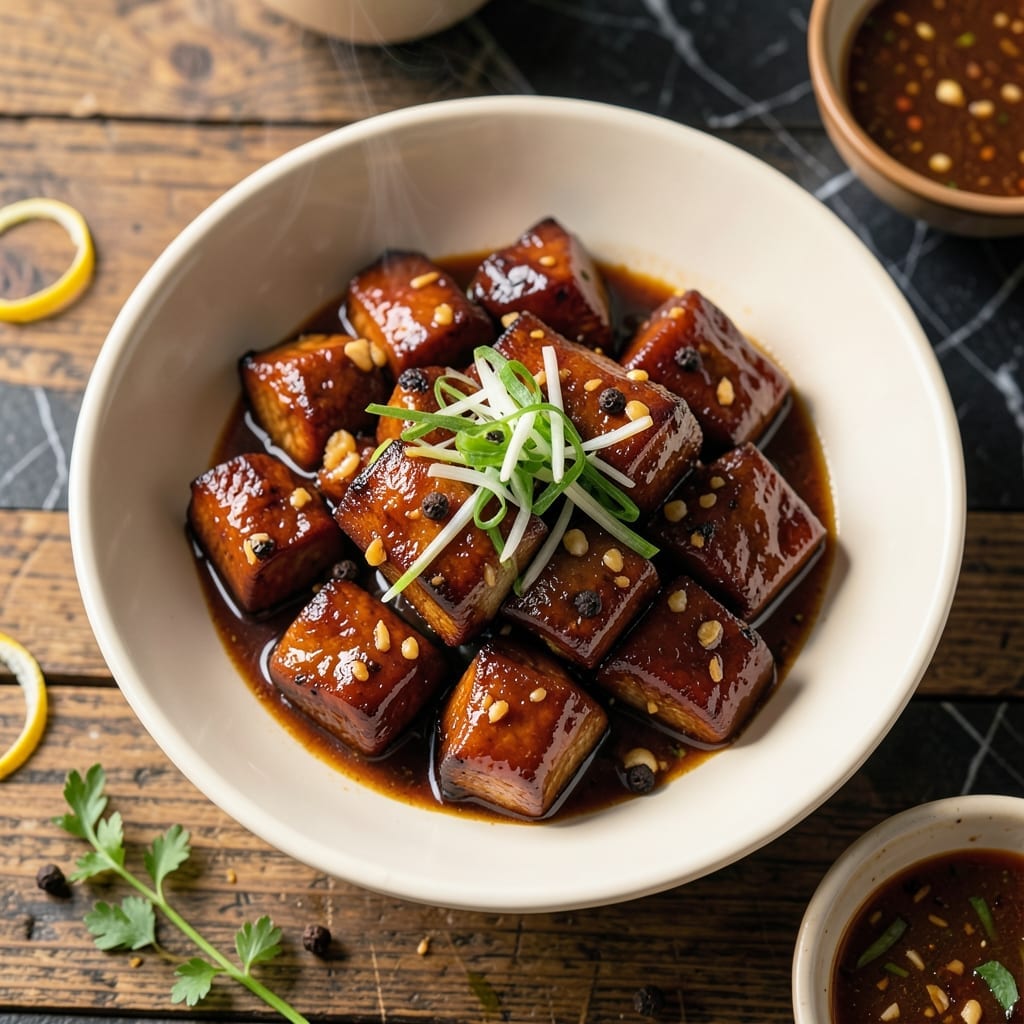
This Filipino-style teriyaki brings together the sweet and savory flavors of adobo with classic Japanese techniques. I developed this fusion after years of experimenting with both cuisines.
The pork marinates in a blend of soy sauce, vinegar, and brown sugar, creating a tender base before hitting the pan. Cooking at high heat ensures a beautiful caramelization while maintaining juiciness.
What emerges is meat with glossy edges and a sauce that balances salty, sweet, and tangy perfectly. The vinegar in the marinade cuts through the richness, a nod to traditional adobo.
Serve over steamed rice to soak up every drop of the flavorful sauce. This dish proves fusion cooking can be both authentic and delicious.
Ingredients for Pork Teriyaki Recipe Filipino Style
Sweet soy sauce and tangy vinegar create the perfect fusion in this dish.
| Ingredient | Amount | Notes |
|---|---|---|
| Pork Shoulder 🥩 | 1 ½ lb | Cut into 1-inch cubes, boneless |
| Soy Sauce 🫒 | ½ cup | Low-sodium preferred for balance |
| Cane Vinegar 💧 | ½ cup | Filipino white vinegar ideal |
| Brown Sugar 🍚 | ½ cup | Packed, light or dark |
| Garlic Cloves 🧄 | 6 cloves | Minced for marinade depth |
| Fresh Ginger 🌿 | 1 tbsp | Peeled and grated finely |
| Bay Leaves 🍃 | 3 whole | Dried, for adobo authenticity |
| Black Peppercorns 🌶️ | 1 tsp | Crushed, freshly ground best |
| Cornstarch 🌾 | 2 tbsp | For sauce thickening |
| Water 💧 | ¼ cup | To adjust sauce consistency |
| Vegetable Oil 🫒 | 2 tbsp | Neutral flavor, high smoke point |
| Green Onions 🧅 | 4 whole | Thinly sliced for garnish |
| Steamed Rice 🍚 | 4 cups | Cooked, for serving |
[recipe_ingredient_scaler]
The pork shoulder is key here—look for well-marbled cuts at your local butcher or Costco. Filipino cane vinegar has a sharper tang than rice vinegar, so grab Datu Puti or Silver Swan brands from Asian markets (or online). The brown sugar adds caramel depth, but coconut sugar works too for a deeper molasses note. Bay leaves should be whole and fragrant—discard any that smell like dust.
No cane vinegar? Rice vinegar with extra lime juice mimics the acidity. Swap pork shoulder for chicken thighs (bone-in for more flavor). Fresh ginger is non-negotiable, but ground ginger at half the amount saves time. For a gluten-free version, use tamari instead of soy sauce. The cornstarch slurry can be made with arrowroot powder if needed.
Marinate the pork for at least 2 hours (overnight for maximum flavor). Leftovers keep for 4-5 days in the fridge or freeze for 3 months. Reheat gently to avoid drying out the meat. The sauce thickens more as it cools—add a splash of water if needed.
Why You’ll Love This Recipe
- One Pan Magic: I just toss pork shoulder, soy sauce, cane vinegar, and brown sugar in one pan—minimal cleanup, maximum flavor.
- Sweet-Savory Balance: The brown sugar caramelizes with soy sauce while garlic adds depth, creating that sticky, crave-worthy glaze.
- Feeds a Crowd: Pork shoulder stays tender even when doubled, so I make extra for leftovers or potlucks.
- Budget Hero: Shoulder cuts cost less than chops, and the sauce uses pantry staples I always have on hand.
Step-by-Step Instructions for Pork Teriyaki Filipino Style
This fusion method blends adobo depth with teriyaki shine—simple but deeply flavorful.
Step 1: Marinate the Pork Shoulder
In a large bowl, combine the 1.5 lb Pork Shoulder (cut into 1-inch cubes) with 0.5 cup Soy Sauce, 0.5 cup Cane Vinegar, 0.5 cup Brown Sugar, 6 cloves Garlic Cloves (minced), 1 tbsp Fresh Ginger (grated), 3 whole Bay Leaves, and 1 tsp Black Peppercorns (crushed). Mix thoroughly to coat every piece evenly.
Cover and refrigerate for at least 2 hours, or overnight for maximum flavor penetration. The vinegar tenderizes the pork while the soy sauce and brown sugar build a rich, caramelized foundation. Stir once halfway through marinating to redistribute the flavors.
Step 2: Sear and Simmer the Pork
Heat 2 tbsp Vegetable Oil in a large skillet or Dutch oven over medium-high heat. Remove the pork from the marinade (reserve the marinade) and sear in batches for 3-4 minutes per side until deeply browned. Don’t overcrowd the pan—this ensures a proper sear instead of steaming.
Once all pork is browned, return it to the pan and pour in the reserved marinade. Bring to a boil, then reduce heat to medium-low and simmer uncovered for 25-30 minutes, stirring occasionally, until the pork is tender and the sauce begins to thicken slightly.
Step 3: Thicken the Sauce to Glazed Perfection
In a small bowl, whisk together 2 tbsp Cornstarch and 0.25 cup Water until smooth. Stir this slurry into the simmering pork and sauce. Cook for an additional 3-5 minutes, stirring constantly, until the sauce thickens to a glossy, syrup-like consistency that coats the back of a spoon.
The sauce should cling to the pork and glisten—this is the hallmark of a well-executed teriyaki. If it thickens too much, add a splash of water to loosen it. Taste and adjust seasoning if needed, though the balance of sweet, salty, and tangy should already be spot-on.
Step 4: Garnish and Serve Over Steamed Rice
Remove the 3 whole Bay Leaves from the sauce and discard. Transfer the pork and its luscious sauce to a serving dish. Slice the 4 whole Green Onions thinly and sprinkle them over the top for a fresh, vibrant contrast.
Serve immediately over 4 cups Steamed Rice, spooning extra sauce generously over each portion. The rice soaks up the rich, sticky glaze beautifully, making every bite irresistibly flavorful. This dish is best enjoyed fresh, while the sauce is still glossy and the pork at its most tender.
Pro Tips For Making Pork Teriyaki Recipe Filipino Style
- Sear the Pork First: I learned this the hard way—browning the pork shoulder in a hot pan for 2-3 minutes per side before braising locks in the juices and adds depth to the teriyaki sauce.
- Balance the Sauce: Filipino-style teriyaki needs equal parts soy sauce and cane vinegar, but I always add a splash more vinegar (about 1 tbsp) to cut through the sweetness of the brown sugar.
- Don’t Rush the Simmer: After burning two batches, I finally figured out the sauce needs at least 10-12 minutes to thicken properly—low and slow is the only way to avoid a watery glaze.
- Crush the Garlic: Sounds weird, but it works: smashing the garlic cloves before mincing releases more flavor into the sauce, and I swear the dish tastes richer when I do this.
Essential Equipment for This Recipe
Skillet or Dutch Oven
A heavy-bottomed 12-inch skillet or Dutch oven is essential for even heat distribution. I use my Lodge cast iron for this recipe—it retains heat beautifully and develops that perfect sear on the pork. Avoid non-stick pans as they can’t handle the high heat needed for caramelization. 🔥
Mixing Bowls
You’ll need a large glass or stainless steel mixing bowl (at least 4-quart capacity) for marinating the pork. I prefer Pyrex because it’s easy to clean and doesn’t absorb odors. The bowl should be big enough to hold all the pork with room to toss it in the marinade.
Sharp Chef’s Knife
A 8-inch chef’s knife makes quick work of cubing the pork shoulder. I’ve had my Wüsthof for over a decade—it’s still my go-to for any meat prep. Keep it sharp to make clean cuts through the pork’s connective tissue.
Wooden Spoon
Use a wooden spoon for stirring the pork while it simmers to prevent scratching your cookware. The flat edge also helps scrape up any browned bits from the bottom of the pan. I keep a few bamboo spoons in my kitchen just for this purpose.
Whisk for Slurry
A small wire whisk ensures your cornstarch slurry is completely smooth before adding it to the sauce. I like the OXO Good Grips whisk—it fits comfortably in my hand. Lumps in the slurry can create uneven thickening in your final sauce.
Measuring Cups and Spoons
Precise measurements matter for the marinade balance. I use stainless steel measuring cups and spoons from New Seasons Market. The vinegar’s acidity needs to balance the sugar’s sweetness perfectly, so accurate measuring is key to that signature Filipino teriyaki flavor. 💡
Nutrition Facts
Frequently Asked Questions
Can I use a different cut of pork?
Yes! Pork tenderloin works well for a leaner option, though it cooks faster. For more fat and flavor, try pork belly, but reduce cooking time to 20 minutes to prevent drying.
Why is cane vinegar important?
Filipino cane vinegar has a sharper, more complex tang than rice vinegar. It balances the sweetness and adds authentic adobo depth. In a pinch, use rice vinegar with extra lime juice.
How do I fix sauce that’s too thin?
Mix 1 tbsp cornstarch with 1 tbsp water and stir into simmering sauce. Cook for 2-3 minutes until thickened. Avoid overcooking, as it can make the sauce gummy.
Can I make this ahead of time?
Marinate the pork overnight for deeper flavor. Cooked leftovers keep for 4-5 days refrigerated or freeze for 3 months. Reheat gently with a splash of water.

Trained in classic French technique but raised on slow-cooked ribs and spicy rubs, she blends culinary skill with smoke and soul.
- Recipe for Boneless Pork Chops in Cast Iron Skillet: Sear and Baste to Juicy Perfection - October 3, 2026
- Recipe for Boneless Cross Rib Roast: Slow-Roasted Beef with Herb Crust - October 3, 2026
- Hamburgers in Sauce Recipe Crock Pot: Slow-Cooked Savory Delight - October 3, 2026