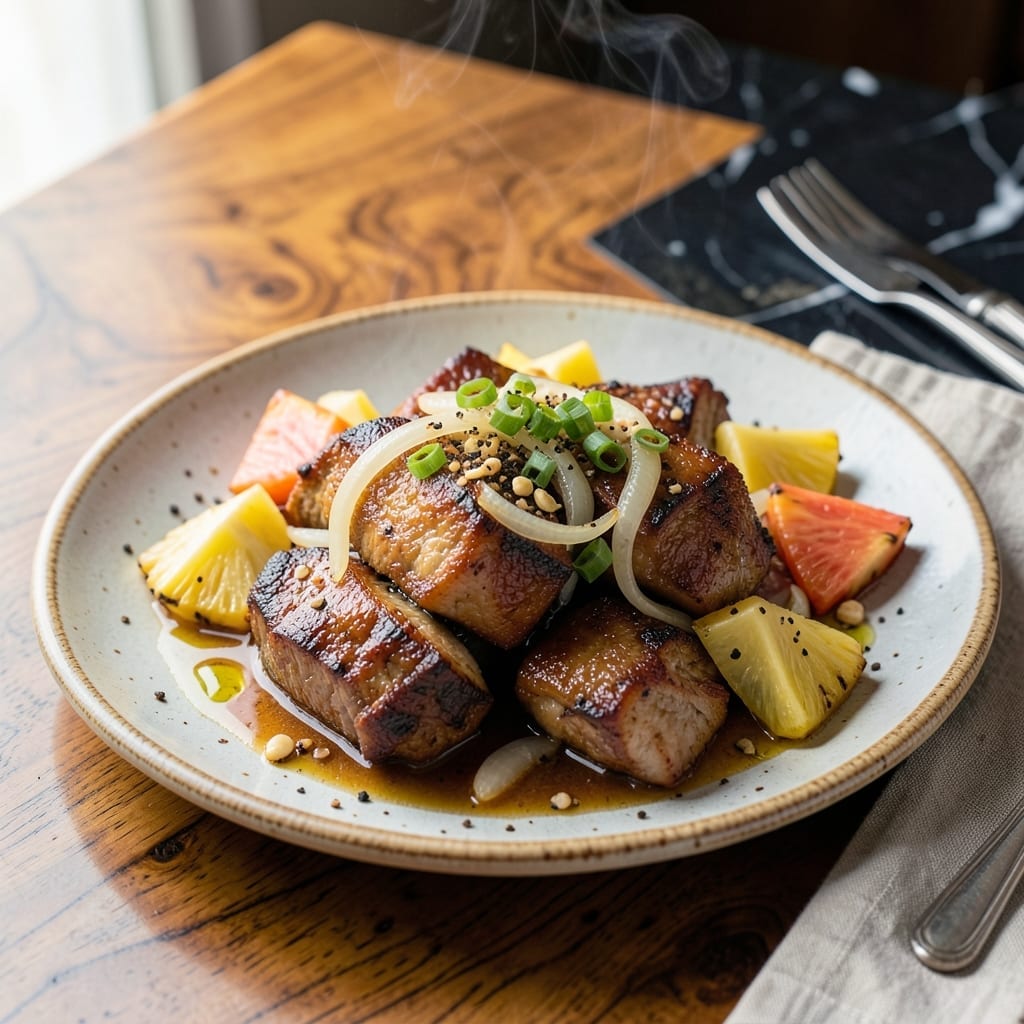
This Filipino-style pork with pineapple reimagines classic adobo with a sweet-sour twist that defines the cuisine’s signature balance. The pineapple adds natural sweetness that perfectly complements the dish’s tangy depth.
Traditional techniques meet modern convenience in this recipe, using simple ingredients to create layers of flavor. The pork becomes fall-apart tender while absorbing the vibrant sauce.
The result is a dish that’s both comforting and exciting, with the pineapple’s acidity cutting through the richness. It’s a celebration of Filipino flavors in every bite.
Serve this with steamed rice to soak up every drop of the savory-sweet sauce. The combination is irresistible.
Ingredients for Pork with Pineapple Recipe Filipino Style
Pork shoulder, pineapple, and adobo staples create this savory-sweet Filipino classic with deep tangy layers.
| Ingredient | Amount | Notes |
|---|---|---|
| Pork Shoulder 🥩 | 2 lb | Cut into 2-inch chunks |
| Fresh Pineapple 🍍 | 2 cups | Diced, reserve juice |
| Soy Sauce 🫒 | ½ cup | Low-sodium preferred |
| White Vinegar 💧 | ½ cup | Cane vinegar ideal |
| Garlic Cloves 🧄 | 8 cloves | Minced finely |
| Yellow Onion 🧅 | 1 whole | Sliced thinly |
| Bay Leaves 🍃 | 3 pieces | Dried, whole |
| Black Peppercorns 🌶️ | 1 tsp | Lightly crushed |
| Brown Sugar 🍚 | 2 tbsp | Light or dark |
| Vegetable Oil 🫒 | 2 tbsp | For searing pork |
| Water 💧 | ½ cup | For braising liquid |
| Green Onions 🧅 | 4 whole | Sliced for garnish |
[recipe_ingredient_scaler]
The pork shoulder is non-negotiable here. Look for well-marbled cuts at Whole Foods or your local butcher—fat equals flavor in adobo. Asian markets often carry pre-cut pork specifically for stewing. The pineapple should be ripe but firm (sniff the base for sweetness). Fresh is ideal, but canned in juice works if you drain and reserve the liquid.
No fresh pineapple? Canned chunks in 100% juice are a solid backup—just skip the syrup. Soy sauce can be substituted with tamari for gluten-free or coconut aminos for a lighter touch. Out of white vinegar? Apple cider vinegar at equal amounts adds a fruity note. Bay leaves are essential—don’t skip them. If you must, 1 tsp dried oregano offers a similar earthy depth.
This tastes even better the next day as flavors meld. Store in an airtight container for up to 4 days in the fridge or 3 months frozen. Reheat gently to preserve the pineapple’s texture (don’t boil). The sauce thickens as it cools—thin with reserved pineapple juice if needed.
Why You’ll Love This Recipe
- One-Pot Wonder: I toss the pork shoulder, pineapple, and marinade in a single pan and let it work its magic.
- Sweet-Savory Magic: The pineapple caramelizes with the soy-vinegar-garlic mix—ridiculously good.
- Feeds a Crowd: I made this for a family gathering and everyone went back for seconds.
- Budget Stretcher: Pork shoulder is affordable, and the pineapple adds a fancy touch without the price tag.
Step-by-Step Instructions for Pork With Pineapple Filipino Style
Master this technique for balanced sweetness and tang with minimal effort and maximum flavor.
Step 1: Sear the Pork Shoulder for Depth of Flavor
Heat the 2 tbsp vegetable oil in a large pot or Dutch oven over medium-high heat until it shimmers. Add the 2 lb pork shoulder chunks in a single layer, working in batches if necessary to avoid crowding. Sear undisturbed for 3-4 minutes per side until deeply browned on all surfaces.
This searing step develops the Maillard reaction, creating complex flavors that form the foundation of your dish. Don’t rush this process—proper browning ensures the meat won’t stew in its own juices later. Transfer the seared pork to a plate and set aside.
Step 2: Build the Aromatic Base with Pineapple
In the same pot, reduce heat to medium and add the 1 whole yellow onion, 8 cloves garlic cloves, and 2 cups fresh pineapple. Sauté for 4-5 minutes until the onions soften and the pineapple begins to caramelize at the edges.
The natural sugars in the pineapple will start to brown, adding a subtle sweetness that complements the tangy elements. Stir in the 2 tbsp brown sugar and cook for an additional 1 minute to dissolve completely and integrate with the other ingredients.
Step 3: Create the Braising Liquid and Simmer
Pour in the 0.5 cup soy sauce, 0.5 cup white vinegar, 0.5 cup water, 3 pieces bay leaves, and 1 tsp black peppercorns. Stir to combine, then return the seared pork to the pot along with any accumulated juices.
The liquid should just cover the pork—if it doesn’t, add a bit more water. Bring to a boil, then reduce heat to low, cover, and simmer for 1.5 to 2 hours until the pork is fork-tender and the sauce has thickened slightly.
Step 4: Reduce the Sauce and Finish
Once the pork is tender, remove the lid and increase heat to medium. Simmer uncovered for 10-15 minutes to allow the sauce to reduce and concentrate. The sauce should coat the back of a spoon and have a glossy, slightly syrupy consistency.
Taste and adjust seasoning if needed—though the combination of soy sauce, vinegar, and pineapple should provide a perfect balance. Discard the bay leaves and black peppercorns before serving.
Step 5: Garnish and Serve
Transfer the pork and sauce to a serving dish and garnish with the 4 whole green onions, sliced thinly. The green onions add a fresh, vibrant contrast to the rich, deeply flavored pork and pineapple.
Serve hot with steamed rice to soak up the delicious sauce. The dish should have a harmonious blend of sweet, tangy, and savory notes in every bite.
Pro Tips For Making Pork With Pineapple Recipe Filipino Style
- Sear First, Simmer Later: Brown the pork shoulder well in the pan before adding liquids—this builds deep flavor that soy sauce and vinegar can’t replicate. I learned this the hard way after making bland versions for years. —
- Use Ripe Pineapple: Fresh, ripe pineapple adds natural sweetness and tenderizes the pork. Skip the canned kind; its texture turns mushy and the taste is flat. —
- Balance the Vinegar: White vinegar cuts through the richness, but too much makes the dish harsh. Start with 2 tablespoons, taste, then adjust—my grandmother swore by this ratio. —
- Crush the Garlic: Smash the garlic cloves slightly before mincing so they release more aroma. Sounds weird, but it actually changes the outcome in this dish.
Essential Equipment for pork with pineapple recipe filipino style
Dutch Oven Essentials
I always reach for my Le Creuset 5.5-quart Dutch oven for this dish—its heavy base distributes heat evenly during the long simmer. The enameled cast iron retains heat perfectly, ensuring the pork cooks gently. Any 5-6 quart Dutch oven works if you don’t have Le Creuset. 🔥
Precision Knife Work
A sharp 8-inch chef’s knife is non-negotiable for cutting the pork into uniform chunks. I use my Wüsthof Classic—it glides through the shoulder effortlessly. For mincing the garlic, a 3.5-inch paring knife gives better control.
Keep your knives honed with a ceramic sharpening rod before starting. Dull knives slip and make prep dangerous.
Wooden Spoon Magic
Stirring with a wooden spoon prevents scratching your Dutch oven’s surface while deglazing. I love my bamboo spoon from the Portland farmers market—it’s sturdy and fits perfectly in the pot’s corners. Avoid metal utensils that can damage enamel.
Measuring Tools
Accurate measurements matter for the sauce balance. I use OXO Good Grips measuring cups for the liquids and a 1 tbsp stainless steel measuring spoon for the brown sugar. The vinegar’s acidity needs precise proportions to complement the pineapple’s sweetness.
Serving Must-Haves
Have a large serving bowl ready for the finished dish—I use a hand-painted ceramic one from my Cincinnati days. Include a ladle for serving the sauce over rice. The sauce is the star, so don’t let it go to waste!
Nutrition Facts
Frequently Asked Questions
Can I use canned pineapple instead of fresh?
Yes! Use 2 cups canned pineapple chunks in 100% juice, drained but with juice reserved. Avoid syrup-packed varieties as they’re too sweet. The reserved juice can replace some braising liquid.
Why does the sauce need to reduce?
Reducing concentrates flavors and thickens the sauce so it clings to the pork. Simmer uncovered for 10-15 minutes at medium heat until glossy. This step balances the sweet and tangy elements perfectly.
How do I prevent the pork from drying out?
Use well-marbled pork shoulder and don’t skip the searing step. Simmer covered at low heat for 1.5-2 hours until fork-tender. The fat and long cook time keep it moist.
Can I make this ahead of time?
Flavors deepen after 1-2 days in the fridge. Store in an airtight container for up to 4 days or freeze for 3 months. Reheat gently to preserve texture.

Trained in classic French technique but raised on slow-cooked ribs and spicy rubs, she blends culinary skill with smoke and soul.
- Recipe For Fried Pork Chops In An Iron Skillet: Crispy Crust With Juicy Centers - October 3, 2026
- Recipe for Fully Cooked Spiral Ham: Sweet Glaze and Effortless Elegance - October 3, 2026
- Recipe for Cream of Rice: Silky Smooth Breakfast Comfort - October 3, 2026