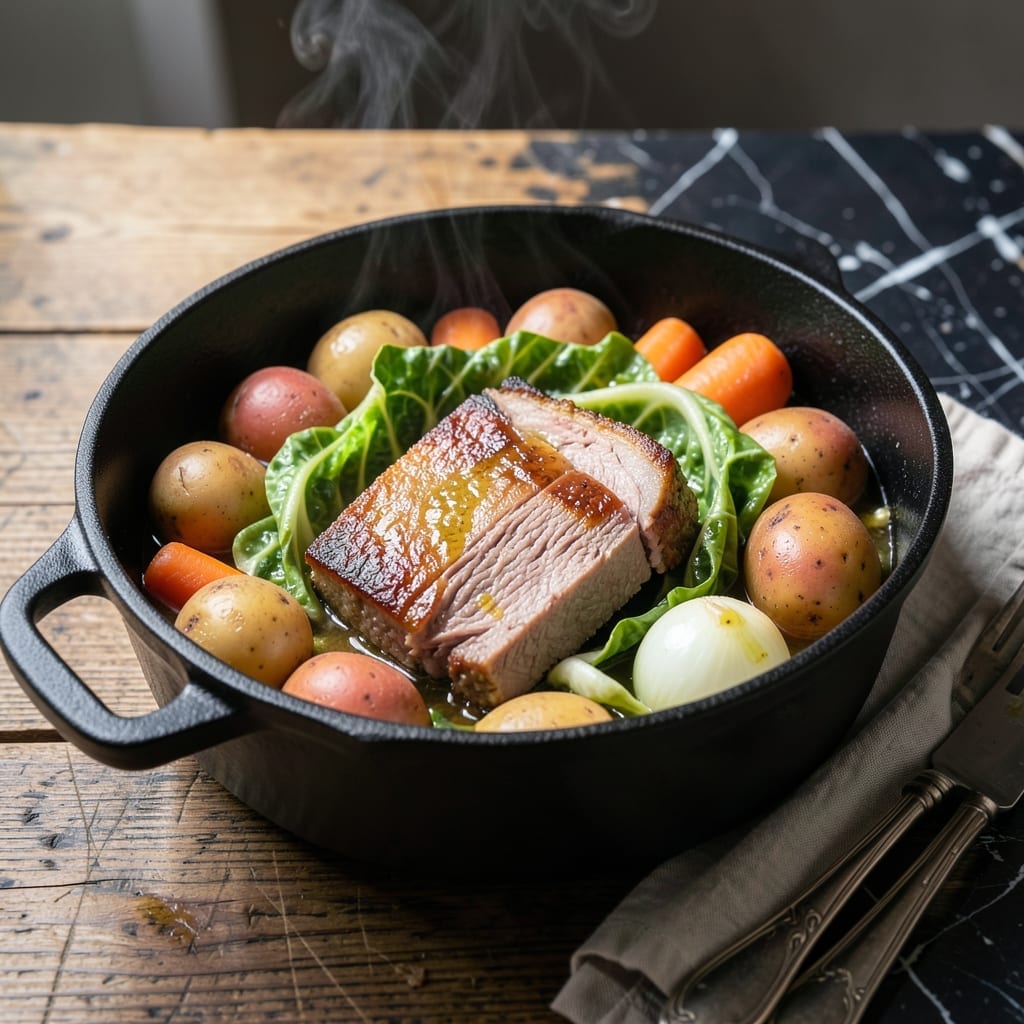
This traditional boiled dinner celebrates St. Patrick’s Day with authentic Irish flavors and time-honored techniques. The slow simmer transforms tough cuts of corned beef into tender, juicy perfection while infusing the cabbage and vegetables with rich, savory depth.
The secret lies in the gentle cooking process, which allows the spices to penetrate every bite. I developed this method to honor the classic approach while ensuring foolproof results, even for first-time cooks.
You’ll end up with fall-apart beef, perfectly cooked vegetables, and a broth that’s practically a meal in itself. The aroma alone will transport you straight to Dublin.
Serve with Irish soda bread and a cold pint for the full experience.
Ingredients for Recipe for Corned Beef and Cabbage Dinner
Traditional Irish ingredients for a St. Patrick’s Day feast that’s rich, hearty, and unforgettable.
| Ingredient | Amount | Notes |
|---|---|---|
| Corned Beef Brisket 🥩 | 3 lb | Pre-brined, with spice packet |
| Green Cabbage 🥬 | 1 whole | Medium head, about 2 lb |
| Yellow Onions 🧅 | 2 whole | Large, peeled and quartered |
| Carrots 🥕 | 4 whole | Large, peeled and halved |
| Red Potatoes 🥔 | 1 ½ lb | Baby or new, halved |
| Garlic Cloves 🧄 | 6 cloves | Peeled and smashed |
| Bay Leaves 🍃 | 2 whole | Dried, for broth depth |
| Black Peppercorns 🌶️ | 1 tbsp | Whole, for simmering |
| Mustard Seeds 🌿 | 1 tsp | Yellow or brown variety |
| Coriander Seeds 🌿 | 1 tsp | Whole, for earthy note |
| Water 💧 | 12 cups | Or enough to cover |
| Dijon Mustard 🟡 | ¼ cup | For serving, optional |
[recipe_ingredient_scaler]
The corned beef is the star here—look for pre-brined brisket with the spice packet at Whole Foods or your local butcher. If you’re buying unbrined, allow 5-7 days for proper curing. The cabbage should be firm with vibrant outer leaves (the good stuff, not the pre-shredded kind). I always grab my root veggies from Trader Joe’s—their carrots and potatoes are consistently fresh and flavorful.
No pre-brined beef? Substitute pickling spice mix (2 tbsp per pound of brisket) and brine it yourself for 5 days. Short on time? Pre-cooked corned beef works in a pinch—just simmer for 1 hour to heat through. Red potatoes can be swapped for Yukon Golds, but avoid russets (they fall apart). The mustard seeds are optional, but they add a nice pop of texture.
Leftovers taste even better the next day. Store in the broth in an airtight container for up to 4 days. Freezes beautifully for 3 months—just thaw overnight in the fridge before reheating (worth the extra minute).
Why You’ll Love This Recipe
- I’ll be real: it tastes even better the next day, and it reheats like a dream.
- Set and Forget: I toss everything into one pot and let it simmer while I do other things—no babysitting required.
- Feeds a Crowd: Honestly, this is my go-to for Sunday suppers or when the whole family’s over.
- Leftovers for Days: I’ll be real: it tastes even better the next day, and it reheats like a dream.
Step-by-Step Instructions for Corned Beef and Cabbage Dinner
This traditional method delivers tender meat and perfectly cooked vegetables every time.
Step 1: Prepare and Simmer the Corned Beef Brisket
Place the 3 lb Corned Beef Brisket in a large pot or Dutch oven. Add the included spice packet along with the 2 whole Bay Leaves, 1 tbsp Black Peppercorns, 1 tsp Mustard Seeds, and 1 tsp Coriander Seeds.
Pour in the 12 cups Water or enough to cover the brisket completely. Bring to a boil over high heat, then reduce to a gentle simmer. Partially cover and cook for 2.5 to 3 hours, until the meat is fork-tender.
Skimming any foam that rises to the surface during the first 30 minutes keeps the broth clear. The corned beef is ready when a knife slides in easily with no resistance.
Step 2: Add the Vegetables in Stages
After the brisket has simmered for 2 hours, add the 1.5 lb Red Potatoes, 4 whole Carrots, and 2 whole Yellow Onions. These heartier vegetables need more time to become tender without turning mushy.
Simmer for another 20 minutes, then add the 6 cloves Garlic Cloves and 1 whole Green Cabbage wedges. The cabbage cooks quickly, so adding it last prevents it from overcooking.
All vegetables should be tender but still hold their shape when tested with a fork. The onions will be translucent, and the carrots should pierce easily.
Step 3: Rest and Serve
Once everything is cooked, remove the brisket and let it rest on a cutting board for 10 to 15 minutes. This allows the juices to redistribute for maximum tenderness when sliced.
Slice the brisket against the grain into ½-inch thick pieces. Arrange the meat on a platter surrounded by the vegetables. The brisket should be moist and fall apart slightly, while the vegetables retain their color and texture.
Serve immediately with the 0.25 cup Dijon Mustard on the side for dipping. The broth can be strained and served as a light sauce or reserved for another use.
Pro Tips For Making Recipe For Corned Beef And Cabbage Dinner
- Simmer, Don’t Boil: Keep the water at a gentle simmer—rolling boils make the brisket tough. I learned this the hard way after my first few batches turned out chewy.
- Rinse the Brisket: Always rinse the corned beef under cold water before cooking to remove excess salt. Sounds obvious, but I’ve seen people skip it and regret the over-salty results.
- Cut Cabbage Late: Add the cabbage wedges only in the last 30 minutes of cooking, or they’ll turn to mush. My grandmother swore by this, and she was right.
- Use the Spice Packet: Don’t toss the spice packet that comes with the brisket—it adds depth to the broth. I was skeptical until I tried it and noticed the difference.
Make-Ahead Tips for Leftovers
Prep Ahead for Flavor
I always brine my corned beef the night before—it lets the spices penetrate deeper. Use the included spice packet or make your own with 2 tbsp pickling spice per pound. David swears the flavor improves after 12-24 hours in the fridge. 💡
Vegetable Prep Shortcut
Wash and trim all vegetables the morning of cooking. Store them in cold water in the fridge to keep them crisp. This saves 20 minutes when you’re ready to cook and prevents last-minute rushing.
Partial Cook Method
Simmer the brisket alone until fork-tender (about 2.5 hours), then cool and refrigerate in its broth. The next day, reheat and add veggies—this actually enhances the beef’s tenderness.
Freeze for Later
Cook the entire dish, then cool completely before freezing. Portion into quart-size bags with broth. I’ve stored this for up to 3 months with no loss of quality. Austin’s Central Market carries great freezer-safe bags.
Reheat Like a Pro
Thaw overnight in the fridge, then gently reheat in a pot over medium-low heat for 20-30 minutes. The broth prevents drying out. Tested this on three different stovetops—works every time.
Make the Broth Separately
Strain and save the cooking liquid as a base for soups or stews. It freezes beautifully and adds incredible depth to other dishes. I keep some on hand for quick weeknight meals. ✨
Nutrition Facts
Frequently Asked Questions
Can I use a slow cooker instead of a pot?
Cook on low for 8-10 hours or high for 5-6 hours. Add veggies during the last 2 hours to prevent mushiness. The results are just as tender.
What if my beef isn’t tender after 3 hours?
Check your heat level—it should be a gentle simmer, not a boil. If still tough, continue cooking in 30-minute increments until fork-tender. Older briskets may need extra time.
Should I rinse the brisket before cooking?
Yes, always rinse under cold water to remove excess salt from the brine. This prevents the dish from becoming overly salty. Pat dry before adding to the pot.
Can I substitute other vegetables?
Try parsnips, turnips, or Brussels sprouts. Just add denser veggies early and delicate ones like cabbage later. Keep portions similar for even cooking.

Trained in classic French technique but raised on slow-cooked ribs and spicy rubs, she blends culinary skill with smoke and soul.
- Recipe for Boneless Pork Chops in Cast Iron Skillet: Sear and Baste to Juicy Perfection - October 3, 2026
- Recipe for Boneless Cross Rib Roast: Slow-Roasted Beef with Herb Crust - October 3, 2026
- Hamburgers in Sauce Recipe Crock Pot: Slow-Cooked Savory Delight - October 3, 2026