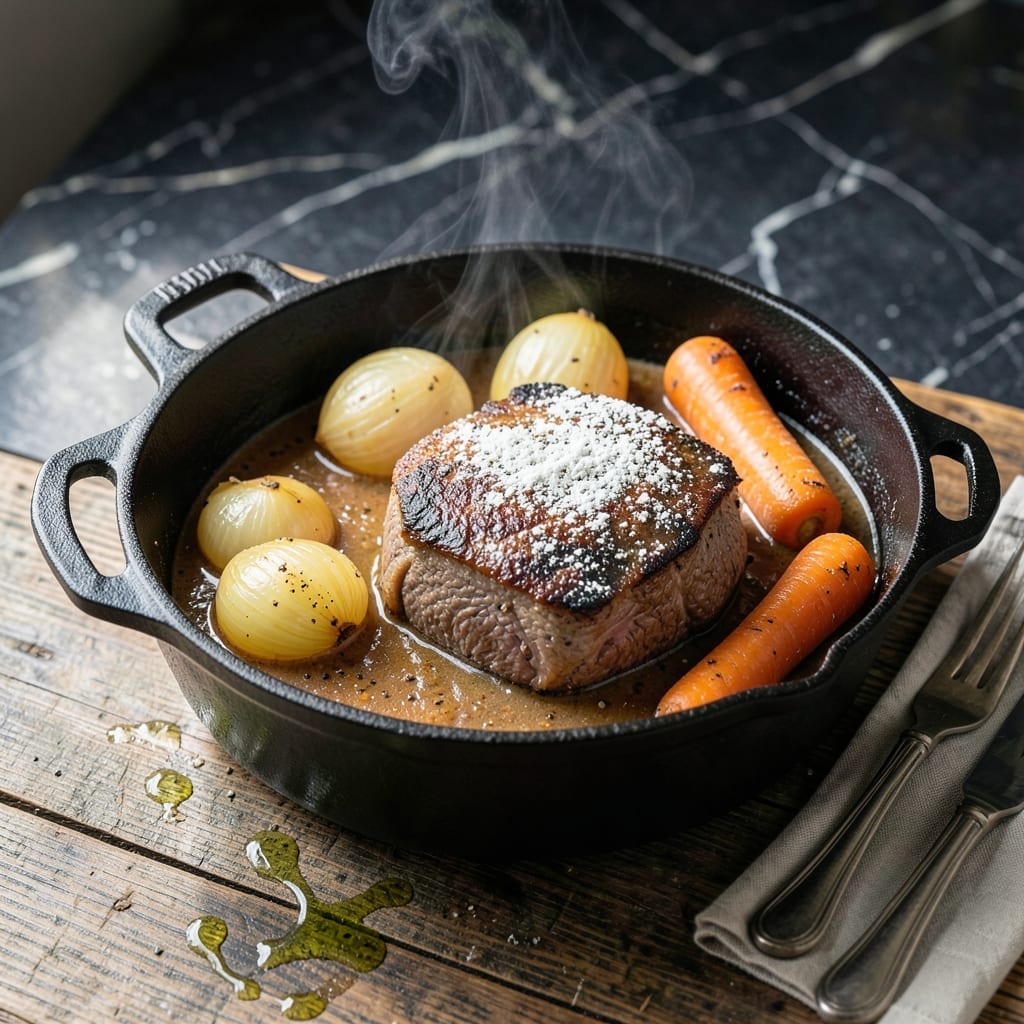
This pot roast delivers fall-apart tender beef and a velvety gravy that defines comfort food. The flour isn’t just for thickening—it creates the perfect crust during searing.
I’ve refined this method over years of Sunday dinners, focusing on low, steady heat that transforms tough cuts into melt-in-your-mouth perfection. The flour-based gravy absorbs all the rich beef flavors.
What emerges after hours of slow simmering is meat so tender it nearly dissolves, surrounded by a rich, deep gravy that soaks into every bite. The aroma alone makes the wait worthwhile.
The secret is patience—rushing this process means missing out on the depth of flavor that develops through slow cooking. Every step builds toward that perfect first bite.
Ingredients for Pot Roast Recipe with Flour
A few quality ingredients transform tough beef into Sunday dinner perfection here.
| Ingredient | Amount | Notes |
|---|---|---|
| Chuck Roast 🥩 | 3 lb | Well-marbled, boneless preferred |
| All-Purpose Flour 🌾 | ½ cup | For searing and thickening gravy |
| Kosher Salt 🧂 | 2 tsp | Diamond Crystal preferred |
| Black Pepper 🌶️ | 1 tsp | Freshly ground |
| Olive Oil 🫒 | 2 tbsp | For searing beef |
| Yellow Onion 🧅 | 2 whole | Large, quartered |
| Carrots 🥕 | 3 whole | Peeled, cut into chunks |
| Celery Stalks 🌿 | 3 whole | Cut into large pieces |
| Garlic Cloves 🧄 | 5 cloves | Smashed, peeled |
| Beef Broth 🍲 | 3 cups | Low-sodium preferred |
| Red Wine 🍷 | 1 cup | Dry variety for depth |
| Bay Leaves 🍃 | 2 whole | Dried, whole leaves |
| Fresh Thyme Sprigs 🌿 | 4 whole | Tied with twine |
| Tomato Paste 🍅 | 2 tbsp | For umami depth |
[recipe_ingredient_scaler]
The chuck roast is non-negotiable here. Look for heavy marbling—that fat renders down into the gravy, creating the signature richness. I grab mine from Costco for larger cuts or Whole Foods for their organic options. Avoid lean cuts like sirloin; they’ll just dry out. The flour is the secret weapon—Gold Medal or King Arthur both work beautifully for that perfect crust.
No red wine? Substitute beef broth with a splash of balsamic vinegar for similar depth. Out of fresh thyme? Dried thyme at one-third the amount works in a pinch. The tomato paste can be swapped with ketchup in a 1:1 ratio (don’t judge), but the paste gives better umami. For the broth, Better Than Bouillon makes a solid low-sodium option if you’re not making it from scratch.
Leftovers taste even better the next day. Store in an airtight container for up to 4 days in the fridge or freeze for 3 months. The gravy thickens as it cools—just reheat gently with a splash of water.
Why You’ll Love This Recipe
- One Pan Magic: That flour coating on the chuck roast makes for effortless searing in one pot—minimal mess, maximum flavor.
- Rich, Savory Crust: The flour browns into this incredible crust with the olive oil, locking in juices while adding depth.
- Feeds a Crowd: Honestly, this is my go-to for Sunday dinner—heartier than it looks and perfect for leftovers.
- Budget Stretcher: A tough cut like chuck becomes tender and luxurious, and it costs less than half of pricier roasts.
Step-by-Step Instructions for Slow-Simmered Beef With Rich Gravy
Here’s how to transform that chuck roast into fall-apart tender beef with deep, savory gravy.
Step 1: Prep and Sear the Chuck Roast
Pat the 3 lb chuck roast dry with paper towels—this ensures a good sear. Season it generously with the 2 tsp kosher salt and 1 tsp black pepper, pressing the seasoning into the meat so it adheres well.
Heat the 2 tbsp olive oil in a Dutch oven over medium-high heat until shimmering. Dredge the chuck roast in the 0.5 cup all-purpose flour, shaking off any excess, then sear it for 4-5 minutes per side until deeply browned. The flour creates a crust that locks in juices and thickens the gravy later. Transfer the meat to a plate and set aside.
Step 2: Sauté the Aromatics and Deglaze
In the same Dutch oven, add the 2 whole yellow onion (quartered), 3 whole carrots, and 3 whole celery stalks. Sauté for 5-6 minutes until the vegetables begin to soften and brown slightly. This builds a flavor base for your gravy.
Add the 5 cloves garlic cloves, 2 tbsp tomato paste, 2 whole bay leaves, and 4 whole fresh thyme sprigs. Stir for 1-2 minutes until the tomato paste darkens slightly—this intensifies its umami richness. Pour in the 1 cup red wine and scrape up any browned bits from the bottom of the pot. Let it simmer for 2-3 minutes until the liquid reduces by half.
Step 3: Braise the Roast to Tenderness
Return the chuck roast to the Dutch oven and pour in the 3 cups beef broth. The liquid should come about halfway up the meat. Bring everything to a gentle simmer, then cover and reduce the heat to low.
Let it braise for 3-3.5 hours, turning the roast every 45-60 minutes to ensure even cooking. You’ll know it’s done when the meat shreds easily with a fork and the gravy has thickened, thanks to the flour from searing. If the liquid reduces too much during cooking, add a splash of water to maintain the level.
Step 4: Rest, Shred, and Serve
Once the chuck roast is fork-tender, remove it from the pot and let it rest on a cutting board for 10-15 minutes. This allows the juices to redistribute, keeping the meat moist.
Shred or slice the beef against the grain and return it to the pot to soak up the rich gravy. Discard the bay leaves and thyme sprigs before serving. The gravy should coat the back of a spoon with a velvety texture. Serve hot with the braised vegetables for a hearty, comforting meal.
Pro Tips For Making Pot Roast Recipe With Flour
- Sear the Floured Meat: Dust the chuck roast with flour just before searing—it creates a thicker crust and prevents the coating from burning. I learned this the hard way after my first few attempts turned into bitter, blackened messes.
- Use Room-Temp Beef: Let the chuck roast sit out for 30-45 minutes before cooking. Cold meat seizes up in the pan, and you’ll miss that deep, even brown color that makes pot roast so satisfying.
- Don’t Crowd the Pan: Sear the roast in batches if needed, or use a large enough pot. Steaming from overcrowding turns the flour coating gummy instead of crisp—sounds weird, but it works.
- Deglaze with Purpose: After searing, pour in a splash of broth or wine to lift those browned flour bits. That’s where the rich, gravy-like flavor hides, and skipping it wastes the best part of the dish.
Troubleshooting This Dish
Gravy Too Thin
If your gravy lacks thickness, the flour may not have browned enough during searing. Remove the meat and simmer the liquid uncovered on medium heat for 10-15 minutes to reduce. Alternatively, mix 1 tbsp flour with 2 tbsp cold water and stir into the gravy. 💡
Meat Not Tender
Tough meat usually means insufficient cooking time. Return the roast to the pot, add ½ cup beef broth, and continue braising at low heat for another 30-45 minutes. Check liquid levels every 20 minutes to prevent drying out.
Gravy Lumps
Flour clumps often form if the dredging wasn’t even. Whisk vigorously to break them up, or strain the gravy through a fine-mesh sieve. For prevention, shake excess flour off the meat before searing and ensure oil is hot enough to sizzle immediately.
Burnt Flour Taste
This happens when searing over too-high heat. Start with medium-high heat, reduce to medium once browning begins. If it’s already burnt, add 1 tsp sugar and 1 tbsp vinegar to balance the bitterness. 🔥
Vegetables Mushy
Add vegetables 30 minutes into braising if you prefer them firmer. They soften significantly during the long cook. For crisp-tender texture, sauté separately and add just before serving.
Flour Not Browning
If your flour coating isn’t browning, your oil may not be hot enough. Wait until a drop of water sizzles and dances in the pot. Also, don’t overcrowd the pan—sear in batches if needed.
Nutrition Facts
Frequently Asked Questions
Why use flour in pot roast?
The flour creates a golden crust when searing and thickens the gravy naturally. It also helps lock in juices for tender meat.
Can I use cornstarch instead?
Yes, but it won’t brown like flour. Use 2 tbsp cornstarch mixed with water as a slurry at the end.
What if my gravy is lumpy?
Whisk vigorously or strain through a fine-mesh sieve. Prevent clumps by shaking off excess flour before searing.
How long does it take to cook?
Plan for 3-3.5 hours at low heat until the beef shreds easily with a fork.

Trained in classic French technique but raised on slow-cooked ribs and spicy rubs, she blends culinary skill with smoke and soul.
- Recipe for Crock Pot Swiss Steak: Slow-Cooked Beef With Mushroom Gravy - October 3, 2026
- Recipe for Kabsa Rice: Spiced Middle Eastern Feast in One Pot - October 3, 2026
- Hamburger Stir Fry Recipe Healthy: Lean Protein and Veggie-Packed Dinner - October 3, 2026