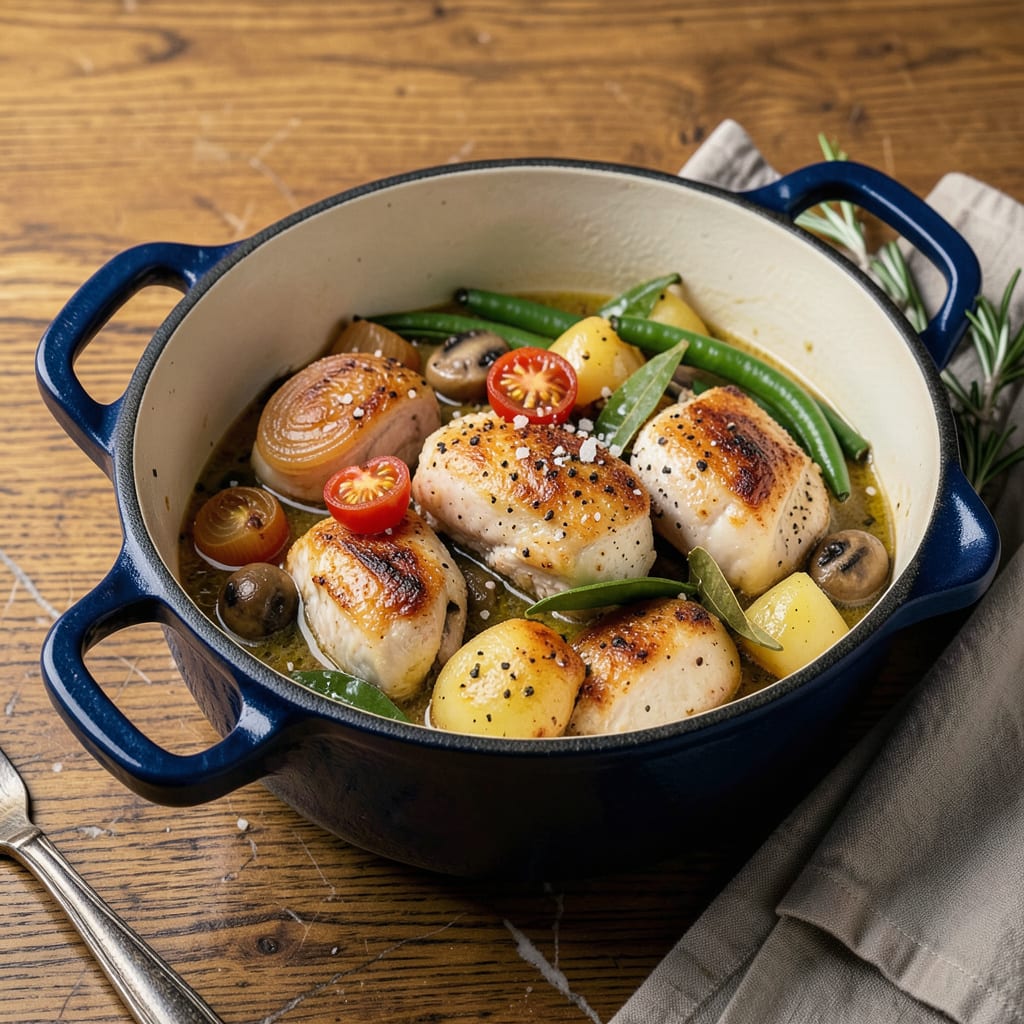
Oven-safe pots are typically made from stainless steel, cast iron, enameled cast iron, or certain ceramic materials. Always check for manufacturer labels indicating oven-safe status and maximum temperature limits (usually 350°F–500°F).
I’ve spent years testing cookware in professional kitchens, and here’s what I’ve learned: the best oven-safe materials balance heat retention with durability. 🔥 Stainless steel won’t warp at high temps, while cast iron develops that perfect sear when transitioning from stovetop to oven. The enamel coating on cast iron prevents rust and makes cleanup easier, but always verify the handle material—some plastic or wood components can’t handle oven heat. What surprises most home cooks is how ceramic pots (like certain Dutch ovens) can withstand 500°F when properly glazed, making them ideal for slow-cooked dishes.
💡 In This Article
- How Oven-Safe Pots Handle High Heat Without Damage
- Choosing the Best Oven-Safe Pot for Your Recipe
How Oven-Safe Pots Handle High Heat Without Damage
The secret lies in how different materials respond to temperature changes. Stainless steel contains chromium and nickel alloys that maintain structural integrity up to 500°F-600°F, preventing warping or pitting. This happens because the metal’s crystalline structure remains stable under heat stress.
Meanwhile, cast iron actually improves with heat exposure—the porous surface develops a natural nonstick patina over time when properly seasoned. 🔥
Enameled cast iron takes this further by adding a glass-like coating that protects against rust while allowing even heat distribution. The enamel is fused to the iron at temperatures exceeding 1400°F during manufacturing, creating a bond that won’t crack under normal oven use (typically up to 500°F). Ceramic pots use high-fired glazes that vitrify into a non-porous surface, but their heat tolerance varies—some can handle 500°F while others max out at 350°F. Always check the manufacturer’s specs.
Thermal shock becomes the real test for durability. When you move a pot from stovetop to oven, materials expand at different rates. Cast iron handles this well due to its uniform composition, while stainless steel with aluminum or copper cores can develop hot spots if heated too quickly.
The danger zone is rapid temperature changes—never place a frozen ceramic pot directly into a 400°F oven, as the glaze may crack from uneven expansion. ✨
Handle materials often determine the true oven-safe limit. Metal handles on All-Clad pans can withstand 600°F, while silicone-wrapped handles on some Le Creuset pieces may only be safe to 390°F. Nonstick coatings begin breaking down above 450°F, releasing potentially harmful fumes.
Glass lids often have lower thresholds (350°F) than their pot bases, making them the weak link in oven-safe systems.
Here’s what happens at the molecular level: When cast iron heats, its dense structure stores energy like a battery, releasing it slowly for even cooking. Stainless steel‘s lower thermal conductivity means it heats more gradually but responds quickly to temperature adjustments.
The enamel on cast iron actually becomes slightly more porous at high temps, which is why acidic foods (like tomato sauce) can eventually erode the coating if simmered too long at 400°F+. 💫
Pro tip: The “ping” sound you hear when heating empty stainless steel? That’s the metal expanding. A well-made pot will make this noise uniformly across the base. If you hear uneven pinging, it may indicate warping—time to replace that pan.
The same expansion principle explains why tight-fitting lids can become stuck after oven use: the metal contracts as it cools, creating a vacuum seal.

Trained in classic French technique but raised on slow-cooked ribs and spicy rubs, she blends culinary skill with smoke and soul.
- Recipe for Boneless Pork Chops in Cast Iron Skillet: Sear and Baste to Juicy Perfection - October 3, 2026
- Recipe for Boneless Cross Rib Roast: Slow-Roasted Beef with Herb Crust - October 3, 2026
- Hamburgers in Sauce Recipe Crock Pot: Slow-Cooked Savory Delight - October 3, 2026