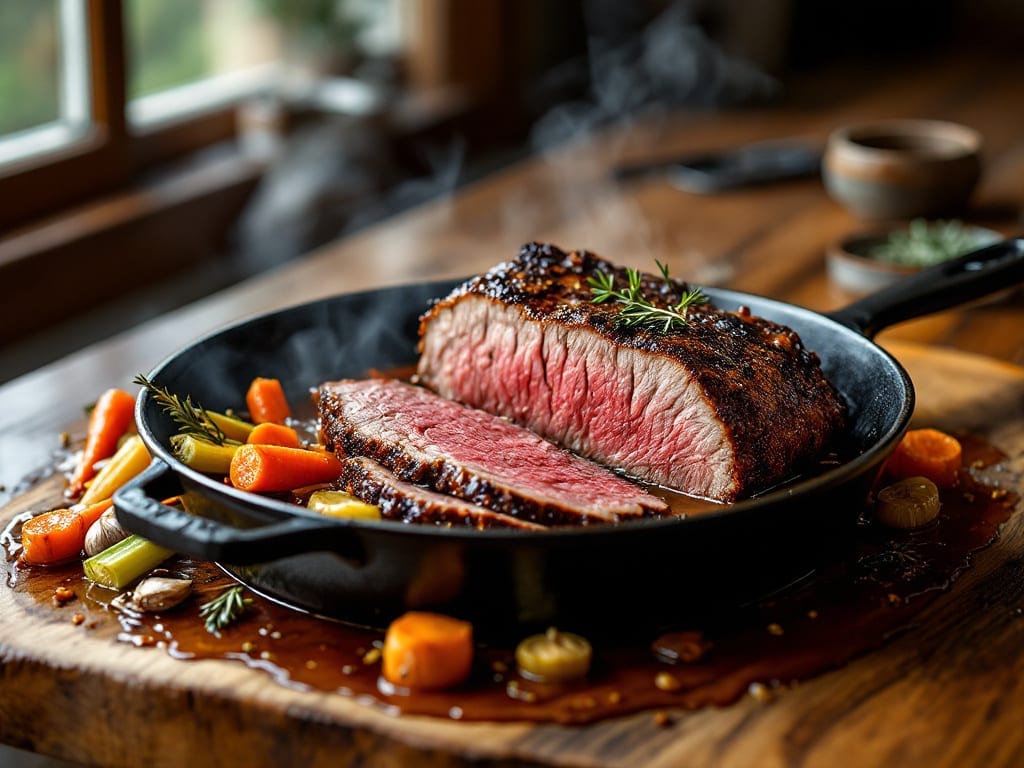
Pressure-cooking beef brisket transforms tough cuts into melt-in-your-mouth perfection in under two hours—a game-changer for busy weeknights. I perfected this method after years of slow-cooking briskets, and the pressure cooker delivers restaurant-quality tenderness without the hours of waiting.
The key lies in proper prep and timing, ensuring every bite is juicy and deeply flavorful.
This recipe starts with a simple sear to build flavor, followed by a low-and-slow pressure cook that breaks down the meat while keeping it moist. Unlike traditional methods that require all-day attention, the pressure cooker does most of the work for you—just set it and let the magic happen.
The result? A brisket so tender it nearly falls apart, with a caramelized crust that adds depth to every slice.
What makes this brisket truly special is its versatility. Serve it sliced thin for sandwiches, shredded over tacos, or as the centerpiece of a hearty meal with roasted vegetables and crusty bread.
The technique is foolproof, and the flavor is undeniable—perfect for feeding a crowd or meal prepping for the week.
Whether you’re using an Instant Pot or another electric pressure cooker, this method delivers consistent results every time. The secret is patience—letting the brisket rest after cooking ensures juices redistribute, guaranteeing the most tender, flavorful slices possible. Let’s get started!
Ingredients for pressure cook beef brisket
Sixteen ingredients, restaurant-quality results—this pressure cooker brisket delivers melt-in-your-mouth perfection without hours of slow cooking.
| Ingredient | Amount | Notes |
|---|---|---|
| Beef Brisket 🥩 | 3 lb | Flat cut, 1-inch thick, trimmed of fat |
| Yellow Onion 🧅 | 1 whole | Sliced into 1-inch pieces |
| Carrots 🥕 | 3 whole | Cut into 2-inch chunks |
| Celery Stalk 🌿 | 3 whole | Cut into 2-inch pieces |
| Garlic Cloves 🧄 | 6 cloves | Smashed, not minced |
| Beef Broth 💧 | 3 cups | Low-sodium preferred |
| Red Wine 🍷 | 1 cup | Cabernet Sauvignon recommended |
| Apple Cider Vinegar 🍎 | ¼ cup | For tenderizing |
| Brown Sugar 🍚 | ¼ cup | Light or dark |
| Smoked Paprika 🌶️ | 2 tbsp | For deep flavor |
| Ground Black Pepper 🌶️ | 1 ½ tbsp | Freshly cracked |
| Kosher Salt 🧂 | 2 tbsp | Diamond Crystal preferred |
| Olive Oil 🫒 | ½ cup | Extra-virgin for searing |
| Fresh Thyme 🌿 | ¼ cup | Leaves only, stems removed |
| Fresh Rosemary 🌿 | ⅛ cup | Needles only, finely chopped |
[recipe_ingredient_scaler]
The brisket cut is non-negotiable for this recipe. Flat-cut brisket with visible marbling delivers the best texture, while point-cut tends to stay tougher. Most butchers will trim it for you, but if buying pre-packaged, check for 1-inch thickness—any thinner risks drying out. For optimal quality, source from local butchers or high-end grocers like Whole Foods, where the meat is typically fresher than standard supermarket packs. The flat cut’s leaner profile makes it ideal for pressure cooking, as the high heat breaks down connective tissue while preserving moisture. Avoid pre-seasoned briskets—the spices in this recipe are carefully balanced for maximum flavor development.
Substitutions should preserve the recipe’s balance of sweet, smoky, and acidic elements. No red wine? Substitute an additional 1 cup of beef broth, but reduce the vinegar to 0.125 cup to maintain acidity. Fresh herbs unavailable? Dried thyme and rosemary work at one-third the amount, but toast the dried rosemary in a dry pan for 30 seconds first to enhance aroma. For the vinegar, apple cider vinegar is ideal, but white wine vinegar or even lemon juice in a pinch will work—just reduce to 0.125 cup. The carrots and celery serve as flavor carriers; if you prefer a different vegetable, swap them for mushrooms or turnips, but adjust cooking time by +10 minutes. The brown sugar can be omitted entirely if you’re watching sugar content, though it contributes to the caramelized crust.
Proper storage begins with the brisket itself. Once cooked, let it rest for at least 30 minutes before slicing—this crucial step allows juices to redistribute, preventing dryness. Store cooked brisket in an airtight container with a thin layer of broth or pan juices to maintain moisture for up to 5 days in the refrigerator. For longer storage, portion into freezer-safe containers with a sprinkle of salt between layers; it keeps 3 months at 0°F (-18°C). The fresh herbs can be refrigerated in a sealed container with a damp paper towel for 5 days, while the spices remain potent indefinitely in a cool, dark cabinet. The broth and wine can be refrigerated separately for 1 week or frozen for 6 months—just thaw overnight in the fridge before use.
Why You’ll Love This Recipe
- Deep, Caramelized Magic: That slow cook under pressure? It turns tough brisket into melt-in-your-mouth perfection with a crusty edge and tender center. The onions and carrots soften into sweet, jammy bits that cling to every bite—like someone took the best parts of a smoked brisket and made them easier.
- Leftovers That Shine: This recipe practically begs for seconds, which means you’ll have delicious sandwiches or tacos for days. Honestly, I’ve reheated this stuff in the microwave three times and it still tasted like Sunday dinner—no sad, dry meat here.
- Budget-Friendly Feast: A whole brisket feeds a crowd for less than takeout, and the veggies (onion, celery, carrots) stretch the flavor without breaking the bank. Between us, this is how I feed my family for under $15 per meal—no guilt, all satisfaction.
Step-by-step instructions for pressure cook beef brisket
This method delivers melt-in-your-mouth tenderness with a caramelized crust using only your pressure cooker.
Prepare the Brisket and Aromatics
Begin by trimming the 3 lb beef brisket to remove any excess fat, leaving about ¼-inch thickness on the fat cap. This ensures proper heat penetration while maintaining moisture. Pat the brisket dry with paper towels and season both sides generously with 1 tablespoon of the 2 tbsp kosher salt and 1 tbsp of the 1.5 tbsp ground black pepper.
In a separate bowl, combine the sliced 1 whole yellow onion, 2-inch chunks of 3 whole carrots, 2-inch pieces of 3 whole celery stalks, and the 6 smashed garlic cloves. This aromatic bundle will infuse the brisket with deep flavor as it cooks. Set aside until ready to use.
Sear the Brisket for Depth of Flavor
Heat the 0.5 cup olive oil in your pressure cooker over medium-high heat until shimmering. Place the seasoned brisket fat-side down and sear for 4-5 minutes until a deep golden-brown crust forms. Flip and sear the other side for another 3-4 minutes. This step is critical—it develops the Maillard reaction for maximum flavor.
Remove the brisket and set it aside. Add the prepared aromatic bundle to the same pot and cook for 2 minutes until the vegetables begin to soften slightly. This step ensures your aromatics contribute to the base flavor rather than just floating in the broth.
Deglaze and Build the Braising Liquid
Pour in the 1 cup red wine and scrape up all the browned bits from the bottom of the pot using a wooden spoon. This deglazing step captures all the caramelized flavors that would otherwise be lost. Add the 0.25 cup apple cider vinegar and simmer for 2 minutes to allow the alcohol to cook off.
Stir in the 2 tbsp smoked paprika, remaining 1 tbsp kosher salt, and remaining 0.5 tbsp ground black pepper. Add the 0.25 cup brown sugar, 0.25 cup fresh thyme, and 0.125 cup finely chopped fresh rosemary. Pour in the 3 cups beef broth and bring the mixture to a gentle boil, stirring to combine all ingredients.
Pressure Cook to Perfect Tenderness
Return the brisket to the pot, fat-side up, and place the aromatic bundle on top. Secure the lid and set the pressure cooker to high pressure for 90 minutes. This cooking time ensures the connective tissue breaks down completely, resulting in fork-tender meat without drying it out.
Once cooking is complete, allow the pressure to release naturally for 15 minutes before quick-releasing any remaining pressure. This gradual release prevents the brisket from becoming tough as the fibers reabsorb moisture. The internal temperature should reach 203°F when fully cooked.
Rest and Serve with Caramelized Crust
Transfer the brisket to a cutting board and tent loosely with aluminum foil. Let it rest for 15 minutes before slicing against the grain into ¼-inch thick pieces. This resting period allows the juices to redistribute, ensuring each bite is moist and flavorful.
The brisket should have a beautiful caramelized crust on the exterior while remaining tender throughout. Serve immediately with the reduced cooking liquid spooned over the top, creating a rich gravy that complements every bite. The vegetables in the pot can be mashed slightly and served as a side if desired.
Pro Tips For Making Pressure Cook Beef Brisket
- USE A THICK CUT: Pressure cookers work best with a brisket that’s at least 1.5 inches thick—any thinner and it’ll overcook before it’s tender. I learned this the hard way when a 1-inch cut turned out like shoe leather. If you’re stuck with a thin piece, wrap it tightly in butcher paper before sealing.
- CHOP VEGETABLES UNIFORMLY: Celery, carrots, and onions should be cut into 1-inch chunks—not just thrown in willy-nilly. Big pieces stay crunchy and undercooked; tiny pieces turn to mush. Aim for consistent sizing so everything finishes at the same time, and don’t skip the celery—it’s the flavor anchor.
- NATURAL RELEASE FIRST: Let the pressure drop naturally for the first 10 minutes after cooking—no quick-release shortcuts. I know it’s tempting to rush, but forcing the lid open too soon makes the brisket dry out faster. After that, a quick release works fine, but wait for the steam to settle before opening.
- SEAR THE BRISKET IN BATCHES: A crowded pot means uneven browning and steamed meat instead of caramelized crust. Cook the brisket in two rounds if needed—get a deep golden sear on one side, flip, then add the veggies. The extra time upfront guarantees better flavor and texture.
Make-ahead tips for this pressure cook beef brisket
Prep Ahead Strategy
I swear by prepping the brisket and aromatics the night before—it cuts cooking day stress by half. Trim the 3 lb brisket and season it with 1 tbsp salt and 1 tbsp pepper, then wrap it tightly in plastic wrap and refrigerate.
The next day, simply sear it fresh for maximum flavor. For the aromatics, chop all vegetables and store them in a sealed container with the smashed garlic. This keeps everything fresh and ready to go. 💡
Freezer-Friendly Prep
Want to go even further? Prep the entire aromatic bundle and store it frozen in a quart freezer bag for up to 3 months. Just thaw overnight in the fridge before using.
I also like to pre-mix the dry spices (smoked paprika, brown sugar, salt, pepper) in a small jar—this way, you only need to add the wet ingredients on cooking day.
The brisket itself can be frozen raw for 2 months if needed, but thaw it completely before searing. ❄️
Cooking Liquid Prep
Save time by prepping the cooking liquid components in advance. Measure out the 3 cups beef broth, 1 cup red wine, and 0.25 cup apple cider vinegar into separate containers. Keep the fresh herbs separate until ready to use—they release their oils best when added fresh.
If you’re short on time, use 1 tbsp dried thyme instead of fresh, but toast it first in a dry pan for 30 seconds to intensify the flavor. 🌿
Portioning for Meal Prep
After cooking, let the brisket rest for 15 minutes, then slice it against the grain into ¼-inch pieces. Portion into airtight containers with a ladle of the reduced cooking liquid to keep it moist. Store in the fridge for up to 5 days or freeze for 3 months.
For easy reheating, microwave individual portions covered with a damp paper towel for 2-3 minutes on 50% power. The liquid will help restore moisture. 🍽️
Make-Ahead Gravy
Don’t waste that flavorful cooking liquid! Strain it through a fine-mesh sieve to remove solids, then reduce it on the stovetop over medium heat for 10-15 minutes until thickened. Store the gravy in a jar in the fridge for up to 5 days or freeze for 3 months.
Reheat gently before serving—just add a splash of water if it thickens too much. This makes an instant upgrade for any meal! 💫
Herb and Spice Storage
Fresh herbs like thyme and rosemary can be prepped ahead by chopping them and storing in ice cube trays filled with water, then frozen. Pop out the cubes as needed—this keeps them vibrant and ready to use.
For the spices, store them in a cool, dark place (like a pantry) in airtight containers to preserve their potency. I keep mine in small jars from Portland’s New Seasons Market for easy access. 🌱
Nutrition facts
Frequently asked questions
Why does the recipe call for a 90-minute pressure cook time?
Beef brisket contains tough connective tissue that needs 90 minutes at high pressure to break down completely. This time ensures the meat becomes fork-tender while preventing dryness. The gradual pressure release afterward helps retain moisture, giving you perfectly tender slices every time.
Can I use a point-cut brisket instead of flat-cut?
While possible, flat-cut brisket is ideal for this method because it’s leaner and cooks more evenly in the pressure cooker. Point-cut tends to stay tougher due to its higher fat content and thicker grain. If using point-cut, increase cooking time by 15-20 minutes and slice against the grain for best results.
What if my brisket isn’t tender after 90 minutes?
Check the internal temperature—it should reach 203°F. If still tough, extend cooking by 15 minutes and check again. Overcooking can dry it out, so avoid going beyond 105 minutes total. The key is proper resting time (15 minutes) after cooking to let juices redistribute.
How do I make this brisket in a stovetop pressure cooker?
Follow the same steps, but reduce cooking time to 75 minutes (stovetop pressure is slightly less efficient). Use a meat thermometer to confirm 203°F internal temp. The searing and liquid prep remain identical—just adjust the timing.
Can I add potatoes or other vegetables during cooking?
Yes! Add 2 lbs of baby potatoes (halved) or other hearty veggies during the last 20 minutes of cooking. Place them on top of the brisket so they don’t get overcooked. For root vegetables like carrots or turnips, add them with the aromatics at the start.

Trained in classic French technique but raised on slow-cooked ribs and spicy rubs, she blends culinary skill with smoke and soul.
- Best Smoked Oxtail Recipe: Deep-Rich Flavor After Low-and-Slow Cooking - October 14, 2026
- Pit Boss Smoked Prime Rib Roast Recipe: Bark-to-Bone Crispness in 4 Hours - October 14, 2026
- Smoked Tuna Steak Recipe: Seared Crust Meets Silky Centers - October 14, 2026