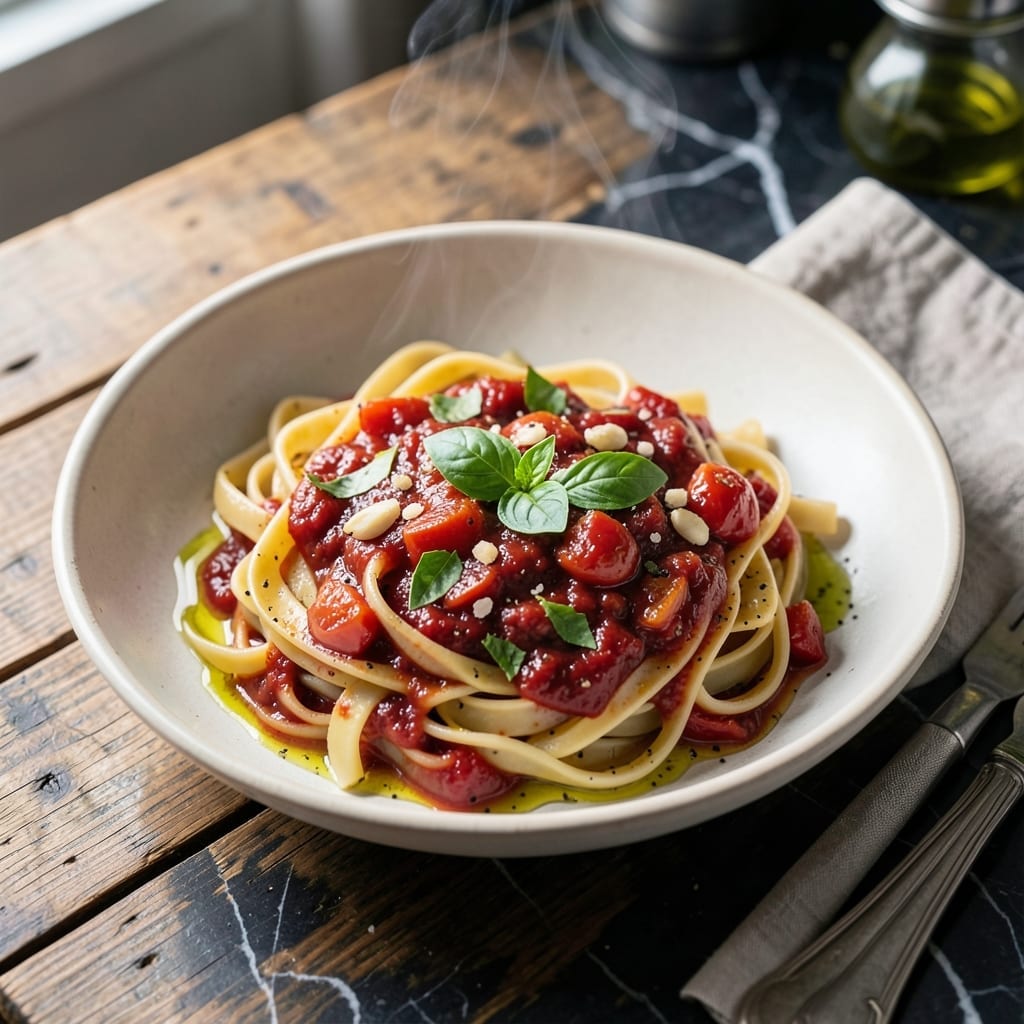
Creating a flavorful marinara that accommodates sensitivities requires careful ingredient selection and precise technique. This version maintains the rich tomato base while eliminating common allergens.
I developed this recipe after noticing many commercial sauces contain unnecessary additives. By using fresh tomatoes, olive oil, and simple seasonings, we achieve a clean, allergy-friendly sauce with authentic Italian character.
The process involves slow simmering to develop depth without dairy, gluten, or artificial ingredients. The result is a versatile sauce that works with pasta, as a pizza base, or for dipping.
Store in an airtight container in the refrigerator for up to 5 days or freeze for longer preservation. The flavor actually improves after a day as the ingredients meld together.
Ingredients for Rao’s Sensitive Marinara Sauce
Nine simple ingredients create this allergy-friendly marinara with authentic Italian character and rich tomato flavor.
| Ingredient | Amount | Notes |
|---|---|---|
| San Marzano Whole Peeled Tomatoes 🍅 | 28 oz | Canned, undrained for richness |
| Extra-Virgin Olive Oil 🫒 | ¼ cup | High-quality for authentic flavor |
| Fresh Garlic Cloves 🧄 | 4 cloves | Minced for depth of flavor |
| Fresh Basil Leaves 🌿 | ½ cup | Loosely packed, finely chopped |
| Sea Salt 🧂 | 1 ½ tsp | Fine grain for even distribution |
| Black Pepper 🌶️ | ½ tsp | Freshly ground for best results |
| Dried Oregano 🍃 | 1 tsp | Mediterranean variety preferred |
| Red Pepper Flakes 🔥 | ¼ tsp | Adjust for heat preference |
| Onion Powder 🧅 | 1 tsp | For savory depth without texture |
[recipe_ingredient_scaler]
The tomatoes are non-negotiable. San Marzano canned tomatoes from Italian markets or Whole Foods deliver the sweet, low-acid base this sauce needs. Look for the DOP certification on the label (that’s the gold standard). The olive oil should be something you’d happily drizzle on bread—California Olive Ranch or Cobram Estate are reliable. Fresh garlic and basil make all the difference (dried just doesn’t have the same vibrancy).
No San Marzano tomatoes? Any high-quality canned tomato works, but avoid pre-seasoned varieties. Out of fresh basil? Dried basil at one-third the amount is acceptable, though less bright. For a deeper umami note without allergens, a pinch of nutritional yeast (found at Trader Joe’s) can be added. The red pepper flakes can be omitted for a milder sauce, or increased for extra heat.
This sauce keeps beautifully—5 days in the fridge, or freeze in airtight containers for up to 3 months. The flavor actually deepens after a day as everything melds. For best results, let it cool completely before storing to preserve freshness and prevent ice crystals.
Why You’ll Love This Recipe
- Five Ingredients: I just dump San Marzano tomatoes, olive oil, garlic, basil, and salt into a pot—no chopping, no fuss.
- Ridiculously Fresh: The basil and garlic hit differently when they’re fresh, not dried. Honestly, it tastes like summer in a jar.
- Pasta Night Hero: I use it for spaghetti, meatball subs, even as a pizza base. Between us, it’s my Tuesday night MVP.
- Makes Extra: One batch gives me enough for dinner plus a jar for the freezer. I’ll be real: leftovers taste even better the next day.
Step-by-Step Instructions for Sensitive Marinara Sauce
Here’s the method. Straightforward, tested, works every time.
Step 1: Bloom Aromatics in Olive Oil
Heat the 0.25 cup extra-virgin olive oil in a heavy-bottomed saucepan over medium-low heat. The oil should shimmer but not smoke—this gentle heat prevents bitterness while coaxing out maximum flavor from the aromatics.
Add the 4 cloves fresh garlic cloves, stirring constantly for 30-45 seconds until just fragrant and barely golden at the edges. I stop just before any browning occurs to maintain the sauce’s delicate, allergy-friendly profile. Immediately add the 1 tsp dried oregano, 0.25 tsp red pepper flakes, and 1 tsp onion powder to toast briefly.
Step 2: Incorporate San Marzano Tomatoes
Add the 28 oz San Marzano whole peeled tomatoes with their juices, crushing them by hand as they go into the pot. This hand-crushing technique releases more pectin than a blender, creating a naturally thicker sauce without added thickeners.
Stir well to combine with the aromatics, then increase heat to medium. Bring to a gentle simmer—you should see small bubbles breaking the surface occasionally. I maintain this temperature throughout cooking to prevent scorching while concentrating flavors.
Step 3: Simmer and Develop Flavor
Reduce heat to low and let the sauce simmer uncovered for 45-60 minutes. Stir occasionally, especially toward the end, as the sauce thickens and becomes more prone to sticking.
The tomatoes will break down completely, and the sauce will reduce by about one-third. You’ll notice the color deepen to a rich ruby red and the texture thicken to coat the back of a spoon. This slow reduction eliminates excess moisture while intensifying the natural sweetness of the San Marzano tomatoes.
Step 4: Finish with Fresh Basil and Seasoning
Remove the sauce from heat and stir in the 0.5 cup fresh basil leaves. The residual heat will wilt the basil perfectly while preserving its bright, aromatic qualities. I add it at the end rather than during cooking to maintain its vibrant color and fresh flavor.
Season with the 1.5 tsp sea salt and 0.5 tsp black pepper, tasting as you go. The salt should enhance the natural tomato flavor without overpowering it. Let the sauce rest for 10 minutes before serving to allow the flavors to meld completely. The final texture should be smooth but with visible flecks of basil throughout.
Pro Tips For Making Rao’S Sensitive Marinara Sauce
- Crush by Hand: I learned this the hard way—skip the blender and crush the San Marzano tomatoes with your hands for a chunkier, more rustic texture that Rao’s is known for.
- Bloom the Garlic: Cook the garlic in olive oil over low heat for 2-3 minutes until fragrant, but pull it off before it browns—burnt garlic ruins the delicate flavor.
- Skip the Dried Basil: Fresh basil leaves added at the end make a real difference, while dried basil tastes harsh and overpowers the sauce.
- Simmer Low and Slow: After combining everything, keep the heat at a gentle simmer for at least 45 minutes—I used to rush this and wondered why my sauce lacked depth.
Make-Ahead Tips for Leftovers
Prep Ahead Strategy
I always start by prepping all my ingredients the night before. Chop the 0.5 cup fresh basil, mince the 4 cloves fresh garlic, and measure out all spices. This saves 15-20 minutes on cooking day and ensures nothing gets overlooked in the heat of the moment. 💡
Sauce Base Prep
You can make the entire sauce base (olive oil, garlic, oregano, red pepper flakes, and onion powder) up to 24 hours ahead. Store this aromatic mixture in an airtight container in the fridge. The flavors will meld beautifully, giving your final sauce even more depth.
Tomato Pre-Treatment
For even better results, drain and hand-crush the 28 oz San Marzano tomatoes the day before. Store them in a sealed container with their juices. This pre-treatment helps break down the tomatoes faster during cooking, cutting your simmer time by about 10-15 minutes.
Full Make-Ahead Option
The complete sauce can be made 2-3 days in advance. In fact, I recommend it—the flavors develop and mellow beautifully. Just cool it completely before storing in airtight containers. Reheat gently over low heat before serving. ✨
Freezer-Friendly Portions
This sauce freezes wonderfully for up to 3 months. I portion it into 1-cup containers for easy use. Thaw overnight in the fridge or directly in a saucepan over low heat. The texture remains perfect, and the flavor stays vibrant.
Herb Freshness Tip
If making ahead, add the fresh basil just before serving rather than during initial cooking. This preserves its bright color and aromatic qualities. Store the chopped basil in a damp paper towel in the fridge for up to 24 hours before use.
Nutrition Facts
Frequently Asked Questions
Can I use regular canned tomatoes instead of San Marzano?
Yes, but expect a slightly more acidic flavor. San Marzano tomatoes are sweeter and less tangy. For best results, look for whole peeled tomatoes without added calcium chloride.
How do I adjust the spice level?
The 0.25 tsp red pepper flakes provides mild heat. For no spice, omit them entirely. For more kick, add up to 1 tsp or include a pinch of cayenne.
Why add basil at the end?
Fresh basil loses its bright flavor and turns dark when cooked too long. Adding it at the end preserves its aromatic qualities and vibrant green color.
Can this sauce be canned for long-term storage?
No, this recipe isn’t tested for safe canning. For shelf-stable storage, freeze in airtight containers for up to 3 months instead.

Trained in classic French technique but raised on slow-cooked ribs and spicy rubs, she blends culinary skill with smoke and soul.
- Recipe for Boneless Pork Chops in Cast Iron Skillet: Sear and Baste to Juicy Perfection - October 3, 2026
- Recipe for Boneless Cross Rib Roast: Slow-Roasted Beef with Herb Crust - October 3, 2026
- Hamburgers in Sauce Recipe Crock Pot: Slow-Cooked Savory Delight - October 3, 2026