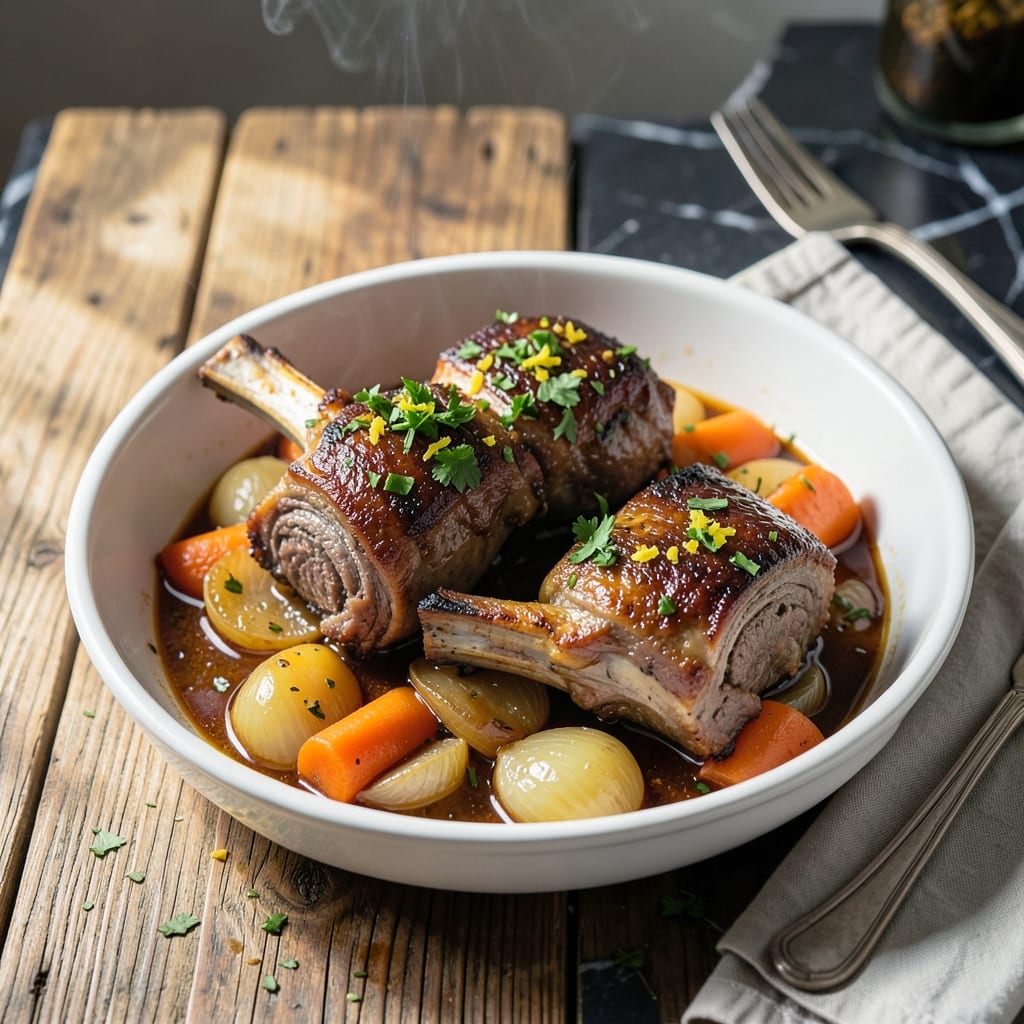
Few dishes capture Milanese elegance like this braised specialty, where fall-off-the-bone meat meets bright gremolata. I perfected my technique after studying my grandmother’s vague notes about “cooking until tender.”
The secret lies in low, slow braising that transforms tough cuts into melt-in-your-mouth perfection. White wine and tomatoes create a rich sauce that deepens with every hour in the oven.
Finish with gremolata—a crisp mixture of lemon zest, garlic, and parsley—that cuts through the richness. This is restaurant quality without the restaurant effort.
Serve over creamy polenta or risotto to soak up every drop of the velvety sauce. Here’s how to make it at home.
Ingredients for Recipe Beef Osso Bucco
Capturing Milanese elegance starts with these quality ingredients for fall-off-the-bone perfection.
| Ingredient | Amount | Notes |
|---|---|---|
| Beef Shanks 🥩 | 4 whole | Cross-cut, about 1.5 inches thick |
| All-Purpose Flour 🌾 | ½ cup | For dredging shanks |
| Olive Oil 🫒 | ¼ cup | Divided for searing and sautéing |
| Unsalted Butter 🧈 | 2 tbsp | For building sauce base |
| Yellow Onion 🧅 | 1 whole | Finely diced for soffritto |
| Carrots 🥕 | 2 whole | Peeled and diced |
| Celery Stalks 🌿 | 2 whole | Diced for aroma base |
| Garlic Cloves 🧄 | 4 cloves | Minced for depth |
| Dry White Wine 🍷 | 1 cup | Crisp variety like Pinot Grigio |
| Canned San Marzano Tomatoes 🍅 | 1 can | 28 oz can, crushed by hand |
| Beef Stock 🥣 | 2 cups | Low-sodium preferred |
| Bay Leaf 🍃 | 1 whole | Dried for braising liquid |
| Fresh Thyme Sprigs 🌿 | 3 pieces | Tied with kitchen twine |
| Lemon Zest 🍋 | 1 tbsp | Finely grated for gremolata |
| Flat-Leaf Parsley 🌿 | ¼ cup | Finely chopped, divided |
[recipe_ingredient_scaler]
The beef shanks are non-negotiable—ask your butcher for cross-cut pieces about 1.5 inches thick. Whole Foods or a good local butcher will have them. Look for good marbling; the fat melts into the sauce. For the wine, any crisp white works, but I reach for Pinot Grigio (whatever’s open). The San Marzano tomatoes are worth hunting down—they’re sweeter and less acidic than standard cans.
No white wine? Substitute extra beef stock with a splash of lemon juice. Fresh thyme not available? Dried at one-third the amount works. If you can’t find beef shanks, short ribs braise similarly, but the bone marrow in osso bucco is the star. For the gremolata, Meyer lemon zest (when in season) adds a floral note. Out of parsley? Fresh basil works in a pinch.
Osso bucco improves overnight—make it a day ahead if you can. Keeps 4-5 days in the fridge, freezes beautifully for 3 months. The gremolata stays fresh for 2 days (sprinkle it on just before serving). Always bring the meat to room temperature before searing—don’t skip this (worth the extra minute).
Why You’ll Love This Recipe
- One Pot Wonder: I love that this comes together in a single Dutch oven—just sear the beef shanks, sauté the onion in olive oil and butter, and let it simmer.
- Fall-Off-The-Bone Good: The slow-cooked beef shanks get so tender they practically melt, and the onion-butter base adds a rich, savory depth.
- Sunday Supper Star: This is my go-to for feeding a crowd or impressing dinner guests with minimal effort.
- Leftovers for Days: Honestly, it tastes even better the next day, and the portions stretch easily for lunches all week.
Step-by-Step Instructions for Beef Osso Bucco
This Milanese classic comes together with patience and attention to detail—here’s how I do it.
Step 1: Sear the Beef Shanks to Deep Brown Perfection
Pat the 4 whole Beef Shanks completely dry with paper towels. Season them generously with salt and pepper, then dredge each shank in the 0.5 cup All-Purpose Flour, shaking off any excess. This light coating helps create a beautiful crust and thickens the braising liquid later.
Heat 2 tablespoons of the 0.25 cup Olive Oil in a large Dutch oven over medium-high heat until shimmering. Working in batches to avoid crowding, sear the shanks for 4-5 minutes per side until deeply browned. You’ll know they’re ready to flip when they release easily from the pan. Transfer to a plate and set aside.
Step 2: Build the Aromatic Base for the Braising Liquid
Reduce heat to medium and add the remaining olive oil along with the 2 tbsp Unsalted Butter. Once the butter melts, add the diced 1 whole Yellow Onion, 2 whole Carrots, and 2 whole Celery Stalks. Cook for 8-10 minutes, stirring occasionally, until the vegetables soften and begin to caramelize.
Add the 4 cloves Garlic Cloves and cook for 1 minute until fragrant. This soffritto base is the flavor foundation of your dish, so don’t rush it. The vegetables should be tender and the onions slightly translucent before moving to the next step.
Step 3: Deglaze and Create the Braising Environment
Pour in the 1 cup Dry White Wine and use a wooden spoon to scrape up all the browned bits from the bottom of the pot. Let it simmer for 3-4 minutes until reduced by half. These fond bits contain incredible flavor that will enrich your braising liquid.
Add the 1 can Canned San Marzano Tomatoes (crushed by hand), 2 cups Beef Stock, 1 whole Bay Leaf, and 3 pieces Fresh Thyme Sprigs. Return the seared shanks to the pot, along with any accumulated juices. The liquid should come about halfway up the shanks. Bring to a gentle simmer.
Step 4: Braise Low and Slow Until Fork-Tender
Cover the pot and transfer to a preheated 325°F oven. Braise for 2 to 2.5 hours, turning the shanks halfway through. You’re looking for meat that pulls away from the bone easily and is fork-tender when pierced.
Check occasionally and add a splash of beef stock if the liquid reduces too much. The sauce should maintain a consistency that will coat the back of a spoon when finished. The aroma filling your kitchen at this stage is absolutely intoxicating.
Step 5: Finish with Gremolata and Serve
Remove the shanks from the sauce and keep warm. Skim any excess fat from the surface of the sauce. Combine the 1 tbsp Lemon Zest with 0.25 cup Flat-Leaf Parsley to make the gremolata.
Spoon the sauce over the shanks and sprinkle generously with the gremolata. The bright, fresh flavors of the lemon and parsley cut through the richness of the braised dish perfectly. Serve immediately with polenta or crusty bread to soak up every last bit of sauce.
Pro Tips For Making Recipe Beef Osso Bucco
- Brown the Shanks Well: I learned this the hard way—sear the beef shanks until deeply browned, about 4-5 minutes per side in hot olive oil and butter. This builds the rich base flavor that defines a great osso bucco.
- Use Thick Cuts: Skip the thin-sliced shanks; ask your butcher for 1.5 to 2-inch thick pieces. They hold up better to the long braise and stay juicy instead of falling apart too soon.
- Don’t Rush the Onions: Cook the yellow onions until soft and golden, about 8-10 minutes, before adding liquids. Raw onions at the start make the sauce taste harsh, no matter how long it simmers.
- Deglaze with Care: After browning, pour in a splash of wine or broth and scrape the bottom of the pan—those browned bits are pure flavor. Sounds simple, but it actually changes the outcome of your sauce.
Common Mistakes When Making Perfect Results
Skipping the Dredge
Don’t skip dredging the shanks in 0.5 cup All-Purpose Flour before searing. This creates a golden crust that thickens the braising liquid naturally. I learned this the hard way—my first osso bucco had a thin, watery sauce. 💡
Overcrowding the Pan
Sear the shanks in batches to avoid crowding. If you cram all 4 whole Beef Shanks in at once, they’ll steam instead of brown. That deep caramelization is non-negotiable for flavor development.
Rushing the Soffritto
Take your time with the Yellow Onion, Carrots, and Celery Stalks. They need 8-10 minutes to soften and sweeten. Rushing this step leaves your sauce tasting raw and one-dimensional.
Underseasoning Early
Season the shanks generously before searing and taste your braising liquid before adding the meat. The 2 cups Beef Stock and tomatoes need salt to bring out their depth. I always adjust seasoning at this stage.
Boiling, Not Simmering
Keep the braise at a gentle simmer, not a rolling boil. Too-high heat makes the meat tough. Aim for 325°F in the oven—just enough to keep a lazy bubble going. Patience is key here. 🔥
Skipping the Rest
Let the shanks rest in the warm sauce for 10-15 minutes after braising. This lets the collagen relax and redistribute juices. Serving immediately means dry meat and a pooling plate.
Nutrition Facts
Frequently Asked Questions
What cut of beef works best for this dish?
Use cross-cut beef shanks about 1.5 inches thick. The bone marrow adds rich flavor, and the connective tissue breaks down beautifully during the 2-2.5 hour braise. Ask your butcher to cut them evenly for even cooking.
Can I make this ahead of time?
The flavors deepen overnight. Braise and cool completely, then refrigerate for up to 4-5 days. Reheat gently on the stove before adding gremolata. It freezes well for 3 months too.
What should I serve with osso bucco?
Creamy polenta or risotto are classic choices to soak up the velvety sauce. Crusty bread works too. The dish is rich, so pair with a simple green salad for balance.
Why did my meat turn out tough?
Most likely the braising liquid boiled instead of simmered, or the 325°F oven temperature was too high. Keep it at a lazy bubble and give it the full 2-2.5 hours for fork-tender results.

Trained in classic French technique but raised on slow-cooked ribs and spicy rubs, she blends culinary skill with smoke and soul.
- Best Smoked Oxtail Recipe: Deep-Rich Flavor After Low-and-Slow Cooking - October 14, 2026
- Pit Boss Smoked Prime Rib Roast Recipe: Bark-to-Bone Crispness in 4 Hours - October 14, 2026
- Smoked Tuna Steak Recipe: Seared Crust Meets Silky Centers - October 14, 2026