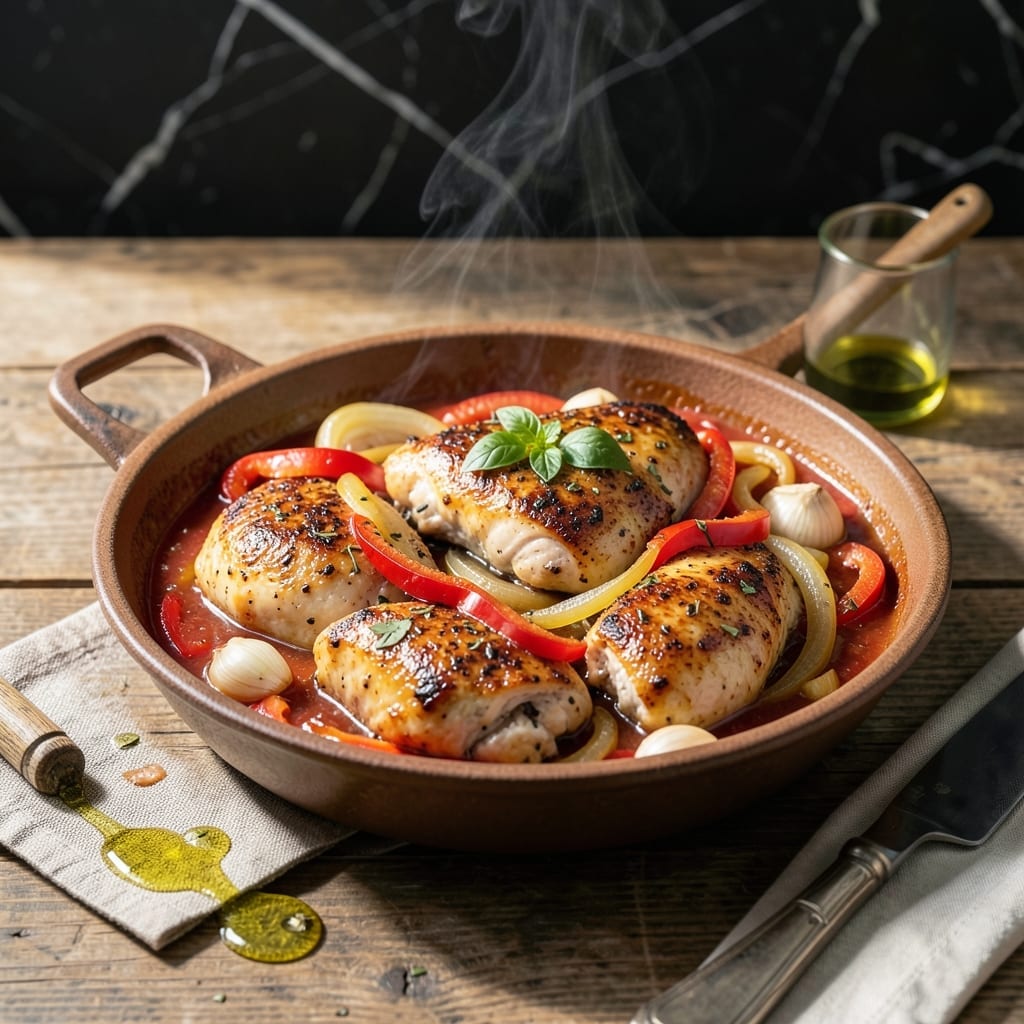
This rustic Italian stew brings the flavors of the countryside to your kitchen with minimal effort. The dish combines tender chicken with rich tomatoes, aromatic herbs, and earthy vegetables for a satisfying meal.
Using boneless chicken simplifies preparation while maintaining the traditional taste and texture. The sauce develops deep, complex flavors as it simmers, coating each piece with its savory goodness.
The recipe stays true to its roots with simple, wholesome ingredients that come together beautifully. One pot is all you need to create this hearty, restaurant-quality dish that tastes like it cooked all day.
Serve with crusty bread or over pasta to soak up every last bit of the flavorful sauce. This classic never goes out of style.
Ingredients for Recipe Chicken Cacciatore Boneless Chicken
Boneless chicken, tomatoes, and herbs create this rustic Italian masterpiece with ease.
| Ingredient | Amount | Notes |
|---|---|---|
| Boneless Chicken Thighs 🍗 | 1 ½ lb | Skin-on for flavor, skinless for convenience |
| Olive Oil 🫒 | 3 tbsp | Extra-virgin preferred for depth |
| Yellow Onion 🧅 | 1 whole | Medium, finely diced |
| Garlic Cloves 🧄 | 4 cloves | Minced for aromatic base |
| Red Bell Pepper 🌶️ | 1 whole | Diced, adds sweetness |
| Canned Diced Tomatoes 🍅 | 2 cans | 28 oz each, with juices |
| Tomato Paste 🍅 | 2 tbsp | For concentrated tomato flavor |
| Dry White Wine 🍷 | ½ cup | Pinot Grigio or Sauvignon Blanc |
| Chicken Broth 🥣 | 1 cup | Low-sodium preferred |
| Dried Oregano 🌿 | 1 tbsp | Mediterranean variety ideal |
| Dried Basil 🍃 | 1 tsp | Crushed for full flavor |
| Bay Leaves 🌿 | 2 pieces | Removed before serving |
| Kalamata Olives 🫒 | ½ cup | Pitted and halved |
| Fresh Parsley 🌿 | ¼ cup | Chopped, for garnish |
| Salt 🧂 | 1 tsp | Kosher or sea salt |
| Black Pepper 🌶️ | ½ tsp | Freshly ground preferred |
[recipe_ingredient_scaler]
The chicken is the foundation here. Boneless thighs stay juicier than breasts during the long simmer. Costco or Whole Foods have great options, but any supermarket’s own brand will do—just look for skin-on if you want that extra depth of flavor. The canned tomatoes should be San Marzano if you’re feeling fancy, but standard diced tomatoes work perfectly fine too.
No white wine? Chicken broth plus a splash of lemon juice mimics the acidity. Fresh out of oregano? Use one-third the amount of fresh rosemary as a substitute. The olives can be swapped for green olives if that’s your preference, and frozen bell peppers work in a pinch (just thaw and drain first). Trader Joe’s has great pre-diced mirepoix if you’re short on time.
This stew tastes even better the next day after the flavors meld. Store in an airtight container in the fridge for up to 4 days or freeze for 3 months. Reheat gently on the stove to keep the chicken from drying out.
Why You’ll Love This Recipe
- One Pan Wonder: I throw everything in a single skillet—chicken, peppers, onions—and let the oven do the rest. No mountain of dishes, just a hearty meal.
- Garlic-Infused Richness: The garlic and onions caramelize into this deep, savory sauce that clings to every bite of tender chicken. Honestly, it’s the kind of flavor that makes you go back for seconds.
- Weeknight Hero: Between us, this is my go-to when I need dinner on the table fast. It’s unfussy but impressive enough for company.
- Budget-Friendly Feast: Boneless thighs stay juicy and cost less than breasts, and a little goes a long way with those bold veggies. I’ll be real: it’s a meal that stretches without skimping on taste.
Step-by-Step Instructions for Chicken Cacciatore With Boneless Chicken
Here’s the method. Straightforward, tested, works every time.
Step 1: Sear the Boneless Chicken Thighs
Heat 3 tbsp olive oil in a large, heavy pot over medium-high heat until it shimmers. Pat the 1.5 lb boneless chicken thighs dry with paper towels and season both sides with 1 tsp salt and 0.5 tsp black pepper. This ensures even browning and locks in moisture.
Add the chicken to the pot in a single layer, working in batches if needed to avoid crowding. Cook undisturbed for 5-6 minutes per side until the pieces develop a deep golden-brown crust. Remove the chicken and set aside—it will finish cooking later.
Step 2: Sauté the Aromatics and Build the Base
In the same pot, add the finely diced 1 whole yellow onion and diced 1 whole red bell pepper. Cook for 5-6 minutes until the onion is translucent and the pepper softens. Stir occasionally to prevent sticking.
Add the minced 4 cloves garlic cloves and cook for 30 seconds until fragrant. Stir in the 2 tbsp tomato paste and cook for 1-2 minutes to deepen its flavor. This step creates the rich foundation for the stew.
Step 3: Deglaze and Combine All Ingredients
Pour in the 0.5 cup dry white wine and scrape up any browned bits from the bottom of the pot. Let it simmer for 2-3 minutes until the liquid reduces by half. The alcohol will cook off, leaving behind its bright, tangy flavor.
Add the 2 cans canned diced tomatoes (with juices), 1 cup chicken broth, 1 tbsp dried oregano, 1 tsp dried basil, and 2 pieces bay leaves. Stir well to combine, then return the chicken to the pot, nestling it into the liquid.
Step 4: Simmer to Perfection
Bring the mixture to a gentle simmer, then reduce the heat to medium-low. Partially cover the pot and cook for 30-35 minutes, stirring occasionally. The chicken should be tender and cooked through by this point.
Stir in the 0.5 cup kalamata olives (pitted and halved) and let the stew cook uncovered for another 5 minutes to allow the flavors to meld and the sauce to thicken slightly. Remove and discard the bay leaves before serving.
Step 5: Garnish and Serve
Taste and adjust seasoning with additional salt and pepper if needed. Ladle the cacciatore into shallow bowls and garnish with the 0.25 cup fresh parsley (chopped). The sauce should be rich and chunky, with the chicken falling apart at the touch of a fork.
Serve hot with crusty bread or over polenta to soak up every last bit of the flavorful sauce. This dish tastes even better the next day as the flavors continue to develop.
Pro Tips For Making Recipe Chicken Cacciatore Boneless Chicken
- Brown the Thighs Well: Get your pan screaming hot and sear the boneless thighs until deeply golden—about 3-4 minutes per side. I learned this the hard way: under-browned chicken makes for a bland cacciatore.
- Slice Peppers Thin: Cut the red bell pepper into ¼-inch strips so they soften quickly and blend into the sauce. Sounds fussy, but it actually changes the outcome.
- Skip Overcrowding: Cook the chicken in batches if needed—crowding the pan steams instead of browns. My grandmother swore by this, and she was right.
- Deglaze with Wine: After browning, pour in a splash of white wine to lift all those browned bits. It adds depth and saves you from scrubbing the pan later.
Serving Suggestions for This recipe chicken cacciatore boneless chicken
Over Pasta
I love serving this over 12 oz dried pappardelle or fettuccine—the wide noodles hold the rich sauce beautifully. Cook the pasta 1 minute less than package instructions, then finish in the cacciatore sauce to absorb maximum flavor. 💛
With Crusty Bread
A warm baguette or ciabatta loaf from your bakery is perfect for soaking up the sauce. Toast slices with olive oil and rub with a garlic clove for extra aroma. I always keep some on hand for leftovers too.
Polenta Base
Creamy polenta makes an excellent gluten-free alternative. I whisk 1 cup cornmeal into 4 cups simmering chicken broth and cook for 20 minutes. The soft texture contrasts wonderfully with the chunky stew.
Vegetable Pairings
A simple arugula salad with lemon vinaigrette adds freshness. Toss 4 cups arugula with 2 tbsp olive oil, 1 tbsp lemon juice, and shaved Parmesan. The peppery greens cut through the richness. 🥗
Family-Style Service
For gatherings, ladle everything into a large serving bowl and let guests help themselves. Set out grated Pecorino Romano and red pepper flakes on the side. This dish always disappears fast at my dinner table.
Nutrition Facts
Frequently Asked Questions
Can I use chicken breasts instead of thighs?
Yes, but thighs stay juicier during the long simmer. If using breasts, reduce cooking time to 20-25 minutes to prevent dryness.
What can I substitute for white wine?
Use chicken broth with 1 tbsp lemon juice or apple cider vinegar. The acidity mimics wine’s brightness.
How do I store leftovers?
Keep in an airtight container in the fridge for up to 4 days or freeze for 3 months. Reheat gently on the stove.
Why did my sauce turn out watery?
Simmer uncovered for the last 10 minutes to thicken. If still thin, mash a few tomatoes to release their pectin.

Trained in classic French technique but raised on slow-cooked ribs and spicy rubs, she blends culinary skill with smoke and soul.
- Best Smoked Oxtail Recipe: Deep-Rich Flavor After Low-and-Slow Cooking - October 14, 2026
- Pit Boss Smoked Prime Rib Roast Recipe: Bark-to-Bone Crispness in 4 Hours - October 14, 2026
- Smoked Tuna Steak Recipe: Seared Crust Meets Silky Centers - October 14, 2026