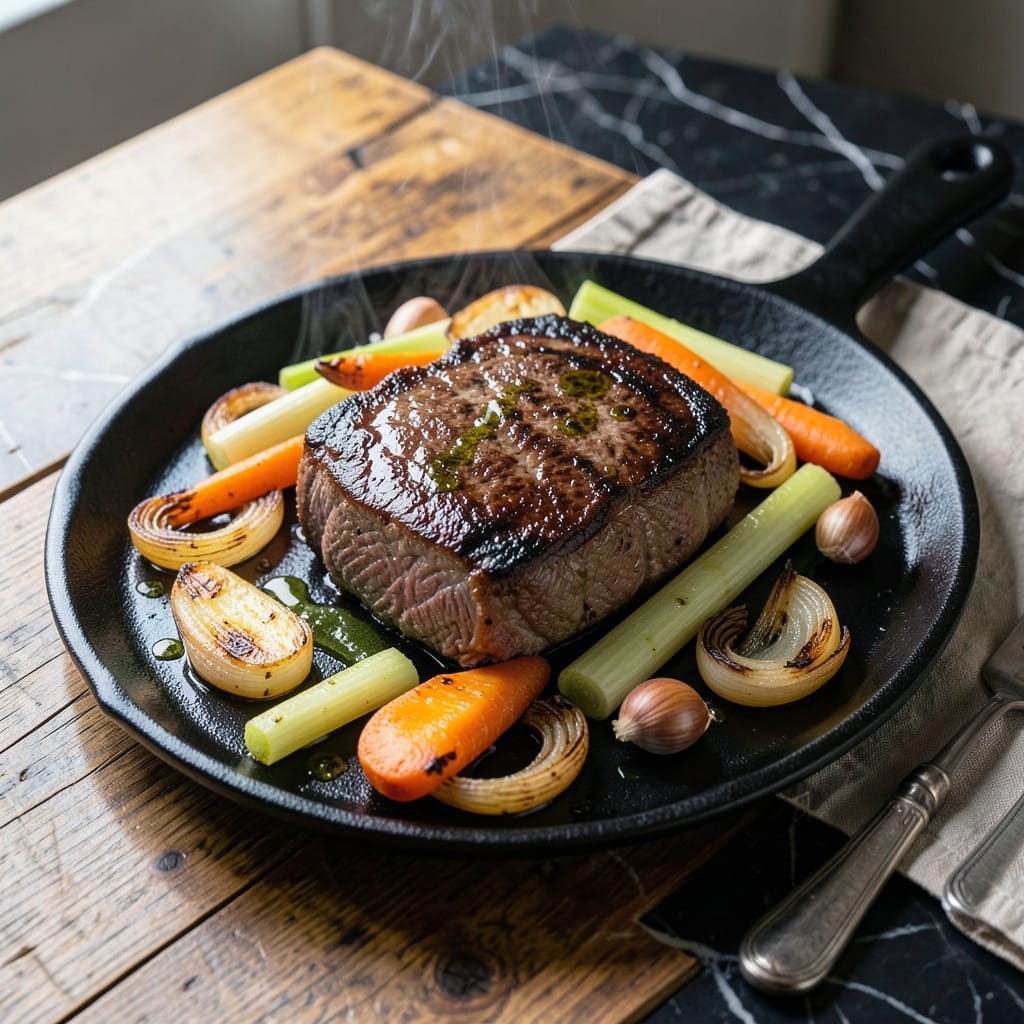
Sunday suppers demand a centerpiece that delivers both comfort and tradition, and this slow-braised rump roast never disappoints. The long, gentle cooking process transforms a humble cut into fall-apart tender meat with deep, rich flavor.
I’ve perfected this method over years of weekend cooking, ensuring every bite is infused with aromatic herbs and a savory braising liquid. The key is patience—low heat and time work together to create a dish that feels like home.
What emerges is a roast so tender it nearly melts on the tongue, surrounded by a velvety sauce that’s perfect for soaking up with crusty bread. It’s the kind of meal that gathers the family around the table and lingers in memory long after the last bite.
Pair it with roasted root vegetables or creamy mashed potatoes for a complete, satisfying meal.
Ingredients for Rump Roast Recipe Ideas
A handful of quality ingredients transform this humble cut into a memorable Sunday supper.
| Ingredient | Amount | Notes |
|---|---|---|
| Beef Rump Roast 🥩 | 3 lb | Well-marbled, trimmed of excess fat |
| Olive Oil 🫒 | 2 tbsp | Divided for searing and braising |
| Yellow Onion 🧅 | 1 whole | Large, roughly chopped |
| Carrots 🥕 | 3 whole | Peeled, cut into chunks |
| Celery Stalks 🌿 | 2 whole | Cut into 1-inch pieces |
| Garlic Cloves 🧄 | 5 cloves | Smashed, skins removed |
| Red Wine 🍷 | 2 cups | Dry variety like Cabernet Sauvignon |
| Beef Broth 💧 | 2 cups | Low-sodium preferred |
| Tomato Paste 🍅 | 2 tbsp | For depth of flavor |
| Fresh Rosemary 🌿 | 2 sprigs | Plus extra for garnish |
| Fresh Thyme 🍃 | 4 sprigs | Stems removed before serving |
| Bay Leaves 🌿 | 2 whole | Dried, whole leaves |
| Kosher Salt 🧂 | 1 ½ tsp | Divided for seasoning |
| Black Pepper 🌶️ | 1 tsp | Freshly ground preferred |
| All-Purpose Flour 🌾 | 2 tbsp | For thickening the sauce |
[recipe_ingredient_scaler]
The beef is non-negotiable here. Opt for well-marbled rump roast—this cut thrives with slow, moist heat. Most butchers at Whole Foods or local markets will trim excess fat if asked. The red wine should be dry and drinkable; if you wouldn’t sip it, don’t cook with it. Cabernet Sauvignon or Merlot are safe bets for balancing the richness of the meat.
No red wine? Beef broth plus 1 tbsp balsamic vinegar works in a pinch. Fresh herbs are ideal, but dried at one-third the amount gets you close (just add them earlier in the process). The tomato paste can come from those handy squeeze tubes at Trader Joe’s—no waste, no mess. If you’re out of celery, an extra carrot or two won’t hurt the flavor profile.
This braised roast tastes even better the next day. It keeps 4-5 days in the fridge, or freeze portions for up to 3 months. Reheat gently to preserve that fall-apart texture you worked so hard to achieve.
Why You’ll Love This Recipe
- Set and Forget: It goes straight from prep to oven with barely any fuss—I just sear the beef, toss in the onions, carrots, and celery, then let the oven do the work.
- Melt-in-Your-Mouth Tender: The rump roast turns so tender it falls apart, and the veggies soak up all that rich, beefy flavor from the olive oil and juices.
- Feeds a Crowd: I can stretch one roast into sandwiches, tacos, or stew the next day—perfect for Sunday dinner and easy lunches all week.
- Budget-Friendly Centerpiece: Here’s what sold me—rump roast is cheaper than other cuts but still delivers that slow-cooked, restaurant-worthy taste.
Step-by-Step Instructions for Slow-Braised Rump Roast
Master this technique for fall-apart tender beef with rich, complex flavors perfect for Sunday supper.
Step 1: Sear the Beef Rump Roast
Pat the 3 lb Beef Rump Roast completely dry with paper towels and season generously with 1 tsp Kosher Salt and 1 tsp Black Pepper. This ensures a good sear and prevents steaming. Heat 1 tbsp Olive Oil in a large Dutch oven over medium-high heat until it shimmers.
Add the beef and sear undisturbed for 4-5 minutes per side until deeply browned. You’ll know it’s ready to flip when it releases easily from the pan. Remove the roast and set aside—this intense browning builds the foundation for your sauce’s depth of flavor.
Step 2: Sauté the Aromatic Vegetables
In the same pot, add the remaining 1 tbsp Olive Oil. Toss in the 1 whole Yellow Onion, 3 whole Carrots, and 2 whole Celery Stalks, cooking for 5-6 minutes until the onion softens and begins to caramelize at the edges.
Add the 5 cloves Garlic Cloves and 2 tbsp Tomato Paste, stirring constantly for 1 minute to bloom the garlic and deepen the tomato paste’s color. This step transforms the raw tomato paste into a rich, brick-red base that enhances the braising liquid.
Step 3: Deglaze and Begin the Braise
Pour in the 2 cups Red Wine, scraping the bottom of the pot to release all the browned bits—this is where the magic happens. Simmer for 3-4 minutes until the wine reduces by half, intensifying its flavor.
Return the beef to the pot. Add the 2 cups Beef Broth, 2 sprigs Fresh Rosemary, 4 sprigs Fresh Thyme, and 2 whole Bay Leaves. The liquid should come about halfway up the roast. Bring to a gentle simmer.
Step 4: Slow-Braise to Perfection
Cover the pot and transfer it to a preheated 325°F oven. Braise for 2.5 to 3 hours, turning the roast halfway through, until the beef is fork-tender and shreds easily. The aroma filling your kitchen will be intoxicating.
Check occasionally to ensure the liquid maintains a gentle simmer. If it reduces too much, add a splash of water or broth. The beef is done when it reaches an internal temperature of 195-200°F and collapses under gentle pressure.
Step 5: Thicken the Sauce and Serve
Remove the beef from the pot and tent with foil to keep warm. Skim excess fat from the braising liquid, then place the pot over medium heat. Mix the 2 tbsp All-Purpose Flour with 2 tbsp of the braising liquid to create a slurry, then whisk it into the pot.
Simmer for 5-7 minutes, stirring constantly, until the sauce thickens enough to coat the back of a spoon. Adjust seasoning with the remaining ½ tsp Kosher Salt if needed. Slice or shred the beef, pour the sauce over, and serve with the braised vegetables for a hearty, satisfying meal.
Pro Tips For Making Rump Roast Recipe Ideas
- Sear It Hard: I learned this the hard way—get your pan screaming hot before adding the rump roast, and don’t move it for at least 2-3 minutes per side to develop a proper crust.
- Cut Veggies Evenly: Chop your onions, carrots, and celery into uniform 1-inch pieces so they cook at the same rate and don’t turn to mush before the roast is done.
- Skip the Cold Meat: Take the rump roast out of the fridge 30-45 minutes before cooking—this guarantees more even cooking and a juicier result.
- Use a Meat Thermometer: After guessing doneness wrong too many times, I finally bought one; pull the roast at 130°F for medium-rare, then let it rest 10 minutes under foil.
Regional Styles of This Recipe
British Sunday Roast
In the UK, this dish transforms into a classic Sunday roast with Yorkshire puddings and roast potatoes. I like to add horseradish sauce for that signature British kick. The gravy becomes richer with a splash of Worcestershire sauce. 💛
French Daube Style
Provençal cooks would braise this in a daube with herbes de Provence and orange zest. I love adding niçoise olives and anchovies for depth. The wine becomes more prominent, often a Côtes du Rhône.
Texas Chuck Wagon
Down in Texas, they’d add chipotle peppers in adobo and cumin to the braising liquid. I’ve seen versions with dr pepper instead of wine – surprisingly good! Serve with cornbread and pickled jalapeños. 🔥
Italian Stracotto
Northern Italian cooks make stracotto al vino rosso with San Marzano tomatoes and Parmigiano rind. I always add pancetta at the start for extra richness. The sauce is incredible over pappardelle.
Portland Farmers Market
Here in Portland, I’ll use local pinot noir and add chanterelle mushrooms from the market. A sprinkle of fresh sage from my garden ties it to our Pacific Northwest terroir.
Nutrition Facts
Frequently Asked Questions
What’s the best cooking method for a tougher cut like this?
Slow braising is ideal for rump roast. Cook it at 325°F for 2.5 to 3 hours until fork-tender. This gentle, moist heat breaks down the connective tissue beautifully.
Can I use a slow cooker instead of the oven?
Sear the meat first, then transfer everything to a slow cooker. Cook on low for 8-10 hours or high for 5-6 hours. The results will be just as tender.
How do I know when it’s done?
It’s ready when it reaches 195-200°F internally and shreds easily with a fork. Don’t rely on time alone—temperature and texture are key.
What if my sauce is too thin?
Simmer uncovered to reduce it, or mix 1 tbsp cornstarch with 1 tbsp cold water for a quick slurry. Stir in and cook for 2-3 minutes to thicken.

Trained in classic French technique but raised on slow-cooked ribs and spicy rubs, she blends culinary skill with smoke and soul.
- Roasted Brisket Recipe: Low-and-Slow Smoky Tenderness Without Dryness - October 15, 2026
- Best Passover Beef Brisket Recipe: Molasses-Spiced Slow-Cooked Masterpiece - October 15, 2026
- Jamie Oliver’s Fast and Simple Brisket Recipe: Smoky-Sweet One-Pan Magic - October 15, 2026