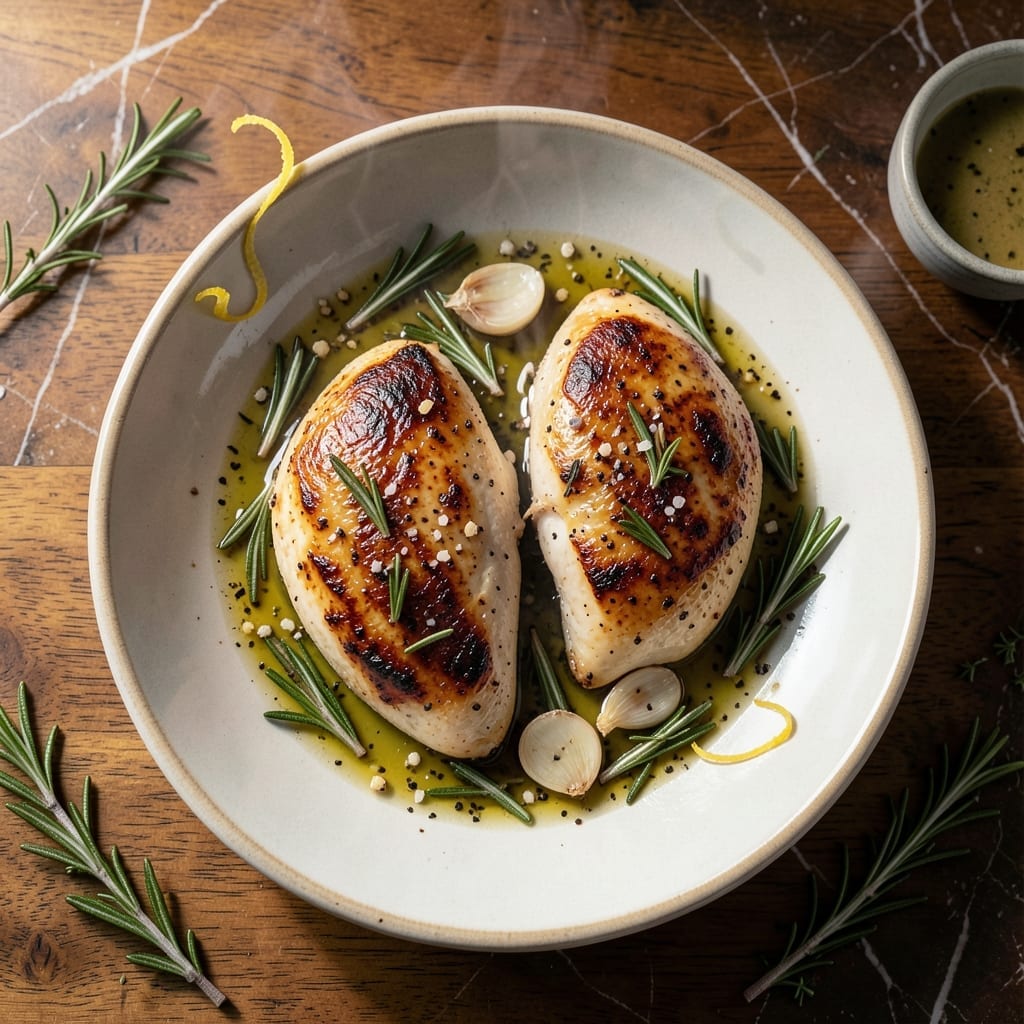
Chicken is the ultimate blank canvas for any meal, and this approach transforms it into something truly special. I developed this method after years of testing in my small Boston kitchen, focusing on foolproof techniques that work every time.
What makes this stand out is its versatility—whether you need a quick weeknight dinner or an impressive dish for guests. The cooking process is straightforward, with clear temperatures and times that guarantee perfectly cooked results.
You’ll end up with tender, flavorful chicken that adapts to any cuisine. The best part? It’s simple enough for beginners but refined enough for experienced cooks.
From traditional roasting to modern twists, this recipe covers all the bases. Let’s get started.
Ingredients for Recipe Chicken
Simple ingredients for chicken that works with any cuisine or occasion. Nothing complicated.
| Ingredient | Amount | Notes |
|---|---|---|
| Chicken Breasts 🍗 | 1 ½ lb | Boneless, skinless, pounded even |
| Olive Oil 🫒 | 2 tbsp | Extra-virgin for best flavor |
| Kosher Salt 🧂 | 1 ½ tsp | Diamond Crystal preferred |
| Black Pepper 🌶️ | 1 tsp | Freshly ground for best results |
| Garlic Cloves 🧄 | 4 cloves | Minced for even distribution |
| Fresh Rosemary 🌿 | 2 tbsp | Chopped, stems removed |
| Fresh Thyme 🍃 | 2 tbsp | Leaves stripped from stems |
| Lemon Juice 🍋 | 1 tbsp | Freshly squeezed for brightness |
| Dijon Mustard 🟡 | 1 tbsp | Smooth, not whole grain |
| Honey 🍯 | 1 tbsp | Local raw preferred |
| Paprika 🌶️ | 1 tsp | Sweet or smoked variety |
| Chicken Broth 🥣 | ½ cup | Low-sodium for control |
[recipe_ingredient_scaler]
The chicken itself matters most. Boneless, skinless breasts are easiest for beginners—consistent thickness means even cooking. Grab them from Whole Foods or Market Basket (they’ve got great local options in Boston). If you’re feeling fancy, airline breasts (still on the bone) stay juicier, but they’re pricier. Pound them to an even thickness—about 1 inch—so every bite cooks perfectly.
Need to swap something? Chicken thighs work great, but they’ll take a bit longer to cook through. Out of fresh herbs? Dried at one-third the amount (just rub them between your palms to wake up the flavor). No Dijon? Whole-grain mustard adds a nice texture—just give it a quick stir to break it up. The honey can be swapped for maple syrup if you’re avoiding sugar.
Store raw chicken in the coldest part of your fridge—use within 2 days. Cooked chicken keeps for 4-5 days in the fridge or freezes beautifully for 3 months. Pro tip: portion before freezing for easy weeknight meals.
Why You’ll Love This Recipe
- One Pan Wonder: I toss the chicken breasts with olive oil, salt, pepper, and garlic, then roast—no extra bowls, no fuss.
- Garlic Lovers Dream: The cloves turn sweet and mellow while the chicken stays juicy, making every bite ridiculously good.
- Weeknight Hero: Honestly, it’s my go-to for busy evenings when I need dinner ready before the kids ask what’s for dessert.
- Budget Friendly: Chicken breasts stretch far, and this recipe uses pantry staples I always have on hand.
Step-by-Step Instructions for Recipe Chicken
Here’s my go-to method for perfectly tender, flavorful chicken every single time.
Step 1: Prep and Season the Chicken
Pat the 1.5 lb Chicken Breasts completely dry with paper towels. I can’t stress this enough—moisture is the enemy of good browning. Pound them to an even ½-inch thickness so they cook uniformly without drying out.
Rub both sides with 2 tbsp Olive Oil, then season generously with 1.5 tsp Kosher Salt and 1 tsp Black Pepper. I use Diamond Crystal kosher salt because it adheres better to the meat. Let the seasoned chicken sit at room temperature for 15 minutes while you prep the rest—this ensures even cooking.
Step 2: Build the Aromatic Marinade
In a small bowl, combine 4 cloves minced Garlic Cloves, 2 tbsp Fresh Rosemary, and 2 tbsp Fresh Thyme. These herbs release their oils when chopped, creating a robust base. Add 1 tbsp Lemon Juice, 1 tbsp Dijon Mustard, 1 tbsp Honey, and 1 tsp Paprika to the bowl.
Whisk everything together until the honey is fully incorporated. The mustard acts as an emulsifier, binding all the ingredients into a cohesive paste. This isn’t just flavor—it’s what will give your chicken that beautiful caramelized crust.
Step 3: Sear the Chicken to Golden Perfection
Heat a large skillet over medium-high heat. When it’s hot enough that a drop of water sizzles and evaporates immediately, add the chicken breasts. Sear undisturbed for 5-6 minutes per side until deep golden brown and an instant-read thermometer registers 160°F in the thickest part.
Don’t rush this step. You want a proper fond—the browned bits stuck to the pan—to develop. That’s where the next layer of flavor comes from. If the chicken browns too quickly, reduce the heat slightly to prevent burning the herbs in the marinade.
Step 4: Deglaze and Finish with Broth
Transfer the seared chicken to a plate and tent with foil. Pour 0.5 cup Chicken Broth into the hot skillet and scrape up all those beautiful browned bits with a wooden spoon. This deglazing step transforms the fond into a light, flavorful pan sauce.
Return the chicken to the skillet, spooning the broth mixture over the top. Reduce heat to medium and let it simmer for 2-3 minutes until the chicken reaches 165°F internally and the sauce reduces slightly. The broth will pick up all the herb and garlic flavors from the searing process.
Let the chicken rest for 5 minutes before slicing. This allows the juices to redistribute, ensuring every bite is moist and tender. Serve with the pan sauce spooned over the top for maximum flavor impact.
Pro Tips For Making Recipe Chicken
- Pound the Breasts: Chicken breasts cook unevenly if left thick on one end. I learned this the hard way—pound them to an even ¾-inch thickness so they cook through without drying out.
- Salt Aggressively: Kosher salt doesn’t penetrate as deeply as you’d think. Use about 1 teaspoon per breast, and don’t be shy—this is where the flavor starts.
- Don’t Overcrowd the Pan: After burning three batches, I finally figured out that cramming all the chicken in at once steams it instead of searing. Give each piece space, or cook in batches.
- Crush the Garlic: Sounds weird, but it works: lightly crush the garlic cloves with the side of your knife before adding them. It releases more flavor into the olive oil without the risk of burning.
Wine and Beer Pairings for recipe chicken
White Wine Pairings
A crisp Sauvignon Blanc from New Zealand cuts through the richness beautifully. Its citrus notes complement the lemon in the dish, while the acidity balances the honey’s sweetness. I love Kim Crawford for this pairing. 🍷
Red Wine Options
For red wine lovers, a light-bodied Pinot Noir works wonderfully. The earthy notes of Oregon’s Willamette Valley versions enhance the rosemary and thyme flavors. Serve slightly chilled for best results.
Beer Pairings
A Belgian Witbier like Hoegaarden offers citrus and coriander notes that pair perfectly with the garlic and herbs. The carbonation cleanses your palate between bites. I always keep a few in my Boston fridge for summer meals. 🍺
Sparkling Choices
For celebrations, Prosecco is my go-to. Its crisp bubbles and apple notes complement the chicken without overwhelming it. La Marca is widely available and consistently good quality.
Non-Alcoholic Options
Try a sparkling apple cider for a festive non-alcoholic pairing. The sweetness mirrors the honey glaze while the effervescence mimics wine. I use Martinelli’s for my family gatherings.
Nutrition Facts
Frequently Asked Questions
What’s the best way to keep chicken moist?
Pounding to even thickness and not overcooking are key. Always use a meat thermometer and pull at 160°F, then let it rest for 5 minutes to reach 165°F.
Can I use chicken thighs instead?
Thighs stay juicier and are more forgiving. Adjust cooking to 175°F internal temp and add 2-3 minutes per side for searing.
How do I prevent the herbs from burning?
Lower the heat if the pan looks too hot. Sear at medium-high, then reduce to medium when adding broth. Fresh herbs burn easily, so watch closely.
What if I don’t have a meat thermometer?
Cut into the thickest part—juices should run clear, not pink. The meat should feel firm but still springy. Avoid overcooking by checking early.

Trained in classic French technique but raised on slow-cooked ribs and spicy rubs, she blends culinary skill with smoke and soul.
- Best Smoked Oxtail Recipe: Deep-Rich Flavor After Low-and-Slow Cooking - October 14, 2026
- Pit Boss Smoked Prime Rib Roast Recipe: Bark-to-Bone Crispness in 4 Hours - October 14, 2026
- Smoked Tuna Steak Recipe: Seared Crust Meets Silky Centers - October 14, 2026