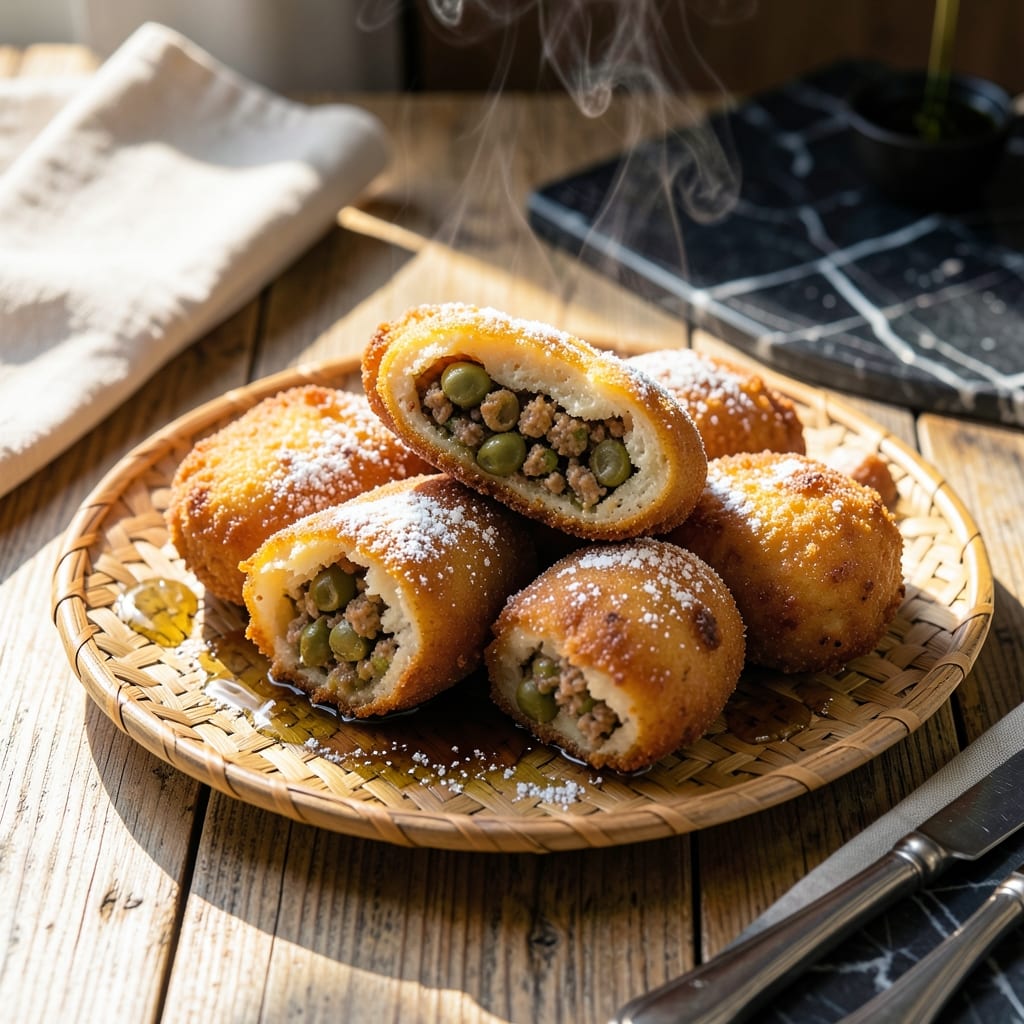
I developed this recipe after years of testing to perfect the crispy texture that defines authentic Puerto Rican alcapurrias. The yuca dough requires precise handling to achieve that golden, shatteringly thin exterior.
What makes this dish special is the contrast between the savory beef filling and the starchy yuca wrapper. The filling, known as picadillo, combines ground beef with olives, capers, and sofrito for complex flavor in every bite.
The frying technique is crucial—maintaining 350°F oil temperature ensures even cooking without absorbing excess grease. Each alcapurria emerges with a blistered surface that gives way to tender filling.
This traditional street food brings Puerto Rican flavors to your kitchen. The process demands patience, but the results justify every minute of effort.
Ingredients for Recipe for Alcapurrias Puerto Rican
Yuca, sofrito, and savory filling create this authentic Puerto Rican dish with crispy perfection.
| Ingredient | Amount | Notes |
|---|---|---|
| Yuca 🥔 | 2 lb | Peeled and grated, fresh |
| Vegetable Oil 🫒 | 4 cups | For frying, neutral flavor |
| All-Purpose Flour 🌾 | 1 cup | For dough consistency |
| Salt 🧂 | 2 tsp | Divided between dough and filling |
| Textured Vegetable Protein 🌱 | 1 cup | Rehydrated for filling |
| Green Olives 🫒 | ½ cup | Pitted and chopped, manzanilla preferred |
| Capers 🌿 | 2 tbsp | Drained and rinsed |
| Sofrito 🧅 | ½ cup | Homemade or store-bought |
| Tomato Sauce 🍅 | ½ cup | For filling moisture |
| Garlic Cloves 🧄 | 4 cloves | Minced for filling |
| Onion 🧅 | 1 whole | Medium, finely diced |
| Ground Cumin 🌿 | 1 tsp | For filling seasoning |
| Ground Coriander 🌿 | 1 tsp | For filling seasoning |
| Black Pepper 🌶️ | ½ tsp | Freshly ground preferred |
| Water 💧 | ½ cup | As needed for dough |
[recipe_ingredient_scaler]
The yuca is non-negotiable here. Latin markets often stock the freshest, firmest tubers—avoid any with soft spots or discoloration. Grate it immediately after peeling to prevent browning. For the filling, textured vegetable protein mimics the traditional beef texture perfectly. Goya or Beyond Meat brands work well if you need a shortcut. The sofrito should be aromatic and vibrant—Badia or Goya make reliable jarred versions.
No sofrito on hand? Blend equal parts bell pepper, onion, garlic, and cilantro for a quick substitute. Green olives can be swapped for kalamata in a pinch, though the flavor profile shifts slightly. For the dough, tapioca starch at a 1:1 ratio replaces flour if needed. The oil must reach 350°F—use a candy thermometer for precision. Capers are salty, so adjust the salt in the filling accordingly.
Assemble and fry alcapurrias the same day for best texture. Dough can rest in the fridge for up to 24 hours if tightly wrapped. Leftovers keep in the fridge for 3 days—reheat in the oven to revive crispiness. Freeze uncooked for up to 1 month, fry straight from frozen.
Why You’ll Love This Recipe
- Minimal Chopping Required: I just grate the yuca and mix in the TVP—no fancy knife skills needed.
- That Crispy Crunch: The yuca and flour combo fries up golden with a satisfying outer bite.
- Feeds a Crowd: Honestly, I double the batch and freeze half for lazy dinners later.
Step-by-Step Instructions for Alcapurrias Puerto Rican
Master these techniques to achieve perfectly crispy yuca dough with a flavorful filling every time.
Step 1: Prepare the Yuca Dough
Peel the 2 lb Yuca completely, removing both the thick outer skin and the pinkish layer beneath. Grate the cleaned yuca using the fine side of a box grater or a food processor fitted with the grating attachment. You should end up with about 4 cups of tightly packed grated yuca.
In a large bowl, combine the grated yuca with the 1 cup All-Purpose Flour and 1 tsp Salt. Mix thoroughly with your hands, pressing the mixture together to form a cohesive dough. Add the 0.5 cup Water gradually, about 2 tbsp at a time, until the dough holds together when squeezed but isn’t sticky. The texture should resemble wet sand that clumps when pressed.
Step 2: Create the Savory Filling
In a medium saucepan, heat 2 tbsp of the Vegetable Oil over medium heat. Add the 1 whole Onion (finely diced) and sauté for 3-4 minutes until translucent. Stir in the 4 cloves Garlic Cloves (minced) and cook for 30 seconds until fragrant.
Add the 1 cup Textured Vegetable Protein (rehydrated and drained), 0.5 cup Sofrito, 0.5 cup Tomato Sauce, 0.5 cup Green Olives (pitted and chopped), 2 tbsp Capers (drained and rinsed), 1 tsp Ground Cumin, 1 tsp Ground Coriander, 1 tsp Salt, and 0.5 tsp Black Pepper. Cook the mixture for 8-10 minutes until thickened and most of the liquid has evaporated. Remove from heat and let cool completely before assembling.
Step 3: Assemble and Shape the Alcapurrias
Divide the yuca dough into 8 equal portions (about ½ cup each) and the filling into 8 equal portions (about 3 tbsp each). Working with one portion at a time, flatten a dough ball in your palm to create a ¼-inch thick circle, approximately 4 inches in diameter.
Place a portion of filling in the center of the dough circle. Gently fold the dough up and around the filling, pressing the edges to seal completely. Shape into an oval or log, ensuring no filling is exposed. The sealed edges should be smooth with no cracks. If the dough cracks, dip your fingers in water and smooth the surface.
Step 4: Fry to Golden Perfection
Heat the remaining Vegetable Oil in a deep, heavy pot to 350°F. The oil should be at least 2 inches deep. To test the temperature, drop a small piece of dough into the oil—it should sizzle immediately and rise to the surface within 10-15 seconds.
Fry the alcapurrias in batches, being careful not to overcrowd the pot, for 4-5 minutes on each side or until they are deep golden brown and crispy all over. Use a slotted spoon to transfer them to a paper towel-lined plate to drain excess oil. The alcapurrias should have a crisp exterior with a creamy interior and hot, savory filling. Serve immediately while hot and crispy.
Pro Tips For Making Recipe For Alcapurrias Puerto Rican
- Boil Yuca Right: Cut the yuca into even 2-inch chunks and boil until fork-tender—about 20-25 minutes. I learned this the hard way: undercooked yuca makes gritty alcapurrias that fall apart when frying.
- Drain Well: After boiling, let the yuca drain in a colander for 10 minutes, then pat dry with a towel. Sounds tedious, but excess moisture makes the dough sticky and hard to shape.
- Skip Cold Oil: Heat the vegetable oil to 350°F before frying—test with a small piece of dough first. Cold oil soaks in, making alcapurrias greasy instead of crisp.
- Prep TVP First: Rehydrate the textured vegetable protein in hot salted water for 10 minutes, then squeeze out all the liquid. My grandmother swore by this, and she was right: dry TVP crumbles and ruins the filling texture.
Regional Styles of recipe for alcapurrias puerto rican
San Juan Street Food
In the capital, alcapurrias are a staple at food trucks and beachside kiosks. Vendors in Old San Juan often use a mix of yuca and green banana for extra crispiness. I tested this combination and found it adds a subtle sweetness that balances the savory filling beautifully. 🗺️
Ponce Tradition
Southern Puerto Rico favors a thicker, heartier version with more filling. In Ponce, they sometimes add annatto seeds to the dough for a golden hue. The filling often includes raisins for a touch of sweetness, which I personally love.
Mayagüez Style
Western regions like Mayagüez prefer a lighter, almost flaky texture by incorporating cornmeal into the dough. This variation fries up extra crispy and holds its shape well. I recommend trying 1/4 cup fine cornmeal for this style.
Caguas Variation
In Caguas, the filling leans spicier with added jalapeños or habanero peppers. The dough remains traditional, but the heat level transforms the eating experience. I suggest starting with 1 minced jalapeño for a mild kick.
Rincón Coastal Twist
Beach towns like Rincón serve alcapurrias with a side of avocado crema. The creamy, tangy dip complements the crispy exterior perfectly. I make mine with ripe avocados, lime juice, and a pinch of salt.
Mountain Region
In the central mountains, they sometimes stuff alcapurrias with salted cod instead of beef. This reflects the area’s historical reliance on preserved fish. The salty cod pairs wonderfully with the starchy yuca wrapper.
Nutrition Facts
Frequently Asked Questions
What’s the best way to peel yuca quickly?
Cut the yuca into 3-4 inch sections first, then peel each piece. Use a sharp knife to remove the thick outer skin and pink layer beneath. Wear gloves if your skin is sensitive to yuca’s sap.
Can I bake alcapurrias instead of frying?
Baking won’t give the same crispy texture. For best results, use an air fryer at 375°F for 12-15 minutes. Turn halfway for even browning.
Why did my dough crack while shaping?
This usually means the dough is too dry. Add 1-2 tbsp more water gradually until it holds together. Also, keep your hands moist while shaping to prevent sticking.
How do I store leftover alcapurrias?
Let them cool completely, then store in an airtight container in the fridge for up to 3 days. Reheat in the oven at 350°F for 10 minutes to restore crispiness.

Trained in classic French technique but raised on slow-cooked ribs and spicy rubs, she blends culinary skill with smoke and soul.
- Best Smoked Oxtail Recipe: Deep-Rich Flavor After Low-and-Slow Cooking - October 14, 2026
- Pit Boss Smoked Prime Rib Roast Recipe: Bark-to-Bone Crispness in 4 Hours - October 14, 2026
- Smoked Tuna Steak Recipe: Seared Crust Meets Silky Centers - October 14, 2026