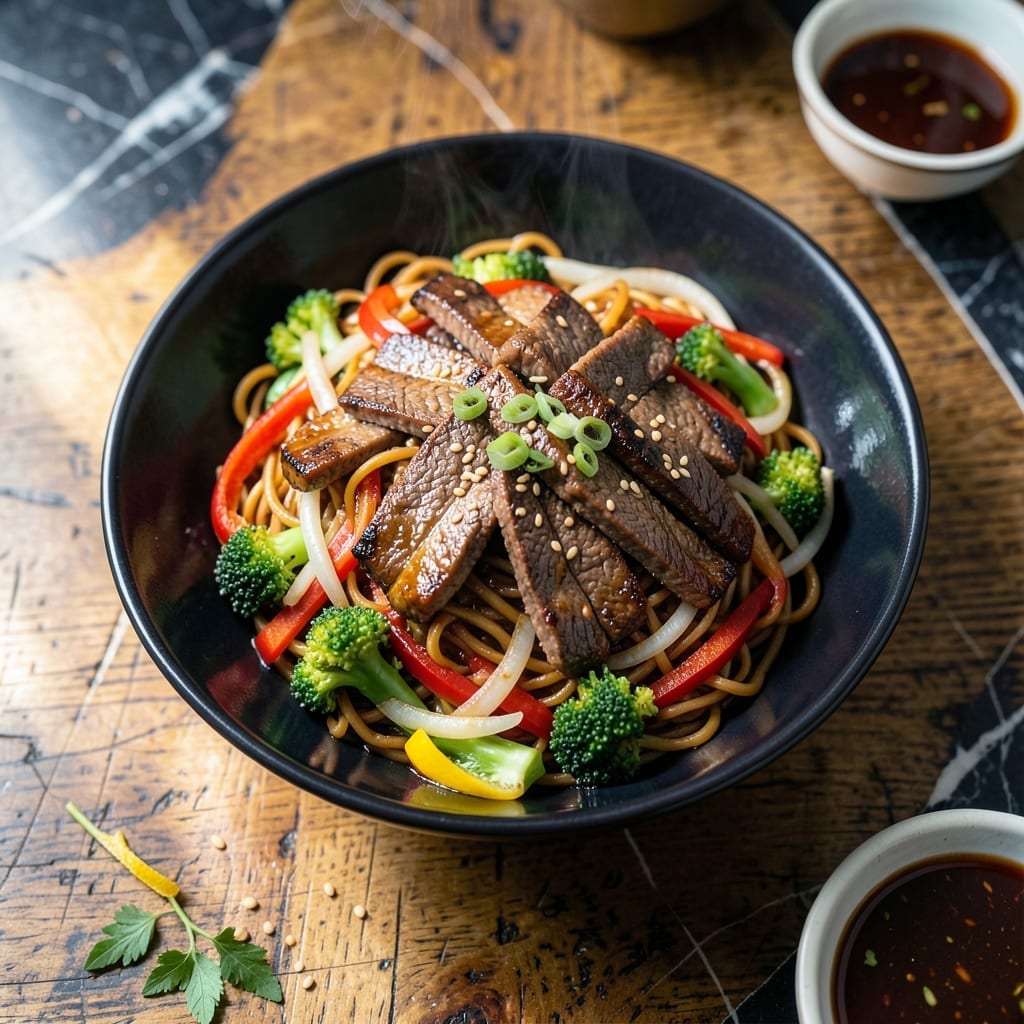
This stir fry delivers tender beef and crisp vegetables in a flavorful sauce that clings perfectly to noodles. I developed this method after years of testing to achieve restaurant-quality results at home.
The key is high heat and quick cooking—thinly sliced beef sears fast while vegetables retain their crunch. A simple soy-ginger sauce ties everything together without overpowering the natural flavors.
You’ll end up with a dish that’s vibrant, satisfying, and ready in under 30 minutes. The noodles soak up the sauce beautifully, creating a balanced bite every time.
Serve immediately while hot for the best texture. This recipe works with any protein or vegetable combination.
Ingredients for Recipe for Beef Stir Fry with Vegetables and Noodles
Restaurant-quality wok-tossed perfection starts with these carefully selected ingredients for vibrant, balanced flavors.
| Ingredient | Amount | Notes |
|---|---|---|
| Flank Steak 🥩 | 1 lb | Thinly sliced against the grain |
| Soy Sauce 🫕 | ⅓ cup | Low-sodium preferred for balance |
| Rice Vinegar 🍶 | 2 tbsp | Unseasoned variety essential |
| Sesame Oil 🫒 | 1 tbsp | Toasted for depth of flavor |
| Fresh Ginger Root 🌿 | 1 tbsp | Minced finely for even distribution |
| Garlic Cloves 🧄 | 4 cloves | Minced for maximum aroma release |
| Brown Sugar 🍚 | 1 tbsp | Light or dark works equally |
| Red Bell Pepper 🌶️ | 1 whole | Julienned for quick cooking |
| Broccoli Florets 🥦 | 2 cups | Cut into bite-sized pieces |
| Carrot 🥕 | 1 whole | Julienned or thinly sliced |
| Green Onions 🧅 | 4 whole | Thinly sliced on diagonal |
| Dried Egg Noodles 🍜 | 8 oz | Cooked al dente per package |
| Vegetable Oil 🫒 | 2 tbsp | High smoke point required |
| Cornstarch 🌾 | 1 tbsp | For velvety sauce texture |
| Water 💧 | ¼ cup | For sauce adjustment |
[recipe_ingredient_scaler]
The beef selection is critical for stir fry success. Flank steak offers the ideal balance of flavor and tenderness when sliced properly against the grain. Whole Foods or a reputable butcher will have high-quality options with good marbling. For the best results, ensure the meat is cold when slicing—this allows for cleaner, thinner cuts that cook quickly and evenly in the wok.
No flank steak available? Sirloin or skirt steak work as excellent substitutes with similar texture. For a gluten-free version, use tamari instead of soy sauce. The vegetables can be adapted based on preference—snap peas, mushrooms, or bok choy all work beautifully. If using frozen vegetables, thaw and pat dry completely to prevent steaming the dish.
Store sliced beef in the refrigerator for up to 24 hours before cooking. Prepared sauce keeps in an airtight container for 1 week. For optimal freshness, chop vegetables just before cooking. This dish is best served immediately but can be reheated gently with a splash of water to maintain texture.
Why You’ll Love This Recipe
- I’ll be real: it tastes even better the next day, and the noodles soak up all that rich sauce perfectly.
- One Pan Wonder: I toss the flank steak, veggies, and noodles in a single skillet—minimal cleanup, maximum flavor.
- Umami Bomb: The soy sauce, sesame oil, and fresh ginger create this deep, savory taste that’s honestly addictive.
- Weeknight Hero: Between us, this is my go-to when I need dinner fast but still crave something restaurant-worthy.
Step-by-Step Instructions for Beef Stir Fry With Vegetables and Noodles
Master the wok technique for perfectly tender beef and crisp vegetables with this professional method.
Step 1: Prepare the Marinade and Slice the Beef
In a bowl, whisk together the 0.33 cup Soy Sauce, 2 tbsp Rice Vinegar, 1 tbsp Sesame Oil, 1 tbsp Fresh Ginger Root, 4 cloves Garlic Cloves, and 1 tbsp Brown Sugar until the sugar dissolves completely. This marinade balances salty, tangy, and sweet notes for depth of flavor.
Slice the 1 lb Flank Steak thinly against the grain into ¼-inch strips. Add the beef to the marinade, ensuring each piece is fully coated. Let it marinate at room temperature for 15 minutes while you prep the remaining ingredients. This short marination tenderizes the beef without turning it mushy.
Step 2: Blanch the Vegetables and Cook the Noodles
Bring a large pot of salted water to a rolling boil. Add the 2 cups Broccoli Florets, 1 whole Red Bell Pepper (julienned), and 1 whole Carrot (julienned). Blanch for 2 minutes until the broccoli turns bright green and the carrots slightly soften. Drain and immediately shock in ice water to preserve their crisp texture.
In the same pot, cook the 8 oz Dried Egg Noodles according to package instructions until al dente. Drain, rinse under cold water to stop the cooking process, and toss with a drizzle of Sesame Oil to prevent sticking.
Step 3: Stir-Fry the Beef to Medium-Rare
Heat 1 tbsp Vegetable Oil in a wok or large skillet over high heat until shimmering. Remove the beef from the marinade (reserve the marinade) and add it to the wok in a single layer. Sear undisturbed for 1-2 minutes until browned on the bottom, then stir-fry for another 1-2 minutes until the beef reaches medium-rare (slightly pink inside).
Transfer the beef to a plate. The high heat ensures a quick sear without overcooking, keeping the meat juicy and tender. Avoid crowding the wok to prevent steaming the beef.
Step 4: Combine Vegetables, Noodles, and Sauce
Add the remaining 1 tbsp Vegetable Oil to the wok. Stir-fry the blanched vegetables for 2 minutes until heated through. Add the cooked noodles and reserved marinade. Toss everything together for 1-2 minutes until the noodles are evenly coated and the sauce begins to thicken.
In a small bowl, mix the 1 tbsp Cornstarch with 0.25 cup Water to create a slurry. Pour it into the wok and stir-fry for an additional 1-2 minutes until the sauce becomes glossy and clings to the noodles and beef. The cornstarch creates a velvety texture that binds all the flavors together.
Step 5: Finish and Garnish
Return the beef to the wok and toss everything together for 30 seconds to reheat. The beef should be fully cooked through but still tender, and the vegetables should retain a slight crispness. Taste and adjust seasoning if needed—though the soy-based marinade typically provides sufficient saltiness.
Transfer to a serving platter and garnish with the 4 whole Green Onions (thinly sliced). Serve immediately while hot, as the noodles can absorb the sauce and become sticky if left to sit. Each bite should deliver a balance of savory beef, crisp vegetables, and silky noodles.
Pro Tips For Making Recipe For Beef Stir Fry With Vegetables And Noodles
- Slice Against the Grain: Cut the flank steak into thin strips against the grain for maximum tenderness—I learned this the hard way after chewing through tough bites in my first few attempts.
- Hot Pan, Quick Cook: Crank the heat to high and cook the beef in batches to prevent steaming; about 2-3 minutes per batch guarantees that perfect sear without overcrowding.
- Bloom the Ginger: Finely mince the fresh ginger root and let it sizzle in the sesame oil for 30 seconds before adding anything else—it releases way more flavor than just tossing it in raw.
- Skip the Over-Salting: Soy sauce is already salty, so go light on additional salt until you’ve tasted the dish—after ruining a batch with heavy-handed seasoning, I now measure twice.
Regional Styles of This recipe for beef stir fry with vegetables and noodles
Sichuan Spicy Style
This version brings serious heat from the Sichuan province. Add 2 tsp Sichuan peppercorns and 1 tbsp chili oil to the marinade, plus 1 tsp red pepper flakes when stir-frying. I love how the numbing spice of the peppercorns balances the fiery chili. 🌶️
Thai Basil Twist
Swap green onions for 1 cup fresh Thai basil leaves added at the very end. The anise-like flavor transforms the dish completely. I also add 1 tbsp fish sauce to the marinade for that essential umami kick.
Japanese Yakisoba
Use yakisoba noodles instead of egg noodles and add 2 tbsp Worcestershire sauce to the marinade. Top with beni shoga (red pickled ginger) and a drizzle of Japanese mayonnaise for authenticity.
Korean Bulgogi
Thinly slice the beef ribeye instead of flank steak. Marinate with ¼ cup gochujang and 2 tbsp honey for that sweet-spicy Korean profile. Garnish with toasted sesame seeds and extra green onions.
Vietnamese Pho-Inspired
Add 1 star anise pod and 1 cinnamon stick to the marinade, then strain before cooking. Use rice noodles and top with bean sprouts and fresh cilantro. The aromatic spices create a beautiful depth of flavor.
The Portland farmers market has amazing star anise that I always grab when making this variation. ✨
Nutrition Facts
Frequently Asked Questions
What cut of beef works best for stir fry?
Flank steak is ideal for its balance of flavor and tenderness when sliced thinly against the grain. For alternatives, sirloin or skirt steak also work well. Always slice cold meat for clean cuts.
Can I use frozen vegetables?
Yes, but thaw and pat them completely dry first to prevent steaming. Fresh vegetables are preferred for the best texture and crunch.
How do I prevent noodles from sticking?
Rinse cooked noodles under cold water and toss with a bit of sesame oil. This keeps them separate until stir-frying. Avoid overcooking the noodles initially.
Why is my sauce too thin?
Ensure you add the cornstarch slurry at the end and cook for 1-2 minutes until glossy. If still thin, mix a bit more cornstarch with water and stir in.

Trained in classic French technique but raised on slow-cooked ribs and spicy rubs, she blends culinary skill with smoke and soul.
- Smoked Whitefish Recipe: Wood-Fired Flakes with Herbed Butter Drizzle - October 15, 2026
- Smoked Teriyaki Beef Jerky Recipe: Umami-Deep Flavor in Every Chewy Bite - October 15, 2026
- Stewed Beef Brisket Recipe: Deep-Rich Flavor After 8 Hours of Slow Simmering - October 15, 2026