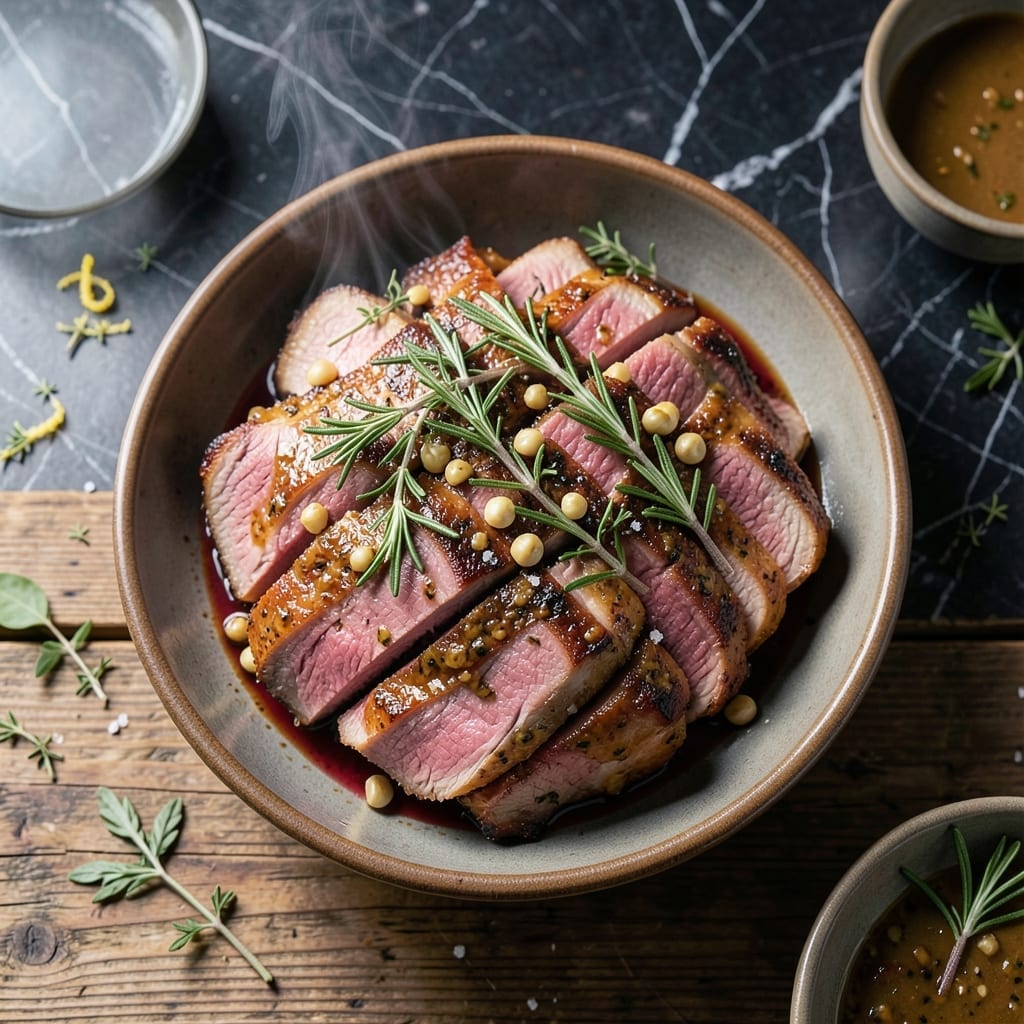
This slow-roasted method transforms tough bottom round into fall-apart tender beef with a flavorful herb crust. I developed this technique after years of experimenting with different cuts and cooking times, finding this approach consistently delivers the best results.
The key is low-and-slow cooking at 275°F for 3-4 hours, allowing the connective tissue to break down gradually. A simple rub of garlic, rosemary, and thyme creates an aromatic crust that enhances the beef’s natural richness without overpowering it.
What emerges from the oven is a roast with a beautifully caramelized exterior and moist, juicy interior. The herbs infuse the meat with complex flavor, while the slow cooking process ensures every bite is uniformly tender.
Perfect for Sunday suppers or special occasions, this recipe proves that less expensive cuts can yield extraordinary results with the right technique.
Ingredients for Recipe for Boneless Bottom Round Roast
Transform tough bottom round into tender, herb-crusted perfection with these essential ingredients.
| Ingredient | Amount | Notes |
|---|---|---|
| Boneless Bottom Round Roast 🥩 | 3 lb | Trimmed of excess fat |
| Garlic Cloves 🧄 | 6 cloves | Minced for herb rub |
| Fresh Rosemary 🌿 | 2 tbsp | Finely chopped, stems discarded |
| Fresh Thyme Leaves 🍃 | 2 tbsp | Stems removed, loosely packed |
| Olive Oil 🫒 | ¼ cup | Extra-virgin for rub and searing |
| Kosher Salt 🧂 | 1 ½ tsp | Diamond Crystal preferred |
| Black Pepper 🌶️ | 1 tsp | Freshly ground, coarse |
| Dijon Mustard 🟡 | 1 tbsp | For binding herb rub |
| Red Wine 🍷 | ½ cup | Dry variety for deglazing |
| Beef Stock 🥫 | 1 cup | Low-sodium preferred |
| Yellow Onion 🧅 | 1 whole | Large, roughly chopped |
| Carrots 🥕 | 3 whole | Peeled, cut into chunks |
| Celery Stalks 🥬 | 2 whole | Cut into large pieces |
[recipe_ingredient_scaler]
The beef cut is non-negotiable here—boneless bottom round delivers the fall-apart texture this method promises. Opt for a well-marbled piece (about 3 lbs) from a reputable butcher or the meat counter at Whole Foods. The roast should have a consistent thickness for even cooking. Trim any large fat deposits yourself for better herb adhesion, but leave a thin layer for flavor.
No fresh herbs? Dried rosemary and thyme at one-third the amount work in a pinch, though the flavor won’t be as vibrant. For the wine, any dry red like Cabernet Sauvignon or Merlot adds depth—substitute additional beef stock plus 1 tbsp balsamic vinegar if avoiding alcohol. The Dijon can be swapped for whole-grain mustard, but avoid yellow mustard’s milder taste.
This roast reheats beautifully—slice only what you need and store the rest whole. Keeps in the fridge for 4-5 days or freezes for 3 months. For best texture, warm leftovers gently in the oven with a splash of stock to prevent drying out.
Why You’ll Love This Recipe
- Set It & Forget: I rub the roast with olive oil, garlic, rosemary, and thyme, pop it in the oven, and let it do its thing—no babysitting required.
- Herb-Crusted Heaven: The fresh rosemary and thyme form this insane crust with the garlic that makes every bite ridiculously flavorful.
- Sunday Dinner Hero: I’ve served this for family gatherings and casual Sunday suppers—it’s hearty enough to impress without the fuss.
- Leftovers for Days: One roast feeds us for two meals, and the slices make killer sandwiches the next day. Honestly, it’s my secret to stress-free lunches.
Step-by-Step Instructions for Slow-Roasted Beef with Herb Crust
This method transforms the boneless bottom round roast into tender, flavorful beef with minimal effort.
Step 1: Prepare the Herb Rub and Season the Roast
In a small bowl, combine the 6 cloves garlic cloves, 2 tbsp fresh rosemary, 2 tbsp fresh thyme leaves, 1.5 tsp kosher salt, 1 tsp black pepper, 1 tbsp Dijon mustard, and 0.25 cup olive oil. Mix thoroughly until the herbs are evenly distributed and the mixture forms a thick paste.
Rub this herb mixture all over the 3 lb boneless bottom round roast, pressing it into the meat so it adheres well. The mustard in the rub helps it cling to the surface while adding a subtle tang. Let the roast sit at room temperature for 30 minutes to allow the flavors to penetrate the meat.
Step 2: Sear the Roast for Depth of Flavor
Preheat your oven to 325°F. While the oven heats, place a large Dutch oven or heavy oven-safe pot over medium-high heat. Add the roast and sear on all sides until deeply browned, about 3-4 minutes per side. This step develops a rich crust that enhances the overall flavor.
Once seared, transfer the roast to a plate. In the same pot, add the 1 whole yellow onion, 3 whole carrots, and 2 whole celery stalks. Sauté for 5 minutes until the vegetables begin to soften and develop color, which will contribute to the braising liquid.
Step 3: Deglaze and Braise the Roast
Pour the 0.5 cup red wine into the pot, scraping up any browned bits from the bottom with a wooden spoon. Let the wine simmer for 2 minutes to reduce slightly and burn off the alcohol. This deglazing step captures all the concentrated flavors from searing.
Return the roast to the pot, nestling it among the vegetables. Pour in the 1 cup beef stock, ensuring the liquid comes about halfway up the roast. Cover the pot with a tight-fitting lid and transfer it to the preheated oven.
Step 4: Slow-Roast to Tender Perfection
Roast the beef for 3 to 3.5 hours, turning the roast halfway through the cooking time to ensure even browning and moisture distribution. The slow, low-temperature cooking breaks down the tough fibers in the bottom round, resulting in a fork-tender texture.
Check the roast occasionally to ensure the liquid hasn’t evaporated. If it seems low, add a splash of water or additional beef stock. The roast is done when an instant-read thermometer inserted into the thickest part reads 195-200°F and the meat pulls apart easily with a fork.
Step 5: Rest and Serve
Carefully transfer the roast to a cutting board and tent it loosely with foil. Let it rest for 15-20 minutes before slicing. This resting period allows the juices to redistribute throughout the meat, ensuring each serving is moist and flavorful.
Strain the braising liquid and skim off any excess fat if desired. Serve the sliced roast with the strained vegetables and a ladle of the rich, herb-infused braising liquid spooned over the top. The liquid can also be reduced further on the stovetop to create a thicker sauce, if preferred.
Pro Tips For Making Recipe For Boneless Bottom Round Roast
- Sear It Hard: Use a screaming hot pan with 2 tablespoons of olive oil to get a deep brown crust on the roast—this is what gives bottom round its best flavor, and I learned this the hard way after too many pale, lackluster attempts.
- Score the Fat: Even if it’s boneless, make shallow cuts in the fat cap every inch or so so the garlic, rosemary, and thyme can really get in there and do their work.
- Skip the Cold Start: Let the roast sit at room temperature for 30-45 minutes before cooking, or you’ll end up with a dry outer ring and a lukewarm center—my grandmother swore by this, and she was right.
- Rest Before Slicing: After roasting, tent it with foil and give it a solid 15 minutes to rest, or all those juices you worked for will end up on the cutting board instead of in the meat.
Make-Ahead Tips for This Recipe
Overnight Herb Infusion
Prepare your herb rub up to 24 hours ahead and coat the roast, then refrigerate it uncovered on a rack. This allows the garlic and herbs to deeply penetrate the meat. I learned this trick from my local butcher in Portland—it makes the flavors even more pronounced. 🌿
Pre-Chop Veggies
Cut your onion, carrots, and celery the night before and store them in a sealed container. This saves 15 minutes of prep on cooking day. Just
Partial Cooking Method
Sear and braise the roast the day before, then refrigerate it in the cooking liquid. The next day, finish cooking at 275°F for 1-1.5 hours. The flavors meld overnight, and the meat becomes even more tender. 💡
Freezer-Friendly Prep
Assemble the entire dish—rubbed roast and chopped veggies—in a freezer bag. It will keep for up to 3 months. Thaw overnight in the fridge before cooking. This is perfect for those busy weeks when I need a hearty meal ready to go.
Braising Liquid Boost
Make extra braising liquid and freeze it in ice cube trays. Pop a few cubes into the pot when reheating leftovers. This trick from my Cincinnati days keeps the meat moist and flavorful for days.
Slice Before Storing
After cooking and cooling, slice the roast and store it in portions with some braising liquid. This makes for easy grab-and-go meals. Reheat gently in a 300°F oven for 15-20 minutes. ✨
Nutrition Facts
Frequently Asked Questions
Can I use a different cut of beef?
While bottom round works best, you can substitute with chuck roast. Both cuts benefit from slow cooking. Avoid leaner cuts like sirloin, as they may dry out during the long cooking time.
What if I don’t have a Dutch oven?
Use a heavy oven-safe pot with a tight lid. A slow cooker set to low for 8 hours also works well. The key is maintaining a consistent, low temperature.
How do I prevent the roast from drying out?
Ensure there’s enough liquid to cover about halfway up the roast. Check periodically and add more stock if needed. Letting it rest before slicing also helps retain moisture.
Can I cook this in a slow cooker?
Yes! Sear the roast first, then transfer everything to the slow cooker. Cook on low for 8-10 hours or high for 5-6 hours for tender results.

Trained in classic French technique but raised on slow-cooked ribs and spicy rubs, she blends culinary skill with smoke and soul.
- Best Smoked Oxtail Recipe: Deep-Rich Flavor After Low-and-Slow Cooking - October 14, 2026
- Pit Boss Smoked Prime Rib Roast Recipe: Bark-to-Bone Crispness in 4 Hours - October 14, 2026
- Smoked Tuna Steak Recipe: Seared Crust Meets Silky Centers - October 14, 2026