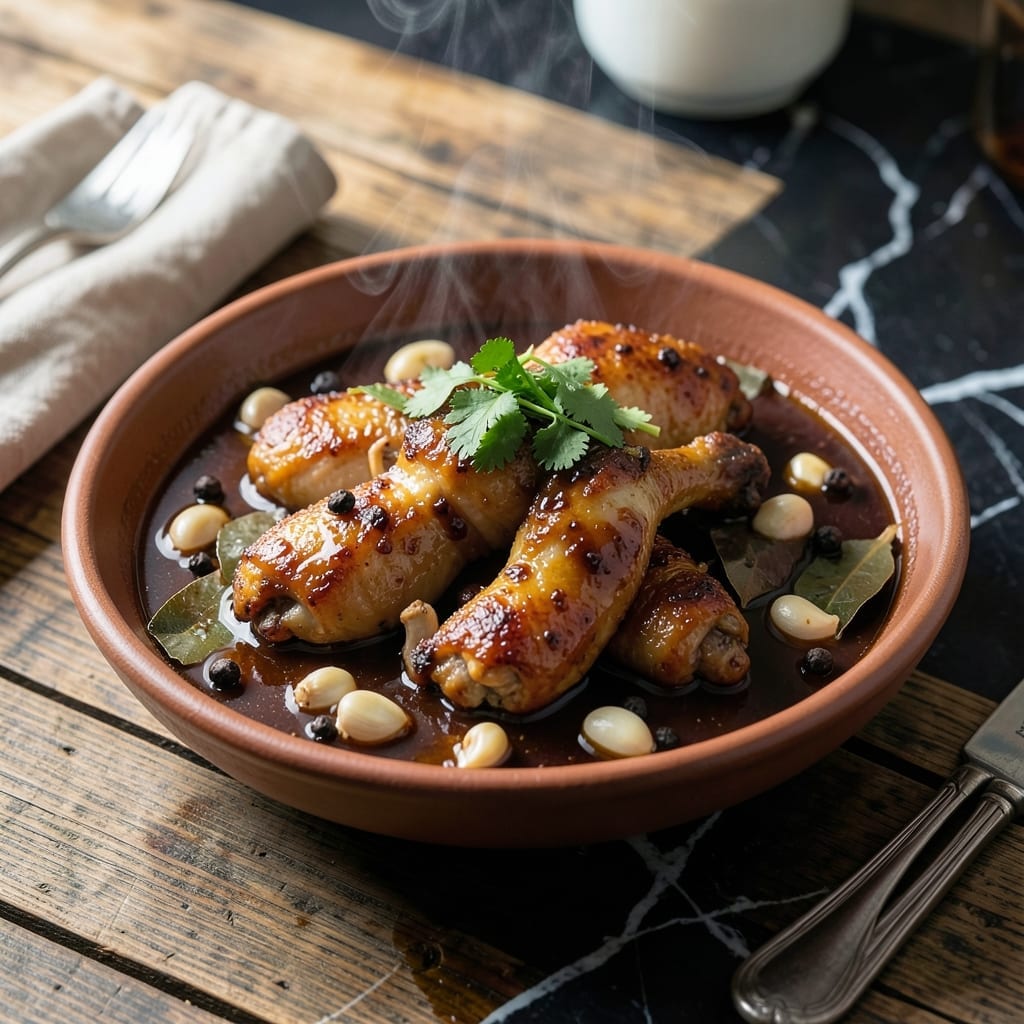
This Filipino chicken adobo recipe is a foolproof introduction to one of the country’s most beloved dishes. The balance of tangy vinegar and savory soy sauce creates a braising liquid that transforms simple ingredients into something extraordinary.
I developed this version after testing dozens of family recipes, focusing on the traditional technique of simmering then reducing the sauce. The result is tender chicken with a glossy, deeply flavored coating that’s both rich and bright.
The beauty lies in its simplicity: chicken thighs, vinegar, soy sauce, garlic, and peppercorns. The long braise coaxes out maximum flavor while keeping the meat juicy. This is comfort food at its most authentic.
Serve with steamed rice to soak up every last drop of the savory sauce. The flavors only improve overnight, making it perfect for meal prep.
Ingredients for Recipe for Chicken Adobo Filipino Version
Simple yet bold, these ingredients create a deeply flavorful Filipino classic with minimal effort.
| Ingredient | Amount | Notes |
|---|---|---|
| Bone-In Chicken Thighs 🍗 | 2 lb | Skin-on for richer flavor |
| White Vinegar 💧 | ¾ cup | Cane vinegar preferred |
| Soy Sauce 🫒 | ½ cup | Use Filipino brands like Silver Swan |
| Garlic Cloves 🧄 | 12 cloves | Peeled, smashed lightly |
| Black Peppercorns 🌶️ | 1 tbsp | Whole, lightly crushed |
| Bay Leaves 🍃 | 3 pieces | Dried, whole |
| Brown Sugar 🍚 | 1 tbsp | Optional, for balance |
| Water 💦 | ½ cup | To adjust sauce consistency |
| Green Onions 🧅 | 4 pieces | Thinly sliced, for garnish |
| Vegetable Oil 🫒 | 2 tbsp | For searing chicken |
| Salt 🧂 | 1 tsp | Adjust to taste |
[recipe_ingredient_scaler]
The chicken thighs are non-negotiable for authenticity—bone-in, skin-on delivers the richest flavor and stays juicy during the long braise. Costco or Whole Foods carry quality options, but any grocery store will work. For vinegar, Filipino cane vinegar is traditional (find it at Asian markets like Seafood City), but white vinegar works in a pinch. Soy sauce should be Filipino brands like Silver Swan or Datu Puti for the right balance.
No cane vinegar? Apple cider vinegar is the closest substitute. Short on soy sauce? Tamari or coconut aminos can work, though the flavor profile shifts slightly. The garlic can be pre-minced (trust me, I won’t judge), but fresh cloves smashed lightly release more flavor. Dried bay leaves are fine—just remove them before serving. For heat, add a dried chili or two with the peppercorns.
This tastes even better the next day once the flavors meld. Store in an airtight container for up to 5 days in the fridge or freeze for 3 months. Reheat gently on the stove to keep the chicken tender.
Why You’ll Love This Recipe
- One Pot Wonder: I just dump everything in a pot and let the soy sauce and vinegar work their magic together.
- Tangy Garlic Bomb: The vinegar cuts through the richness while the garlic and peppercorns pack a serious flavor punch.
- Feeds a Crowd: Bone-in thighs stretch this dish to feed my whole family, and it tastes even better the next day.
- Pantry Staples: I always have soy sauce, vinegar, and garlic on hand, so this is my go-to when the fridge looks empty.
Step-by-Step Instructions for Chicken Adobo Filipino Version
Master this classic technique for tender meat and perfectly balanced sauce every time.
Step 1: Sear the Chicken Thighs to Golden Perfection
Heat the 2 tbsp vegetable oil in a large, heavy pot or Dutch oven over medium-high heat. When the oil shimmers, add the 2 lb bone-in chicken thighs, skin-side down. I always use skin-on for the richest flavor.
Sear undisturbed for 5-7 minutes until the skin turns deep golden brown and crisp. Flip and sear the other side for another 3-4 minutes. The goal is to develop a rich fond on the bottom of the pot—this will form the base of your sauce. Remove the chicken and set aside.
Step 2: Sauté Aromatics and Toast Spices
In the same pot, reduce heat to medium. Add the 12 cloves garlic cloves, lightly smashed, and sauté for 1-2 minutes until fragrant but not browned. Then add the 1 tbsp black peppercorns and 3 pieces bay leaves, stirring for 30 seconds to toast the spices.
This step is crucial—it releases the essential oils from the garlic and spices, building layers of flavor. Be careful not to burn the garlic, as it will turn bitter and ruin the dish.
Step 3: Build the Braising Liquid
Pour in the 0.75 cup white vinegar, 0.5 cup soy sauce, 1 tbsp brown sugar, and 0.5 cup water. Stir to combine, scraping up any browned bits from the bottom of the pot. The vinegar will initially smell sharp, but it mellows beautifully as it cooks.
Return the chicken to the pot, skin-side up, along with any accumulated juices. Add the 1 tsp salt. The liquid should just cover the chicken—if it doesn’t, add a splash more water. Bring to a gentle boil.
Step 4: Braise Until Fall-Off-The-Bone Tender
Reduce heat to low, cover, and let it simmer gently for 35-40 minutes. You want a slow, steady simmer—not a rolling boil, which would make the meat tough. Halfway through, turn the chicken pieces to ensure even cooking.
You’ll know it’s done when the meat pulls away from the bone easily and a knife slides in with no resistance. The sauce should have reduced slightly and taken on a glossy sheen.
Step 5: Finish and Garnish
Once the chicken is tender, uncover and simmer for another 5-10 minutes to allow the sauce to thicken slightly. Taste and adjust seasoning if needed—Filipino adobo should have a bright, tangy-salty balance.
Discard the bay leaves and transfer to a serving dish. Garnish with the 4 pieces green onions, thinly sliced. Serve hot with steamed rice to soak up every last bit of the rich, savory sauce.
Pro Tips For Making Recipe For Chicken Adobo Filipino Version
- Sear the Thighs First: Brown the bone-in thighs in the pot before adding liquids—this builds a deep, caramelized base that makes the adobo sauce richer. I learned this the hard way after skipping it and ending up with pale, bland chicken.
- Balance the Vinegar: Use equal parts white vinegar and soy sauce, but taste before adding all the vinegar at once. Some brands are sharper than others, and you can always adjust later.
- Don’t Boil the Sauce: Keep the heat at a gentle simmer, never a rolling boil, or the vinegar will turn harsh and the sauce can break. My grandmother swore by this, and she was right.
- Crush the Garlic: Smash the garlic cloves with the side of your knife before peeling and mincing—it releases more flavor and saves time. Sounds weird, but it works.
Pro Cooking Tips for Great recipe for chicken adobo filipino version
Perfect Searing Technique
Use a heavy pot like my vintage Lodge cast iron for even heat distribution. Heat the 2 tbsp vegetable oil until shimmering before adding the 2 lb bone-in chicken thighs—this prevents sticking and ensures a proper sear. Don’t crowd the pot; work in batches if needed. 🔥
Vinegar Timing Matters
Never add vinegar directly to hot oil—it can splatter dangerously. Always deglaze with the 0.75 cup white vinegar after removing the chicken. The acidity helps lift the fond, creating a deeper flavor base for your sauce.
Low and Slow Braise
Maintain a gentle simmer at low heat for the 35-40 minutes braise. A rolling boil toughens the meat. I check the heat by ensuring only occasional bubbles break the surface. The sauce should just barely ripple.
Sauce Reduction Trick
After braising, uncover and simmer for 5-10 minutes to concentrate flavors. If the sauce reduces too much, add ¼ cup water. You want it thick enough to coat the chicken but still fluid enough to drizzle over rice.
Garlic Flavor Boost
Lightly smashing the 12 cloves garlic releases more allicin than mincing, which mellows beautifully during the long cook. Remove any green sprouts from the cloves first—they can add bitterness. 💡
Rest Before Serving
Let the chicken rest in the sauce for 10 minutes off heat before serving. This allows the juices to redistribute. The flavors will be more balanced, and the meat will stay moist when sliced.
Nutrition Facts
Frequently Asked Questions
Can I use chicken breasts instead of thighs?
I don’t recommend it. Thighs stay juicy during the long braise, while breasts can dry out. If you must, reduce cooking time to 25-30 minutes and check often.
Why does the vinegar smell so strong at first?
The sharp aroma mellows as it cooks, balancing the soy sauce’s saltiness. Simmering for 35-40 minutes transforms it into a rich, tangy depth. Don’t skip this step!
Can I make this in a slow cooker?
Yes! Sear the chicken first, then combine all ingredients in the slow cooker. Cook on low for 4-5 hours or high for 2-3 hours.

Trained in classic French technique but raised on slow-cooked ribs and spicy rubs, she blends culinary skill with smoke and soul.
- Stewed Beef Brisket Recipe: Deep-Rich Flavor After 8 Hours of Slow Simmering - October 15, 2026
- Beef Brisket Rolls Recipe: Flaky Layers and Smoky Sweet Filling - October 15, 2026
- Masterbuilt Smoker Beef Brisket Recipe: Bark-To-Meat Ratio Hack for Unmatched Flavor - October 15, 2026