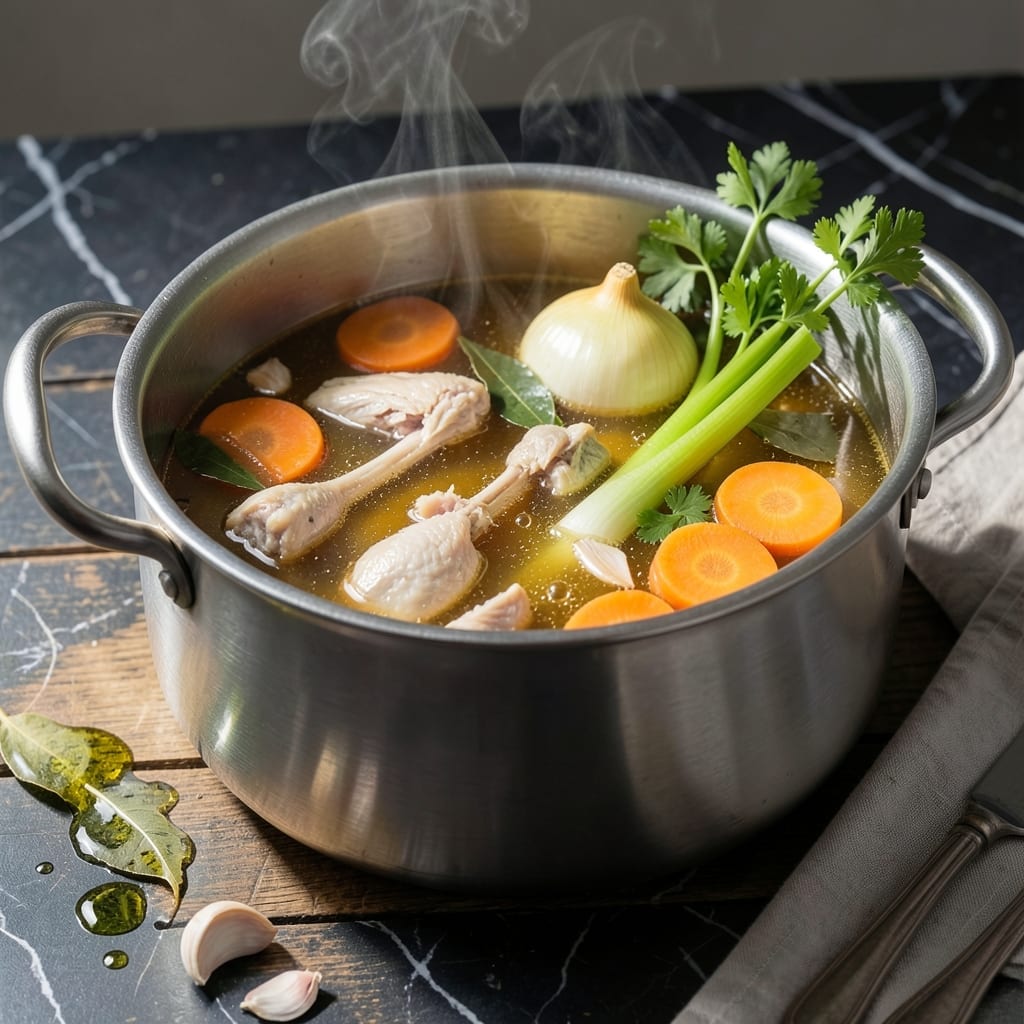
There’s no better way to extract maximum flavor from a chicken carcass than making stock from scratch. This method transforms what would be waste into a rich, aromatic base for countless dishes.
The key is a gentle simmer—never a boil—to draw out impurities while keeping the stock clear. Skimming the surface regularly ensures a clean, golden liquid that’s packed with natural gelatin and depth of flavor.
With just a few hours and basic vegetables, you’ll create a versatile stock that elevates soups, sauces, and braises. The process is simple, but the results are anything but ordinary.
Strain and store it properly, and you’ll have a zero-waste staple ready for any recipe. Here’s how to make it perfectly every time.
Ingredients for Recipe for Chicken Stock with Chicken Carcass
Transform leftover bones into liquid gold with these simple kitchen staples.
| Ingredient | Amount | Notes |
|---|---|---|
| Chicken Carcass 🍗 | 1 whole | From roasted or raw chicken |
| Cold Water 💧 | 12 cups | Enough to cover carcass |
| Yellow Onion 🧅 | 1 whole | Quartered, skin on |
| Carrots 🥕 | 2 whole | Cut into large chunks |
| Celery Stalks 🌿 | 2 whole | Cut into large chunks |
| Garlic Cloves 🧄 | 4 cloves | Lightly crushed, unpeeled |
| Bay Leaves 🍃 | 2 pieces | Dried whole leaves |
| Black Peppercorns 🌶️ | 1 tsp | Whole, not ground |
| Fresh Parsley Stems 🌿 | ½ cup | With leaves if available |
| Apple Cider Vinegar 🍏 | 1 tbsp | Or white wine vinegar |
| Salt 🧂 | 2 tsp | Kosher or sea salt |
[recipe_ingredient_scaler]
The chicken carcass is everything here. Use bones from roasted chicken for deepest flavor, or raw if that’s what you have—just par-cook them first to render fat. Most butchers will give away carcasses for free if you ask. Whole Foods and local markets are great sources. Look for pieces with some meat still clinging—it adds body to the final stock.
No celery? Fennel stalks or extra carrots work in a pinch. Out of apple cider vinegar? White wine or lemon juice at the same amount adds the needed acidity. The parsley stems are often discarded—perfect zero-waste use. Dried thyme or a splash of soy sauce can deepen umami if you’re missing an ingredient.
Stock keeps 3-4 days refrigerated in airtight containers, or freeze for up to 6 months. For clearest results, chill completely before skimming fat. Portion into ice cube trays for easy use in sauces and soups.
Why You’ll Love This Recipe
- Set and Forget: I just toss the carcass and veggies in a pot, cover with cold water, and let it simmer for hours with zero babysitting.
- Rich and Deep: The slow simmer pulls every bit of flavor from the bones, onions, carrots, and celery into a golden, savory liquid.
- Soup’s Best Friend: Honestly, I keep a batch in the freezer—it’s the base for my soups, stews, and even risotto.
- Penny-Wise Perfection: Between us, I used to buy stock until I realized this costs almost nothing and tastes way better.
Step-by-Step Instructions for Chicken Stock With Chicken Carcass
This zero-waste method extracts maximum flavor from every component with minimal effort.
Step 1: Prepare the Carcass and Aromatic Vegetables
Place the 1 whole Chicken Carcass in a large stockpot. I break it into manageable pieces with kitchen shears or my hands to expose more surface area to the water. This ensures every bone and bit of connective tissue contributes to the final flavor.
Add the 1 whole Yellow Onion (quartered with skin on), 2 whole Carrots (cut into large chunks), 2 whole Celery Stalks (cut into large chunks), and 4 cloves Garlic Cloves (lightly crushed, unpeeled). The vegetable skins and garlic peels add depth and color to the stock without bitterness.
Step 2: Add Seasonings and Acid for Depth
To the pot, add the 2 pieces Bay Leaves, 1 tsp Black Peppercorns (whole, not ground), and 0.5 cup Fresh Parsley Stems. I tie the parsley stems and bay leaves together with kitchen twine for easier removal later, though it’s optional.
Pour in the 1 tbsp Apple Cider Vinegar. The acid helps extract calcium from the bones, creating a richer, more mineral-forward stock. Don’t worry—it won’t make the stock taste vinegary.
Step 3: Cover with Water and Simmer
Add the 12 cups Cold Water, ensuring it covers the chicken carcass and vegetables by 1-2 inches. I always start with cold water for a cleaner, clearer stock. The gradual temperature increase helps draw out impurities, which we’ll address next.
Place the pot over medium-high heat and bring to a gentle boil. As soon as it reaches a boil, reduce the heat to low to maintain a bare simmer. You should see occasional small bubbles breaking the surface, not a rolling boil. A hard boil makes stock cloudy and can break down the collagen before it turns into gelatin.
Step 4: Skim Impurities and Season
As the stock simmers, a foam will rise to the surface. Use a fine-mesh skimmer or large spoon to remove this foam every 15-20 minutes for the first hour. This step is crucial for a clean, clear stock. I find most impurities rise within the first 30-45 minutes.
After skimming, add the 2 tsp Salt. Season lightly now—you can always adjust the salt level later when using the stock in recipes. Partially cover the pot and let it simmer undisturbed for 3-4 hours. The longer cooking time extracts maximum gelatin from the bones.
Step 5: Strain and Store the Finished Stock
After simmering, the stock should have a rich golden color and a fragrant aroma. The carcass will have released most of its collagen, and the vegetables will be very soft. Carefully strain the stock through a fine-mesh sieve into a large bowl or another pot, pressing gently on the solids to extract all the liquid.
Discard the solids and let the stock cool to room temperature. I place my pot in an ice bath to speed this up. Once cool, refrigerate the stock for up to 5 days or freeze for up to 3 months. As it chills, the fat will solidify on top for easy removal.
Pro Tips For Making Recipe For Chicken Stock With Chicken Carcass
- Start with Cold Water: Always cover the carcass with cold water and bring to a simmer slowly—this draws out impurities gradually so your stock stays clear, not cloudy.
- Roast the Carcass First: I learned this the hard way—tossing the carcass in the oven at 400°F for 20 minutes until golden adds depth that raw bones just can’t.
- Skim the Foam: The first 15 minutes, a foamy layer rises to the top—skim it off with a spoon or your stock will taste bitter, not rich.
- Add Vinegar Last: Sounds weird, but it works: a splash of apple cider vinegar in the last hour pulls out every bit of collagen from the bones for a gelatinous finish.
Make-Ahead Tips for This recipe for chicken stock with chicken carcass
Batch Cooking
I always make stock in large batches—double or triple this recipe when I have multiple carcasses. A 12-quart stockpot handles 2-3 carcasses easily. More bones mean more gelatin, which gives your stock that beautiful, silky mouthfeel. 💪
Freezing for Long-Term
Portion cooled stock into freezer-safe containers, leaving 1-inch headspace for expansion. I use quart-sized mason jars or silicone muffin molds for smaller portions. Stock freezes beautifully for up to 6 months without losing quality.
Quick Cooling Method
To cool stock rapidly, divide it between multiple shallow containers or place your pot in an ice bath. Stirring occasionally speeds the process. Never leave stock at room temperature for more than 2 hours to prevent bacterial growth.
Fat Skimming Tip
After refrigerating, the fat solidifies on top—simply lift it off. For clearer stock, skim fat while warm using a ladle or paper towel. I save this fat for cooking; it’s packed with chicken flavor. 🔥
Concentrated Stock
Simmer strained stock uncovered for 30-45 minutes to reduce by half. This creates a concentrated base that takes up less freezer space. Dilute with water when using in recipes.
Labeling System
Always label containers with the date and type. I use masking tape and a Sharpie for a simple, effective system. This prevents mystery liquids in your freezer later.
Nutrition Facts
Frequently Asked Questions
How long should I simmer the bones?
Simmer for 3-4 hours for best flavor and gelatin extraction. Longer times (up to 6 hours) work but won’t significantly improve results. Avoid boiling—keep it at a gentle simmer.
Can I use a slow cooker instead of a pot?
Yes! Cook on low for 8-10 hours or high for 4-5 hours. The slow cooker makes it hands-off, but skimming foam is harder, so expect slightly cloudier stock.
Why add vinegar to the stock?
The 1 tbsp vinegar helps extract calcium and minerals from the bones, creating a richer, more nutritious stock. It won’t make your stock taste sour.
How do I know when it’s done?
Your stock is ready when the bones crumble easily and the liquid is deep golden. The carcass should look “spent” with little meat left.

Trained in classic French technique but raised on slow-cooked ribs and spicy rubs, she blends culinary skill with smoke and soul.
- Best Smoked Oxtail Recipe: Deep-Rich Flavor After Low-and-Slow Cooking - October 14, 2026
- Pit Boss Smoked Prime Rib Roast Recipe: Bark-to-Bone Crispness in 4 Hours - October 14, 2026
- Smoked Tuna Steak Recipe: Seared Crust Meets Silky Centers - October 14, 2026