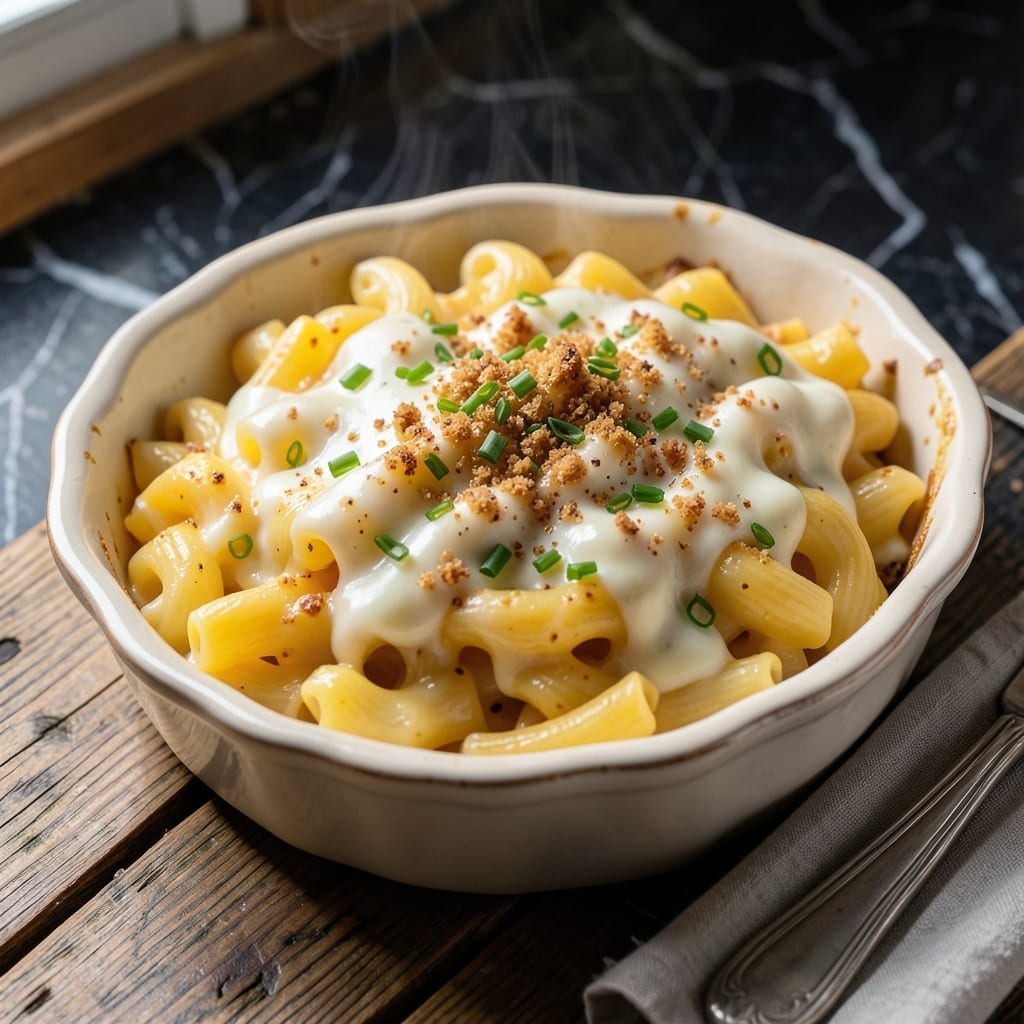
This stovetop macaroni and cheese delivers on its promise of velvety creaminess without a single shortcut. The secret lies in a carefully crafted cheese sauce that clings to every elbow, creating that luxurious texture we all crave.
I’ve perfected this method through years of testing, focusing on the ideal ratio of dairy to pasta. The sauce begins with a classic roux, then builds layers of flavor with sharp cheddar and creamy Monterey Jack, finished with a touch of mustard for depth.
What emerges is a dish with ultra-smooth sauce that coats each piece perfectly, never breaking or turning grainy. The pasta absorbs just enough sauce to stay creamy without becoming mushy, achieving that ideal bite every time.
Ready in under 30 minutes, this version proves that extraordinary results don’t require extraordinary effort. The stovetop method ensures consistent creaminess that baked versions often struggle to match.
Ingredients for Recipe for Extra Creamy Macaroni and Cheese
Classic ingredients transform into that ultra-creamy stovetop mac we all crave.
| Ingredient | Amount | Notes |
|---|---|---|
| Elbow Macaroni 🍝 | 1 lb | Or any short pasta shape |
| Unsalted Butter 🧈 | ½ cup | For the roux base |
| All-Purpose Flour 🌾 | ⅓ cup | Sifted for smooth roux |
| Whole Milk 🥛 | 3 cups | Full-fat for creaminess |
| Heavy Cream 🥣 | 1 cup | Ensures ultra-smooth texture |
| Sharp Cheddar Cheese 🧀 | 2 cups | Freshly grated from block |
| Monterey Jack Cheese 🧀 | 1 ½ cups | Freshly grated for melt |
| Dijon Mustard 🟡 | 1 tbsp | Adds subtle tangy depth |
| Kosher Salt 🧂 | 1 tsp | Adjust to taste after cooking |
| Ground Black Pepper 🌶️ | ½ tsp | Freshly ground preferred |
| Garlic Powder 🧄 | ½ tsp | Optional for extra flavor |
| Dry Mustard 🟡 | ½ tsp | Boosts cheesy flavor |
[recipe_ingredient_scaler]
The cheese quality is non-negotiable here. Sharp cheddar and Monterey Jack create the perfect melt—avoid pre-shredded (it has anti-caking agents that ruin texture). Whole Foods or Trader Joe’s have great block cheese options. For the dairy, full-fat whole milk and heavy cream ensure that velvety finish. The roux needs unsalted butter so you control the seasoning.
Swapping the cheeses? Gouda and fontina work beautifully too. No heavy cream? Use half-and-half plus a tbsp of cornstarch for similar richness. For extra depth, a splash of sodium citrate (from modernist pantry) makes the sauce foolproof. The mustard is subtle but important—yellow mustard in a pinch, though Dijon is ideal.
This is best served immediately, but leftovers keep 3-4 days in the fridge. Reheat gently with a splash of milk to restore creaminess. Sauce will thicken as it cools, so stir in extra milk as needed. Not suitable for freezing (sauce separates).
Why You’ll Love This Recipe
- I’ll be real: it tastes even better the next day, and that’s saying something for mac and cheese.
- One Pot Wonder: I love that I can go from boiling pasta to creamy perfection in the same pot—no colander, no extra dishes.
- Velvety Dream: The combo of whole milk and heavy cream makes it so rich I’ve caught myself sneaking bites straight from the pot.
- Crowd Pleaser: Honestly, it’s the only thing my picky nephew and foodie sister both ask for at family dinners.
Step-by-Step Instructions for Extra Creamy Macaroni and Cheese
Here’s the method. Straightforward, tested, works every time.
Step 1: Cook the Elbow Macaroni to Al Dente
Bring a large pot of salted water to a rolling boil over high heat. Add the 1 lb Elbow Macaroni and cook according to package directions, stirring occasionally, until just al dente—about 1 minute less than the suggested cooking time.
Drain the pasta in a colander but do not rinse. Rinsing washes away the starch that helps the sauce cling. Shake the colander gently to remove excess water, then set aside. The pasta will finish cooking when combined with the hot cheese sauce.
Step 2: Prepare the Roux Base for Creaminess
In a large, heavy-bottomed pot, melt the 0.5 cup Unsalted Butter over medium heat. Once melted and foaming subsides, whisk in the 0.33 cup All-Purpose Flour to form a smooth paste. Cook this roux, whisking constantly, for 1-2 minutes until it turns a light golden color.
This step is crucial—cooking the flour removes its raw taste and creates the foundation for a velvety sauce. Keep the heat moderate to avoid browning the roux too quickly, which could make the sauce taste burnt rather than rich.
Step 3: Gradually Incorporate Dairy for a Silky Sauce
Slowly pour in the 3 cups Whole Milk and 1 cup Heavy Cream, whisking continuously to prevent lumps from forming. The mixture will thicken as it heats. Bring it to a gentle simmer, then reduce the heat to medium-low and let it cook for 3-4 minutes, stirring frequently.
You’ll notice the sauce beginning to coat the back of a spoon. At this point, it should be thick enough to leave a clear path when you run a finger through it on the spoon. This consistency ensures the sauce will cling perfectly to the pasta.
Step 4: Melt in the Cheeses and Seasonings
Reduce the heat to low and add the 2 cups Sharp Cheddar Cheese and 1.5 cups Monterey Jack Cheese gradually, stirring after each addition until fully melted. This step requires patience—adding the cheese too quickly can cause the sauce to break or become grainy.
Once the cheeses are fully incorporated, stir in the 1 tbsp Dijon Mustard, 1 tsp Kosher Salt, 0.5 tsp Ground Black Pepper, 0.5 tsp Garlic Powder, and 0.5 tsp Dry Mustard. Taste and adjust seasoning if needed. The dry mustard enhances the cheesy flavor without adding a noticeable mustard taste.
Step 5: Combine Pasta and Sauce for the Final Dish
Add the cooked Elbow Macaroni to the cheese sauce and stir gently to coat every piece evenly. If the sauce seems too thick, add a splash of warm milk to loosen it to your desired consistency. Let the mixture sit for 2-3 minutes off the heat to allow the pasta to absorb some of the sauce.
Serve immediately while still warm and creamy. The sauce will thicken slightly as it cools, so for the creamiest texture, enjoy it right away. This dish doesn’t hold well, so plan to serve it fresh for the best experience.
Pro Tips For Making Recipe For Extra Creamy Macaroni And Cheese
- Cook Pasta Al Dente: Boil the elbow macaroni for 1-2 minutes less than the package says—I learned this the hard way after ending up with mushy noodles that turned the dish into paste.
- Warm Your Dairy: Take the whole milk and heavy cream out of the fridge 20 minutes before starting, or microwave for 15 seconds, so they blend smoothly into the roux without turning the sauce grainy.
- Skip Cold Butter: Use room-temperature unsalted butter for the roux—cold butter seizes up when it hits the flour and creates little lumps that never fully dissolve, even after whisking.
- Rest Before Serving: Let the finished mac and cheese sit off the heat for 5 minutes under a lid—this is when the sauce thickens and the flavors meld, and I was skeptical until I tried it.
Troubleshooting This Dish
Sauce Breaking or Grainy
If your cheese sauce turns grainy or separates, the cheese was likely added too quickly or at too high a temperature. Remove from heat immediately and whisk in 1-2 tbsp of warm milk until smooth. Using pre-shredded cheese often causes this issue due to anti-caking agents. 💡
Sauce Too Thick
Stir in warm milk, 1 tbsp at a time, until you reach the desired consistency. This happens if the roux was cooked too long or the sauce reduced too much. Remember, the pasta will absorb some sauce as it sits, so keep it slightly looser than your final preference.
Sauce Too Thin
Return the pot to low heat and let it simmer for 2-3 minutes while stirring constantly. If it doesn’t thicken enough, mix 1 tbsp cornstarch with 1 tbsp cold water and whisk it in. Cook for another 1-2 minutes until thickened.
Pasta Too Mushy
Overcooked pasta is the main culprit here. Cook your elbows 1 minute less than package instructions, as they’ll continue cooking in the hot sauce. If it’s already mushy, next time use 1 minute less cooking time and rinse with cold water immediately after draining.
Cheese Not Melting Smoothly
This usually means the cheese wasn’t grated finely enough or added too quickly. Always grate your own cheese from blocks and add it gradually. If using a cheese blend, ensure they have similar melt points. I find sharp cheddar and Monterey Jack work perfectly together.
Sauce Clumping in Roux
Lumps in your roux mean the flour wasn’t fully incorporated before adding liquid. Whisk vigorously when adding flour to butter. If lumps form, whisk in ½ cup cold milk first to smooth it out before adding the rest. A flat whisk works better than a spoon for this. ✨
Nutrition Facts
Frequently Asked Questions
Can I use pre-shredded cheese to save time?
Avoid pre-shredded cheese as it contains anti-caking agents that prevent smooth melting. Always grate fresh from a block for the creamiest texture.
How do I prevent the sauce from breaking?
Add cheese gradually on low heat and stir constantly. If it starts to separate, whisk in 1-2 tbsp warm milk until smooth.
Can I make this ahead of time?
It’s best served immediately, but you can reheat leftovers with a splash of milk to restore creaminess. Store in an airtight container for 3-4 days.
Why does my sauce turn grainy?
Graininess usually means the cheese was added too quickly or at too high a temperature. Use freshly grated cheese and add it slowly on low heat.

Trained in classic French technique but raised on slow-cooked ribs and spicy rubs, she blends culinary skill with smoke and soul.
- Best Smoked Oxtail Recipe: Deep-Rich Flavor After Low-and-Slow Cooking - October 14, 2026
- Pit Boss Smoked Prime Rib Roast Recipe: Bark-to-Bone Crispness in 4 Hours - October 14, 2026
- Smoked Tuna Steak Recipe: Seared Crust Meets Silky Centers - October 14, 2026