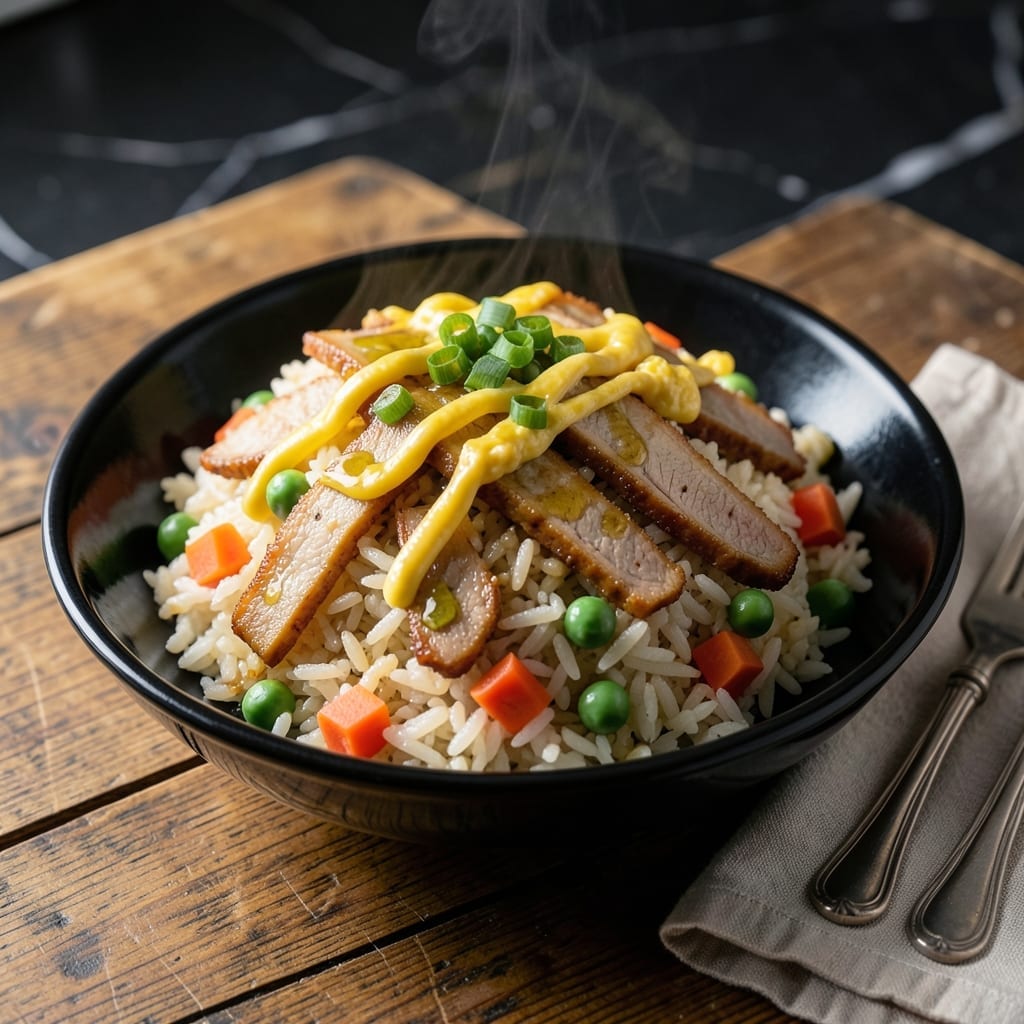
Mastering wok-tossed pork fried rice at home delivers restaurant-quality results with simple ingredients. I developed this method through years of testing to capture that authentic smoky flavor and perfect texture.
The secret lies in using day-old rice and high heat to create those signature savory bites. Each grain stays separate while absorbing the rich pork flavor and vegetable sweetness.
You’ll achieve tender pork pieces, crisp vegetables, and rice with just the right amount of chew. The aroma alone will transport you to your favorite Chinese restaurant.
This dish comes together quickly once you’ve prepped your ingredients. Here’s how to make these wok-tossed bites perfectly every time.
Ingredients for Recipe for Chinese Pork Fried Rice
Cold rice, tender pork, and crisp veggies create those signature savory bites at home.
| Ingredient | Amount | Notes |
|---|---|---|
| Day-Old Cooked White Rice 🍚 | 4 cups | Cold, preferably overnight, separated |
| Pork Shoulder 🥩 | ¾ lb | Boneless, thinly sliced |
| Large Eggs 🥚 | 2 whole | Lightly beaten for scrambling |
| Frozen Green Peas 🌱 | ¾ cup | Thawed, drained well |
| Carrots 🥕 | 2 whole | Medium, diced small |
| Green Onions 🧅 | 3 whole | Thinly sliced, whites and greens separated |
| Garlic Cloves 🧄 | 3 cloves | Minced finely |
| Light Soy Sauce 🫒 | 2 tbsp | Low-sodium preferred |
| Dark Soy Sauce 🫒 | 1 tsp | For color depth |
| Shaoxing Wine 🍶 | 1 tbsp | Or dry sherry as substitute |
| Sesame Oil 🫒 | 1 tsp | Toasted, for finishing |
| Vegetable Oil 🫒 | 3 tbsp | High smoke point, neutral flavor |
| Kosher Salt 🧂 | ½ tsp | Adjust to taste |
| White Pepper 🌶️ | ¼ tsp | Freshly ground preferred |
[recipe_ingredient_scaler]
The rice is non-negotiable here—day-old from the fridge (the good stuff, not the pre-shredded kind) absorbs the wok heat without turning mushy. For the pork, pork shoulder gives you that melt-in-your-mouth texture. I grab mine from local Asian markets—better marbling and often cheaper than mainstream grocers. Look for vibrant orange carrots and plump peas; frozen works perfectly (just thaw and drain well).
No Shaoxing wine? Dry sherry at a 1:1 ratio works great. Out of pork shoulder? Pork loin is leaner but still tasty—just don’t overcook. Vegetable swaps are easy: bell peppers instead of carrots, corn instead of peas. The soy sauces matter—light for flavor, dark for color. If you’re gluten-free, tamari is your best bet for both.
Prep all ingredients before firing up the wok—mise en place is everything. Leftovers keep 3-4 days in the fridge (reheat in a skillet, not microwave) and freeze for 2 months. The sesame oil goes in last (don’t skip this part)—it’s worth the extra minute.
Why You’ll Love This Recipe
- One Pan Wonder: I toss everything into the wok and it’s done in 15—no extra pots, no fuss, just rice, pork, and eggs sizzling together.
- Umami Bomb: That hit of soy with the pork shoulder and the sweet crunch of carrots? Ridiculously good every single time.
- Feeds the Crew: I make a big batch on Sunday and we’re set for lunches all week—still tastes fresh reheated.
Step-by-Step Instructions for Chinese Pork Fried Rice
Master the wok with this method that delivers restaurant-quality texture and flavor at home.
Step 1: Velvet the Pork and Prep Aromatics
Slice the 0.75 lb pork shoulder into thin strips, about ⅛-inch thick. Toss with 1 tbsp Shaoxing wine, 1 tsp light soy sauce, and 0.25 tsp white pepper. This velveting step ensures the pork stays tender during the high-heat stir-fry.
Finely mince the 3 cloves garlic cloves, dice the 2 whole carrots into small cubes, and separate the whites and greens of the 3 whole green onions. Keep all prepped ingredients within arm’s reach of your wok—this dish moves fast.
Step 2: Scramble Eggs and Cook Pork Separately
Heat 1 tbsp vegetable oil in a wok over high heat until shimmering. Pour in the 2 whole large eggs and scramble quickly with a spatula until just set but still slightly runny. Remove and set aside—they’ll finish cooking when combined with the rice.
Add another 1 tbsp vegetable oil to the wok. When hot, spread the pork in a single layer and sear undisturbed for 30 seconds before stirring. Cook for 2-3 minutes until the pork is no longer pink. Remove and join the eggs.
Step 3: Stir-Fry Vegetables and Rice
Add the remaining 1 tbsp vegetable oil to the wok. Toss in the diced carrots and stir-fry for 1 minute. Add the minced garlic and green onion whites, stirring constantly for 30 seconds until fragrant.
Add the 4 cups day-old cooked white rice, breaking up any clumps with your spatula. Stir-fry for 2 minutes until the rice is hot and slightly crispy. The grains should separate easily and glisten with oil.
Step 4: Combine All Elements and Season
Return the pork and eggs to the wok. Add the 0.75 cup frozen green peas, 2 tbsp light soy sauce, 1 tsp dark soy sauce, and 0.5 tsp kosher salt. Toss everything together for 1-2 minutes until heated through and evenly coated.
The rice should have a uniform light brown color from the soy sauces, with visible flecks of pork, egg, and vegetables. Taste and adjust seasoning if needed—the dark soy sauce adds color more than saltiness.
Remove from heat, drizzle with 1 tsp sesame oil, and toss once more. Garnish with the reserved green onion greens for a fresh finish. Serve immediately while hot and aromatic.
Pro Tips For Making Recipe For Chinese Pork Fried Rice
- Use Cold Rice: Day-old rice from the fridge works best—it’s drier and fries up fluffier instead of turning mushy. I learned this the hard way after my first few batches came out gluggy.
- Prep Pork Small: Cut the pork shoulder into tiny, even cubes (about ¼-inch). This guarantees quick cooking and every bite gets that perfect char without chewing on tough chunks.
- Cook Eggs Separately: Scramble the eggs first, then set them aside. Sounds like extra work, but it prevents them from turning rubbery in the wok while you’re still cooking the pork and veggies.
- Hot Wok, Quick Cook: Crank the heat to high and work fast—add the peas and carrots last since they only need 1-2 minutes to warm through. After burning a batch or two, I finally realized medium heat just steams everything instead of frying.
Dietary Considerations for This Recipe
Gluten-Free Option
For gluten-free versions, simply swap both soy sauces for tamari at a 1:1 ratio. I tested this with San-J tamari and the flavor difference was minimal. The dish maintains its rich umami depth while being completely safe for gluten-sensitive eaters. 💪
Lower Sodium Choice
Cut sodium by 50% by using low-sodium light soy sauce and reducing the amount to 1 tbsp. Add a pinch of MSG (¼ tsp) if you want to boost savoriness without salt. I found the flavor still shines through beautifully.
Vegetarian Adaptation
Replace pork with extra-firm tofu (½ lb, pressed and cubed). Velvet the cubes with 1 tbsp cornstarch and 1 tbsp soy sauce before stir-frying. The tofu absorbs the seasonings just like pork, giving you that same satisfying texture.
Egg-Free Version
Skip the eggs entirely and add ¼ cup finely chopped mushrooms when cooking the pork. The mushrooms provide a similar meaty texture and absorb the soy sauce flavors well. I’ve made it this way for friends with egg allergies and they loved it.
Pescatarian Twist
Swap pork for ½ lb shrimp (peeled, deveined, and chopped). Cook the shrimp separately first, as it only needs 1-2 minutes per side. The seafood pairs surprisingly well with the traditional seasonings, and the dish comes together just as quickly. 💡
Nut Allergy Note
This recipe is naturally nut-free as written. Just double-check that your Shaoxing wine and soy sauces don’t have any cross-contamination warnings. I always keep a dedicated nut-free wok for friends with severe allergies.
Nutrition Facts
Frequently Asked Questions
Can I use fresh rice instead of day-old?
No, fresh rice contains too much moisture and will turn mushy. Always use cold, day-old rice for the best texture. Spread freshly cooked rice on a tray and refrigerate for 4+ hours if needed.
What can I substitute for pork?
Try chicken breast, shrimp, or extra-firm tofu for different protein options. For shrimp, cook separately first as it only needs 1-2 minutes per side.
How do I prevent my rice from being soggy?
Use high heat and cook in small batches. Overcrowding the wok steams the rice instead of frying it. Also, ensure your rice is completely cold before starting.
Can I make this ahead of time?
Yes, but reheat properly. Store leftovers in the fridge for up to 3-4 days. Reheat in a skillet with a splash of oil, not the microwave, to maintain texture.

Trained in classic French technique but raised on slow-cooked ribs and spicy rubs, she blends culinary skill with smoke and soul.
- Stewed Beef Brisket Recipe: Deep-Rich Flavor After 8 Hours of Slow Simmering - October 15, 2026
- Beef Brisket Rolls Recipe: Flaky Layers and Smoky Sweet Filling - October 15, 2026
- Masterbuilt Smoker Beef Brisket Recipe: Bark-To-Meat Ratio Hack for Unmatched Flavor - October 15, 2026