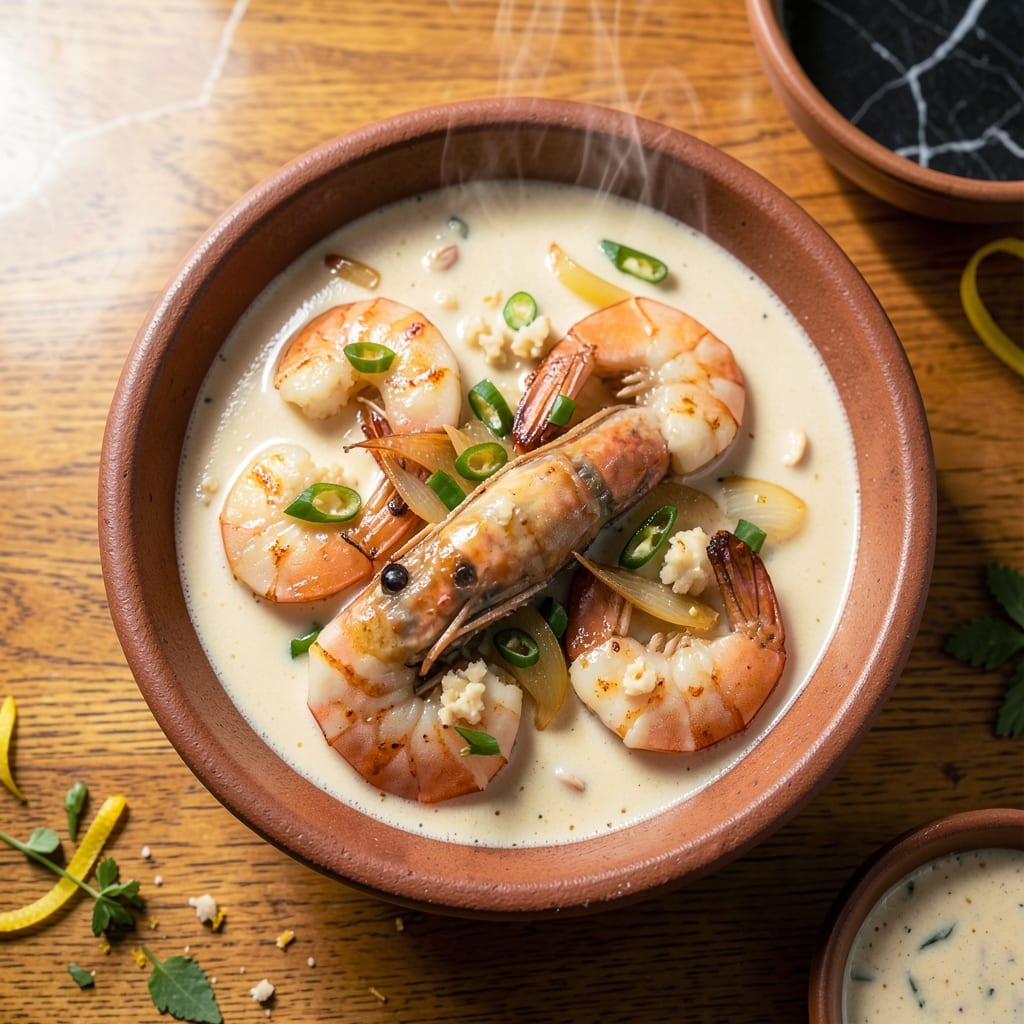
Bengali cuisine shines in this delicate balance of spices and coconut cream, creating a dish that’s rich yet refined. I developed this version to stay true to traditional chingri malai curry while making it approachable for home cooks.
The prawns cook gently in a fragrant sauce of coconut milk, ginger, and green chilies, letting their natural sweetness stand out. A touch of sugar enhances the flavors, while a slow simmer ensures the sauce thickens perfectly.
What you’ll get is tender prawns in a velvety, aromatic curry that’s elegant enough for guests but simple enough for a weeknight. The key is patience—letting the flavors meld without rushing the process.
Serve with steamed rice to soak up every bit of the creamy, spiced sauce. This is Bengali comfort food at its best.
Ingredients for Recipe for Chingri Malai Curry
Velvety coconut cream and fragrant spices transform these prawns into something extraordinary.
| Ingredient | Amount | Notes |
|---|---|---|
| Large Prawns 🍤 | 1 ½ lb | Peeled, deveined, tails on |
| Coconut Milk 🥥 | 2 cups | Full-fat for creaminess |
| Fresh Ginger 🌿 | 1 tbsp | Minced or grated |
| Green Chilies 🌶️ | 2 whole | Slit lengthwise for heat |
| Yellow Onion 🧅 | 1 whole | Finely chopped |
| Garlic Cloves 🧄 | 4 cloves | Minced for depth |
| Ground Turmeric 🌿 | 1 tsp | For color and earthiness |
| Ground Cumin 🌿 | 1 tsp | Toasted for warmth |
| Ground Coriander 🌿 | 1 tsp | Balances the spices |
| Garam Masala 🌶️ | ½ tsp | Added at the end |
| Sugar 🍬 | 1 tsp | Enhances the sweetness |
| Vegetable Oil 🫒 | 3 tbsp | For sautéing aromatics |
| Fresh Cilantro 🌿 | ¼ cup | Chopped, for garnish |
| Salt 🧂 | 1 tsp | Adjust to taste |
[recipe_ingredient_scaler]
The prawns are the star—look for large, fresh ones at your seafood counter (frozen works in a pinch). I grab mine from Whole Foods or a trusted local fishmonger. The coconut milk needs to be full-fat for that luxurious texture; Thai Kitchen or Native Forest are solid brands. Ginger and green chilies should be fresh—dried just won’t cut it here.
No fresh ginger? Ground ginger at half the amount works, but it’s not ideal. Swap green chilies for serrano peppers if that’s what you’ve got. Out of garam masala? Equal parts cinnamon, cardamom, and cloves gets you close. The prawns can be shrimp if that’s easier to find—just adjust cooking time slightly.
This tastes even better the next day. Keeps in the fridge for 2-3 days (the coconut milk may separate, but a quick stir fixes it). Freezes for up to 1 month—store in airtight containers to prevent freezer burn.
Why You’ll Love This Recipe
- One Pan Wonder: I love that this comes together in a single pot—just sauté the onion, ginger, and chilies, then let the prawns and coconut milk do their magic.
- Coconut Dream: The creamy coconut milk balanced with fresh ginger and green chilies creates a rich, aromatic sauce that’s ridiculously good with fluffy rice.
- Weeknight Hero: Honestly, it’s my go-to for busy evenings when I need something impressive but unfussy.
- Leftovers? Yes Please: The flavors deepen overnight, so I always make extra—next day’s lunch tastes even better.
Step-by-Step Instructions for Chingri Malai Curry
Here’s how I create this creamy Bengali classic with perfectly cooked prawns and rich coconut sauce.
Step 1: Prepare the Aromatic Base
Heat the 3 tbsp vegetable oil in a heavy-bottomed pot over medium heat. When the oil shimmers, add the finely chopped yellow onion and cook for 6-8 minutes until golden brown and translucent around the edges.
Add the minced fresh ginger, minced garlic cloves, and slit green chilies. Sauté for 2-3 minutes until the raw aroma dissipates and the mixture becomes fragrant. I press the ginger and garlic into the pot with my spoon to release their oils.
Step 2: Toast the Spices and Build Flavor
Stir in the ground turmeric, ground cumin, and ground coriander. Toast the spices for 1 minute until they darken slightly and become aromatic. This step is crucial—under-toasting leaves the spices raw, while over-toasting makes them bitter.
Add the 1 tsp sugar and 1 tsp salt, then pour in ¼ cup of the coconut milk. Stir well to combine, scraping any browned bits from the bottom of the pot. This creates a thick paste that will form the base of your sauce.
Step 3: Cook the Prawns and Coconut Sauce
Add the 1.5 lb large prawns to the pot and stir to coat them in the spice mixture. Cook for 2-3 minutes per side until the prawns turn opaque pink and begin to curl.
Pour in the remaining coconut milk and stir to combine. Bring the mixture to a gentle simmer, then reduce the heat to medium-low. Let it cook for 8-10 minutes until the sauce thickens slightly and the prawns are fully cooked through.
Step 4: Finish and Garnish
Sprinkle in the 0.5 tsp garam masala and stir to combine. Taste and adjust the seasoning with additional salt if needed. The sauce should be creamy and rich, with a beautiful golden color from the turmeric.
Remove from heat and let the curry rest for 2-3 minutes to allow the flavors to meld. Garnish with the 0.25 cup fresh cilantro just before serving. The cilantro adds a fresh, bright contrast to the rich coconut sauce.
Pro Tips For Making Recipe For Chingri Malai Curry
- Devein the Prawns: Always slit the back of each prawn and remove the dark vein—it can add bitterness to the delicate coconut milk sauce. I learned this the hard way after wondering why my curry had a slightly off aftertaste.
- Bloom the Spices: Cook the grated ginger and chopped green chilies in oil for at least 2 minutes before adding onions. Sounds simple, but this step actually changes the outcome by deepening the flavor base.
- Skip the Boil: Never let the coconut milk reach a rolling boil—it can separate and ruin the creamy texture. Keep it at a gentle simmer, stirring occasionally.
- Use Full-Fat Coconut Milk: I was skeptical until I tried it, but full-fat coconut milk makes a real difference in richness. The light version just doesn’t hold up to the bold flavors of the prawns and spices.
Essential Equipment for Great recipe for chingri malai curry
Heavy-Bottomed Pot
A 3-4 quart heavy-bottomed pot is essential for even heat distribution. I use my Le Creuset Dutch oven—it prevents hot spots that could scorch the coconut milk. Look for something with a tight-fitting lid to trap aromas during simmering.
Wooden Spoon
Use a wooden spoon to stir your aromatic base and scrape the bottom of the pot. Unlike metal, wood won’t scratch your cookware and helps release the fond (those flavorful browned bits) into the sauce. Plus, it feels more connected to traditional Bengali cooking. 💛
I keep mine by the stove for curries like this one.
Sharp Chef’s Knife
A 8-inch chef’s knife makes quick work of the onion, ginger, and garlic prep. I love my Wüsthof—it glides through the ingredients with minimal effort. Always slice away from yourself and keep your fingertips tucked under for safety.
Cutting Board
A large, stable cutting board is non-negotiable for prepping all your aromatics. I prefer bamboo or plastic for this recipe (they’re gentler on knives than glass). Clean it thoroughly after handling raw prawns to avoid cross-contamination.
Measuring Spoons
Accurate spice measurements make a huge difference in curries. I use magnetic measuring spoons that stay organized in my drawer. For this recipe, you’ll need precise amounts of turmeric, cumin, coriander, and garam masala—eyeballing can throw off the balance. 🌟
Fine-Mesh Strainer
If your coconut milk separates (which it often does), a fine-mesh strainer helps whisk it back together smoothly. I also use mine to rinse the prawns if they need it. It’s one of those small tools that makes a big difference in texture.
Nutrition Facts
Frequently Asked Questions
Can I use shrimp instead of prawns?
Yes, large shrimp work perfectly as a substitute. Adjust cooking time to 2-3 minutes per side since shrimp cook faster. Choose 16/20 count for best texture and flavor.
Why does my coconut milk separate?
Full-fat coconut milk often separates in the can. Simply whisk it before using or stir while heating. A fine-mesh strainer helps if lumps persist. Avoid shaking the can vigorously.
How do I know when the prawns are done?
They’ll turn opaque pink and curl into a C-shape. Internal temperature should reach 145°F. Overcooking makes them rubbery, so remove from heat immediately when done.
Can I make this ahead of time?
The flavors deepen overnight. Store in an airtight container for up to 3 days in the fridge. Reheat gently on low heat to prevent curdling.

Trained in classic French technique but raised on slow-cooked ribs and spicy rubs, she blends culinary skill with smoke and soul.
- Best Smoked Oxtail Recipe: Deep-Rich Flavor After Low-and-Slow Cooking - October 14, 2026
- Pit Boss Smoked Prime Rib Roast Recipe: Bark-to-Bone Crispness in 4 Hours - October 14, 2026
- Smoked Tuna Steak Recipe: Seared Crust Meets Silky Centers - October 14, 2026