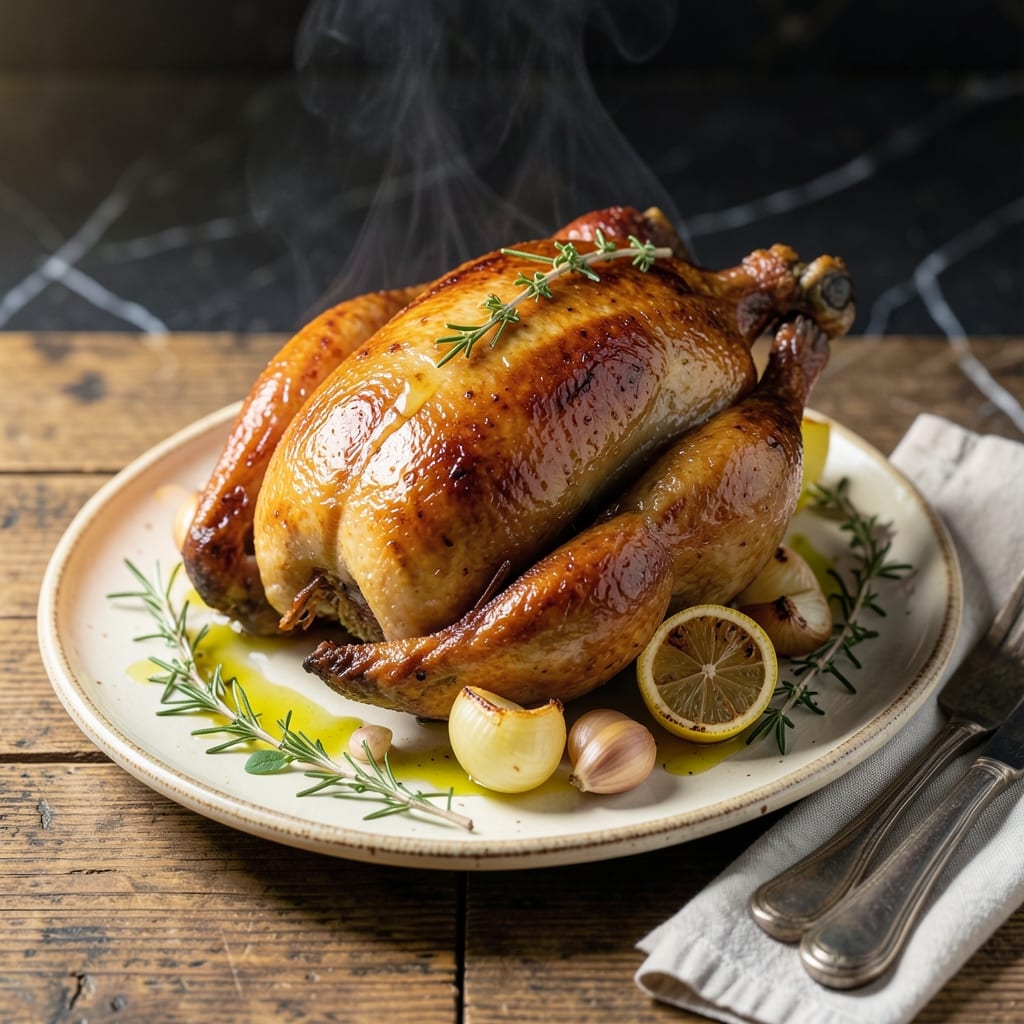
Roasting a whole chicken delivers perfectly golden, juicy results every time with the right technique.
I developed this method after years of testing, focusing on even cooking and crisp skin without drying the meat. A simple herb blend and proper oven temperature create a bird that’s tender inside with a golden brown exterior.
The key is starting with a dry bird and letting it rest before carving. This ensures the juices redistribute, giving you moist meat in every bite. The aroma alone makes it worth the effort.
Serve with roasted vegetables for a complete meal that impresses without complication.
Ingredients for Recipe for Cooking Whole Chicken in Oven
A whole bird, fresh herbs, and simple aromatics create this golden, juicy centerpiece.
| Ingredient | Amount | Notes |
|---|---|---|
| Whole Chicken 🍗 | 4 lb | Giblets removed, patted dry |
| Unsalted Butter 🧈 | ½ cup | Softened to room temperature |
| Fresh Rosemary 🌿 | 2 tbsp | Chopped, stems discarded |
| Fresh Thyme 🍃 | 2 tbsp | Chopped, stems discarded |
| Garlic Cloves 🧄 | 6 cloves | Minced for herb butter |
| Kosher Salt 🧂 | 1 ½ tsp | Diamond Crystal preferred |
| Black Pepper 🌶️ | 1 tsp | Freshly ground preferred |
| Lemon 🍋 | 1 whole | Halved for cavity |
| Yellow Onion 🧅 | 1 whole | Quartered for cavity |
| Carrots 🥕 | 3 whole | Chopped, for roasting pan |
| Celery Stalks 🌿 | 3 pieces | Chopped, for roasting pan |
| Chicken Stock 🍲 | 1 cup | Low-sodium preferred |
| Olive Oil 🫒 | 2 tbsp | For roasting vegetables |
[recipe_ingredient_scaler]
The chicken quality is non-negotiable here. Air-chilled birds from Whole Foods or local butchers yield the best results—drier skin equals crispier skin. Look for 4-5 lb birds; smaller ones dry out faster. The herbs should be vibrant and fragrant; if your rosemary or thyme looks wilted, swap it out. Pat the bird thoroughly dry with paper towels before seasoning (this is the secret to that golden finish).
No fresh herbs? Dried at one-third the amount works, but fresh delivers the bright flavor this dish needs. Short on butter? Olive oil plus a splash of stock keeps the meat moist. The lemon and onion in the cavity aren’t just for flavor—they elevate the bird off the pan for even cooking. Skip the giblets for this recipe; they’re more trouble than they’re worth.
Roast leftovers keep 3-4 days wrapped in the fridge. The carcass makes excellent stock—simmer with veggie scraps for 2 hours. Carve just before serving; it stays juicier whole. Always let it rest 15-20 minutes post-roasting (don’t skip this).
Why You’ll Love This Recipe
- One Pan Wonder: I love that this roasts the chicken and herbs together—no extra pots, just a sheet pan and an oven.
- Herb-Butter Magic: The garlic, rosemary, and thyme melt into the butter, making every bite rich and aromatic.
- Feeds a Crowd: This whole chicken easily serves four, with leftovers for sandwiches or salads.
- Budget Stretch: A single chicken and a few fresh herbs give me multiple meals without breaking the bank.
Step-by-Step Instructions for Cooking Whole Chicken in Oven
Follow this precise method to achieve perfectly golden, herb-infused roasted chicken every time.
Step 1: Prepare and Season the Chicken
Begin by thoroughly patting the 4 lb Whole Chicken dry with paper towels, inside and out. This ensures crispy skin. Season the cavity generously with 1.5 tsp Kosher Salt and 1 tsp Black Pepper, then stuff it with the 1 whole Lemon (halved) and 1 whole Yellow Onion (quarterd).
In a small bowl, mix the 0.5 cup Unsalted Butter with 2 tbsp Fresh Rosemary, 2 tbsp Fresh Thyme, and 6 cloves Garlic Cloves (minced). Gently separate the chicken skin from the breast and thighs, then spread half the herb butter underneath. Rub the remaining butter over the entire exterior.
Step 2: Prepare the Roasting Pan
Scatter the 3 whole Carrots (chopped) and 3 pieces Celery Stalks (chopped) across the bottom of a roasting pan. Drizzle them with 2 tbsp Olive Oil and toss to coat evenly. These vegetables will create a flavorful base and prevent the chicken from sticking.
Place a roasting rack over the vegetables. This elevates the chicken, allowing hot air to circulate and ensuring even browning. Pour 1 cup Chicken Stock into the pan—this adds moisture and creates a foundation for pan juices.
Step 3: Roast the Chicken to Golden Perfection
Preheat your oven to 425°F. Place the chicken breast-side up on the rack in the pan. Roast for 20 minutes, then reduce the heat to 375°F and continue roasting for an additional 50-60 minutes.
You’ll know it’s done when the skin is deep golden brown and crisp, and an instant-read thermometer inserted into the thickest part of the thigh (without touching the bone) registers 165°F. Baste the chicken with the pan juices every 20 minutes for extra flavor and moisture.
Step 4: Rest and Serve
Carefully transfer the chicken to a cutting board and tent it loosely with aluminum foil. Let it rest for 15 minutes—this allows the juices to redistribute, ensuring moist, tender meat. Skim any excess fat from the pan juices and use them to drizzle over the chicken when serving.
Carve the chicken and serve it with the roasted vegetables and pan juices. The result should be juicy, flavorful meat with a perfectly crisp, herb-infused skin. This method guarantees a show-stopping centerpiece for any meal.
Pro Tips For Making Recipe For Cooking Whole Chicken In Oven
- Start Hot, Finish Low: I learned this the hard way—sear the chicken at 425°F for 20 minutes first, then drop to 375°F. This gives you crispy skin without drying out the meat.
- Dry the Chicken: Pat that bird bone-dry with paper towels before seasoning. Sounds tedious, but it’s the only way to get that golden, crackly skin everyone fights over.
- Butter Under Skin: Don’t just rub butter on top—gently loosen the skin and smear unsalted butter mixed with minced garlic, rosemary, and thyme underneath. It bastes the meat from within as it roasts.
- Rest Before Carving: Pull it out when the thigh hits 165°F, tent with foil, and let it rest 15 minutes. I skip this when I’m starving, but the juices stay put instead of pooling on the cutting board.
Essential Equipment for Great recipe for cooking whole chicken in oven
Roasting Pan Essentials
For perfect results, I use a heavy-duty stainless steel roasting pan with a rack—my All-Clad 16×13-inch has never let me down. The rack keeps the bird elevated so air circulates, giving you that even golden brown finish. Avoid nonstick pans; they can’t handle the high heat needed. 💡
Thermometer Matters
An instant-read thermometer is non-negotiable for juicy meat. I trust my ThermoWorks Mk4—it gives accurate readings in 2-3 seconds. Check the thickest part of the thigh, avoiding bone, for that perfect 165°F internal temperature.
Butter Prep Tools
Softening butter quickly? Use a microplane to grate cold butter—it incorporates into herbs faster. My OXO Good Grips microplane handles this in 30 seconds. A small mixing bowl and silicone spatula help combine the herb butter evenly.
Basting Brush
A good basting brush makes all the difference. I love the OXO silicone brush—it won’t melt at 425°F and cleans easily. Baste every 20 minutes with pan juices for extra flavor and moisture.
Carving Knife
For clean slices, use a sharp carving knife. My Wüsthof 8-inch glides through the bird effortlessly. Place the chicken on a stable cutting board—John Boos maple is my go-to for its nonslip surface.
Resting Setup
After roasting, tent with foil and rest on a warm platter. I use a stoneware serving dish from Le Creuset—it retains heat beautifully during the 15-minute rest, keeping the meat warm while juices redistribute.
Nutrition Facts
Frequently Asked Questions
How long should I let the chicken rest after roasting?
Always rest it for 15 minutes before carving. This allows juices to redistribute, keeping the meat moist and tender. Skipping this step can result in dry chicken.
Can I use dried herbs instead of fresh?
Yes, but use 1/3 the amount since dried herbs are more concentrated. Fresh herbs provide brighter flavor, but dried work in a pinch.
What if my chicken browns too quickly?
Tent it loosely with foil to prevent over-browning while it finishes cooking. The internal temperature must still reach 165°F.
Do I need to truss the chicken?
Trussing helps it cook evenly and keeps it moist. Use kitchen twine to tie the legs together before roasting.

Trained in classic French technique but raised on slow-cooked ribs and spicy rubs, she blends culinary skill with smoke and soul.
- Best Smoked Oxtail Recipe: Deep-Rich Flavor After Low-and-Slow Cooking - October 14, 2026
- Pit Boss Smoked Prime Rib Roast Recipe: Bark-to-Bone Crispness in 4 Hours - October 14, 2026
- Smoked Tuna Steak Recipe: Seared Crust Meets Silky Centers - October 14, 2026