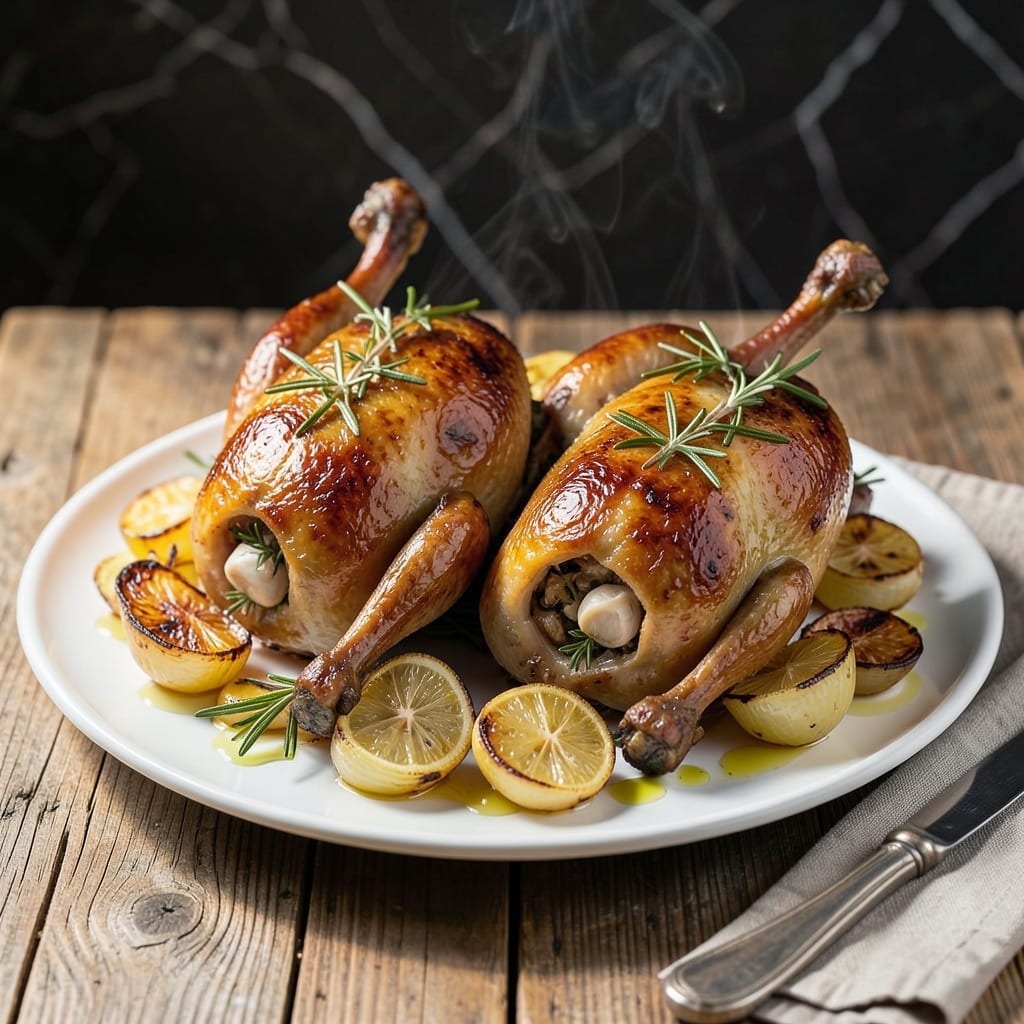
There’s a reason Cornish game hens feel special—each serving is a tender, perfectly portioned centerpiece ready for the oven.
Roasting at high heat ensures crisp, golden skin while keeping the meat juicy inside. This method delivers consistent, impressive results with minimal effort.
Ingredients for Recipe for Cornish Game Hens
Each bird gets its own perfect portion of herbs, butter, and citrus for maximum flavor.
| Ingredient | Amount | Notes |
|---|---|---|
| Cornish Game Hens 🍗 | 4 whole | Thawed if frozen, patted dry |
| Unsalted Butter 🧈 | ½ cup | Softened to room temperature |
| Fresh Rosemary 🌿 | 2 tbsp | Finely chopped, stems discarded |
| Fresh Thyme 🍃 | 2 tbsp | Leaves stripped from stems |
| Garlic Cloves 🧄 | 4 cloves | Minced to fine paste |
| Lemon 🍋 | 1 whole | Zested and juiced, divided |
| Kosher Salt 🧂 | 1 ½ tsp | Diamond Crystal preferred |
| Freshly Ground Black Pepper 🌶️ | 1 tsp | Coarse grind for texture |
| Olive Oil 🫒 | 2 tbsp | Extra-virgin for richness |
| Yellow Onion 🧅 | 1 whole | Medium size, quartered |
| Carrots 🥕 | 2 whole | Peeled, cut into chunks |
| Chicken Stock 🥣 | ½ cup | Low-sodium preferred |
[recipe_ingredient_scaler]
The Cornish game hens must be fresh or properly thawed—never refreeze. Source from Whole Foods or a reputable butcher for consistent sizing (about 1-1.25 lbs each). Pat them dry thoroughly with paper towels; moisture prevents crisp skin. Diamond Crystal kosher salt is the standard in professional kitchens for its clean flavor and even distribution.
No fresh rosemary or thyme? Dried herbs at one-third the amount work, but rehydrate them in a bit of warm water first. Substitute sage or marjoram if that’s what’s on hand. For the stock, homemade or high-quality store-bought (like Better Than Bouillon) is key—avoid overly salty or artificial-tasting brands.
Prepared hens can be refrigerated 1-2 days before roasting. Leftovers hold well for 3-4 days and make excellent sandwiches. Freeze cooked meat for up to 3 months in airtight containers.
Why You’ll Love This Recipe
- One Pan Wonder: I roast the hens with butter, rosemary, and thyme all on a single sheet pan—cleanup is a breeze.
- Herb-Infused Delight: The garlic and fresh herbs melt into the butter, making every bite ridiculously flavorful.
- Dinner Party Star: Honestly, it looks fancy but takes almost no effort, so I serve it when I want to impress.
- Leftovers Magic: The meat stays juicy, so I love turning extras into sandwiches or salads the next day.
Step-by-Step Instructions for Roasted Cornish Game Hens
This method ensures perfectly tender meat with crisp, golden skin every time.
Step 1: Prepare and Season the Hens
Pat the 4 whole Cornish Game Hens completely dry inside and out with paper towels. I emphasize this step because moisture prevents proper browning. Season the cavities and skins generously with 1.5 tsp Kosher Salt and 1 tsp Freshly Ground Black Pepper.
In a small bowl, combine the 0.5 cup Unsalted Butter with 2 tbsp Fresh Rosemary, 2 tbsp Fresh Thyme, and 4 cloves Garlic Cloves minced to a paste. Gently separate the skin from the breast meat and rub half the butter mixture underneath. This flavors the meat directly while keeping the skin crisp.
Step 2: Stuff and Truss for Even Roasting
Quarter the 1 whole Yellow Onion and cut the 2 whole Carrots into chunks. Place these in a roasting pan to create a natural rack. This elevates the hens, allowing heat to circulate for even cooking. Halve the 1 whole Lemon, reserving the zest for later use, and place one half inside each of two hens.
Truss the hens with kitchen twine to maintain shape during roasting. This prevents the legs from drying out and ensures even cooking. Place them breast-side up in the pan, then brush with the remaining herb butter. Drizzle with 2 tbsp Olive Oil for additional browning.
Step 3: Roast at High Heat for Crisp Skin
Preheat your oven to 425°F. Roast the hens for 25 minutes, then reduce the temperature to 375°F and continue roasting for 25-30 minutes more. The initial high heat jumpstarts the browning process, while the lower temperature ensures the meat cooks through without drying.
Baste the hens with pan juices halfway through the cooking time. You’ll know they’re done when the internal temperature reaches 165°F in the thickest part of the thigh and the juices run clear. The skin should be deep golden brown and crisp to the touch.
Step 4: Rest and Prepare the Pan Sauce
Transfer the hens to a cutting board and tent loosely with foil. Let them rest for 10-15 minutes—this allows the juices to redistribute for maximum tenderness. Pour the pan drippings into a saucepan, skim off excess fat, and place over medium heat.
Add the 0.5 cup Chicken Stock and the reserved lemon zest and juice. Simmer for 3-4 minutes until slightly reduced. Taste and adjust seasoning if needed. This simple pan sauce captures all the roasting flavors and complements the hens beautifully.
Pro Tips For Making Recipe For Cornish Game Hens
- Preheat Your Pan: I learned this the hard way—start with a screaming hot pan or skillet to sear the hens properly. A cold pan just steams the skin, and you’ll lose that crispy, golden finish everyone loves.
- Dry the Hens Well: Pat those Cornish game hens bone dry with paper towels before seasoning. Sounds tedious, but it’s the only way to get that buttery-herb coating to stick and crisp up right.
- Skip Crowded Roasting: Resist the urge to cram all the hens in one pan. Give them space so the heat circulates—otherwise, they’ll steam instead of roast, and the skin stays rubbery.
- Butter Under Skin: After seasoning, gently loosen the skin and rub some of that rosemary-thyme butter underneath. It bastes the meat from the inside out and actually changes the outcome—juicier every time.
Serving Suggestions for This Recipe
Plating Presentation
Arrange each hen on a warm plate, breast-side up, with the roasted onion and carrots as a base. The golden skin should be the star, so position it facing your guests. I like to tuck a sprig of fresh rosemary under the leg for a pop of color. 💫
Sauce Application
Drizzle the reduced pan sauce over the hens in a zigzag pattern, letting it pool slightly on the plate. Use a spoon to baste the hens one last time before serving. This adds shine and reinforces the herb and lemon flavors.
Garnish Touches
Finish with a sprinkle of reserved lemon zest and a few thyme leaves for freshness. A light dusting of flaky sea salt on top of the crisp skin elevates the presentation. I often add a wedge of lemon on the side for guests to squeeze.
Side Pairings
Serve with simple sides that complement but don’t compete. A crisp green salad with a light vinaigrette cuts through the richness. Roasted asparagus or potatoes soak up the pan sauce beautifully.
Serving Temperature
These hens are best served hot, straight from resting. If you must wait, cover them loosely with foil and keep in a 200°F oven for up to 20 minutes. The skin will stay crisp, and the meat will remain juicy. 🔥
Portioning Tip
Each hen serves one, but for smaller appetites, you can halve them lengthwise. Use kitchen shears to cut through the bone cleanly. This makes for an elegant presentation and ensures everyone gets a taste of the crisp skin.
Nutrition Facts
Frequently Asked Questions
How do I know when they’re fully cooked?
Use a meat thermometer to check the thickest part of the thigh. It’s done at 165°F with clear juices. The skin should be deep golden brown and crisp.
Can I prepare them ahead of time?
Yes! Season and butter the hens up to 1-2 days before roasting. Store them uncovered in the fridge to dry the skin further for extra crispiness.
What if I don’t have fresh herbs?
Use dried herbs at one-third the amount. Rehydrate them in warm water first for better flavor. Sage or marjoram work well as substitutes.
How should I store leftovers?
Refrigerate cooked hens in airtight containers for 3-4 days. Freeze for up to 3 months for longer storage. Reheat gently to preserve moisture.

Trained in classic French technique but raised on slow-cooked ribs and spicy rubs, she blends culinary skill with smoke and soul.
- Recipe for Boneless Pork Chops in Cast Iron Skillet: Sear and Baste to Juicy Perfection - October 3, 2026
- Recipe for Boneless Cross Rib Roast: Slow-Roasted Beef with Herb Crust - October 3, 2026
- Hamburgers in Sauce Recipe Crock Pot: Slow-Cooked Savory Delight - October 3, 2026