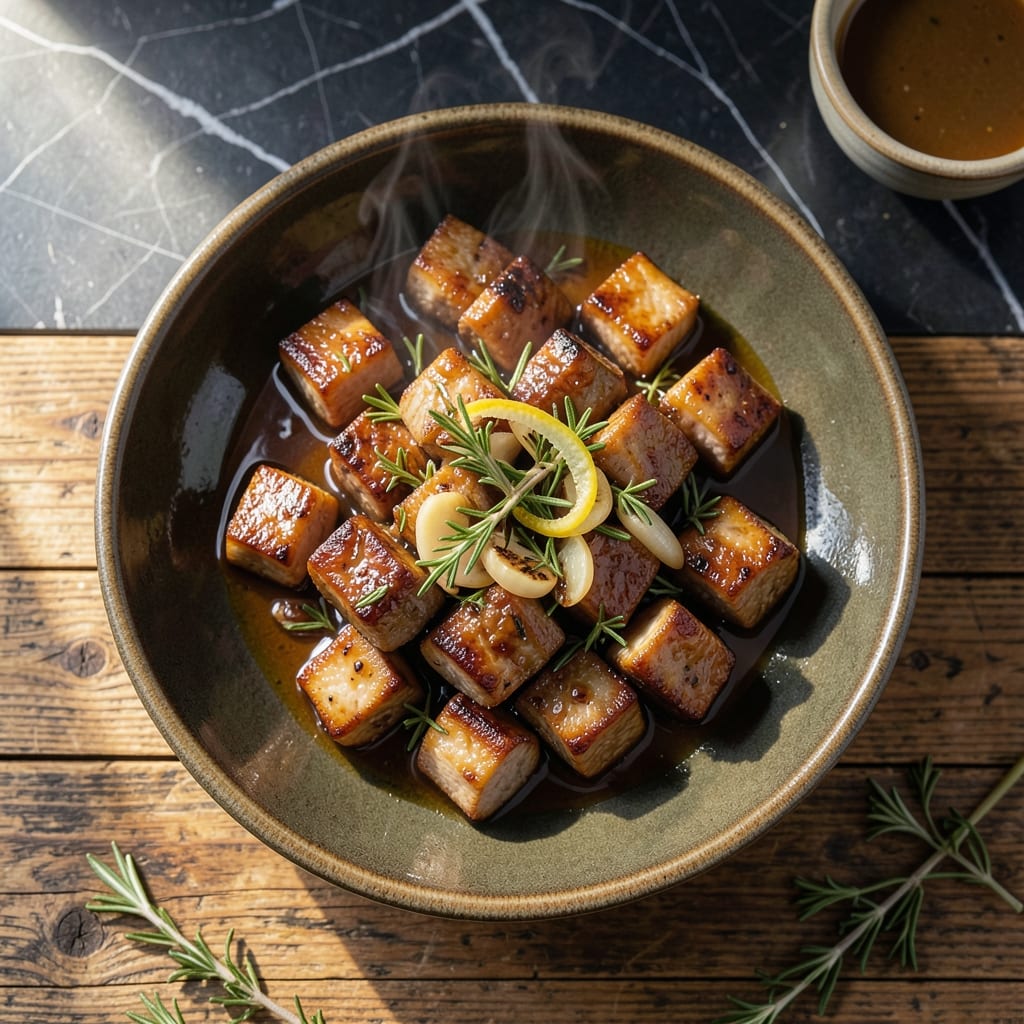
Cubed pork loin transforms into a tender, flavorful main course with the right technique. I learned this method after years of trial and error, perfecting the balance between marinating and searing.
The key is cutting uniform pieces for even cooking and using a hot pan to lock in juices. A simple herb marinade adds depth without overpowering the pork’s natural richness.
What emerges is succulent, golden-brown cubes with a caramelized crust. The pork stays moist inside while developing complex flavors from the herbs and searing process.
Serve with roasted vegetables or mashed potatoes for a complete meal. This approach proves that impressive results don’t require complicated techniques.
Ingredients for Recipe for Cubed Pork Loin
Uniform pork cubes, fresh herbs, and a hot pan create this succulent main course.
| Ingredient | Amount | Notes |
|---|---|---|
| Pork Loin 🥩 | 1 ½ lb | Boneless, cut into 1-inch cubes |
| Olive Oil 🫒 | 3 tbsp | Divided for marinade and searing |
| Fresh Rosemary 🌿 | 2 tbsp | Finely chopped, stems removed |
| Fresh Thyme 🍃 | 1 tbsp | Leaves stripped from stems |
| Garlic Cloves 🧄 | 4 cloves | Minced for marinade |
| Dijon Mustard 🟡 | 1 tbsp | Smooth variety preferred |
| Red Wine Vinegar 🍷 | 2 tbsp | For acidity in marinade |
| Kosher Salt 🧂 | 1 ½ tsp | Divided for marinade and seasoning |
| Black Pepper 🌶️ | 1 tsp | Freshly cracked preferred |
| Brown Sugar 🟤 | 1 tbsp | Light or dark variety |
| Soy Sauce 🥣 | 2 tbsp | Low-sodium recommended |
| Butter 🧈 | 1 tbsp | Unsalted, for finishing |
| Shallot 🧅 | 1 whole | Finely minced for marinade |
[recipe_ingredient_scaler]
The pork loin quality is paramount. Opt for center-cut pieces with even marbling—this ensures tenderness after cubing. Whole Foods or Costco typically stock premium options. For the herbs, organic rosemary and thyme (available at Trader Joe’s) deliver superior aroma. Avoid pre-ground black pepper; freshly cracked makes a noticeable difference in the final crust.
No fresh herbs? Dried rosemary and thyme at one-third the amount will suffice, though the flavor profile will be more concentrated. Apple cider vinegar can replace red wine vinegar in a pinch. For a gluten-free option, tamari substitutes seamlessly for soy sauce. The brown sugar can be omitted, but it contributes to the caramelized crust mentioned in the technique.
Marinate the pork for up to 24 hours in the refrigerator for optimal flavor penetration. The seared cubes reheat well—store in an airtight container for 3-4 days. Freezing is not recommended as it can compromise the pork’s texture after thawing.
Why You’ll Love This Recipe
- One Pan Wonder: I cube the pork, toss it with the herbs and garlic, and let the oven do the rest.
- Herb Infused Bites: The rosemary and thyme make every piece taste like it’s been slow-roasted for hours.
- Feeds a Crowd: I’ve served this at dinner parties and weeknight meals with zero complaints.
- Lunchbox Hero: Leftovers taste even better the next day in sandwiches or salads.
Step-by-Step Instructions for Herb-Marinated Cubed Pork Loin
Master the technique for perfectly seared pork with a flavorful herb crust every time.
Step 1: Create the Herb Marinade
In a large bowl, whisk together 3 tbsp olive oil, 2 tbsp fresh rosemary, 1 tbsp fresh thyme, 4 cloves garlic cloves, 1 tbsp Dijon mustard, 2 tbsp red wine vinegar, 1 tsp kosher salt, 1 tsp black pepper, 1 tbsp brown sugar, and 2 tbsp soy sauce until fully combined.
Add 1 whole shallot, finely minced, and stir. The acidity from the vinegar and soy sauce will tenderize the pork while the herbs infuse it with aromatic depth. Let the marinade sit for 5 minutes to allow the flavors to meld before adding the pork.
Step 2: Marinate the Pork Loin
Add the 1.5 lb pork loin, cut into 1-inch cubes, to the marinade. Toss to coat every piece thoroughly, ensuring the marinade penetrates all the nooks and crannies. Cover the bowl with plastic wrap and refrigerate for at least 2 hours, or ideally overnight.
The longer the pork marinates, the more pronounced the flavors will be. For best results, stir the pork halfway through the marinating time to redistribute the flavors. Remove the pork from the refrigerator 30 minutes before cooking to bring it to room temperature.
Step 3: Sear the Pork to Perfection
Heat a large skillet over medium-high heat until hot. Add 1 tbsp olive oil (from the 3 tbsp total) and swirl to coat the pan. Remove the pork from the marinade, shaking off excess, and add it to the skillet in a single layer, working in batches if necessary to avoid crowding.
Sear the pork for 3-4 minutes per side until deeply browned and cooked through. The pork is done when it reaches an internal temperature of 145°F and the juices run clear. Resist the urge to stir too frequently—let the pork develop a rich, caramelized crust.
Step 4: Finish with Butter and Rest
Once the pork is cooked through, reduce the heat to medium and add 1 tbsp butter to the skillet. Tilt the pan slightly and baste the pork with the melted butter for 1-2 minutes, spooning it over each piece to enhance the flavor and shine.
Transfer the pork to a serving platter and let it rest for 5 minutes before serving. This resting period allows the juices to redistribute, ensuring each bite is tender and succulent. Garnish with any remaining fresh herbs from the marinade for a pop of color and aroma.
Pro Tips For Making Recipe For Cubed Pork Loin
- Dry the Pork: Pat the cubed pork loin completely dry with paper towels before seasoning—I learned this the hard way after my first batch steamed instead of seared.
- Smash the Garlic: Lightly crush the garlic cloves with the side of your knife before chopping. It releases more flavor into the olive oil and herbs.
- Skip the Overcrowding: Give each cube space in the pan, even if it means cooking in batches. Steer clear of packing them in, or they’ll boil in their own juices.
- Rest Before Serving: Let the cooked pork rest for 5 minutes under foil before serving. It keeps the juices where they belong—in the meat, not on the cutting board.
Common Mistakes When Making Great recipe for cubed pork loin
Uneven Cubing
Cutting pork into inconsistent sizes leads to uneven cooking—some pieces dry out while others stay undercooked. I use a ruler to ensure 1-inch cubes every time. This small step makes a huge difference in texture and doneness. 💡
Skipping the Rest
Slicing into the pork immediately after searing causes all those precious juices to spill onto the cutting board. Always let it rest for 5 minutes before serving. I learned this the hard way after ruining several batches early on.
Overcrowding the Pan
Adding too many cubes at once lowers the pan temperature, resulting in steamed pork instead of seared. Work in batches, giving each piece ½-inch space between them. The caramelized crust you want only happens with proper spacing.
Cold Pork in Pan
Starting with chilled pork straight from the fridge leads to uneven cooking and tough meat. Always let the marinated pork sit at room temperature for 30 minutes before searing. This ensures even cooking throughout each cube.
Ignoring Internal Temp
Guessing doneness by color alone is unreliable. Use an instant-read thermometer to confirm 145°F internal temperature. I keep a ThermoWorks thermometer in my kitchen drawer for this exact purpose.
Over-Marinating
While marinating adds flavor, leaving pork in acidic marinades like this one for more than 24 hours can start to break down the meat texture. Stick to the recommended time for the best balance of flavor and texture. 🔥
Nutrition Facts
Frequently Asked Questions
What’s the best way to cut pork loin into cubes?
Use a sharp knife and cut against the grain into 1-inch cubes for even cooking. Partially freezing the loin for 20 minutes makes slicing easier and more precise.
Can I use a different cut of pork?
Pork tenderloin works well, but reduce cooking time to 2-3 minutes per side. Avoid fatty cuts like shoulder, as they won’t sear as cleanly or evenly.
How do I know when the pork is done without a thermometer?
Press the cubes with tongs—firmness with slight give indicates doneness. For safety, aim for 145°F internal temperature; a thermometer is the most reliable method.
Can I make this ahead of time?
Marinate the pork up to 24 hours ahead, but cook just before serving. Reheated pork loses its crisp crust and moisture.

Trained in classic French technique but raised on slow-cooked ribs and spicy rubs, she blends culinary skill with smoke and soul.
- Recipe For Fried Pork Chops In An Iron Skillet: Crispy Crust With Juicy Centers - October 3, 2026
- Recipe for Fully Cooked Spiral Ham: Sweet Glaze and Effortless Elegance - October 3, 2026
- Recipe for Cream of Rice: Silky Smooth Breakfast Comfort - October 3, 2026