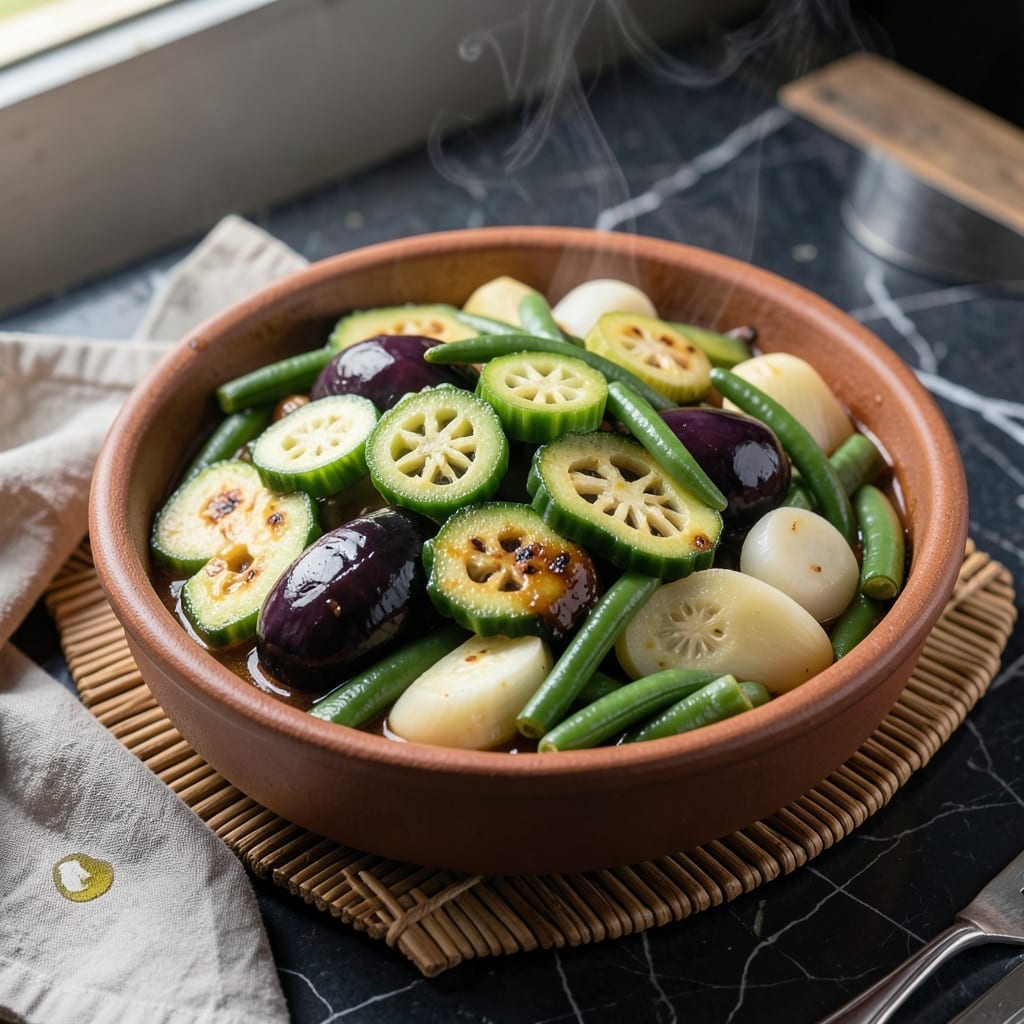
This traditional Filipino dish showcases the vibrant flavors of mixed vegetables simmered in a rich, savory sauce.
I’ve perfected the balance of bitter melon, eggplant, and okra with shrimp paste for an authentic taste of home cooking.
Ingredients for Recipe for Filipino Pinakbet
Fresh veggies and pantry staples bring this Filipino classic to vibrant life.
| Ingredient | Amount | Notes |
|---|---|---|
| Bitter Melon 🥒 | 1 whole | Medium-sized, sliced thin |
| Japanese Eggplant 🍆 | 2 whole | Sliced into rounds |
| Okra 🌿 | 8 pieces | Trimmed, whole or halved |
| Zucchini 🥒 | 1 whole | Sliced into half-moons |
| Daikon Radish 🥕 | ½ whole | Peeled, sliced into matchsticks |
| String Beans 🌱 | 1 cup | Trimmed, cut into 2-inch pieces |
| Tomatoes 🍅 | 2 whole | Medium, quartered |
| Red Onion 🧅 | 1 whole | Thinly sliced |
| Garlic Cloves 🧄 | 4 cloves | Minced |
| Vegan Shrimp Paste 🫒 | 2 tbsp | Or miso paste for umami |
| Vegetable Broth 🥣 | 1 cup | Low-sodium preferred |
| Coconut Oil 🥥 | 2 tbsp | For sautéing vegetables |
| Sea Salt 🧂 | 1 tsp | Adjust to taste |
| Black Pepper 🌶️ | ½ tsp | Freshly ground |
[recipe_ingredient_scaler]
The bitter melon is non-negotiable for authenticity. Look for firm, bright green ones at Asian markets—they should feel heavy for their size. Eggplant soaks up oil, so Japanese eggplant (the long, thin kind) works best here. If you can’t find daikon, regular radish in a pinch, but the texture won’t be quite the same. I grab my produce at H Mart or the local Filipino grocery when I can.
No vegan shrimp paste? Miso paste or fermented tofu gets you close to that funky, salty depth. Fresh okra can be slimy for some—if that’s you, blanch it first or sub in green beans. The coconut oil can be swapped for neutral oil (like avocado), but it adds a nice richness. For extra umami, a dash of soy sauce or tamari won’t hurt.
Pinakbet tastes even better the next day once flavors meld. Stores 3-4 days in the fridge, reheats like a dream. Freezes well too for up to 3 months—just thaw and warm gently to keep textures intact.
Why You’ll Love This Recipe
- One Pot Meal: I just toss the bitter melon, eggplant, okra, zucchini, and daikon into a single pot with shrimp paste—no fancy techniques, no multiple pans.
- Umami Bomb: The salty shrimp paste mixed with those crisp-tender veggies hits this deep, savory note that’s honestly hard to stop eating.
- Feeds a Crowd: Between us, it’s my go-to for family dinners because it stretches easily and tastes even better the next day.
- Budget Hero: A pound of mixed veggies and a spoon of bagoong cost less than a fast-food meal and fill the table.
Step-by-Step Instructions for Filipino Pinakbet
Here’s the method I use to layer all these flavors just right.
Step 1: Sauté the Aromatics in Coconut Oil
Heat the 2 tbsp coconut oil in a large pot or deep skillet over medium heat. Add the red onion and cook for 3-4 minutes until it turns translucent and starts to soften at the edges. You’ll notice the raw bite mellows out as it cooks.
Stir in the 4 cloves garlic cloves and cook for another 30 seconds until fragrant. Don’t let the garlic brown—just warm it enough to release its aroma. This forms the flavor base that will carry through the entire dish.
Step 2: Build the Umami Foundation with Vegan Shrimp Paste
Push the onion and garlic to one side of the pot. Add the 2 tbsp vegan shrimp paste to the cleared space and cook for 1-2 minutes, stirring constantly. The paste will darken slightly and become incredibly fragrant—this is the soul of the dish.
Pour in 1 cup vegetable broth and stir to dissolve the shrimp paste completely. Let this simmer for 2 minutes to meld the flavors. The liquid should turn a rich, golden color. This step ensures every vegetable will be coated in that signature umami depth.
Step 3: Add the Hard Vegetables First
Add the 0.5 whole daikon radish, 1 cup string beans, and 1 whole bitter melon. Stir well to coat them in the sauce. Cover and cook for 5 minutes over medium heat—this gives the denser vegetables a head start.
The daikon should begin to soften at the edges but still hold its shape. The bitter melon will start to release its unique flavor into the broth. Keep the heat steady; you want a gentle simmer, not a rolling boil.
Step 4: Incorporate the Remaining Vegetables
Add the 2 whole japanese eggplant, 1 whole zucchini, 2 whole tomatoes, and 8 pieces okra. Stir gently to combine. These vegetables cook faster, so adding them now ensures everything finishes at the same time.
Season with 1 tsp sea salt and 0.5 tsp black pepper. Cover and cook for another 8-10 minutes, stirring occasionally. The eggplant should be tender, the zucchini soft but not mushy, and the okra still vibrant green.
Step 5: Simmer and Adjust to Perfection
Reduce the heat to low and let the pinakbet simmer uncovered for 5 minutes. This allows the flavors to concentrate and the sauce to thicken slightly. Taste and adjust the seasoning if needed—the bitterness from the melon should be balanced by the salt and umami.
The vegetables should be tender but still retain some texture. The sauce will have reduced to a glossy coating that clings to each piece. Serve it hot, with the sauce spooned generously over the top, for the best experience.
Pro Tips For Making Recipe For Filipino Pinakbet
- Salt the Bitter Melon: Soak sliced bitter melon in salted water for 10 minutes to cut the bitterness—I learned this the hard way after serving a painfully bitter batch.
- Layer by Density: Add the daikon and eggplant first, then zucchini and okra last, since they cook faster and turn mushy if left too long.
- Skip the Overcrowding: Resist the urge to dump all veggies at once; cook in batches if needed to avoid steaming them instead of sautéing.
- Use Shrimp Paste: A spoonful of bagoong (shrimp paste) sautéed with garlic and onion upgrades the flavor instantly—sounds weird, but it works.
Flavor Customization for This Dish
Spice It Up
Add 1-2 Thai chili peppers or ½ tsp red pepper flakes to the sautéed aromatics for a fiery kick. This works beautifully with the bitterness of the melon. I often toss in 1 chopped siling labuyo (Filipino bird’s eye chili) when I can find it at my local Asian market.
Extra Umami Boost
Enhance the depth with 1 tbsp soy sauce or 1 tsp fish sauce (ensure it’s vegan if needed). A splash of 1 tsp lime juice right at the end brightens all the flavors. I learned this trick from a vendor at the Filipino grocery near my coastal rides.
Creamy Twist
Stir in ½ cup coconut milk at the end for a richer, creamier sauce. This mellows the bitterness slightly and adds a luxurious mouthfeel. The milk also helps balance the heat if you’ve added extra spice. I love this variation on cooler evenings.
Herb Infusion
Fresh herbs can elevate this dish. Add ¼ cup chopped Thai basil or cilantro just before serving. I sometimes forage wild lemongrass near my herb spots and bruise 2 stalks to infuse into the broth for a citrusy note. 🌿
Protein Additions
For a heartier meal, add 1 cup cubed tofu or 1 cup cooked chickpeas along with the eggplant. The tofu soaks up the sauce beautifully. I pan-fry the tofu separately in 1 tbsp coconut oil first for extra texture.
Sweet Balance
If the bitterness is too strong, stir in 1 tsp brown sugar or 1 tsp coconut sugar. This doesn’t make the dish sweet but rounds out the flavors. I find this helps when introducing pinakbet to first-time eaters. 💛
Nutrition Facts
Frequently Asked Questions
What can I use instead of bitter melon?
Try zucchini or green bell pepper for a milder flavor. They won’t replicate the bitterness but keep the dish’s texture.
Can I make this without shrimp paste?
Yes! Use miso paste or soy sauce for a similar umami kick. Vegan fish sauce works too.
How do I reduce the bitterness?
Soak sliced bitter melon in salted water for 10 minutes, then rinse. Adding 1 tsp sugar also helps balance it.
What’s the best way to store leftovers?
Keep in an airtight container in the fridge for up to 4 days. Reheat gently to preserve texture.

Trained in classic French technique but raised on slow-cooked ribs and spicy rubs, she blends culinary skill with smoke and soul.
- Recipe for Boneless Pork Chops in Cast Iron Skillet: Sear and Baste to Juicy Perfection - October 3, 2026
- Recipe for Boneless Cross Rib Roast: Slow-Roasted Beef with Herb Crust - October 3, 2026
- Hamburgers in Sauce Recipe Crock Pot: Slow-Cooked Savory Delight - October 3, 2026