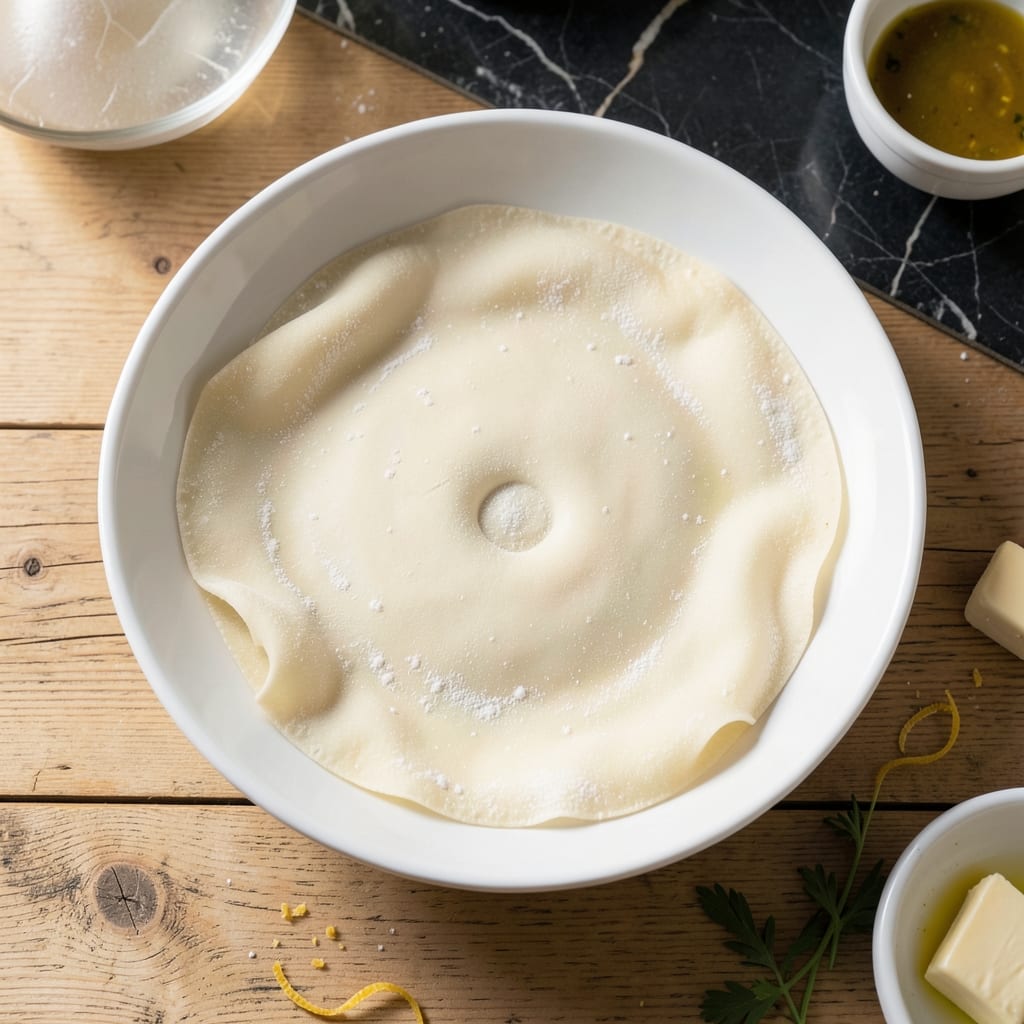
Making filo dough at home delivers paper-thin layers that elevate baklava, spanakopita, and other pastries to new heights. This proven technique requires patience but yields restaurant-quality results every time.
The key is in the resting process—allowing the dough to relax between rollings creates the elasticity needed for those signature translucent sheets. With just flour, water, and oil, you can achieve perfectly delicate layers that shatter with each bite.
I’ve refined this method through years of trial, ensuring the dough remains workable without tearing. The secret is rolling it as thin as possible, then brushing each sheet with melted butter for that characteristic flaky texture.
Once mastered, this dough opens up a world of Mediterranean and Middle Eastern possibilities. The process takes time, but the results are worth the effort.
Ingredients for Recipe for Filo Dough
Minimal ingredients yield maximum elegance with this delicate, flaky dough foundation.
| Ingredient | Amount | Notes |
|---|---|---|
| All-Purpose Flour 🌾 | 3 cups | Plus extra for dusting work surface |
| Warm Water 💧 | 1 cup | Approximately 110°F for activation |
| Extra-Virgin Olive Oil 🫒 | ¼ cup | Plus extra for brushing dough |
| White Vinegar 🍶 | 1 tbsp | Helps tenderize the gluten |
| Sea Salt 🧂 | 1 tsp | Fine grain for even distribution |
| Unsalted Butter 🧈 | ½ cup | Melted for brushing layers |
| Cornstarch 🌽 | 2 tbsp | Prevents sticking during rolling |
| Granulated Sugar 🍚 | 1 tsp | Optional for sweet pastries |
[recipe_ingredient_scaler]
The flour quality is paramount here. King Arthur all-purpose is the gold standard for its consistent protein content (11.7%), which provides the right balance of structure and elasticity. Bob’s Red Mill is a solid alternative if you prefer organic. Always measure by weight for precision—3 cups equals about 360 grams. The warmth of the water activates the gluten without killing it, so aim for that 110°F sweet spot.
No extra-virgin olive oil? Melted coconut oil works in a pinch, though it may impart a slight flavor. The vinegar is non-negotiable—it relaxes the gluten strands, making the dough more pliable. If you’re out, lemon juice at the same amount can substitute. For sweet applications, the sugar can be omitted, but it does help with browning. The butter must be unsalted to control the sodium content precisely.
Fresh dough keeps in the fridge for up to 3 days wrapped tightly in plastic. For longer storage, freeze between sheets of parchment for 1 month. Always bring to room temperature before rolling. The cornstarch is your secret weapon—dust your surface generously to prevent any sticking during that paper-thin rolling process.
Why You’ll Love This Recipe
- Five Ingredients: No fuss—just flour, water, olive oil, vinegar, and salt. That’s it.
- Crisp & Flaky: The olive oil gives it that golden, paper-thin crunch I crave in every bite.
- Endless Possibilities: I use it for spanakopita, baklava, or even quick appetizers. Honestly, it never gets old.
- Budget Friendly: A batch costs pennies compared to store-bought, and I can freeze extras for later.
Step-by-Step Instructions for Filo Dough
Master the technique for ultra-thin, elastic sheets perfect for layered pastries and desserts.
Step 1: Combine and Knead the Dough
In a large mixing bowl, whisk together the 3 cups All-Purpose Flour, 1 tsp Sea Salt, and 1 tsp Granulated Sugar. Make a well in the center and add the 1 cup Warm Water, 0.25 cup Extra-Virgin Olive Oil, and 1 tbsp White Vinegar.
Using a wooden spoon, gradually incorporate the dry ingredients into the wet until a shaggy dough forms. The vinegar helps tenderize the gluten, which is essential for achieving the paper-thin elasticity filo requires. The dough should feel slightly tacky but not sticky.
Turn the dough onto a lightly floured surface and knead for 8-10 minutes until smooth and elastic. You’ll know it’s ready when the dough springs back slowly when pressed with a finger, indicating well-developed gluten.
Step 2: Rest the Dough for Optimal Elasticity
Shape the kneaded dough into a ball and place it in a lightly oiled bowl. Cover with a damp kitchen towel or plastic wrap and let it rest at room temperature for 1 hour. This resting period allows the gluten to relax, making the dough easier to roll out thinly.
During this time, the Extra-Virgin Olive Oil in the dough will also hydrate the flour fully, improving the texture. If your kitchen is cool, you can extend the rest to 2 hours for even better results.
Step 3: Divide and Roll the Dough Paper-Thin
Divide the rested dough into 4 equal portions (each will make one large sheet). Lightly dust a clean work surface with a mix of All-Purpose Flour and 2 tbsp Cornstarch—the cornstarch prevents sticking during rolling.
Working with one portion at a time (keep the others covered to prevent drying), roll the dough as thin as possible, ideally to a thickness of about 1/16 inch. Use a long rolling pin and roll from the center outward, rotating the dough frequently to maintain an even thickness.
The dough should be nearly translucent when held up to the light. If it resists rolling or springs back, let it rest for another 5-10 minutes before continuing.
Step 4: Layer and Prepare for Use
Once rolled, lightly brush the surface of each sheet with melted Unsalted Butter (from the 0.5 cup Unsalted Butter). This not only adds flavor but also helps the layers adhere when building dishes like baklava.
Stack the buttered sheets with parchment paper between each to prevent sticking. Cover the stack with a damp towel until ready to use. If not using immediately, wrap tightly in plastic wrap and refrigerate for up to 2 days, or freeze for 1 month.
When ready to use, bring the dough to room temperature before assembling your dish to prevent cracking.
Pro Tips For Making Recipe For Filo Dough
- Rest the Dough: After kneading, let the dough rest for at least 30 minutes under a damp towel—I learned this the hard way when my first few batches kept springing back.
- Use Warm Water: The water should be just warm to the touch, about 110°F. Too hot and you’ll cook the flour; too cold and the dough won’t come together smoothly.
- Skip the Over-Flouring: Resist the urge to dust too much flour while rolling—just enough to prevent sticking, or your filo will turn out dry and tough.
- Add Vinegar Last: Mix the white vinegar in at the very end, right before resting. Sounds weird, but it works: it tenderizes the gluten without overworking the dough.
Storing and Reheating Leftovers
Short-Term Storage
For immediate use within 2 days, wrap your filo sheets tightly in plastic wrap after rolling. Store in the refrigerator at 40°F or below. The cold helps preserve the dough’s elasticity while preventing it from drying out. I always place mine in the coldest part of the fridge. ❄️
Freezing for Later
For longer storage, layer sheets between parchment paper, then wrap the stack in plastic and aluminum foil. This double protection prevents freezer burn. Your dough will keep for up to 1 month at 0°F. Label with the date to track freshness.
Thawing Properly
When ready to use, transfer the frozen dough to the refrigerator and let it thaw overnight. For quicker results, place the sealed package in a bowl of cold water for 30-45 minutes. Never thaw at room temperature, as this can cause condensation that makes the dough sticky.
Reheating Not Needed
Unlike cooked dishes, filo dough doesn’t require reheating. Simply bring it to room temperature before using. If the sheets feel dry after storage, lightly brush with water and let rest for 10 minutes to restore pliability.
Room Temperature Use
Always work with dough at room temperature. Cold dough is more prone to cracking. If you’ve refrigerated your sheets, let them sit on the counter for 15-20 minutes before handling. This makes rolling and layering much easier. 💡
Preventing Drying
Keep unused portions covered with a damp towel while working. This prevents the edges from drying out, which can ruin the entire batch. I learned this the hard way after my first few attempts ended with brittle, unusable sheets.
Nutrition Facts
Frequently Asked Questions
Why does my dough keep springing back when rolling?
The gluten needs more rest time between rollings. Let it sit for 5-10 minutes covered with a damp towel, then try again. This relaxation prevents the elastic rebound.
Can I substitute the olive oil?
Yes, use melted coconut oil or another neutral oil. Avoid strong-flavored oils like sesame, as they’ll alter the taste. The fat content is crucial for texture.
How do I prevent the sheets from sticking together?
Dust generously with cornstarch and flour, and place parchment between each sheet. Stacking with butter in between also helps separate them.
What’s the ideal thickness for filo sheets?
Aim for about 1/16 inch—nearly translucent. Use a long rolling pin and rotate the dough often to maintain even thickness.

Trained in classic French technique but raised on slow-cooked ribs and spicy rubs, she blends culinary skill with smoke and soul.
- Stewed Beef Brisket Recipe: Deep-Rich Flavor After 8 Hours of Slow Simmering - October 15, 2026
- Beef Brisket Rolls Recipe: Flaky Layers and Smoky Sweet Filling - October 15, 2026
- Masterbuilt Smoker Beef Brisket Recipe: Bark-To-Meat Ratio Hack for Unmatched Flavor - October 15, 2026