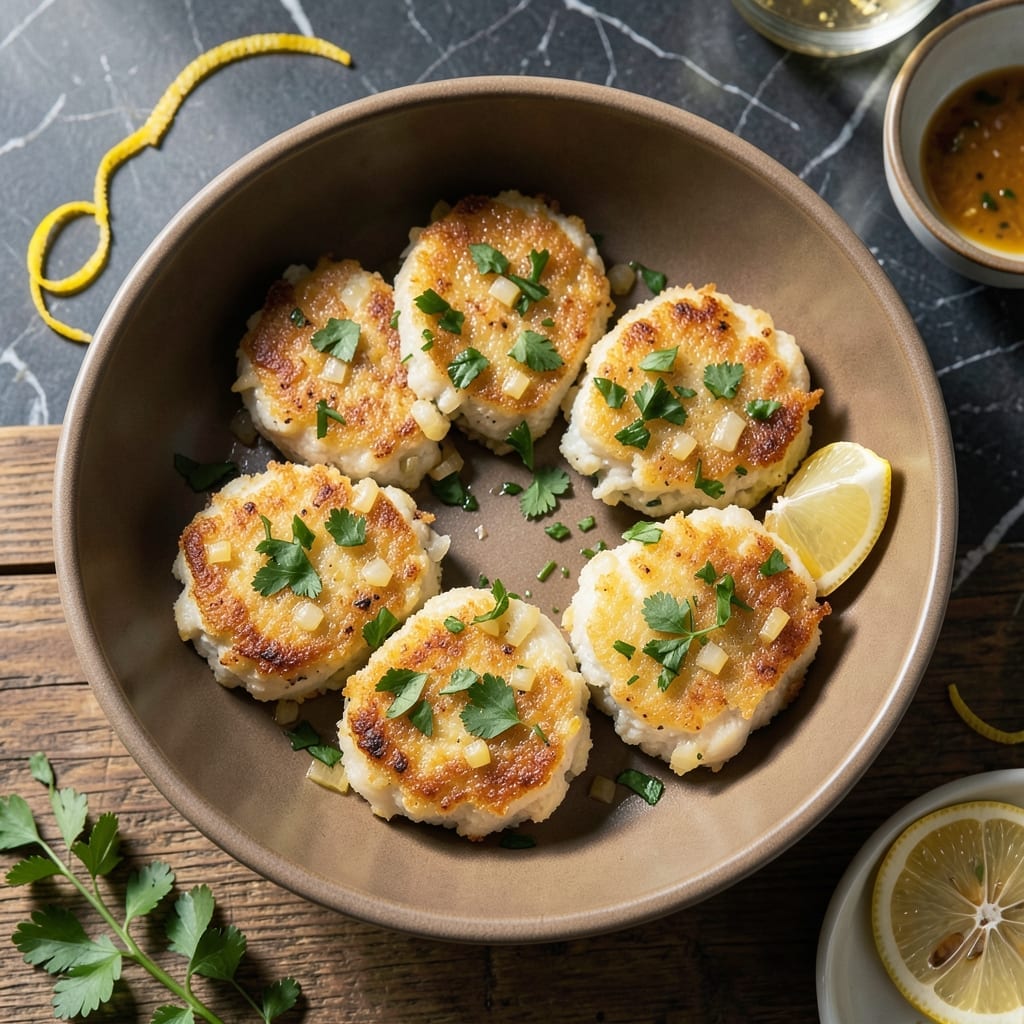
This fish cake recipe transforms mild hake into a crispy, golden creation with a tender, flaky center. I’ve perfected the balance between a crust that shatters and meat that stays moist inside.
The secret lies in minimal handling and high heat. Fresh hake holds together beautifully when mixed with just enough binder, and a hot pan ensures that perfect exterior without drying out the fish.
You’ll get a texture that’s light yet satisfying, with a coating that stays crispy even after resting. These cakes hold their shape and deliver that coveted flaky bite every time.
Serve with lemon wedges or a creamy dipping sauce for a dish that feels special but comes together with straightforward technique.
Ingredients for Recipe for Fish Cakes Using Hake
Fresh hake, crispy coating, and a handful of pantry staples bring this together beautifully.
| Ingredient | Amount | Notes |
|---|---|---|
| Fresh Hake Fillets 🐟 | 1 ½ lb | Skinless, boneless, chopped |
| All-Purpose Flour 🌾 | ½ cup | For binding and coating |
| Large Eggs 🥚 | 2 whole | Lightly beaten for binding |
| Panko Breadcrumbs 🍞 | 1 cup | For crispy coating |
| Yellow Onion 🧅 | ½ whole | Finely diced for flavor |
| Fresh Parsley 🌿 | ¼ cup | Chopped for freshness |
| Dijon Mustard 🟡 | 1 tbsp | For tangy depth |
| Lemon Zest 🍋 | 1 tsp | Freshly grated for brightness |
| Lemon Juice 🍋 | 2 tbsp | Freshly squeezed for acidity |
| Old Bay Seasoning 🌶️ | 1 tsp | For classic seafood flavor |
| Salt 🧂 | 1 tsp | Kosher or sea salt preferred |
| Black Pepper 🌶️ | ½ tsp | Freshly ground for best flavor |
| Vegetable Oil 🫒 | ½ cup | For frying to golden crisp |
| Mayonnaise 🥛 | 2 tbsp | For rich binding |
[recipe_ingredient_scaler]
The hake is the star—fresh, skinless, boneless fillets are essential for that flaky texture. Look for wild-caught if available (check the seafood counter at Whole Foods or Trader Joe’s). Panko breadcrumbs are non-negotiable for the shatteringly crisp crust; regular breadcrumbs just won’t deliver. The egg and mayo work together as binders, so don’t skip either—it’s what keeps the cakes from falling apart in the pan.
Out of hake? Cod or haddock work just as well—same mild flavor, same flaky texture. No panko? Crushed saltines or cornflakes can stand in, though the texture will be slightly different. Fresh parsley can be swapped for dill or chives (both pair nicely with fish). If you’re avoiding mayo, Greek yogurt works in a pinch, but the flavor will be tangier.
Fish cakes are best served fresh, but leftovers keep in the fridge for 2-3 days. Reheat in a toaster oven or air fryer to revive the crispy coating. For make-ahead, shape the patties and refrigerate (uncooked) for up to 24 hours before frying.
Why You’ll Love This Recipe
- One Bowl Wonder: I mix everything right in the same bowl—flour, eggs, breadcrumbs, and flaked hake. No fancy prep, just my hands and a fork.
- Crispy Outside, Tender Inside: The panko breadcrumbs give that golden crunch, while the hake stays moist and flaky. Honestly, it’s the texture that hooked me.
- Weeknight Rescue: Between us, these fish cakes save dinner when I’m short on time. Ready in 20 minutes, and the kids actually eat them.
- Budget-Friendly Protein: Hake is affordable, and a little goes a long way. I stretch one fillet into four generous cakes without breaking the bank.
Step-by-Step Instructions for Fish Cakes Using Hake
Here is the proven method to achieve a crispy coating with flaky white meat every time.
Step 1: Prepare the Fish Mixture
Finely chop the 1.5 lb Fresh Hake Fillets and place them in a large mixing bowl. Add the 0.5 whole Yellow Onion (finely diced), 0.25 cup Fresh Parsley (chopped), 1 tbsp Dijon Mustard, 1 tsp Lemon Zest, 2 tbsp Lemon Juice, 1 tsp Old Bay Seasoning, 1 tsp Salt, and 0.5 tsp Black Pepper.
I mix these together gently to avoid breaking up the fish too much. The Dijon Mustard and Lemon Juice add a tangy brightness that balances the richness of the Fresh Hake Fillets. This base ensures every bite is flavorful and moist.
Step 2: Bind the Mixture with Egg and Mayonnaise
In a small bowl, lightly beat the 2 whole Large Eggs and mix in the 2 tbsp Mayonnaise. Pour this mixture over the fish and stir until just combined. The Mayonnaise adds richness while the Large Eggs act as the primary binder to hold everything together.
Real talk: don’t overmix here. You want the Fresh Hake Fillets to remain in visible chunks for that flaky texture promised in the result. The mixture should hold its shape when pressed but still appear slightly loose.
Step 3: Form and Coat the Fish Cakes
Place the 0.5 cup All-Purpose Flour and 1 cup Panko Breadcrumbs in separate shallow dishes. Divide the fish mixture into 8 equal portions (about 3 oz each) and gently shape them into ½-inch thick patties.
Dredge each patty in the All-Purpose Flour, shaking off any excess, then press both sides into the Panko Breadcrumbs until fully coated. The Panko Breadcrumbs create that crispy exterior we’re after. Set the coated cakes on a plate and let them rest for 5 minutes to help the coating adhere.
Step 4: Pan-Fry to Golden Perfection
Heat the 0.5 cup Vegetable Oil in a large skillet over medium-high heat until shimmering but not smoking. Carefully place the fish cakes in the pan, leaving space between them to prevent crowding. Cook for 4-5 minutes per side until they develop a deep golden brown crust.
Watch for the edges to turn crisp and the Panko Breadcrumbs to achieve that promised crunch. Don’t flip too early—the cakes should release easily from the pan when properly browned. Drain on a paper towel-lined plate to remove any excess Vegetable Oil.
Step 5: Rest and Serve Warm
Let the fish cakes rest for 2-3 minutes before serving. This brief rest allows the interior to set while maintaining the crispy coating. The Fresh Hake Fillets inside should remain tender and flaky, contrasting beautifully with the crunchy exterior.
Serve immediately while hot. The ideal fish cake will have a crisp, golden Panko Breadcrumbs shell giving way to moist, flaky Fresh Hake Fillets with each bite. The aromatic hints of Lemon Zest and Fresh Parsley should come through as finishing notes.
Pro Tips For Making Recipe For Fish Cakes Using Hake
- Drain the Hake: After cooking the hake, let it drain in a colander for 5 minutes—this removes excess moisture that would make your fish cakes fall apart.
- Chill Before Frying: Refrigerate the shaped fish cakes for 20-30 minutes before frying; this helps them hold together and develop a crispier crust.
- Grate the Onion: Finely grate the yellow onion instead of dicing it—this distributes the flavor evenly without creating chunky bits that disrupt the texture.
- Use Cold Eggs: I learned this the hard way—cold eggs bind the mixture better than room temperature ones, preventing the cakes from breaking apart in the pan.
Troubleshooting This Recipe
Too Wet Mixture
If your fish mixture feels soggy, you’ve likely overmixed or added too much liquid. Drain any excess moisture first, then add 1-2 tbsp extra Panko Breadcrumbs to absorb the dampness. I find chilling the mixture for 15 minutes helps it firm up naturally. 💡
Cakes Falling Apart
This usually means the binder isn’t strong enough. Ensure you’re using both 2 Large Eggs and 2 tbsp Mayonnaise as specified. If the hake is very wet, pat it dry with paper towels before mixing. Press the patties firmly when shaping to compact the ingredients.
Coating Not Sticking
If the Panko Breadcrumbs won’t adhere, the fish mixture might be too moist. Lightly dust the patties with All-Purpose Flour first, then press into the breadcrumbs. Let them rest for 5 minutes after coating to set the crust properly.
Oil Temperature Issues
If your cakes absorb too much oil, your pan isn’t hot enough. Heat the 0.5 cup Vegetable Oil over medium-high heat until it shimmers. Test with a breadcrumb—it should sizzle immediately. If smoking, lower the heat slightly to prevent burning the coating.
Dry Interior
Overcooking is the likely culprit. Keep the heat at medium-high and cook for exactly 4-5 minutes per side. The Fresh Hake Fillets should reach 145°F internal temperature—use a thermometer to check. Resting for 2-3 minutes after cooking helps retain moisture. 🔥
Uneven Browning
This happens when the pan is overcrowded. Cook in batches, leaving 1 inch between cakes. Press the patties gently with a spatula during cooking to ensure even contact with the pan. Rotate the pan occasionally for consistent heat distribution.
Nutrition Facts
Frequently Asked Questions
Can I use frozen hake for this?
Yes, but thaw it completely in the fridge overnight first. Pat it very dry with paper towels to remove excess moisture before mixing. This prevents a soggy texture in your cakes.
What’s the best oil for frying?
Use a neutral oil with a high smoke point like vegetable or canola. Heat 0.5 cup to medium-high until shimmering. Avoid olive oil—its low smoke point can make the coating bitter.
How do I keep them crispy after cooking?
Drain on a wire rack instead of paper towels to prevent steam from softening the crust. Serve immediately, or keep warm in a 200°F oven for up to 15 minutes.
Can I bake instead of fry?
Yes, brush with oil and bake at 400°F for 12-15 minutes, flipping halfway. The texture won’t be as crispy, but it’s a lighter option. Use a baking sheet lined with parchment.

Trained in classic French technique but raised on slow-cooked ribs and spicy rubs, she blends culinary skill with smoke and soul.
- Stewed Beef Brisket Recipe: Deep-Rich Flavor After 8 Hours of Slow Simmering - October 15, 2026
- Beef Brisket Rolls Recipe: Flaky Layers and Smoky Sweet Filling - October 15, 2026
- Masterbuilt Smoker Beef Brisket Recipe: Bark-To-Meat Ratio Hack for Unmatched Flavor - October 15, 2026