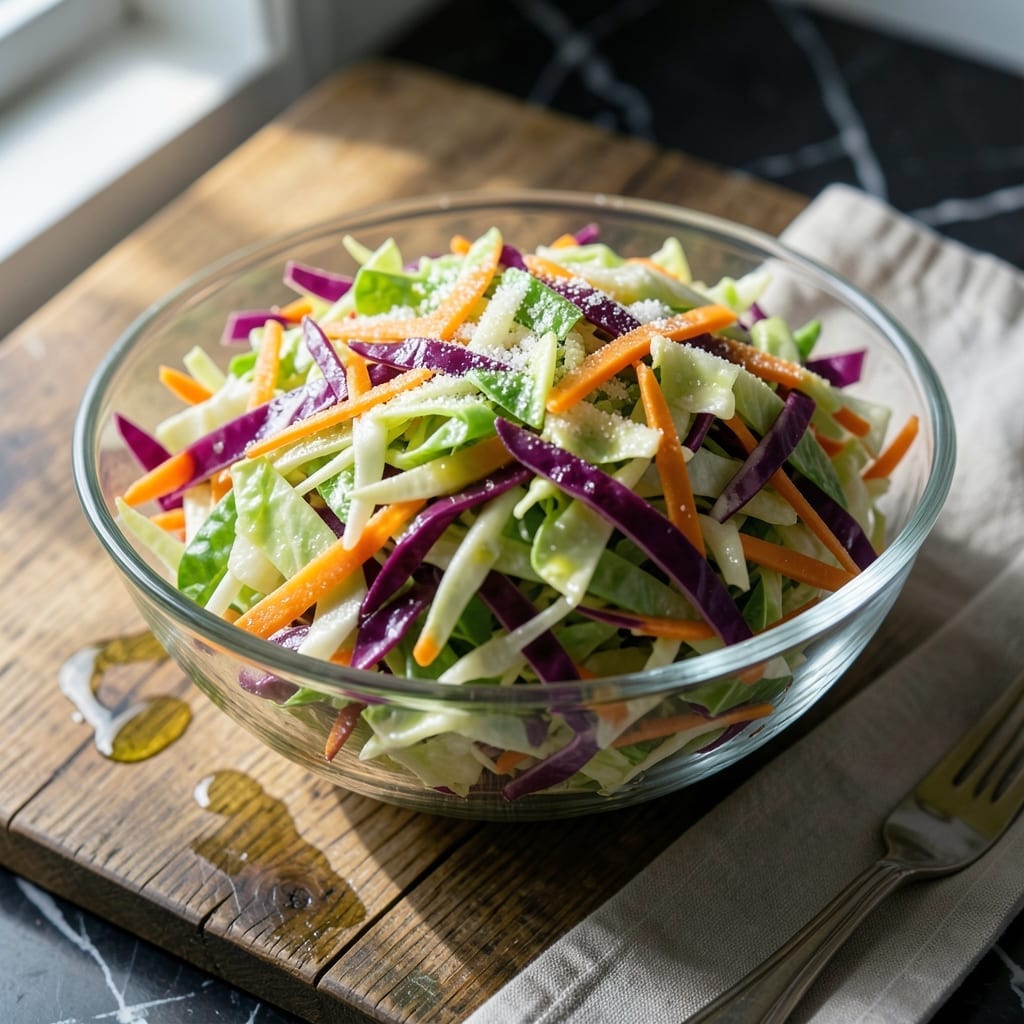
This freezer coleslaw revolutionizes meal prep by preserving that crisp texture we all crave. No more soggy leftovers—just fresh-tasting slaw ready when you need it.
I developed this method after years of testing, ensuring the dressing stays perfectly balanced during freezing. The secret is a vinegar-based dressing that doesn’t separate or turn watery.
The result is a side dish that tastes freshly made, with all the crunch intact. It pairs just as well with weeknight burgers as it does with holiday feasts.
Make a double batch and store it for up to 3 months. This is the kind of practical solution that makes home cooking feel effortless.
Ingredients for Recipe for Freezer Coleslaw
Fresh cabbage, carrots, and a tangy dressing that stays crisp straight from the freezer.
| Ingredient | Amount | Notes |
|---|---|---|
| Green Cabbage 🥬 | 6 cups | Thinly shredded for texture |
| Red Cabbage 🥬 | 2 cups | Thinly shredded for color |
| Carrots 🥕 | 2 whole | Julienned or grated fine |
| White Vinegar 💧 | ½ cup | For tangy dressing base |
| Granulated Sugar 🍚 | ¼ cup | Balances acidity perfectly |
| Vegetable Oil 🫒 | ⅓ cup | Neutral flavor preferred |
| Dijon Mustard 🟡 | 1 tbsp | Adds depth to dressing |
| Celery Seeds 🌿 | 1 tsp | Essential for authentic flavor |
| Salt 🧂 | 1 tsp | Diamond Crystal preferred |
| Black Pepper 🌶️ | ½ tsp | Freshly ground for best taste |
| Green Bell Pepper 🌶️ | ½ cup | Finely diced for crunch |
| Sweet Onion 🧅 | ¼ cup | Finely grated or minced |
[recipe_ingredient_scaler]
The cabbage is key here. Look for firm heads with vibrant color—avoid any with wilting outer leaves. I grab mine from local farmers markets when possible, but standard grocery store produce works fine too. The red cabbage adds color that holds up beautifully during freezing. For the carrots, organic from Whole Foods tend to have better flavor, but any fresh carrots will do.
No celery seeds? Celery salt at half the amount works in a pinch, though the texture differs slightly. White vinegar can be swapped for apple cider vinegar—just expect a milder tang. The Dijon mustard is flexible: regular yellow mustard will give a milder flavor. If you’re out of sugar, honey or agave works (just use slightly less).
This keeps its crunch for up to 3 months in the freezer. Thaw in the fridge overnight before serving. Leftovers stay fresh in the fridge for about 5 days—if they last that long.
Why You’ll Love This Recipe
- No-Fuss Mixing: I just toss shredded green cabbage, red cabbage, and carrots with vinegar and sugar—no cooking, no fuss.
- Tangy Sweet Bite: The white vinegar and sugar balance creates that zesty-sweet crunch I crave every time.
- Meal Prep Hero: I make a double batch, freeze half, and pull it out for potlucks or quick lunches.
- Pennywise Pile: Honestly, a head of cabbage and a few carrots stretch into gallons of slaw for pennies.
Step-by-Step Instructions for Freezer Coleslaw
This method ensures your slaw stays crisp and fresh-tasting even after freezing and thawing.
Step 1: Prepare the Vegetables for Freezing
Begin by thinly shredding the 6 cups Green Cabbage and 2 cups Red Cabbage using a sharp knife or food processor. I prefer using the food processor’s slicing attachment for consistent, fine shreds that hold up well to freezing.
Next, julienne or finely grate the 2 whole Carrots, finely dice the 0.5 cup Green Bell Pepper, and grate or mince the 0.25 cup Sweet Onion. The finer the cut, the better the texture will be after freezing and thawing.
Spread all the prepared vegetables on a large baking sheet in a single layer. This prevents them from clumping together during freezing, which would make them mushy when thawed.
Step 2: Freeze the Vegetables Individually
Place the baking sheet in the freezer and freeze the vegetables for 2-3 hours until completely solid. This step is crucial—it allows the vegetables to freeze individually so they maintain their texture.
Once frozen solid, transfer the vegetables to a large freezer-safe container or heavy-duty freezer bags. Press out as much air as possible before sealing to prevent freezer burn. The vegetables can be stored in the freezer for up to 3 months.
Real talk: don’t skip the pre-freezing step on the tray. It makes all the difference in preventing a soggy slaw later.
Step 3: Prepare the Dressing
In a medium bowl, whisk together the 0.5 cup White Vinegar, 0.25 cup Granulated Sugar, 0.33 cup Vegetable Oil, 1 tbsp Dijon Mustard, 1 tsp Celery Seeds, 1 tsp Salt, and 0.5 tsp Black Pepper.
Whisk vigorously until the mixture is completely emulsified and the sugar is fully dissolved. The dressing should be smooth and slightly thickened. Taste and adjust seasoning if needed, though I find this balance perfect for tangy, slightly sweet slaw.
Here’s the thing—this dressing is designed to hold up to freezing, so don’t be tempted to modify the ratios.
Step 4: Combine and Freeze
When ready to use, remove the frozen vegetables from the freezer and transfer them to a large bowl. Pour the dressing over the vegetables while they’re still frozen. This helps the dressing coat each piece evenly as they thaw.
Stir well to combine, then cover and return the mixture to the freezer. For best texture, let the slaw thaw in the refrigerator for 4-6 hours before serving. The vegetables will soften slightly but maintain a pleasant crunch.
I know it seems weird, but freezing the dressed slaw for a short time before thawing helps the flavors meld beautifully.
Step 5: Serve and Enjoy
Once thawed, give the slaw a good stir to redistribute the dressing. The vegetables will release some liquid as they thaw, which is normal. Simply drain off any excess liquid before serving if desired.
This slaw is incredibly versatile—serve it as a side with fried chicken, sandwiches, or even as a topping for tacos. The flavors hold up well, and the texture remains surprisingly crisp for a freezer slaw. Each bite should deliver that perfect balance of tangy, sweet, and crunchy.
Pro Tips For Making Recipe For Freezer Coleslaw
- Salt the Cabbage: Toss shredded cabbage with 1 teaspoon salt and let sit for 10 minutes—this draws out excess water so your coleslaw stays crisp, not soggy.
- Use Fine Shreds: Slice cabbage and carrots paper-thin (a mandoline helps) so they soften just right in the freezer and absorb the vinegar-sugar dressing evenly.
- Dissolve Sugar First: Heat vinegar and sugar together until fully dissolved before mixing with veggies—prevents grainy texture and guarantees even sweetness.
- Freeze in Portions: Pack coleslaw in single-serving containers (I use pint jars) so you only thaw what you need, avoiding the mushy leftovers problem.
Health Benefits of This Recipe
Nutrient-Rich Vegetables
This dish packs a serious nutritional punch with its cabbage base. Just 1 cup of raw cabbage provides over 50% of your daily vitamin C needs, plus a healthy dose of fiber for digestion. I love that it’s a side dish that actually contributes to your daily nutrient goals. 💪
Low-Calorie Crunch
At about 25 calories per cup, cabbage is one of the most calorie-efficient foods you can eat. The entire batch of this slaw comes in under 150 calories per serving, making it a guilt-free addition to any meal. Perfect for when I’m watching my calorie intake but still want something satisfying.
Digestive Health Boost
The 4 grams of fiber per serving in this slaw supports gut health and keeps you feeling full. The combination of cabbage and carrots provides both soluble and insoluble fiber, which work together to support your digestive system. I notice I feel lighter after meals that include this slaw.
Vitamin K Powerhouse
Cabbage is an excellent source of vitamin K, with one serving providing about 85% of your daily needs. This vitamin is crucial for blood clotting and bone health. The red cabbage adds even more antioxidants to the mix.
Antioxidant Protection
The red cabbage in this recipe contains anthocyanins, powerful antioxidants that give it that beautiful purple color. These compounds help protect your cells from damage. I always include red cabbage for both the color and the health benefits. ✨
Hydration Support
With vegetables making up over 90% of this dish, you’re getting a serious hydration boost. Cabbage and carrots have high water content, which helps keep you hydrated. It’s a refreshing side dish that feels as good as it tastes.
Nutrition Facts
Frequently Asked Questions
How long can I store this in the freezer?
It keeps its best texture for up to 3 months. After that, it’s still safe to eat but may soften slightly.
What if my slaw turns watery after thawing?
Drain off excess liquid and stir before serving. This is normal due to the vegetables’ water content.
Can I use a different type of vinegar?
Yes, apple cider vinegar works well, though it has a milder tang than white vinegar.
Is it safe to freeze with mayonnaise?
No, mayo-based dressings separate and become watery when frozen. Stick to vinegar-based dressings only.

Trained in classic French technique but raised on slow-cooked ribs and spicy rubs, she blends culinary skill with smoke and soul.
- Recipe for Boneless Pork Chops in Cast Iron Skillet: Sear and Baste to Juicy Perfection - October 3, 2026
- Recipe for Boneless Cross Rib Roast: Slow-Roasted Beef with Herb Crust - October 3, 2026
- Hamburgers in Sauce Recipe Crock Pot: Slow-Cooked Savory Delight - October 3, 2026