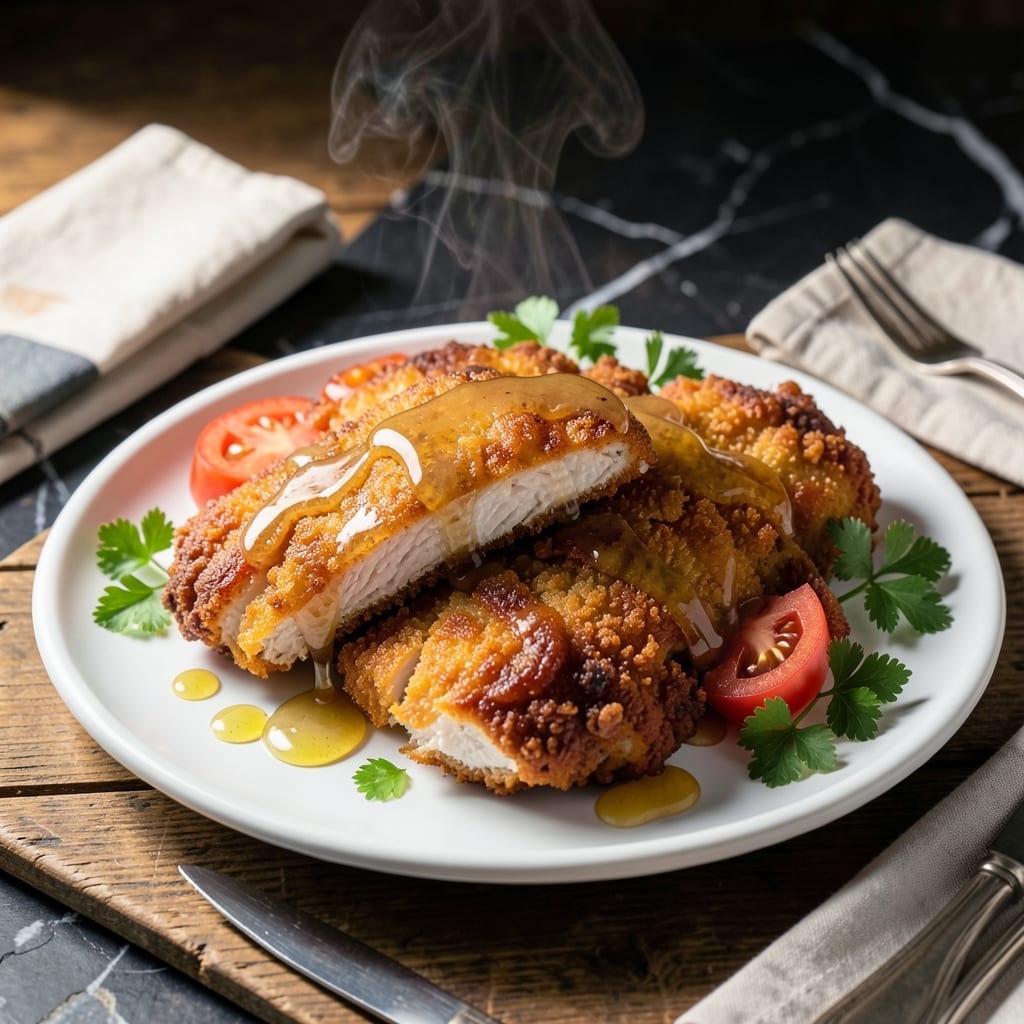
Achieving crispy fried chicken with a moist interior requires precise technique and proper temperature control. This method delivers restaurant-quality results at home without complicated equipment.
The secret lies in a two-step breading process and maintaining oil temperature between 350-375°F. Each piece develops a golden, shatteringly crispy crust while sealing in juices for that perfect moist texture.
Boneless chicken breasts cook faster than bone-in pieces, making this ideal for quick weeknight meals. The breading stays intact, and the meat remains tender throughout.
Serve immediately for maximum crunch, or keep warm in the oven while finishing the batch. Pair with classic sides like mashed potatoes or coleslaw.
Ingredients for Recipe for Fried Boneless Chicken Breast
Quality ingredients create that restaurant-style crispy exterior and juicy interior at home.
| Ingredient | Amount | Notes |
|---|---|---|
| Boneless Chicken Breast 🍗 | 1 ½ lb | Pounded to even 1/2-inch thickness |
| All-Purpose Flour 🌾 | 1 ½ cups | Divided for dredging and breading |
| Large Eggs 🥚 | 2 whole | Beaten for egg wash binding |
| Buttermilk 🥛 | 1 cup | Full-fat for optimal tenderness |
| Baking Powder 🧂 | 1 tbsp | For extra crispiness in coating |
| Salt 🧂 | 1 ½ tsp | Diamond Crystal kosher preferred |
| Black Pepper 🌶️ | 1 tsp | Freshly ground for best flavor |
| Paprika 🌶️ | 1 tbsp | Sweet or smoked variety |
| Garlic Powder 🧄 | 1 tsp | Not garlic salt substitute |
| Onion Powder 🧅 | 1 tsp | Fresh ground preferred |
| Cayenne Pepper 🔥 | ¼ tsp | Adjust for spice preference |
| Vegetable Oil 🫒 | 4 cups | For deep frying, peanut oil alternative |
| Panko Breadcrumbs 🍞 | 1 ½ cups | Japanese-style for extra crunch |
[recipe_ingredient_scaler]
The chicken quality is paramount. Boneless, skinless breasts from reputable sources like Whole Foods or Costco ensure consistent texture. Pound them to uniform thickness—this prevents uneven cooking and guarantees that crispy, golden crust on every piece. The buttermilk should be full-fat (trust me on this), as the acidity tenderizes while the fat keeps the meat moist during frying.
No buttermilk? Whole milk plus 1 tbsp vinegar or lemon juice per cup works in a pinch. For gluten-free, swap the flour for cornstarch or rice flour—the coating will be slightly different but still crispy. Panko can be replaced with regular breadcrumbs, though the crunch won’t be as pronounced. Peanut oil offers a higher smoke point if you’re frying at elevated temperatures.
Fry in batches to avoid crowding the pan—this drops the oil temp and leads to soggy breading. Drain on a wire rack (not paper towels) to maintain crispiness. Leftovers keep in the fridge for up to 3 days, though they’re best eaten fresh. Reheat in a 375°F oven for 10-12 minutes to revive the crunch.
Why You’ll Love This Recipe
- One Bowl Wonder: I mix the flour, buttermilk, and eggs in a single bowl—no fancy prep, just dip and fry.
- Crispy Outside, Juicy Inside: The buttermilk soak keeps the chicken tender while the flour crust gets that golden crunch.
- Feeds the Crew: I double the batch for leftovers that disappear faster than I can pack them for lunch.
- Pantry Staples Only: Between us, I always have these ingredients on hand—no last-minute grocery runs.
Step-by-Step Instructions for Fried Boneless Chicken Breast
Master the technique for achieving a perfectly crispy crust while maintaining a juicy, moist interior.
Step 1: Prepare and Season the Chicken
Begin by pounding the 1.5 lb boneless chicken breast to an even ½-inch thickness between plastic wrap. This ensures even cooking and prevents dry spots. Season both sides generously with 1.5 tsp salt, 1 tsp black pepper, 1 tbsp paprika, 1 tsp garlic powder, 1 tsp onion powder, and 0.25 tsp cayenne pepper.
Let the seasoned chicken rest at room temperature for 10-15 minutes while you prepare the breading station. This allows the spices to adhere better and the meat to cook more evenly.
Step 2: Set Up the Breading Station
Create a breading assembly line with three shallow dishes. In the first, combine 1.5 cups all-purpose flour and 1 tbsp baking powder—this adds lift to the crust. In the second, whisk the 2 whole large eggs with 1 cup buttermilk until smooth. Place the 1.5 cups panko breadcrumbs in the third dish.
The buttermilk in the egg wash tenderizes the chicken while helping the coating adhere. I prefer full-fat buttermilk for maximum richness and moisture in the final product.
Step 3: Bread the Chicken Thoroughly
Dredge each piece of chicken in the flour mixture, pressing gently to ensure full coverage. Shake off excess, then dip into the egg wash, allowing any excess to drip off. Finally, press into the panko breadcrumbs, applying slight pressure so the crumbs adhere completely to all surfaces.
Place the breaded chicken on a wire rack set over a baking sheet. This prevents the coating from becoming soggy while you finish breading the remaining pieces. Let the breaded chicken rest for 5-10 minutes to help the coating set before frying.
Step 4: Fry to Golden Perfection
Heat the 4 cups vegetable oil in a heavy pot or Dutch oven to 350°F. Use a deep-fry thermometer for accuracy—this temperature ensures the chicken cooks through without burning the exterior. Carefully lower 2-3 pieces into the hot oil, avoiding overcrowding which would lower the oil temperature.
Fry for 6-8 minutes on each side until the coating is deep golden brown and the internal temperature reaches 165°F. The breading should be crisp and audibly crunch when tapped. Transfer to a wire rack or paper towels to drain excess oil.
Step 5: Rest and Serve Immediately
Allow the fried chicken to rest for 5 minutes before serving. This brief resting period lets the juices redistribute throughout the meat, ensuring each bite remains moist. The internal temperature will also rise slightly during this time, guaranteeing it’s fully cooked.
Serve immediately while the coating is at its crispiest. The contrast between the shatteringly crisp panko crust and the tender, juicy interior delivers the perfect texture in every bite. For best results, avoid stacking the pieces which could trap steam and make the coating soggy.
Pro Tips For Making Recipe For Fried Boneless Chicken Breast
- Pound the Chicken: Use a meat mallet or rolling pin to even out the thickness to about ½ inch—this guarantees even cooking and prevents dry, chewy edges.
- Soak in Buttermilk: Let the chicken breasts sit in the buttermilk for at least 30 minutes (or overnight if you have time)—it tenderizes the meat and helps the coating stick better.
- Hot Oil Only: I learned this the hard way—wait until the oil reaches 350°F before frying, or the coating will absorb too much grease and turn soggy instead of crispy.
- Rest Before Serving: Give the fried chicken a solid 5 minutes on a wire rack after cooking—this keeps the crust crisp while the juices redistribute inside.
Regional Styles of This Dish
Southern Classic Style
For a true Southern twist, swap panko for crushed cornflakes or saltine crackers in your breading. I love the nostalgic crunch this gives—it reminds me of my grandma’s Sunday suppers. Add 1 tsp dried thyme to the flour mix for that classic comfort food flavor. 💛
Nashville Hot Version
After frying, brush the chicken with ¼ cup hot oil infused with 2 tbsp cayenne, 1 tbsp brown sugar, and 1 tsp smoked paprika. This creates that signature fiery, slightly sweet coating. Serve with pickles and white bread to balance the heat.
Korean Double-Fry
Fry the breaded chicken once at 325°F for 4 minutes, rest for 5 minutes, then fry again at 375°F until golden. This Korean method yields ultra-crispy results. Toss in a gochujang or soy-garlic glaze for sticky, savory perfection.
German Schnitzel Style
Use fine dry breadcrumbs instead of panko and add ½ tsp nutmeg to the flour. Pound the chicken thinner (¼ inch) and pan-fry in butter for a lighter, golden crust. Serve with lemon wedges and a simple parsley garnish.
Spicy Cajun Kick
Add 1 tbsp Cajun seasoning (like Tony Chachere’s) to your flour mix and a pinch to the egg wash. The blend of paprika, garlic, and cayenne gives it that Louisiana bite. I like to serve this with remoulade sauce for dipping.
Nutrition Facts
Frequently Asked Questions
What’s the best oil for frying?
Use vegetable or peanut oil for a 350-375°F smoke point. Avoid olive oil as it burns at high heat.
How do I keep the coating crispy?
Drain on a wire rack, not paper towels, to prevent steam buildup. Fry in small batches to maintain oil temperature.
Can I bake instead of fry?
Yes! Bake at 400°F for 20-25 minutes on a wire rack for crispiness. Spray with oil first for browning.
Why is my chicken dry?
Overcooking or uneven thickness causes dryness. Pound to ½-inch and cook to 165°F only.

Trained in classic French technique but raised on slow-cooked ribs and spicy rubs, she blends culinary skill with smoke and soul.
- Recipe for Boneless Pork Chops in Cast Iron Skillet: Sear and Baste to Juicy Perfection - October 3, 2026
- Recipe for Boneless Cross Rib Roast: Slow-Roasted Beef with Herb Crust - October 3, 2026
- Hamburgers in Sauce Recipe Crock Pot: Slow-Cooked Savory Delight - October 3, 2026