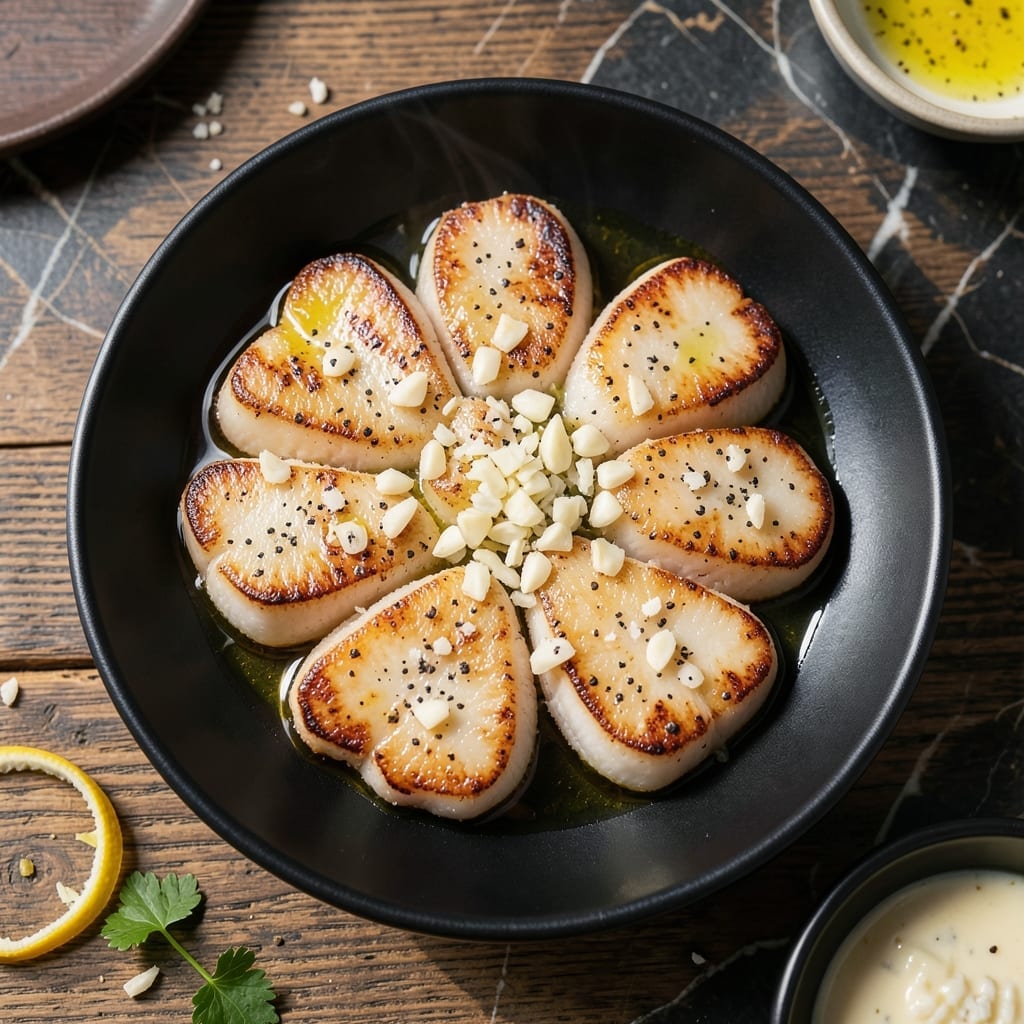
Frozen scallops can deliver restaurant-quality results with the right technique and patience.
I developed this method after testing countless approaches to achieve perfectly seared, buttery scallops every time. The key is proper thawing and high heat to create a golden crust while keeping the centers tender.
This approach transforms humble frozen seafood into an elegant dish worthy of special occasions. The buttery finish adds richness without overpowering the scallops’ natural sweetness.
Serve these with your favorite sides for a meal that feels indulgent but comes together with simple ingredients and techniques.
Ingredients for Recipe for Frozen Scallops
Transform frozen seafood into elegant pan-seared perfection with these quality ingredients.
| Ingredient | Amount | Notes |
|---|---|---|
| Frozen Scallops 🐚 | 1 ½ lb | Dry-packed, large sea scallops preferred |
| Unsalted Butter 🧈 | 4 tbsp | Divided, high-quality European style |
| Extra-Virgin Olive Oil 🫒 | 2 tbsp | High smoke point variety |
| Kosher Salt 🧂 | 1 tsp | Diamond Crystal preferred |
| Freshly Ground Black Pepper 🌶️ | ½ tsp | Coarse grind recommended |
| Garlic Cloves 🧄 | 3 cloves | Minced finely for aroma |
| Fresh Lemon 🍋 | 1 whole | Zested and juiced |
| Fresh Flat-Leaf Parsley 🌿 | ¼ cup | Finely chopped for garnish |
| Dry White Wine 🍷 | ¼ cup | Optional for deglazing |
| Shallot 🧅 | 1 whole | Finely diced for sauce |
| Heavy Cream 🥛 | ¼ cup | For buttery pan sauce |
[recipe_ingredient_scaler]
The scallops are the star here. Dry-packed sea scallops from Trader Joe’s or Whole Foods yield the best texture—they release less moisture during cooking. Avoid wet-packed scallops as they steam instead of sear. Look for large, uniform scallops (U10 or U12 count) for even cooking. The butter should be European-style for its higher fat content and superior browning capability.
No white wine? Substitute chicken stock with a splash of lemon juice. Fresh parsley can be replaced with chives or tarragon at equal amounts. If avoiding dairy, use olive oil instead of butter for searing (though the flavor profile will differ). The heavy cream in the pan sauce is optional but recommended—half-and-half works at half the quantity if that’s what you have.
Thaw scallops in the fridge overnight—never at room temperature. Use within 1-2 days of thawing for peak freshness. The pan sauce can be made ahead and reheated gently. Cooked scallops are best served immediately but will hold for 10 minutes in a warm oven.
Why You’ll Love This Recipe
- No-Thaw Needed: I can go straight from freezer to pan—no waiting, no fuss.
- Buttery Luxury: The butter and olive oil combo makes the scallops tender with a rich, golden crust.
- Dinner in Minutes: Honestly, it’s faster than ordering takeout, yet feels fancy enough for company.
- Budget Seafood: Frozen scallops give me that restaurant-quality taste without the fresh seafood price tag.
Step-by-Step Instructions for Pan-Seared Frozen Scallops
This method transforms frozen scallops into restaurant-quality dishes with a golden crust.
Step 1: Thaw and Pat the Frozen Scallops Dry
Submerge the 1.5 lb Frozen Scallops in a bowl of cold water for 15-20 minutes until completely thawed. I always use cold water—never warm—to prevent partial cooking that can make the scallops mealy.
Drain the scallops and pat them meticulously dry with paper towels. Any moisture will steam the scallops instead of searing them. You want the surface to be completely dry before they hit the pan. Season both sides evenly with 1 tsp Kosher Salt and 0.5 tsp Freshly Ground Black Pepper.
Step 2: Sear the Scallops to Golden Perfection
Heat 2 tbsp Extra-Virgin Olive Oil in a large, heavy skillet over medium-high heat until the oil shimmers but isn’t smoking. Add the scallops in a single layer, ensuring they don’t touch—this prevents steaming. Work in batches if necessary.
Sear undisturbed for 2-3 minutes until the bottoms develop a deep golden crust. Resist the urge to move them; they’ll release naturally when ready. Flip and sear the other side for 1-2 minutes until just opaque in the center. Transfer the scallops to a plate and tent with foil to keep warm.
Step 3: Build the Pan Sauce with Aromatics
Reduce heat to medium and add 2 tbsp Unsalted Butter to the same skillet. Once melted, add the finely diced 1 whole Shallot and cook for 2-3 minutes until softened and translucent. Add the minced 3 cloves Garlic Cloves and cook for 30 seconds until fragrant but not browned.
Deglaze the pan with 0.25 cup Dry White Wine, scraping up all the browned bits with a wooden spoon. Simmer for 2-3 minutes until the liquid reduces by half. This step extracts all the caramelized flavors from the searing process.
Step 4: Finish the Sauce and Serve
Stir in the remaining 2 tbsp Unsalted Butter and 0.25 cup Heavy Cream. Simmer for 1-2 minutes until the sauce thickens slightly and coats the back of a spoon. Squeeze in the juice of 1 whole Fresh Lemon and stir to combine.
Return the scallops to the skillet, spooning the sauce over them to coat evenly. Cook for an additional 30 seconds just to heat through. Garnish with 0.25 cup Fresh Flat-Leaf Parsley and serve immediately. The sauce should be velvety, with balanced acidity from the lemon cutting through the richness.
Pro Tips For Making Recipe For Frozen Scallops
- Thaw Completely: I learned this the hard way—partially frozen scallops release too much moisture and steam instead of searing, so thaw them overnight in the fridge or under cold running water for 15-20 minutes.
- Pat Them Dry: Even a little moisture prevents a good sear, so press the scallops between paper towels until they’re bone-dry before hitting the pan.
- Hot Pan, Quick Sear: Crank the heat to medium-high and sear for 2-3 minutes per side—any longer and they turn rubbery, any cooler and they won’t caramelize.
- Finish With Butter: After flipping, add a tablespoon of butter to the pan and baste the scallops for the last 30 seconds—it adds a rich, golden crust that olive oil alone can’t.
Dietary Considerations for recipe for frozen scallops
Gluten-Free Naturally
This dish is inherently gluten-free since it contains no wheat, barley, or rye ingredients. The only potential concern would be cross-contamination from shared cooking surfaces or utensils. 💪
Dairy-Free Option
To make this dairy-free, simply replace the Unsalted Butter with olive oil for searing. For the pan sauce, use coconut cream instead of Heavy Cream. The flavor will differ slightly but still complement the scallops beautifully.
Low-Carb Friendly
With just 3g net carbs per serving (from the shallot and wine), this dish fits perfectly into low-carb and keto diets. The protein and healthy fats from the scallops and butter provide sustained energy without the carb crash.
Shellfish Allergy Warning
Scallops are mollusks, so anyone with shellfish allergies must avoid this dish entirely. Even trace amounts can cause severe reactions. Always check with guests about allergies before serving.
Pescatarian Approved
This recipe aligns perfectly with pescatarian diets, focusing solely on seafood and plant-based ingredients like Shallot, Garlic Cloves, and Fresh Lemon. It’s a great way to enjoy seafood’s benefits without meat.
Sodium Considerations
With 1 tsp Kosher Salt for the entire recipe, you can control sodium by adjusting seasoning to taste. For heart-healthy versions, reduce salt by half and use low-sodium wine for deglazing.
Nutrition Facts
Frequently Asked Questions
Do I need to thaw them before cooking?
Always thaw first for best results. Use cold water for 15-20 minutes or overnight in the fridge. Cooking from frozen leads to uneven texture and poor searing.
How can I tell when they’re done?
They’re ready when opaque throughout and register 125-130°F internally. The centers should still be slightly translucent when removed from heat—they’ll finish cooking while resting.
Why do my scallops stick to the pan?
This usually means the pan wasn’t hot enough or the scallops weren’t dry. Use medium-high heat and pat them completely dry before searing. Don’t move them until they release naturally.
Can I use a non-stick pan?
Yes, but stainless steel or cast iron gives better searing. If using non-stick, avoid metal utensils and be extra careful with heat to prevent damaging the coating.

Trained in classic French technique but raised on slow-cooked ribs and spicy rubs, she blends culinary skill with smoke and soul.
- Smoked Teriyaki Beef Jerky Recipe: Umami-Deep Flavor in Every Chewy Bite - October 15, 2026
- Stewed Beef Brisket Recipe: Deep-Rich Flavor After 8 Hours of Slow Simmering - October 15, 2026
- Beef Brisket Rolls Recipe: Flaky Layers and Smoky Sweet Filling - October 15, 2026