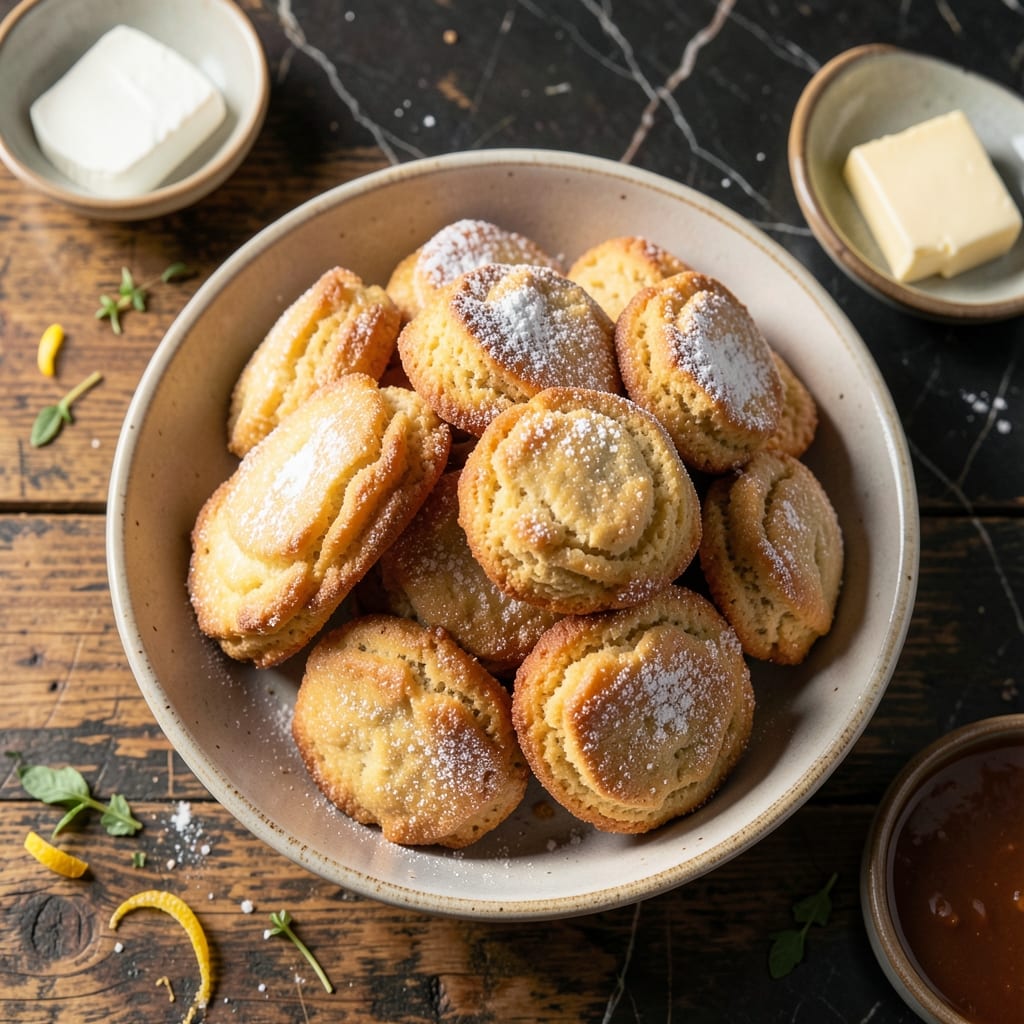
There’s a reason Hardee’s biscuits have a cult following—they’re flaky, buttery, and impossibly tender. This recipe replicates that signature texture and rich flavor with simple, pantry-friendly ingredients.
The secret lies in using cold butter and layering it into the dough just right. A touch of shortening adds extra flakiness, while buttermilk keeps the layers light and tender.
These biscuits rise tall in the oven, developing a golden crust outside and a soft, pull-apart interior. They taste even better fresh from the oven, slathered with extra butter or honey.
Perfect for breakfast, alongside fried chicken, or as a snack any time of day. Here’s how to make them at home.
Ingredients for Recipe for Hardee’s Biscuits
Pantry staples plus cold fats create those signature buttery, flaky layers everyone craves.
| Ingredient | Amount | Notes |
|---|---|---|
| All-Purpose Flour 🌾 | 2 cups | Plus extra for dusting surface |
| Baking Powder 🧂 | 1 tbsp | Ensures proper rise and lift |
| Granulated Sugar 🧈 | 1 tsp | Balances the richness of butter |
| Salt 🧂 | ½ tsp | Fine sea salt preferred |
| Unsalted Butter 🧈 | ½ cup | Cold, cubed for layering |
| Vegetable Shortening 🫒 | ¼ cup | Cold, for extra flakiness |
| Buttermilk 🥛 | ¾ cup | Cold, full-fat for best texture |
| Baking Soda 🧂 | ¼ tsp | Helps neutralize buttermilk acidity |
[recipe_ingredient_scaler]
The cold fats are non-negotiable here. Land O’Lakes unsalted butter and Crisco shortening give that authentic flakiness. Use full-fat buttermilk—the low-fat versions won’t deliver the same richness. Most grocery stores carry all three in the dairy aisle. If you can’t find buttermilk, Whole Foods usually has it, or you can make a quick substitute with milk and vinegar.
No buttermilk? Mix 3/4 cup milk with 2 tbsp white vinegar or lemon juice and let it sit for 5 minutes. Shortening can be replaced with more butter, but the texture will be slightly less flaky. For a richer flavor, European-style butter (like Plugrá) works well. The flour should be all-purpose—King Arthur or Gold Medal are both reliable brands.
Store cold fats in the freezer for 1 hour before starting for best results. Dough can be made ahead and refrigerated for up to 24 hours. Baked biscuits stay fresh for 2 days at room temperature in an airtight container. Freeze for up to 1 month.
Why You’ll Love This Recipe
- Foolproof Mix: I just dump flour, baking powder, sugar, and salt, cut in cold butter, and boom—biscuits ready for the oven.
- Buttery Layers: That unsalted butter folded in creates flaky, melt-in-your-mouth goodness with every bite.
- Breakfast to Dinner: Honestly, they’re perfect with sausage gravy at dawn or as a side with fried chicken at night.
- Pocketbook Friendly: Five basic pantry staples and I’ve got warm biscuits for pennies—no special ingredients required.
Step-by-Step Instructions for Hardee’s Biscuits
Master the technique for achieving those signature flaky layers with this precise, professional method.
Step 1: Combine Dry Ingredients
In a large mixing bowl, whisk together the 2 cups All-Purpose Flour, 1 tbsp Baking Powder, 1 tsp Granulated Sugar, 0.5 tsp Salt, and 0.25 tsp Baking Soda. This step ensures even distribution of leavening agents, which is critical for consistent rise across the entire batch.
Use a fine-mesh sieve if your baking powder has any lumps. The sugar and salt should dissolve completely into the flour mixture, creating a uniform base for the wet ingredients to come. Properly combined dry ingredients prevent pockets of uneven texture in your finished product.
Step 2: Cut in Cold Fats
Add the 0.5 cup Unsalted Butter (cubed) and 0.25 cup Vegetable Shortening to the dry mixture. Using a pastry blender or your fingertips, work the fats into the flour until the mixture resembles coarse crumbs with pea-sized pieces of fat visible throughout. This creates the flaky layers that define this dish.
The key here is maintaining the cold temperature of the fats—warm butter will melt and create a dense texture rather than flaky layers. Work quickly and avoid overmixing. You should see distinct bits of butter and shortening scattered throughout the flour, which will melt during baking to create those coveted pockets of air.
Step 3: Incorporate Buttermilk
Make a well in the center of the flour mixture and pour in the 0.75 cup Buttermilk. Using a fork, gently stir the mixture just until the dry ingredients are moistened and the dough begins to come together. The dough will be shaggy and slightly sticky—that’s exactly what you want.
Overmixing at this stage develops gluten, which will make your biscuits tough rather than tender. The buttermilk’s acidity reacts with the baking soda to create additional lift, while its fat content contributes to the richness. Stop stirring as soon as the dough forms a rough mass.
Step 4: Fold and Cut Biscuits
Turn the dough onto a lightly floured surface and gently pat it into a 1-inch thick rectangle. Fold the rectangle in half like a book, then gently pat it down again to 1-inch thickness. Repeat this fold-and-pat process 2 more times to create layers.
This lamination technique is what creates the signature flaky texture. Use a 2.5-inch biscuit cutter to cut out biscuits, pressing straight down without twisting. Twisting seals the edges and prevents proper rise. Gather the scraps, gently pat them out, and cut more biscuits until all dough is used.
Step 5: Bake to Golden Perfection
Arrange the biscuits on a parchment-lined baking sheet with edges just touching. Preheat your oven to 450°F and bake for 12-15 minutes until the tops are golden brown and the biscuits have risen significantly.
The close arrangement helps the biscuits rise upward rather than outward. They’re done when the tops are golden and the bottoms are lightly browned. Remove from the oven and brush the tops with melted butter if desired. Serve immediately while warm for the best texture and flavor.
Pro Tips For Making Recipe For Hardee’S Biscuits
- Chill the Butter: Cut your unsalted butter into small cubes and freeze for 15 minutes before mixing—this keeps it from melting into the dough, which is what gives Hardee’s-style biscuits their flaky layers.
- Don’t Overmix: Stir the dough just until it comes together; overworking it develops gluten, and you’ll end up with tough biscuits instead of tender, crumbly ones.
- Use Cold Liquid: If your recipe calls for buttermilk or milk, make sure it’s ice cold when you add it to the dry ingredients—warm liquid can soften the butter prematurely.
- Bake Immediately: Get the biscuits in the oven as soon as they’re shaped; letting the dough sit too long before baking reduces the rise from the baking powder.
Common Mistakes When Making Great recipe for hardees biscuits
Overworking the Dough
Once you add the buttermilk, resist the urge to stir too much. Overworking develops gluten, which makes biscuits tough instead of tender. Stop mixing as soon as the dough comes together—it should still look shaggy.
Warm Fats
Never use room-temperature butter or shortening. The fats must stay cold to create flaky layers. I keep my butter and shortening in the freezer for 1 hour before starting. Warm fats melt too soon, leading to dense, flat biscuits.
Twisting the Cutter
When cutting biscuits, press the cutter straight down and lift—never twist it. Twisting seals the edges, which prevents the biscuits from rising properly. This small mistake can ruin your layers.
Overcrowding the Pan
Leave a little space between biscuits so they have room to expand. If they’re too close, they’ll merge into one giant biscuit. A 1-inch gap between each ensures even baking and proper rise.
Skipping the Folds
The fold-and-pat process creates those iconic flaky layers. Skipping this step or doing it too quickly results in flat, dense biscuits. Take your time and repeat the folding 3 times for the best texture.
Incorrect Oven Temp
Baking at too low a temperature won’t give you the rise or golden crust. Stick to 450°F and preheat your oven fully. A hot oven ensures a quick rise and that perfect golden-brown finish. 💡
Nutrition Facts
Frequently Asked Questions
Can I use regular milk instead of buttermilk?
Yes! Mix 3/4 cup milk with 2 tbsp lemon juice or vinegar, then let it sit for 5 minutes. This creates a buttermilk substitute with the right acidity for flaky, tender layers.
Why do my biscuits turn out flat?
Flat biscuits usually mean warm fats or overworked dough. Always use cold butter and shortening, and avoid overmixing once the liquid is added. This keeps the layers distinct and ensures a proper rise.
Can I make the dough ahead of time?
Shape the dough, cover it tightly, and refrigerate for up to 24 hours. Bake straight from the fridge for the best flaky texture. This also lets you prep for busy mornings.
What’s the trick to extra flaky layers?
The secret is folding the dough like a book 3 times before cutting. This creates multiple layers that puff up beautifully in the oven. Use cold fats and handle the dough gently.

Trained in classic French technique but raised on slow-cooked ribs and spicy rubs, she blends culinary skill with smoke and soul.
- Recipe for Boneless Pork Chops in Cast Iron Skillet: Sear and Baste to Juicy Perfection - October 3, 2026
- Recipe for Boneless Cross Rib Roast: Slow-Roasted Beef with Herb Crust - October 3, 2026
- Hamburgers in Sauce Recipe Crock Pot: Slow-Cooked Savory Delight - October 3, 2026