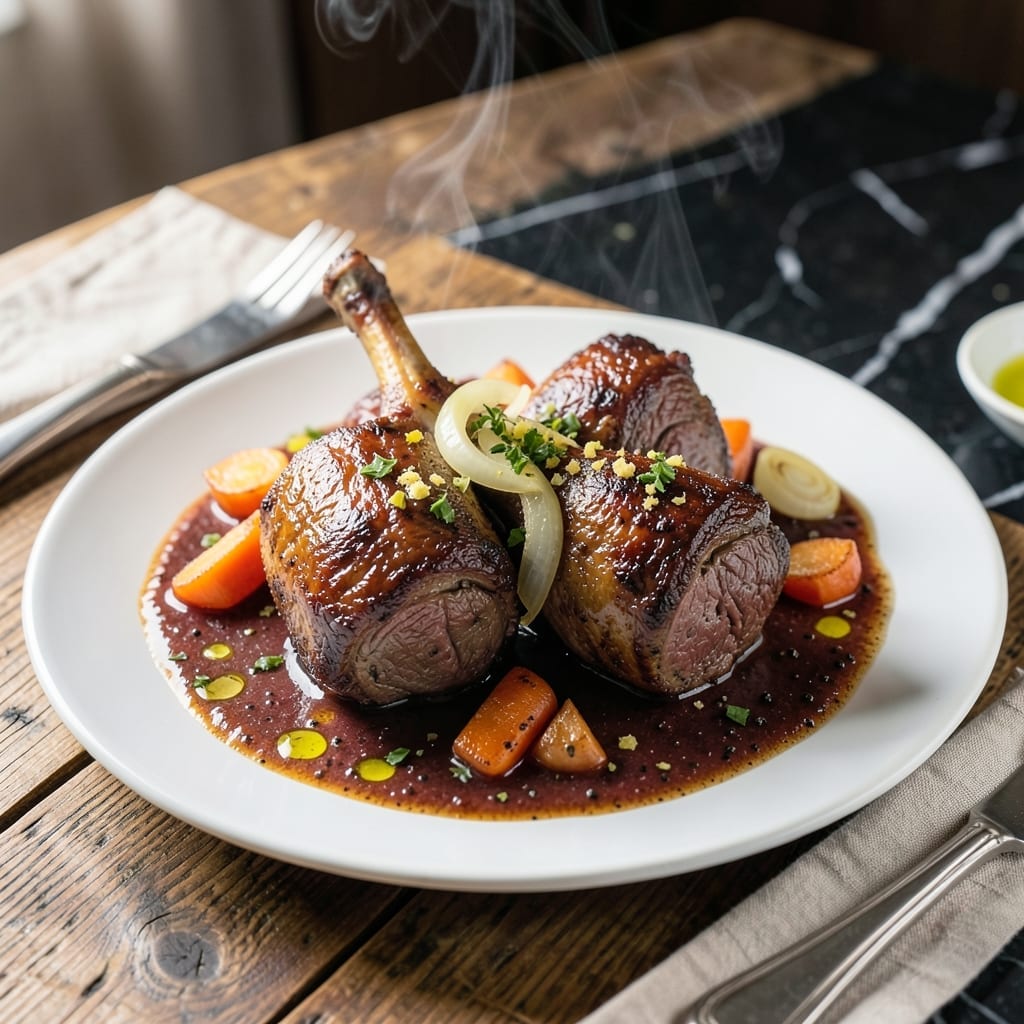
This Milanese classic transforms humble beef shanks into a fall-off-the-bone masterpiece. Standing beside my grandmother in Sicily, I learned the patience required for perfect osso buco.
The secret lies in the slow braise with white wine, broth, and aromatic vegetables. Each element builds layers of rich, complex flavor that only time can develop.
You’ll achieve tender meat and luxurious sauce that’s perfect over saffron risotto. The marrow in the bones becomes spreadable, adding depth to every bite.
This dish rewards patience with restaurant-quality results that taste like a Sunday family dinner in Milan. The process is as enjoyable as the eating.
Ingredients for Recipe for Osso Buco with Beef Shanks
Pantry staples meet a few special ingredients for this Milanese braised classic.
| Ingredient | Amount | Notes |
|---|---|---|
| Beef Shanks 🥩 | 4 whole | Cross-cut, 1.5 inches thick |
| All-Purpose Flour 🌾 | ½ cup | For dredging shanks |
| Olive Oil 🫒 | 3 tbsp | Divided for browning |
| Unsalted Butter 🧈 | 2 tbsp | For vegetable sauté |
| Yellow Onion 🧅 | 1 whole | Finely diced |
| Carrots 🥕 | 2 whole | Peeled, diced |
| Celery Stalks 🌿 | 2 whole | Diced for mirepoix |
| Garlic Cloves 🧄 | 4 cloves | Minced finely |
| Dry White Wine 🍷 | 1 ½ cups | Pinot Grigio or Sauvignon Blanc |
| Beef Stock 🥣 | 2 cups | Low-sodium preferred |
| San Marzano Tomatoes 🍅 | 1 can | 28 oz, crushed by hand |
| Fresh Rosemary 🌿 | 2 sprigs | Tied with twine |
| Fresh Thyme 🍃 | 2 sprigs | Tied with rosemary |
| Bay Leaf 🍃 | 1 whole | Added during braising |
| Kosher Salt 🧂 | 1 ½ tsp | Diamond Crystal preferred |
| Black Pepper 🌶️ | 1 tsp | Freshly ground |
[recipe_ingredient_scaler]
The beef shanks are non-negotiable here. Ask your butcher for cross-cut pieces about 1.5 inches thick—they’ll have more marrow. Whole Foods or a good local butcher shop usually carries them. Look for pieces with good marbling; that fat renders down during the slow braise, creating that luxurious sauce. If they’re pre-cut, check the thickness—too thin and they’ll dry out.
No white wine? Dry vermouth works in a pinch. Out of fresh herbs? Dried thyme and rosemary at half the amount can substitute, but fresh really makes a difference. The tomatoes should be San Marzano—their sweetness balances the wine’s acidity. Can’t find beef stock? Use Better Than Bouillon beef base mixed with water. It’s concentrated, so go light on the salt.
This tastes even better the next day. Refrigerate in the braising liquid for up to 4 days, or freeze for 3 months. The marrow will solidify when cold—just reheat gently to melt it back into the sauce. Always skim excess fat before storing.
Why You’ll Love This Recipe
- One Pot Wonder: I brown the beef shanks in the same pot I use for braising—fewer dishes, same rich flavor.
- Fall-Off-The-Bone Tender: The slow-cooked shanks with onion and butter melt in your mouth every time.
- Crowd Pleaser: I serve this at dinner parties and family Sundays—always gets rave reviews.
- Better Next Day: Honestly, the leftovers taste even deeper after a night in the fridge.
Step-by-Step Instructions for Osso Buco With Beef Shanks
This Milanese classic demands patience, but the fall-off-the-bone result is absolutely worth the wait.
Step 1: Dredge and Brown the Beef Shanks
Pat the 4 whole beef shanks dry with paper towels—this ensures a perfect sear. Season them generously with the 1.5 tsp kosher salt and 1 tsp black pepper, then dredge each shank in the 0.5 cup all-purpose flour, shaking off any excess. The flour creates a light crust and thickens the braising liquid later.
Heat 2 tbsp of the 3 tbsp olive oil in a large Dutch oven over medium-high heat. Working in batches to avoid crowding, brown the shanks for 4-5 minutes per side until deeply caramelized. You want a rich, dark crust—this builds the foundation of flavor. Transfer the browned shanks to a plate and set aside.
Step 2: Build the Aromatic Base
Reduce the heat to medium and add the remaining 1 tbsp olive oil and 2 tbsp unsalted butter to the same pot. Add the finely diced 1 whole yellow onion, 2 whole carrots, and 2 whole celery stalks. Sauté for 6-8 minutes until the vegetables soften and the onion becomes translucent.
Stir in the 4 cloves minced garlic cloves and cook for 30 seconds until fragrant. Be careful not to let the garlic burn—it should smell sweet and aromatic, not bitter. This mirepoix base is the flavor backbone of your braise.
Step 3: Deglaze and Begin the Braise
Pour in the 1.5 cups dry white wine, scraping up all the browned bits from the bottom of the pot with a wooden spoon. Let the wine simmer for 3-4 minutes until it reduces by half. This deglazing step lifts all the concentrated flavor from the fond into your sauce.
Add the 1 can crushed San Marzano tomatoes, 2 cups beef stock, 2 sprigs fresh rosemary, 2 sprigs fresh thyme, and 1 whole bay leaf. Stir to combine, then return the beef shanks to the pot along with any accumulated juices. The liquid should come about halfway up the shanks.
Step 4: Braise to Tenderness
Bring the mixture to a gentle simmer, then reduce the heat to low. Cover the pot and let it braise for 2.5 to 3 hours, turning the shanks every 45 minutes to ensure even cooking. The shanks are done when the meat pulls away from the bone easily and a knife slides in with no resistance.
Maintain a slow, steady simmer throughout the cooking process. If the liquid reduces too much, add a splash of water or additional beef stock. The sauce should thicken slightly but still be liquid enough to spoon over the shanks when serving.
Step 5: Rest and Serve
Once the beef shanks are tender, carefully remove them from the pot and set them aside. Skim any excess fat from the surface of the sauce, then adjust the seasoning if needed. Return the shanks to the pot to warm through for 5 minutes before serving.
Let the osso buco rest for 10 minutes off the heat. This allows the juices to redistribute and the flavors to meld. Serve the shanks hot, spooning the rich, aromatic sauce over the top. Traditional gremolata makes a bright, fresh finish.
Pro Tips For Making Recipe For Osso Buco With Beef Shanks
- Sear Until Dark: Get that crust deep brown—almost black—on the floured shanks before braising. I learned the hard way that a pale sear means weak flavor in the finished dish.
- Use Room-Temp Shanks: Pull the beef shanks out of the fridge 30-45 minutes before cooking. Cold meat seizes up in hot oil and steams instead of browning, even with all-purpose flour dredging.
- Skip the Overcrowding: Brown the shanks in batches if needed—about 2 tablespoons of olive oil and butter per batch. Steer clear of stuffing the pan; it drops the temperature and turns your sear into a sad boil.
- Deglaze with Wine: After removing the shanks, pour in a splash of dry white wine to scrape up those browned bits. Sounds like extra work, but it adds a depth to the sauce that water or broth just can’t match.
Regional Styles of This Recipe
Milanese Tradition
In Milan, osso buco is the king of Sunday dinners, always served with saffron risotto to soak up the rich sauce. The dish dates back to the 19th century, when slower cooking methods became popular. I remember my grandmother making it for family gatherings, the scent of rosemary and wine filling the kitchen. 💛
Roman Adaptation
In Rome, they often add pancetta to the mirepoix for an extra layer of smokiness. The sauce tends to be a bit thicker, with more emphasis on the tomato component. Some cooks finish with a splash of balsamic vinegar for acidity.
Sicilian Influence
My family’s version includes olives and capers for a briny contrast that cuts through the richness. We also use more garlic—about 6 cloves instead of four. The island’s love of bold flavors really shines through. 🌿
Tuscan Style
Tuscans often use Chianti instead of white wine, giving the dish a deeper, more robust character. They also prefer cannellini beans as a side, which soak up the sauce beautifully. The herbs are usually simpler—just rosemary and bay leaf.
Venetian Approach
In Venice, they might add a splash of prosecco to the braising liquid for a lighter touch. The dish is often garnished with fresh parsley and lemon zest. The focus here is on balancing the richness with bright, fresh flavors.
Nutrition Facts
Frequently Asked Questions
Can I use a slow cooker instead of a Dutch oven?
Yes! Brown the shanks first, then transfer everything to a slow cooker. Cook on low for 8 hours or high for 5-6 hours. The result will be just as tender, though the sauce may need reducing afterward.
How do I know when the beef shanks are done?
The meat should pull away from the bone easily and feel fork-tender. If it resists, continue braising for another 30 minutes and check again. Patience ensures perfect texture.
What’s the best way to serve this dish?
Traditionally, it’s served over saffron risotto or creamy polenta. The rich sauce pairs beautifully with starchy sides that soak up the flavors. A sprinkle of gremolata adds freshness.
Can I make this ahead of time?
The flavors deepen when refrigerated overnight. Store in the braising liquid for up to 4 days, or freeze for 3 months. Reheat gently to preserve texture.

Trained in classic French technique but raised on slow-cooked ribs and spicy rubs, she blends culinary skill with smoke and soul.
- Best Smoked Oxtail Recipe: Deep-Rich Flavor After Low-and-Slow Cooking - October 14, 2026
- Pit Boss Smoked Prime Rib Roast Recipe: Bark-to-Bone Crispness in 4 Hours - October 14, 2026
- Smoked Tuna Steak Recipe: Seared Crust Meets Silky Centers - October 14, 2026