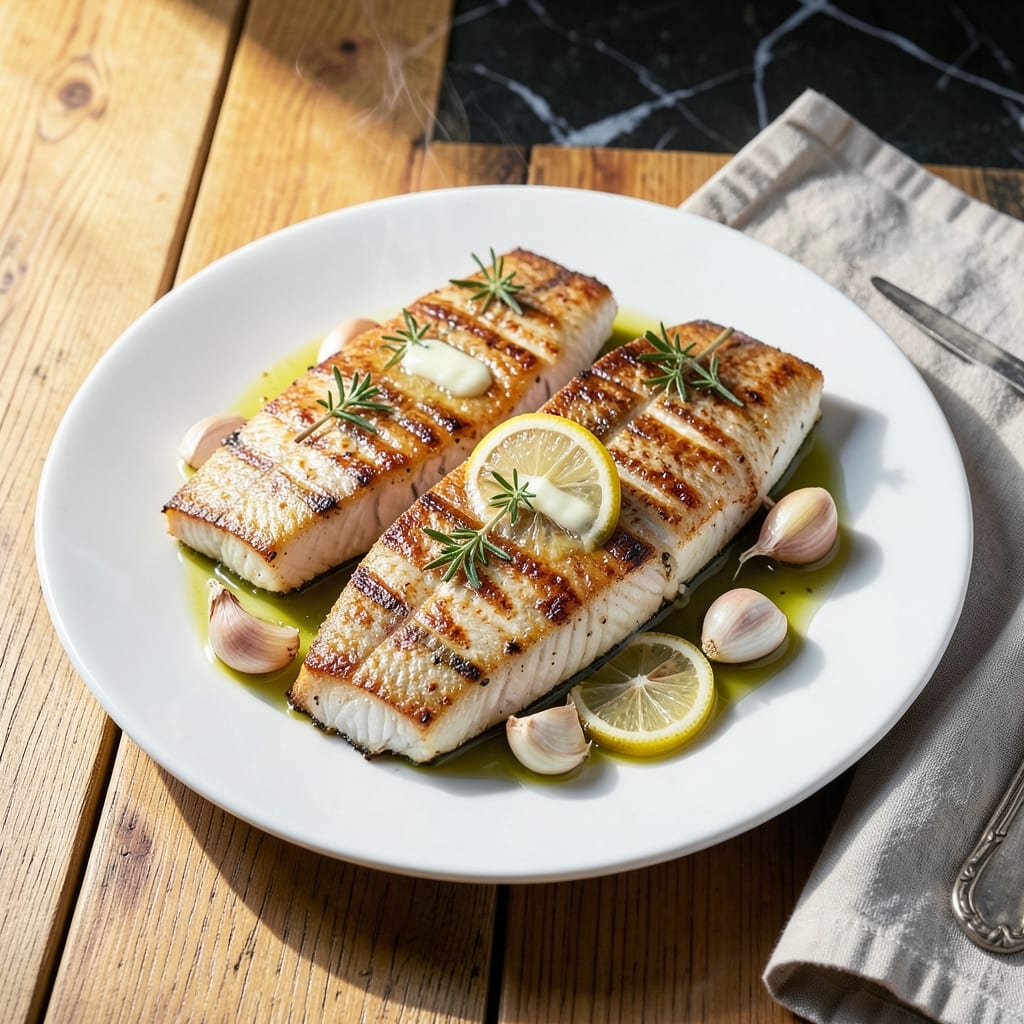
This oven method brings restaurant-quality sea bass to your home kitchen with minimal effort.
I developed this technique after too many dry, overcooked fillets taught me the importance of precise timing and temperature control. The high-heat start creates a golden crust while keeping the interior tender and flaky.
You will achieve perfectly cooked fish with a buttery texture and clean flavor that lets the sea bass shine. The oven does most of the work while you prepare simple sides.
Serve with lemon wedges and fresh herbs for a dish that feels special but comes together with ease.
Ingredients for Recipe for Oven Cooked Sea Bass
Simple ingredients for a dish that feels like a restaurant special at home.
| Ingredient | Amount | Notes |
|---|---|---|
| Sea Bass Fillets 🐟 | 4 pieces | Skin-on, about 6 oz each |
| Olive Oil 🫒 | 3 tbsp | Divided for cooking and finishing |
| Unsalted Butter 🧈 | 2 tbsp | Cold, cubed for basting |
| Garlic Cloves 🧄 | 3 cloves | Thinly sliced for infusion |
| Fresh Thyme Sprigs 🌿 | 4 sprigs | Optional but recommended |
| Lemon 🍋 | 1 whole | Zested and juiced |
| Kosher Salt 🧂 | 1 tsp | Plus more to taste |
| Freshly Ground Black Pepper 🌶️ | ½ tsp | Or to taste |
| Dry White Wine 🍷 | ¼ cup | Optional for deglazing |
| Fresh Parsley 🌿 | ¼ cup | Chopped, for garnish |
| Shallot 🧅 | 1 whole | Minced for sauce base |
| Heavy Cream 🥛 | ¼ cup | Optional for finishing sauce |
[recipe_ingredient_scaler]
The sea bass is the star—look for skin-on fillets at your fish counter (I always ask for center-cut pieces, about 1-inch thick). Whole Foods and local seafood markets have great options, but even the frozen stuff at Trader Joe’s works in a pinch. Freshness is key: the fish should smell clean, like the ocean (not fishy). Ask when it came in—ideally, it’s been on ice for less than 24 hours.
No white wine? Substitute chicken broth with a splash of lemon juice—it won’t be quite as bright, but it’ll do. Out of thyme? Rosemary or oregano can step in. If you’re skipping the cream, a pat of extra butter at the end adds richness. And if shallots aren’t in your pantry, red onion works too (just dice it finer so it melts into the sauce).
Cook this the day you buy the fish—sea bass doesn’t love hanging out in the fridge. Leftovers? Rare, but they’ll keep for 1-2 days (gently reheat in a low oven). The lemon zest brightens everything up, so don’t skip it (worth the extra minute).
Why You’ll Love This Recipe
- I’ll be real: cold sea bass on salad the next day is my secret weapon.
- One Pan Wonder: I just toss the sea bass with olive oil, garlic, and thyme on a sheet pan—hardly any cleanup.
- Buttery Garlic Magic: The butter and garlic melt into the fish, making every bite ridiculously rich.
- Date Night Ready: Honestly, it feels fancy enough for guests but takes 15 minutes.
Step-by-Step Instructions for Oven Cooked Sea Bass
Here’s how to achieve restaurant-quality results with minimal effort and maximum flavor.
Step 1: Prep and Season the Sea Bass Fillets
Pat the 4 pieces sea bass fillets dry with paper towels—this is crucial for achieving a good sear. Skin-on fillets can be slippery, so handle them gently. Season both sides lightly with 1 tsp kosher salt and 0.5 tsp freshly ground black pepper.
Let the fillets sit at room temperature for 10-15 minutes while you prep the remaining ingredients. This takes the chill off the fish, ensuring even cooking. Meanwhile, zest and juice the 1 whole lemon, mince the 1 whole shallot, and thinly slice the 3 cloves garlic cloves.
Step 2: Sear the Fillets to Golden Perfection
Heat 2 tbsp olive oil in a large oven-safe skillet over medium-high heat until it shimmers. Add the fillets skin-side down and press gently with a spatula for the first 30 seconds to prevent curling. Cook undisturbed for 3-4 minutes until the skin is golden brown and crispy.
Flip the fillets carefully and add the 2 tbsp unsalted butter, sliced garlic, and 4 sprigs fresh thyme sprigs to the pan. Baste the fillets with the melted butter for 1-2 minutes until the edges appear opaque. The butter will foam and smell incredible—this is the flavor base for your dish.
Step 3: Finish in the Oven with Aromatics
Transfer the skillet to a preheated 400°F oven. Add the minced shallot to the pan, scattering it around the fillets. Roast for 6-8 minutes until the fish flakes easily with a fork and reaches an internal temperature of 145°F.
If you’re using the optional 0.25 cup dry white wine, carefully pour it into the hot skillet now and return to the oven for the final 2 minutes. This deglazes the pan and creates a light, flavorful sauce. Watch for the wine to sizzle and reduce slightly.
Step 4: Create the Finishing Sauce and Serve
Remove the skillet from the oven and transfer the fillets to a serving plate. Place the skillet back on the stovetop over medium heat. Add the 0.25 cup heavy cream and half the lemon juice, stirring to combine. Simmer for 2-3 minutes until the sauce thickens slightly.
Spoon the sauce over the fillets and garnish with the remaining lemon zest and 0.25 cup fresh parsley. Drizzle with the remaining 1 tbsp olive oil for a finishing touch. The sauce should coat the back of a spoon and have a silky, luxurious texture.
Pro Tips For Making Recipe For Oven Cooked Sea Bass
- Pat Fillets Dry: I learned this the hard way—wet sea bass steams instead of searing, so blot those fillets with paper towels before they hit the pan or oven.
- Preheat the Pan: After burning my first batch, I now heat the skillet for a full 3-4 minutes before adding the oil and bass to get that golden crust.
- Skip the Cold Butter: Sounds weird, but it works: let your unsalted butter sit at room temp for 10 minutes so it melts evenly over the fish and herbs.
- Check at 8 Minutes: Sea bass cooks fast—start probing with a fork at the 8-minute mark to avoid the dry, rubbery texture that comes from overdoing it.
Make-Ahead Tips for This Dish
Prep Ahead Strategy
Pat the sea bass fillets dry and season them up to 1 hour before cooking. Keep them uncovered in the fridge—this dries the surface for a better sear. I learned this trick after too many soggy fillets. 💡
Pre-Mince Aromatics
Mince the shallot and slice the garlic up to 2 days ahead. Store in small airtight containers in the fridge. Fresh thyme can be prepped the same way—just trim the stems right before using.
Preheat Everything
Take your oven-safe skillet out of the cabinet and place it in the oven while preheating to 400°F. A hot pan prevents sticking and ensures even cooking. This small step makes a big difference.
Lemon Prep
Zest and juice the lemon the night before. Store zest in a tiny container and juice in a small jar. Both keep well for 24-48 hours in the fridge. Fresh citrus brightens the dish beautifully.
Sauce Base Ready
Measure the dry white wine and heavy cream ahead of time. Having these ready to pour saves precious seconds when the fish is in the pan. I keep mine in small measuring cups on the counter.
Room Temperature Fish
Pull the seasoned fillets from the fridge 30 minutes before cooking. This ensures even cooking throughout. Cold fish straight from the fridge often cooks unevenly. ❄️
Nutrition Facts
Frequently Asked Questions
What oven temperature should I use?
Preheat your oven to 400°F for even cooking and a perfect finish. This temperature ensures the fillets cook through without drying out.
How do I know when it’s done?
The fish is ready when it reaches an internal temperature of 145°F and flakes easily with a fork. Look for opaque flesh that separates cleanly.
Can I use skinless fillets?
Yes, but skin-on helps hold the fillets together and adds crispness. If using skinless, reduce oven time by 1-2 minutes to prevent overcooking.
What if my fillets are thicker?
For fillets over 1-inch thick, add 2-3 minutes to the oven time. Always check for doneness with a meat thermometer.

Trained in classic French technique but raised on slow-cooked ribs and spicy rubs, she blends culinary skill with smoke and soul.
- Recipe for Fully Cooked Spiral Ham: Sweet Glaze and Effortless Elegance - October 3, 2026
- Recipe for Cream of Rice: Silky Smooth Breakfast Comfort - October 3, 2026
- Old Fashioned Beef and Noodles Recipe Crock Pot: Set-It-and-Forget-It Hearty Meal - October 3, 2026