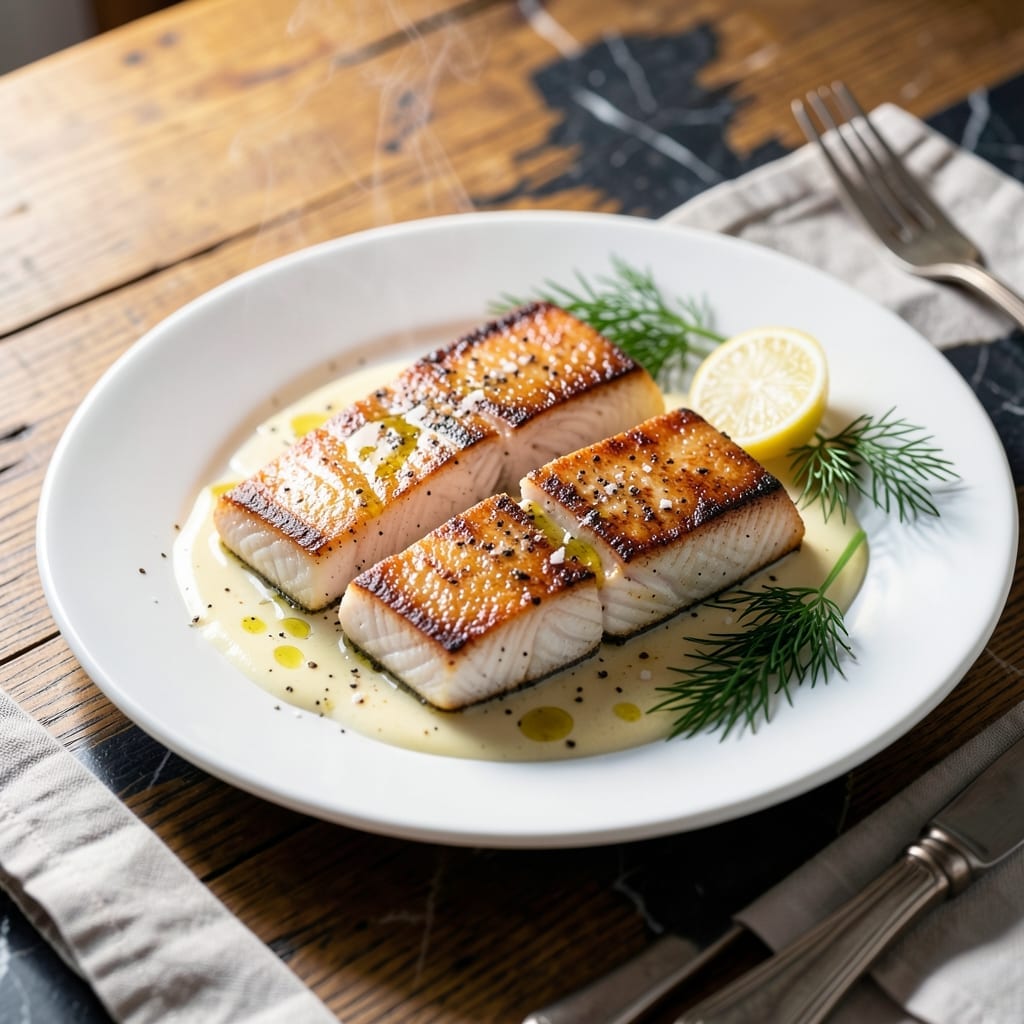
I learned the art of pan-frying halibut from my grandmother’s vague but wise instructions. This method delivers a golden crust with flaky, tender fish inside.
The secret is high heat, a hot pan, and patience to let the skin crisp without moving it. A buttery lemon-garlic finish elevates the dish to restaurant quality.
In 15 minutes, you’ll have perfectly cooked fillets with a bright, aromatic sauce. The technique works every time, even for beginners.
Serve with roasted asparagus or a simple salad for a complete, elegant meal. The results speak for themselves.
Ingredients for Recipe for Pan Fried Halibut Fillets
Short list. Big flavor. Restaurant-quality fish at home in minutes.
| Ingredient | Amount | Notes |
|---|---|---|
| Halibut Fillets 🐟 | 1 ½ lb | Skin-on, about 1-inch thick |
| All-Purpose Flour 🌾 | ½ cup | For dusting fillets |
| Kosher Salt 🧂 | 1 tsp | Diamond Crystal preferred |
| Black Pepper 🌶️ | ½ tsp | Freshly ground preferred |
| Unsalted Butter 🧈 | 4 tbsp | Divided for cooking and sauce |
| Extra-Virgin Olive Oil 🫒 | 2 tbsp | High smoke point preferred |
| Garlic Cloves 🧄 | 4 cloves | Minced for sauce |
| Fresh Lemon 🍋 | 1 whole | Zested and juiced |
| Fresh Parsley 🌿 | ¼ cup | Chopped, for garnish |
| Fresh Thyme Sprigs 🌿 | 4 pieces | Leaves stripped from stems |
| Shallot 🧅 | 1 whole | Finely diced |
| Dry White Wine 🍷 | ¼ cup | Sauvignon Blanc or Pinot Grigio |
[recipe_ingredient_scaler]
The halibut is the star here. Wild-caught from a trusted fishmonger is ideal—look for fillets with moist, translucent flesh and a mild ocean scent. Skin-on is non-negotiable for that crispy finish. Whole Foods or local seafood markets usually have great options. If buying frozen, thaw overnight in the fridge (never at room temp). The fillets should be about 1-inch thick for even cooking.
No white wine? Chicken or vegetable broth with a splash of lemon juice works in a pinch. Shallots can be swapped for red onion at half the amount. Out of thyme? Dried thyme at one-third the quantity. The lemon is key—use fresh, not bottled. For a richer sauce, add a pat of extra butter at the end (worth the extra minute).
Halibut cooks fast—use it within 2 days of purchase. Store it wrapped in paper towels on a plate in the coldest part of your fridge. The sauce can be made ahead and reheated gently. Leftovers? Rare, but they’ll keep for 1-2 days (best eaten fresh).
Why You’ll Love This Recipe
- 20-Minute Dinner: I can get this from fridge to plate faster than takeout arrives, just flour, butter, and a hot pan.
- Buttery Crisp Edge: That golden crust from the butter and flour with the tender halibut inside? Pure magic.
- Fancy Enough for Guests: I serve this when I want to impress without slaving in the kitchen all day.
- Leftovers Reheat Well: Honestly, the fillets taste just as good warmed up the next day for lunch.
Step-by-Step Instructions for Pan Fried Halibut Fillets
Here’s my foolproof method for achieving that perfect golden crust with tender, flaky fish inside.
Step 1: Prep and Season the Halibut Fillets
Pat the 1.5 lb halibut fillets completely dry with paper towels—this is non-negotiable for achieving a good sear. Any moisture left on the surface will steam the fish instead of browning it.
Season both sides evenly with the 1 tsp kosher salt and 0.5 tsp black pepper. Then, lightly dust each fillet with some of the 0.5 cup all-purpose flour, shaking off any excess. The flour creates a delicate crust that browns beautifully and helps the sauce cling later.
I like to do this step right before cooking. If you flour too early, the coating can get soggy from the fish’s natural moisture.
Step 2: Sear the Halibut to Golden Perfection
Heat the 2 tbsp extra-virgin olive oil and 2 tbsp unsalted butter in a large skillet over medium-high heat until the butter stops foaming. You want it hot enough to sizzle when the fish hits the pan, but not so hot it burns the butter.
Carefully place the floured halibut fillets in the skillet, skin-side down if they have skin. Press down gently with a fish spatula for the first 20-30 seconds to prevent curling and ensure even contact with the pan.
Cook for 3-4 minutes per side until the crust is deep golden brown and the fish releases easily from the pan. The halibut should flake slightly when tested with a fork but still appear slightly translucent in the center—it’ll finish cooking in the next step.
Step 3: Build the Lemon Garlic Wine Sauce
Remove the halibut from the skillet and set aside on a warm plate. Reduce heat to medium and add the remaining 2 tbsp unsalted butter to the pan. Once melted, add the finely diced shallot and cook for 1-2 minutes until softened.
Add the minced 4 cloves garlic cloves and the leaves from the 4 pieces fresh thyme sprigs, cooking for 30 seconds until fragrant. Be careful not to let the garlic brown—it should just soften and release its aroma.
Pour in the 0.25 cup dry white wine and the juice from the 1 whole fresh lemon, scraping up any browned bits from the bottom of the pan. Let this simmer for 2-3 minutes until reduced by about half and slightly thickened.
Step 4: Finish and Serve
Return the halibut fillets to the skillet, nestling them into the sauce. Spoon the sauce over the fish and let it cook for another 1-2 minutes to finish cooking the fish and allow the flavors to meld.
The halibut is done when it’s opaque throughout and flakes easily with a fork. The internal temperature should reach 145°F.
Garnish with the chopped 0.25 cup fresh parsley and a sprinkle of lemon zest from the fresh lemon. Serve immediately while the crust is still crisp and the sauce is hot. Each bite should deliver tender, flaky fish with a bright, buttery sauce that soaks into every forkful.
Pro Tips For Making Recipe For Pan Fried Halibut Fillets
- Dry the Fillets: Pat the halibut thoroughly with paper towels before dredging in flour—any moisture left on the surface will steam the fish instead of frying it.
- Hot Pan, Cold Butter: Heat the pan until it’s nearly smoking before adding the butter, then let it foam but not brown before adding the fish.
- Skip the Overcrowding: Cook the fillets in batches if needed; too many in the pan at once drops the temperature and leads to soggy, unevenly cooked fish.
- Rest Before Serving: After cooking, transfer the halibut to a warm plate and let it rest for 3-4 minutes—this keeps the juices inside where they belong.
Flavor Customization for This Recipe
Herb Variations
Swap the thyme for 2 tbsp fresh dill—it pairs wonderfully with the lemon and butter. I love this with a sprinkle of fennel fronds for an anise note. Tarragon works too, but use just 1 tbsp as its flavor can be strong.
Spice It Up
Add a pinch of cayenne pepper or red pepper flakes to the flour coating for subtle heat. For more kick, stir ½ tsp smoked paprika into the sauce. I learned this trick from a fishmonger at the farmers market. 🌶️
Citrus Twists
Try lime or orange zest instead of lemon for a different bright note. A splash of orange juice in the sauce adds sweetness. My grandmother would sometimes add a 1-inch strip of orange peel while cooking.
Creamy Upgrade
For a richer finish, stir 2 tbsp heavy cream or crème fraîche into the sauce at the end. This makes it velvety and luxurious. I save this version for special occasions when I want to impress.
Umami Boost
Add 1 tsp capers or 1 tbsp chopped olives to the sauce for briny depth. A dash of fish sauce (just ½ tsp) enhances all the flavors without tasting fishy. Trust me on this one. 💡
Nutrition Facts
Frequently Asked Questions
What’s the best oil for pan frying?
Use high smoke-point oils like avocado or grapeseed. Olive oil works if kept at medium-high heat. Avoid butter alone—it burns easily.
How do I prevent the fish from sticking?
Ensure your pan is very hot before adding fish. Use non-stick skillets or well-seasoned cast iron. Don’t move the fillets for 3-4 minutes to develop a crust.
Can I use frozen halibut?
Thaw frozen fillets overnight in the fridge. Pat them very dry before cooking to avoid steaming. Never refreeze after thawing.
What sides pair well with this dish?
Try roasted asparagus, garlic mashed potatoes, or a simple arugula salad. The lemon sauce pairs perfectly with steamed green beans too.

Trained in classic French technique but raised on slow-cooked ribs and spicy rubs, she blends culinary skill with smoke and soul.
- Smoked Whitefish Recipe: Wood-Fired Flakes with Herbed Butter Drizzle - October 15, 2026
- Smoked Teriyaki Beef Jerky Recipe: Umami-Deep Flavor in Every Chewy Bite - October 15, 2026
- Stewed Beef Brisket Recipe: Deep-Rich Flavor After 8 Hours of Slow Simmering - October 15, 2026