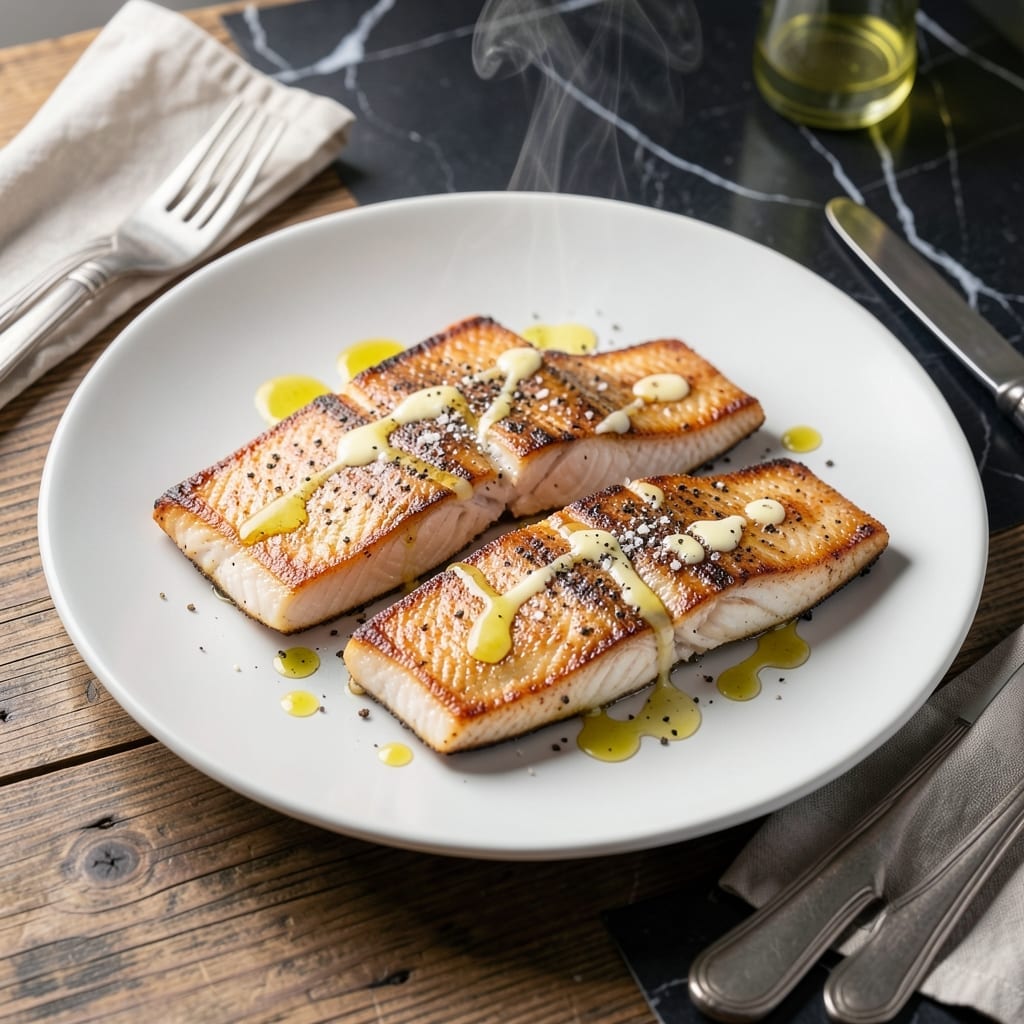
Pan-fried trout achieves what most home cooks only dream of: flaky flesh with skin so crisp it shatters at the touch. This method delivers restaurant results with minimal effort.
The secret lies in patience and heat control. Start with a screaming hot pan, then let the trout cook undisturbed until the skin releases naturally. The butter basting at the end adds richness without sogginess.
What emerges is trout with a golden, crackling skin and flesh that separates into perfect flakes at the slightest nudge. The buttery aroma alone signals you’ve nailed the technique.
Serve immediately with lemon wedges and fresh herbs. This dish transforms simple ingredients into something extraordinary.
Ingredients for Recipe for Pan Fried Trout Fillet
Simple ingredients transform into an extraordinary dish with buttery richness and crisp perfection.
| Ingredient | Amount | Notes |
|---|---|---|
| Rainbow Trout Fillets 🐟 | 4 whole | Skin-on, 6-8 oz each, pin bones removed |
| All-Purpose Flour 🌾 | ½ cup | For dredging fillets evenly |
| Kosher Salt 🧂 | 2 tsp | Diamond Crystal preferred for texture |
| Freshly Ground Black Pepper 🌶️ | 1 tsp | Coarse grind for best flavor |
| Unsalted Butter 🧈 | 6 tbsp | Divided for cooking and basting |
| Extra-Virgin Olive Oil 🫒 | 2 tbsp | High smoke point variety |
| Fresh Lemon 🍋 | 1 whole | Cut into wedges for serving |
| Fresh Dill 🌿 | ¼ cup | Chopped, for garnish |
| Fresh Parsley 🌿 | ¼ cup | Chopped, for garnish |
| Garlic Cloves 🧄 | 2 cloves | Minced for basting butter |
[recipe_ingredient_scaler]
The trout is everything here. Rainbow trout fillets with skin on are ideal—look for bright, firm flesh and a mild aroma. Most Whole Foods or local seafood markets carry them fresh, but frozen works too (thaw overnight in the fridge). Ask the fishmonger to remove pin bones if you’re not comfortable doing it yourself. The flour dredge creates that crisp skin, so don’t skip it (all-purpose is perfect).
No rainbow trout? Brook or brown trout work just as well. Swap dill for fresh tarragon or chives if that’s what you have. The butter can be ghee for a higher smoke point, or use all olive oil if avoiding dairy. For extra flavor, add a few thyme sprigs or a bay leaf to the basting butter. Just avoid overcrowding the pan—cook in batches if needed.
Trout is best the day it’s cooked, but leftovers hold up for 24 hours in the fridge. Reheat gently in a skillet to revive the skin. The basting butter? Use it all—no waste, all flavor. Fresh herbs don’t keep long, so buy them the day you plan to cook.
Why You’ll Love This Recipe
- 20-Minute Dinner: I can get this from fridge to plate faster than it takes to decide on takeout.
- Buttery Crisp: That golden crust from the butter and flour with the flaky trout inside? Ridiculously good.
- Fancy Enough: Here’s what sold me—it feels restaurant-worthy but costs less than a single trout entree at my local bistro.
- Leftovers? Rare: Honestly, there never are any. But if by some miracle there are, they make an incredible next-day sandwich.
Step-by-Step Instructions for Pan Fried Trout Fillet
Master the technique for achieving buttery crisp skin and flaky flesh with this straightforward method.
Step 1: Season and Dredge the Rainbow Trout Fillets
Pat the 4 whole Rainbow Trout Fillets completely dry with paper towels. This step is non-negotiable—moisture is the enemy of crispy skin. Season both sides evenly with 2 tsp Kosher Salt and 1 tsp Freshly Ground Black Pepper, pressing the seasoning gently into the flesh.
Dredge each fillet lightly in 0.5 cup All-Purpose Flour, shaking off any excess. The flour creates a thin, even coating that promotes browning without masking the delicate flavor of the trout. Set the dredged fillets aside on a clean plate while you heat the pan.
Step 2: Sear the Fillets to Crisp Perfection
Heat 2 tbsp Extra-Virgin Olive Oil in a large skillet over medium-high heat until it shimmers. Add the fillets skin-side down, pressing gently with a spatula for 10 seconds to ensure full contact with the pan. Cook undisturbed for 3-4 minutes until the skin is golden brown and crisp.
Watch for the edges to turn opaque and lift slightly from the pan—this is your visual cue that the skin has crisped properly. Avoid moving the fillets too soon; they should release easily when ready. The flour coating will create a delicate, lace-like crust on the skin.
Step 3: Finish with Butter and Aromatics
Flip the fillets and immediately reduce the heat to medium. Add 4 tbsp Unsalted Butter, 2 cloves minced Garlic Cloves, and half of the 0.25 cup Fresh Dill to the pan. Tilt the skillet slightly and spoon the foaming butter over the fillets continuously for 2-3 minutes.
This basting technique ensures the trout cooks evenly while infusing it with rich, buttery flavor. The garlic should become fragrant but not brown—burnt garlic will impart bitterness. The fillets are done when the flesh flakes easily with a gentle nudge and the internal temperature reaches 145°F.
Step 4: Plate and Garnish
Transfer the fillets to a serving platter, skin-side up. Cut the 1 whole Fresh Lemon into wedges and arrange them around the trout. Sprinkle the remaining 0.25 cup Fresh Dill and 0.25 cup Fresh Parsley over the top for a vibrant finish.
The final touch: drizzle the remaining 2 tbsp Unsalted Butter from the pan over the fillets for added richness. Serve immediately while the skin is still crisp. Each bite should deliver tender, flaky flesh with a satisfying crunch from the perfectly browned skin.
Pro Tips For Making Recipe For Pan Fried Trout Fillet
- Dry the Fillets: Pat the trout fillets completely dry with paper towels before dredging in flour—I learned this the hard way after my first few batches steamed instead of crisped.
- Hot Pan, Cold Butter: Start with a screaming hot pan, then add the butter right before the fish goes in. Sounds weird, but it works: you get that golden crust without burnt butter.
- Skip the Overcrowding: Resist the urge to cook all fillets at once—give each piece at least an inch of space or they’ll steam instead of fry.
- Rest Before Serving: Let the trout rest 2-3 minutes on a warm plate after cooking. I used to rush this part and wondered why my fish was dry.
Creative Variations of recipe for pan fried trout fillet
Lemon-Herb Delight
Add 1 tbsp lemon zest to your flour dredge for bright citrus notes. I also mix in 1 tsp dried oregano for an extra herbaceous kick. The acidity cuts through the richness beautifully while keeping that perfect crisp skin. 💛
Spicy Southwest Style
Swap the dill and parsley for 1 tbsp smoked paprika and ½ tsp cayenne pepper in your seasoning. Add 2 tbsp chopped cilantro at the end. This variation reminds me of summer fishing trips to the Pacific Northwest.
Mediterranean Twist
After flipping, add ¼ cup sliced kalamata olives and 2 tbsp capers to the butter. The briny flavors complement the trout wonderfully. I love this with a side of couscous from New Seasons Market.
Brown Butter Version
Let your 6 tbsp Unsalted Butter brown slightly before basting. The nutty aroma adds depth to the dish. Just watch it carefully—browned butter can go from perfect to burnt in 30 seconds. 🔥
Almond Crust
Press ¼ cup finely chopped almonds into the flour-dredged fillets before cooking. The nuts toast beautifully and add a satisfying crunch. I toast the almonds in a dry pan for 2 minutes first to enhance their flavor.
Wine-Infused
Deglaze the pan with ¼ cup dry white wine after removing the trout. Pour this sauce over the fillets for an elegant finish. A Pinot Grigio works beautifully here.
Nutrition Facts
Frequently Asked Questions
Do I need to remove the skin before cooking?
No, keep the skin on! It crisps beautifully and protects the delicate flesh. Just
What’s the best oil for high-heat searing? Use olive oil or avocado oil with a high smoke point. Avoid butter initially—it burns at medium-high heat. Save it for basting at the end.
How do I know when the trout is done?
The flesh should flake easily with a fork and reach 145°F internally. Look for opaque edges and skin that releases cleanly from the pan.
Can I use frozen trout fillets?
Yes, but thaw them overnight in the fridge first. Pat them very dry before cooking, as excess moisture prevents crispy skin.

Trained in classic French technique but raised on slow-cooked ribs and spicy rubs, she blends culinary skill with smoke and soul.
- Smoked Teriyaki Beef Jerky Recipe: Umami-Deep Flavor in Every Chewy Bite - October 15, 2026
- Stewed Beef Brisket Recipe: Deep-Rich Flavor After 8 Hours of Slow Simmering - October 15, 2026
- Beef Brisket Rolls Recipe: Flaky Layers and Smoky Sweet Filling - October 15, 2026