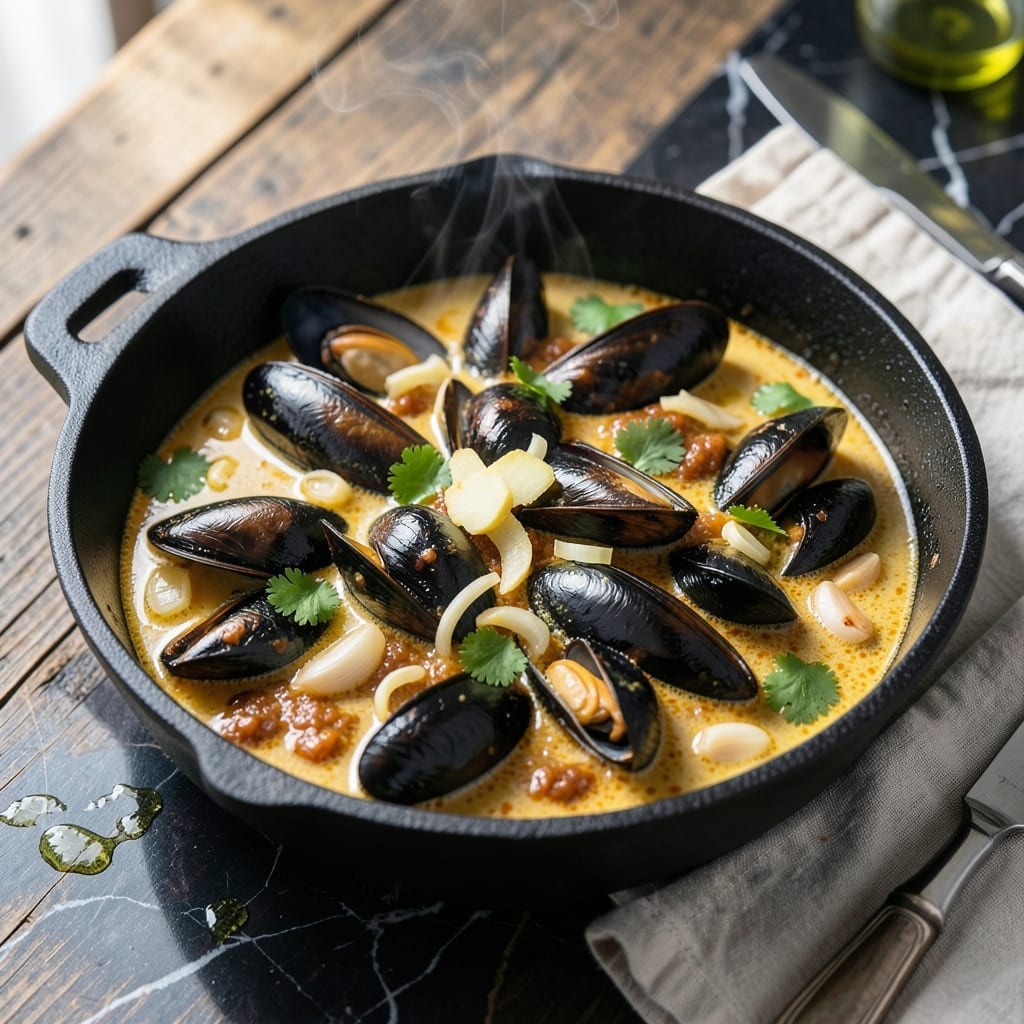
This Thai-inspired mussel stew transforms simple ingredients into a creamy, aromatic masterpiece that feels restaurant-worthy. My approach focuses on building layers of flavor with minimal effort.
The coconut milk creates a velvety broth that perfectly complements the briny sweetness of fresh mussels. A handful of traditional spices and herbs adds authentic depth without complicating the process.
What emerges is a dish with tender mussels bathed in a creamy, fragrant sauce that’s rich yet balanced. The aromas alone will transport you to a seaside kitchen.
Serve with crusty bread to soak up every last drop of that incredible sauce. The technique is straightforward, but the results are anything but ordinary.
Ingredients for Recipe for Mussels with Coconut Milk
Fresh mussels, coconut milk, and Thai spices create this aromatic, creamy dish with minimal effort.
| Ingredient | Amount | Notes |
|---|---|---|
| Fresh Mussels 🦪 | 2 lb | De-bearded and scrubbed clean |
| Full-Fat Coconut Milk 🥥 | 2 cups | Canned, well-shaken before using |
| Shallots 🧅 | 2 whole | Finely minced for aromatic base |
| Garlic Cloves 🧄 | 4 cloves | Thinly sliced for even distribution |
| Fresh Ginger Root 🌿 | 1 tbsp | Peeled and finely grated |
| Red Curry Paste 🌶️ | 2 tbsp | Thai variety for authentic flavor |
| Fish Sauce 🐟 | 1 tbsp | Use vegan alternative if needed |
| Fresh Lime Leaves 🍃 | 4 pieces | Torn for aromatic infusion |
| Fresh Cilantro 🌿 | ½ cup | Chopped, stems reserved for broth |
| Lime 🍈 | 1 whole | Juiced and zested for brightness |
| Light Brown Sugar 🍚 | 1 tsp | Balances the acidity and spice |
| Thai Basil Leaves 🌿 | ¼ cup | Loosely packed for garnish |
| Jasmine Rice 🍚 | 1 ½ cups | Uncooked, for serving alongside |
| Crusty Bread 🍞 | 1 whole | For soaking up sauce |
[recipe_ingredient_scaler]
The mussels are the star, so source them from a trusted seafood counter—look for tightly closed shells and a briny, oceanic smell. Whole Foods and local fishmongers are ideal for freshness. For the coconut milk, full-fat canned varieties like Thai Kitchen or Aroy-D yield the richest, most velvety texture. Avoid light coconut milk; it won’t achieve the desired creaminess.
No Thai basil on hand? Regular basil works in a pinch (though the flavor profile is milder). Swap lime leaves for lime zest plus a bay leaf—the citrusy aroma remains intact. Fish sauce can be replaced with soy sauce for a vegetarian twist, but adjust salt levels carefully. For heat control, reduce red curry paste to 1 tbsp and add a pinch of cayenne instead.
Store mussels in the fridge, covered with a damp towel, for up to 2 days. Coconut milk keeps for 1 week once opened if transferred to an airtight container. The stew reheats well—store leftovers in the fridge for up to 3 days, but avoid freezing to preserve texture.
Why You’ll Love This Recipe
- One Pot Wonder: I toss everything in a single pot—mussels, coconut milk, shallots—and dinner’s ready before I can set the table.
- Rich and Velvety: That first spoonful of coconut-ginger broth with the briny mussels? Ridiculously good, and the garlic just ties it all together.
- Dinner Party Star: I’ve served this to picky eaters and foodies alike, and both groups ask for seconds.
- Budget Luxury: Fresh mussels feel fancy, but they’re often cheaper than steak, and the coconut milk stretches the meal further than you’d expect.
Step-by-Step Instructions for Mussels With Coconut Milk
This method ensures a perfectly balanced Thai-inspired dish with rich, aromatic flavors every time.
Step 1: Sauté the Aromatic Base
Heat a large, heavy pot over medium heat. Add the 2 whole Shallots, 4 cloves Garlic Cloves, and 1 tbsp Fresh Ginger Root to the dry pot. Sauté for 2-3 minutes until the shallots soften and the garlic becomes fragrant and lightly golden.
This step builds the flavor foundation. Stir frequently to prevent burning—garlic can go from golden to bitter in seconds. The ginger should release its sharp, citrusy aroma, signaling it’s ready for the next ingredients.
Step 2: Bloom the Curry Paste and Build the Broth
Add the 2 tbsp Red Curry Paste to the pot and stir for 1 minute until the oil separates slightly and the paste becomes deeply aromatic. This blooming process unlocks the paste’s full potential, creating a complex, layered base for your stew.
Pour in the 2 cups Full-Fat Coconut Milk, stirring to incorporate the paste completely. Add the 1 tbsp Fish Sauce, 1 tsp Light Brown Sugar, and 4 pieces Fresh Lime Leaves. Bring to a gentle simmer over medium-low heat.
Step 3: Steam the Mussels to Perfection
Add the 2 lb Fresh Mussels to the pot, discarding any that remain open after a light tap. Cover with a tight-fitting lid and steam for 5-7 minutes. Shake the pot gently once during cooking to redistribute the mussels.
You’ll know they’re done when all shells have opened and the meat is plump and opaque. Discard any mussels that fail to open—this is non-negotiable for safety. The broth should be creamy and fragrant with a vibrant red hue from the curry paste.
Step 4: Finish and Garnish
Remove the pot from heat. Stir in the juice and zest from the 1 whole Lime. Taste and adjust seasoning if needed—the balance should be bright, creamy, and slightly spicy with a hint of sweetness.
Ladle the mussels and broth into bowls. Garnish generously with the 0.5 cup Fresh Cilantro and 0.25 cup Thai Basil Leaves. Serve immediately with 1.5 cups Jasmine Rice and 1 whole Crusty Bread on the side for dipping.
Pro Tips For Making Recipe For Mussels With Coconut Milk
- Steam, Don’t Boil: I learned this the hard way—coconut milk should barely simmer when cooking mussels, otherwise it separates and takes on a greasy texture. Keep it at a gentle bubble, just enough to coax the mussels open.
- Scrub the Mussels: Sounds tedious, but it’s non-negotiable: scrub each mussel under cold water and pull off any beards or barnacles. After one gritty bite, you’ll never skip this step again.
- Use Full-Fat Only: Light coconut milk just won’t cut it here. The fat carries the flavor of the shallots, garlic, and ginger, and gives the sauce that rich, creamy body.
- Toast the Aromatics: Sauté the shallots, garlic, and ginger in a little oil until fragrant—about 2-3 minutes—before adding the coconut milk. It deepens their flavor and makes a real difference in the final dish.
Regional Styles of recipe for mussels with coconut milk
Thai Coastal Style
This version stays true to Southern Thailand’s seafood traditions. I use 2 tbsp red curry paste and 4 kaffir lime leaves for that authentic coastal flavor. The coconut milk creates a rich, fragrant broth that’s both comforting and complex. 🌊
Vietnamese Fusion
Inspired by my travels, I swap red curry for 1 tbsp lemongrass paste and add 1 tbsp soy sauce for umami depth. Fresh herbs like Thai basil and cilantro keep the dish vibrant. Serve with steamed jasmine rice for a hearty meal.
Malaysian Rendition
Here, I add 1 tsp turmeric and 1 stalk lemongrass (bruised) to the broth for an earthy, citrusy twist. The result is a golden-hued stew with layers of Southeast Asian warmth. The mussels soak up these bold flavors beautifully.
Filipino Adaptation
This version incorporates 1 tbsp calamansi juice and 1 tsp chili flakes for a tangy, spicy kick. I love how the coconut milk mellows the heat while keeping the dish lively. It’s a nod to the Philippines’ love of bold, balanced flavors.
Indonesian Touch
For this take, I stir in 1 tsp galangal and 1 tsp shrimp paste with the aromatics. The shrimp paste adds a deep, savory note that pairs wonderfully with the coconut milk. Garnish with extra lime and fresh herbs. 🍃
Nutrition Facts
Frequently Asked Questions
Can I use frozen mussels instead of fresh?
Yes, but thaw them overnight in the fridge first. Avoid refreezing once thawed. Cook them straight from the fridge for best results.
How do I know when the mussels are cooked?
They’re done when all shells open wide after 5-7 minutes of steaming. Discard any that stay closed—they may be unsafe to eat.
What can I use instead of lime leaves?
Substitute with 1 tsp lime zest plus a bay leaf. The citrusy aroma will still shine through in your broth.
Can I make this ahead of time?
Best served fresh, but leftovers keep in the fridge for up to 3 days. Reheat gently—don’t boil—to preserve the texture.

Trained in classic French technique but raised on slow-cooked ribs and spicy rubs, she blends culinary skill with smoke and soul.
- Smoked Teriyaki Beef Jerky Recipe: Umami-Deep Flavor in Every Chewy Bite - October 15, 2026
- Stewed Beef Brisket Recipe: Deep-Rich Flavor After 8 Hours of Slow Simmering - October 15, 2026
- Beef Brisket Rolls Recipe: Flaky Layers and Smoky Sweet Filling - October 15, 2026