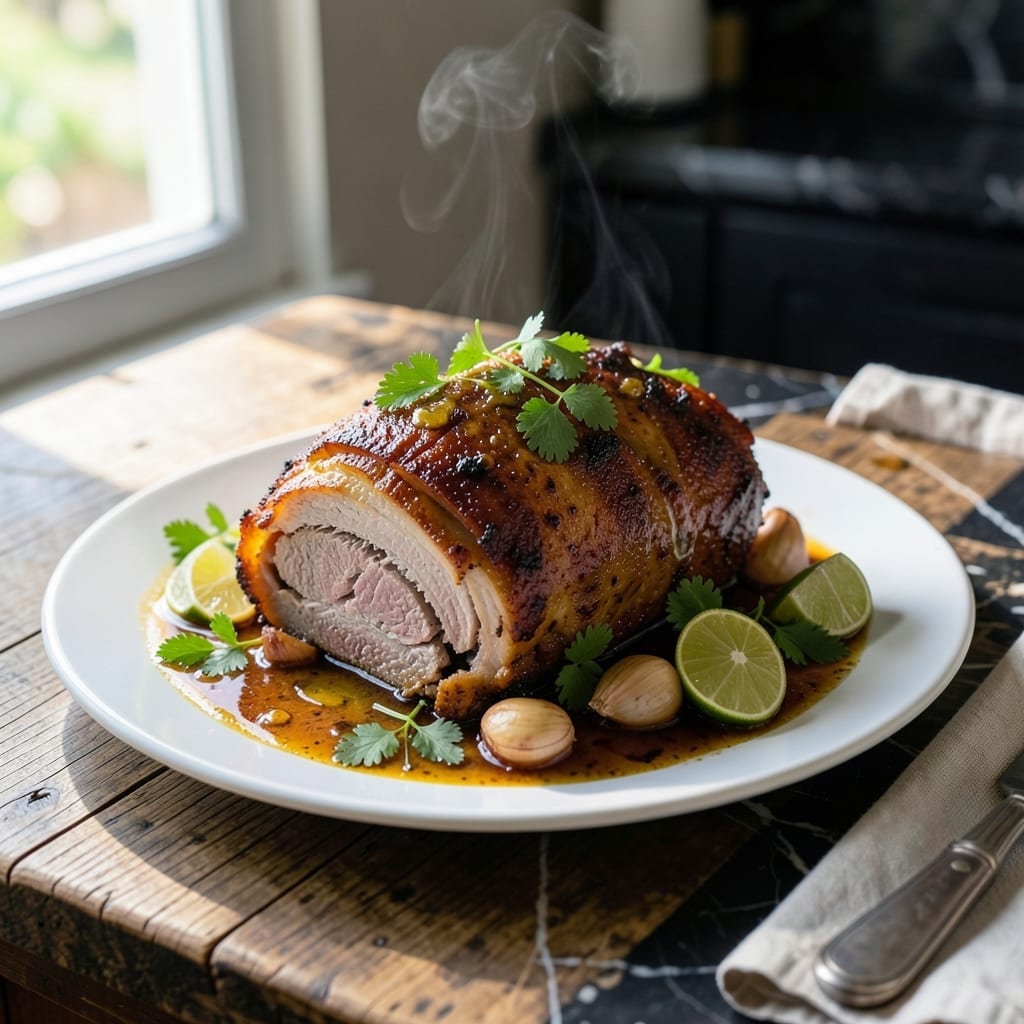
This slow-roasted pork shoulder captures the vibrant spirit of Puerto Rican tradition in every bite. I tested this method in my Boston kitchen, perfecting the balance of garlic, citrus, and spices that define authentic pernil.
The marinade, called mojo, works its magic overnight, infusing the meat with bold flavors that develop depth during the long roasting process. Low heat and patience transform tough pork into tender, fall-apart perfection.
What emerges is meat with a crispy exterior giving way to juicy, aromatic layers. The garlic and citrus create a crust that seals in moisture while adding complex, savory notes.
Serve with rice, beans, and plantains for a complete meal. This dish brings Puerto Rico to your table.
Ingredients for Recipe for Pernil Puerto Rican Style
Pantry staples and fresh herbs create this vibrant Puerto Rican classic at home.
| Ingredient | Amount | Notes |
|---|---|---|
| Pork Shoulder 🐖 | 4 lb | Bone-in, skin-on for crispiness |
| Garlic Cloves 🧄 | 12 cloves | Peeled, roughly chopped |
| Fresh Oregano 🌿 | ½ cup | Chopped, stems removed |
| Fresh Cilantro 🍃 | ½ cup | Chopped, stems removed |
| Sour Oranges 🍊 | 3 whole | Juiced, or sub lime+orange mix |
| Lime Juice 🍋 | ½ cup | Freshly squeezed |
| Olive Oil 🫒 | ½ cup | Extra-virgin preferred |
| Dried Oregano 🌿 | 1 tbsp | For depth of flavor |
| Ground Black Pepper 🌶️ | 2 tbsp | Freshly ground preferred |
| Ground Cumin 🌿 | 1 tbsp | Toasted for warmth |
| Adobo Seasoning 🧂 | 2 tbsp | Puerto Rican blend, or DIY mix |
| Kosher Salt 🧂 | 2 tbsp | Diamond Crystal preferred |
| Bay Leaves 🍃 | 4 whole | For marinade infusion |
| White Vinegar 💧 | 2 tbsp | Balances citrus flavors |
[recipe_ingredient_scaler]
The pork shoulder is non-negotiable here. Bone-in, skin-on gives you that perfect crispy exterior and juicy interior. Look for it at Latin markets or well-stocked supermarkets—ask the butcher if you don’t see it. Sour oranges are the soul of mojo, but if your store doesn’t carry them (most don’t), equal parts orange and lime juice works in a pinch. Just don’t skip the citrus.
No fresh oregano or cilantro? Dried at one-third the amount (but fresh is worth the effort). Out of adobo seasoning? Mix 1 tbsp each garlic powder, onion powder, and oregano with 1 tsp each salt, pepper, and cumin. The vinegar helps tenderize—apple cider vinegar can sub for white. For extra authenticity, add a splash of sofrito to the marinade.
The mojo can sit overnight (better flavor) or just 4 hours minimum. Leftovers keep 4-5 days in the fridge or freeze for 3 months. Reheat gently to keep the meat from drying out—it’s even better the next day.
Why You’ll Love This Recipe
- Hands-Off Cooking: I just season the pork shoulder with garlic, oregano, and sour orange, then let the oven do the work.
- Flavor Explosion: The mix of fresh cilantro, garlic, and sour orange creates that signature Puerto Rican taste I crave.
- Feeds a Crowd: One pork shoulder makes enough for a big family dinner, with leftovers for sandwiches the next day.
- Budget Hero: Pork shoulder is affordable, and a little goes a long way with these bold flavors.
Step-by-Step Instructions for Pernil Puerto Rican Style
Here’s the method I use for that perfect crispy skin and tender, flavorful meat every time.
Step 1: Create the Bold Citrus-Garlic Marinade
In a blender or food processor, combine the 12 cloves garlic cloves, 0.5 cup fresh oregano, 0.5 cup fresh cilantro, juice from the 3 whole sour oranges, 0.5 cup lime juice, 0.5 cup olive oil, 1 tbsp dried oregano, 2 tbsp ground black pepper, 1 tbsp ground cumin, 2 tbsp adobo seasoning, 2 tbsp kosher salt, 4 whole bay leaves, and 2 tbsp white vinegar.
Blend until you have a thick, fragrant paste. I like to let this sit for 10 minutes before using—it allows all those bold flavors to meld together. The citrus will be bright, the garlic pungent, and the herbs aromatic. This marinade is the soul of your pernil.
Step 2: Score and Marinate the Pork Shoulder
Pat the 4 lb pork shoulder dry with paper towels. Using a sharp knife, score the skin in a crosshatch pattern, cutting about ½ inch deep. This helps the marinade penetrate and creates more surface area for crispy skin later.
Place the pork in a large bowl or resealable bag and pour the marinade over it, making sure to rub it into every crevice and under the skin. I always wear gloves for this part—garlic and citrus can be tough on your hands. Let it marinate in the refrigerator for at least 4 hours, but overnight is even better for maximum flavor infusion.
Step 3: Slow-Roast to Perfection
Preheat your oven to 325°F. Remove the pork from the marinade (reserve the marinade) and place it skin-side up on a rack in a roasting pan. Pour 1 cup of the reserved marinade into the bottom of the pan.
Roast uncovered for 3 to 3½ hours, basting with the pan juices every 45 minutes. You’ll know it’s ready when the skin is deep golden brown and crispy, and the internal temperature reaches 195°F. The meat should be fall-apart tender when pierced with a fork.
Step 4: Rest and Serve
Transfer the pernil to a cutting board and let it rest for 20 minutes before carving. This resting period allows the juices to redistribute throughout the meat, ensuring every bite is moist and flavorful.
I like to serve it with the pan juices spooned over the top. The skin should crackle when you cut into it, revealing tender, juicy meat underneath. Pull it apart with forks or slice it thick—either way, it’ll be packed with that incredible garlic-citrus flavor that makes pernil so special.
Pro Tips For Making Recipe For Pernil Puerto Rican Style
- Score the Fat Cap: Cut deep crosshatches into the pork shoulder’s fat cap—about 1/2 inch apart—so the marinade penetrates and the skin crisps up properly.
- Use Fresh Sour Oranges: Bottled bitter orange juice works in a pinch, but fresh sour oranges give that bright, complex citrus punch pernil is known for.
- Don’t Rush the Marinade: Let the pork sit in the garlic, oregano, and sour orange marinade overnight—anything less and the flavors won’t sink in deep enough.
- Roast Low and Slow: Start at 325°F and give it at least 4 hours, basting every 45 minutes, so the meat falls apart and the skin gets that perfect crackle.
Health Benefits of This Recipe
Rich in Protein
This dish delivers high-quality protein essential for muscle repair and growth. A 4-ounce serving provides about 30 grams of protein, making it perfect for active lifestyles or anyone looking to maintain muscle mass. I love how satisfying it feels after a long day in my Boston kitchen. 💪
Healthy Fats
While pork shoulder contains some fat, much of it renders out during slow roasting. The remaining fats include monounsaturated fats from the olive oil in the marinade, which support heart health. The citrus marinade helps reduce saturated fat absorption during cooking.
Vitamin Powerhouse
The garlic in this recipe is packed with vitamin C, vitamin B6, and manganese. Just 3 cloves provide about 15% of your daily vitamin C needs. The fresh herbs contribute antioxidants that combat inflammation. I notice I feel more energized when I include garlic-heavy dishes like this in my diet.
Mineral Boost
Pork is an excellent source of zinc and iron, crucial for immune function and oxygen transport. The adobo seasoning adds extra minerals like selenium. A single serving covers about 25% of your daily zinc needs, which is vital for maintaining a strong immune system.
Low-Carb Friendly
With no added sugars and minimal carbohydrates, this dish fits perfectly into low-carb or keto diets. The protein-to-carb ratio is excellent for those watching their carb intake. I often serve it with cauliflower rice instead of traditional rice to keep it even lower in carbs. ✨
Antioxidant-Rich
The combination of garlic, citrus, and fresh herbs provides a powerful antioxidant punch. Vitamin C from the citrus and allicin from the garlic work together to fight oxidative stress. The oregano and cilantro add their own unique antioxidants, making this dish a flavorful way to support your health.
Nutrition Facts
Frequently Asked Questions
Can I use a pork butt instead of shoulder?
Yes, pork butt works well as it’s from the same primal cut. The flavor and texture will be very similar, though shoulder has slightly more connective tissue. Just ensure it’s bone-in, skin-on for that perfect crispy exterior.
Why is the internal temperature higher than most meats?
The 195°F target breaks down collagen in the tough cut, creating that fall-apart tenderness. This higher temp also renders fat for crispier skin while keeping the meat moist inside.
How do I get the skin extra crispy?
Pat it very dry before roasting and score deeply. Finish under the broiler for 3-5 minutes at the end, watching closely. The citrus in the marinade helps achieve that perfect crackle.

Trained in classic French technique but raised on slow-cooked ribs and spicy rubs, she blends culinary skill with smoke and soul.
- Stewed Beef Brisket Recipe: Deep-Rich Flavor After 8 Hours of Slow Simmering - October 15, 2026
- Beef Brisket Rolls Recipe: Flaky Layers and Smoky Sweet Filling - October 15, 2026
- Masterbuilt Smoker Beef Brisket Recipe: Bark-To-Meat Ratio Hack for Unmatched Flavor - October 15, 2026