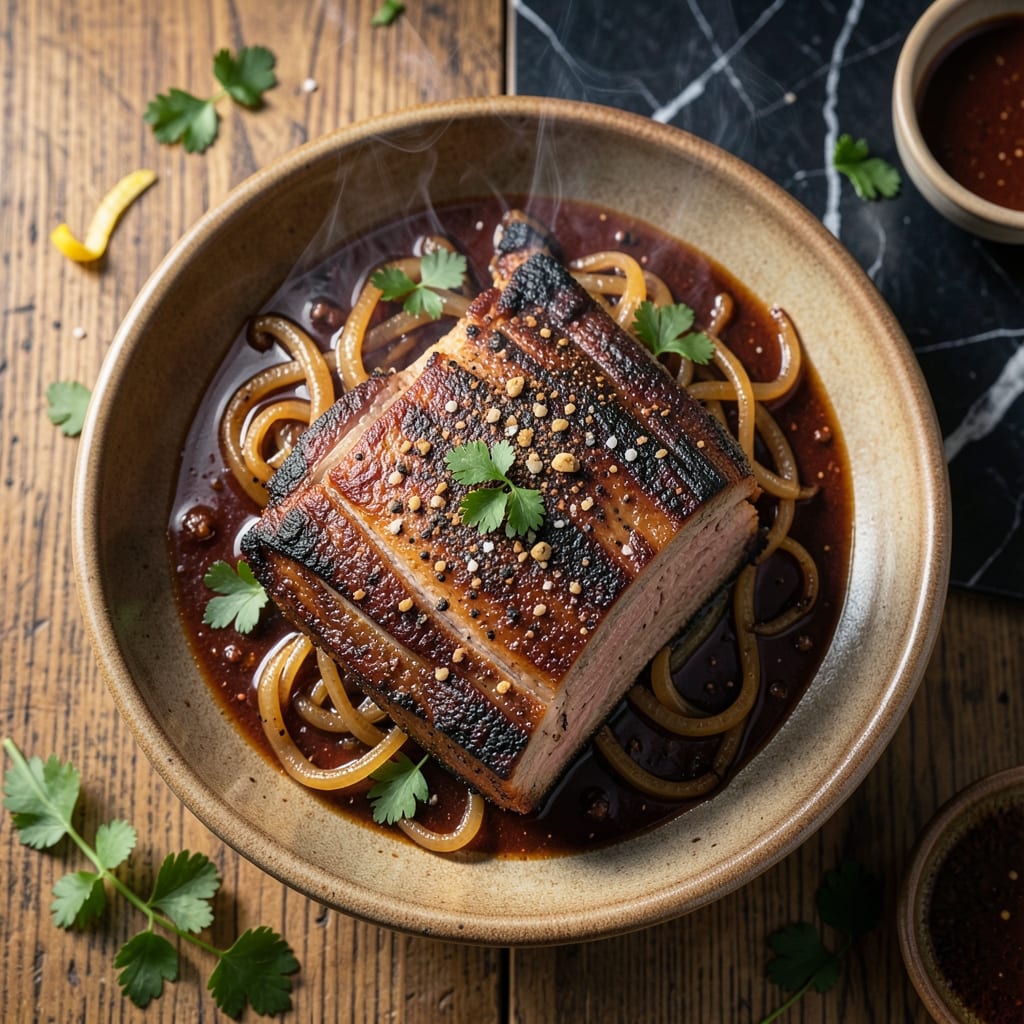
Pork brisket transforms completely when given the right treatment—low heat and time. This method delivers buttery tenderness that falls apart at the touch of a fork.
I developed this approach after testing multiple techniques in my small kitchen, finding that slow-roasting at a consistent temperature yields the most reliable results. The key is patience, allowing the connective tissue to break down gradually.
What emerges is meat so tender it nearly melts, with a rich depth of flavor that only comes from proper slow cooking. The exterior develops a subtle crust while the inside stays impossibly soft.
Serve this with simple sides to let the pork shine. Here’s how to achieve it perfectly every time.
Ingredients for Recipe for Pork Brisket
A handful of bold flavors and one spectacular cut of pork. That’s all you need.
| Ingredient | Amount | Notes |
|---|---|---|
| Pork Brisket 🥩 | 3 lb | Bone-in preferred for flavor |
| Kosher Salt 🧂 | 1 tbsp | Diamond Crystal preferred |
| Black Pepper 🌶️ | 1 tbsp | Freshly cracked for best texture |
| Garlic Powder 🧄 | 1 tbsp | Not garlic salt |
| Onion Powder 🧅 | 1 tbsp | Fresh ground ideal |
| Smoked Paprika 🌶️ | 1 tsp | Adds depth to crust |
| Brown Sugar 🧈 | ¼ cup | Light or dark variety |
| Apple Cider Vinegar 🍏 | 2 tbsp | Balances richness of meat |
| Olive Oil 🫒 | 2 tbsp | For searing and moisture |
| Low-Sodium Chicken Broth 🍲 | 1 cup | Or substitute water in pinch |
| Fresh Rosemary 🌿 | 2 whole | Sprigs, optional for aroma |
| Fresh Thyme 🍃 | 2 whole | Sprigs, optional for aroma |
[recipe_ingredient_scaler]
The pork brisket itself is non-negotiable here. Bone-in gives you that extra depth of flavor and keeps the meat moist during the long cook. I get mine from Whole Foods or a trusted local butcher—look for good marbling and a deep pink color. The fat cap should be at least a quarter-inch thick. If you can only find boneless, it’ll work, but reduce the cook time by about an hour.
No smoked paprika? Regular paprika plus a pinch of cayenne gets you close. Out of brown sugar? Maple syrup at half the volume works in a pinch. The vinegar is key for cutting through the richness, but white wine vinegar or even lemon juice can sub in. If using dried herbs instead of fresh, cut the amount by two-thirds and add them directly to the rub.
This tastes even better the next day—let it rest in the fridge overnight and reheat gently. Keeps wrapped tightly for 4-5 days in the fridge, or freeze portions for 3 months (thaw in the fridge before reheating).
Why You’ll Love This Recipe
- Set It and Forget: I rub the brisket with salt, pepper, garlic and onion powders in five minutes, then let the oven do the rest.
- Smoky Depth: The dry rub forms the most addictive crust while keeping the meat inside juicy and tender.
- Feeds a Crowd: One brisket turns into pulled pork sandwiches, tacos, or a hearty stew for days of meals.
- Budget Hero: Pork brisket is way cheaper than beef, but still delivers that slow-cooked, melt-in-your-mouth satisfaction.
Step-by-Step Instructions for Pork Brisket
Here’s the method I use to achieve fall-apart tenderness with a caramelized crust.
Step 1: Season the Brisket for Maximum Flavor
Pat the 3 lb Pork Brisket dry with paper towels—this ensures the seasoning sticks properly. In a small bowl, mix together the 1 tbsp Kosher Salt, 1 tbsp Black Pepper, 1 tbsp Garlic Powder, 1 tbsp Onion Powder, 1 tsp Smoked Paprika, and 0.25 cup Brown Sugar until evenly combined.
Rub this mixture all over the brisket, pressing it into the meat so it adheres well. Don’t be shy—you want every inch covered. Then, drizzle the 2 tbsp Apple Cider Vinegar over the surface and rub it in. This adds a subtle tang and helps break down the meat fibers. Let it sit at room temperature for 30 minutes while you preheat the oven.
Step 2: Sear the Brisket for a Deep Crust
Heat the 2 tbsp Olive Oil in a large Dutch oven over medium-high heat. When the oil is shimmering and almost smoking, carefully place the brisket in the pot. Sear for 4-5 minutes per side until deeply browned and a rich crust forms.
You’ll know it’s ready to flip when it releases easily from the pot—don’t force it. This searing step creates the Maillard reaction, giving your brisket that complex, savory depth. Once browned on both sides, remove it from the pot and set it aside temporarily.
Step 3: Braise Low and Slow for Tenderness
Pour in the 1 cup Low-Sodium Chicken Broth to deglaze the pot, scraping up all those flavorful browned bits with a wooden spoon. Return the brisket to the pot, fat-side up. Add the 2 whole Fresh Rosemary and 2 whole Fresh Thyme sprigs to the liquid for aromatic depth.
Cover the pot tightly and transfer it to a preheated 325°F oven. Braise for 3-4 hours, turning the brisket once halfway through. You’re aiming for an internal temperature of 195-200°F, where the connective tissue breaks down into gelatin, making the meat fork-tender.
Step 4: Rest and Serve for Juicy Results
Once the brisket is tender enough to pull apart with a fork, carefully transfer it to a cutting board. Let it rest, loosely tented with foil, for at least 15 minutes—this allows the juices to redistribute throughout the meat.
Slice against the grain into ½-inch thick pieces. The meat should be moist, tender, and infused with the rich flavors of the braising liquid. Serve with some of the reduced pan juices spooned over the top for extra moisture and depth.
Pro Tips For Making Recipe For Pork Brisket
- Season Overnight: I learned this the hard way—dry-brining the pork brisket with kosher salt, black pepper, garlic powder, and onion powder at least 12 hours ahead makes a real difference in flavor penetration.
- Low and Slow: Cook it at 275°F (135°C) for 3-4 hours—rushing with higher heat just turns it tough and chewy, and nobody wants that.
- Don’t Skip the Rest: After pulling it from the oven, let it rest under foil for at least 20 minutes—this keeps the juices locked in instead of all over your cutting board.
- Pat It Dry: Sounds weird, but it works: blot the brisket with paper towels before seasoning so the rub actually sticks instead of sliding off with excess moisture.
Dietary Considerations for This Dish
Gluten-Free Adaptation
This recipe is naturally gluten-free as written. All ingredients, from the pork brisket to the spice rub, contain no wheat or gluten derivatives. Just double-check your chicken broth label—some brands add gluten-containing thickeners.
Low-Carb Option
To reduce carbs, simply omit the 0.25 cup Brown Sugar from the rub. I’ve tested this version, and while you lose some caramelization, the smoked paprika and vinegar still deliver great flavor. The meat stays just as tender.
Dairy-Free Note
There’s no dairy in this preparation, making it safe for those avoiding lactose. The richness comes purely from the pork itself and the olive oil used for searing. No substitutions needed here. 💪
Sodium Considerations
For a lower-sodium version, reduce the 1 tbsp Kosher Salt by half and use low-sodium chicken broth. The apple cider vinegar and herbs will still provide plenty of flavor without the extra salt.
Allergy-Friendly
This dish is free from common allergens like nuts, eggs, and soy. The only potential concern is celery in some chicken broths—always verify the label if celery sensitivity is an issue. ✨
Keto-Friendly Twist
Replace the brown sugar with 2 tbsp erythritol or monk fruit sweetener. This keeps the carbs minimal while maintaining the crust’s texture. The 325°F braise works perfectly with these alternatives.
Nutrition Facts
Frequently Asked Questions
What internal temperature should I aim for?
Target 195-200°F internally for perfect tenderness. This ensures connective tissues break down fully. Use a meat thermometer for accuracy.
Can I cook this in a slow cooker instead?
Yes! Sear first, then cook on low for 8-10 hours or high for 5-6 hours. Add ½ cup extra broth to prevent drying out.
Why did my brisket turn out dry?
Overcooking or insufficient liquid are common culprits. Check temperature early, and ensure the pot stays covered tightly during braising.
How long should I let it rest before slicing?
Rest for at least 15 minutes, tented with foil. This lets juices redistribute for moist, flavorful slices.

Trained in classic French technique but raised on slow-cooked ribs and spicy rubs, she blends culinary skill with smoke and soul.
- Stewed Beef Brisket Recipe: Deep-Rich Flavor After 8 Hours of Slow Simmering - October 15, 2026
- Beef Brisket Rolls Recipe: Flaky Layers and Smoky Sweet Filling - October 15, 2026
- Masterbuilt Smoker Beef Brisket Recipe: Bark-To-Meat Ratio Hack for Unmatched Flavor - October 15, 2026